Gopnik
Definition
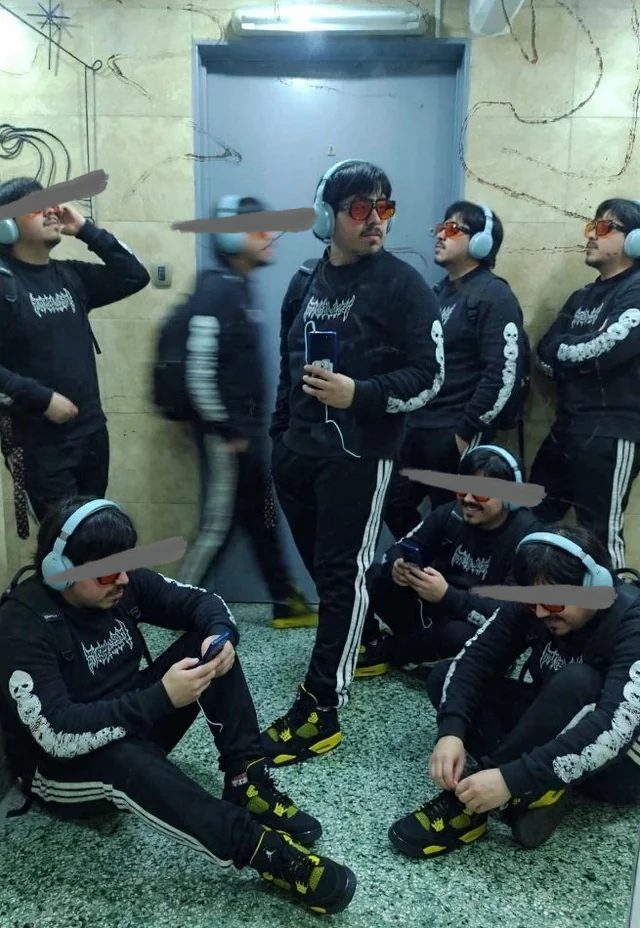
Gopnik style is the street dress vernacular of the urban peripheries of the former Soviet Union, most visible in the late 1980s and 1990s across Russia, Ukraine, Belarus, and neighboring republics. The word itself began as slang for working-class youth of the courtyards. Its better-credited etymology traces to gop-stop, street slang for robbery, while the popular hostel-acronym story is regarded as folk etymology. As a dress system it centers on the tracksuit worn as an everyday suit. The tracksuit became a prestige object after Adidas outfitted the Soviet team for the 1980 Moscow Olympics, then ubiquitous after 1991 as counterfeit three-stripe suits flooded post-collapse open-air markets. A flat cap over a close crop, inexpensive sneakers or leather shoes, the barsetka hand-bag, sunflower seeds, and the flat-heeled squat complete the look. It was documented by sociologists, revived by internet meme culture, and translated into high fashion during the post-Soviet wave of 2014-2019 by Gosha Rubchinskiy, Vetements-era Demna, and stylist Lotta Volkova.
Visual Grammar
Silhouette
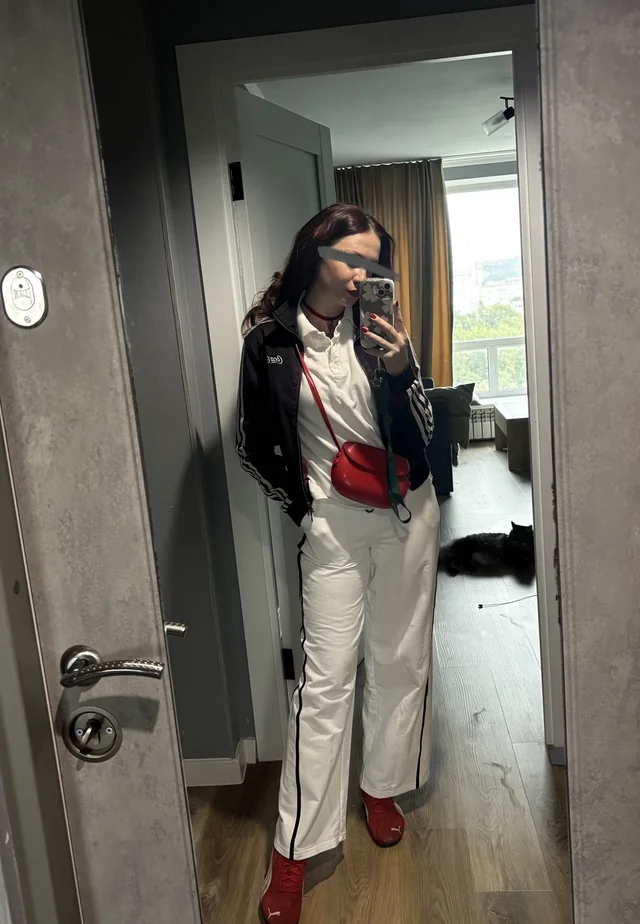
- full tracksuit worn as a suit, a zip-up track jacket with matching track pants
- track pants tucked into socks or worn over sneakers
- flat cap (kepka) or knit cap over a very short haircut
- track jacket layered over a plain tee
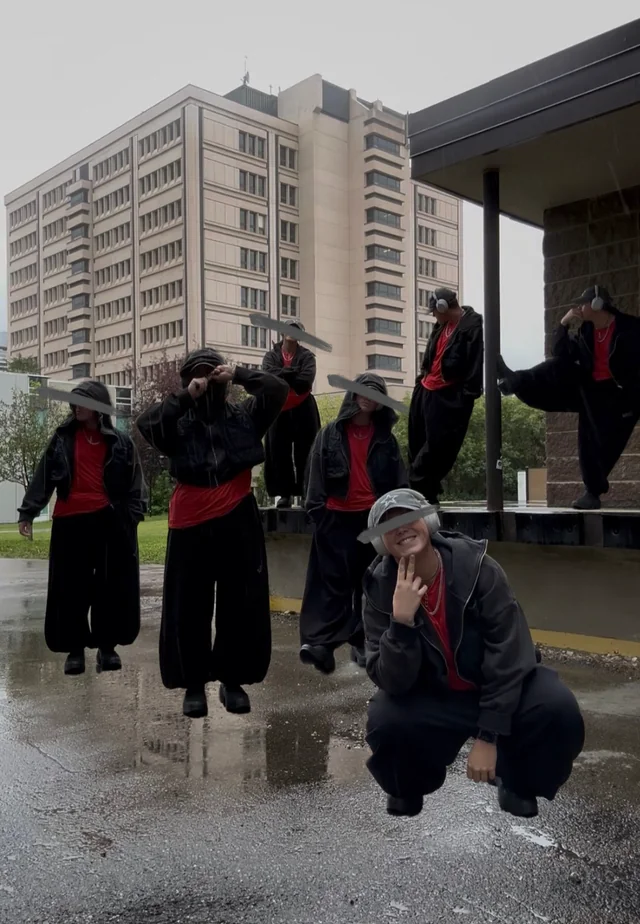
- the low flat-heeled squat as a signature body position, silhouette expressed as posture
Materials
- polyester and nylon tricot tracksuit fabric
- counterfeit-market branding as part of the texture (the "Abibas" lore)
- inexpensive leather in caps, the barsetka hand-bag, and shoes
- knit acrylic caps in winter
Construction
- mass-market, machine-made sportswear with no tailoring and a roomy off-the-rack fit
- contrast piping and three-stripe sleeve and leg taping (or knockoff two- and four-stripe variants)
Colors
- black, navy, and white
- primary blue tracksuits with white stripes
- red-white-blue tricolor, which entered the vocabulary through the fashion canonization (Rubchinskiy) rather than through the street original
Footwear
- white or black low-cost sneakers
- pointed black leather shoes worn with the tracksuit as a documented variant
Body Logic
The style reads through posture as much as through clothing. The low flat-heeled squat, performed in courtyards, at bus stops, and in archways, is the aesthetic's signature body position, and the tracksuit's loose athletic cut accommodates it. Fit is unfussy and mass-market. The body is presented as practical and unornamented, with the close-cropped head under a cap completing the grammar. The barsetka, a small leather hand-bag for documents and keys, and pocketed sunflower seeds are the documented accessories of the ensemble.
Exemplars
- 01
Gosha Rubchinskiy2008-2018
Moscow designer and photographer whose label built a global fashion language from post-Soviet youth style, using Cyrillic typography, street casting, and a three-season Adidas Football collaboration shown in Kaliningrad, St Petersburg, and Yekaterinburg. He ended the brand's original form in 2018 and relaunched in 2025.
- 02
Demna Gvasalia / Vetements2014-present
The Georgian-born designer whose Vetements (founded 2014) and tenure at Balenciaga (from 2015) elevated everyday post-Soviet dress codes, including the oversized tracksuit, onto the luxury runway.
- 03
Lotta Volkova2014-present
Vladivostok-born stylist and key Vetements and Balenciaga collaborator, widely credited as a principal author of the post-Soviet look in high fashion.
- 04
Squatting Slavs meme culture2012-2017
Online communities and creators (including the YouTube channel Life of Boris) that carried the tracksuit-and-squat image to a global audience and set up the fashion world's rediscovery.
Timeline
1980
Adidas outfits the Soviet team for the Moscow Olympics under visible branding restrictions, making the three-stripe tracksuit a scarce prestige object in the USSR.
late 1980s
Genuine tracksuits remain scarce and coveted. The gopnik street culture of the urban peripheries becomes broadly visible during perestroika.
1991-1999
Counterfeit three-stripe tracksuits flood post-collapse open-air markets and become ordinary working-class urban dress across the former USSR.
2012-2017
Internet meme culture, including squatting-Slavs communities and YouTube creators, carries the image worldwide.
2014-2019
The post-Soviet fashion wave canonizes the vernacular: Vetements launches, Demna takes over Balenciaga, and Gosha Rubchinskiy shows Adidas collaborations in Russian cities ahead of the 2018 World Cup, framed critically by The Calvert Journal's New East coverage.
2018-2022
The wave recedes. Rubchinskiy ends his brand's original form in 2018 and commentary turns "post-post-Soviet," while the tracksuit vernacular remains a fixed reference in fashion.
References
- 01Gavriliuk, V. V. "The Gopniks as a Phenomenon in the Youth Community." Russian Education and Society, 2011.
- 02Balogh, Boróka Emma. "The Gopniki: Aesthetic Performativity in a Post-Socialist Hybrid Subcultural Space." The Polish Journal of Aesthetics 74, 2025.
- 03"Adidas, a love story: how Russians fell for the iconic three stripes." The Calvert Journal / New East Digital Archive.
- 04Trotman, Samuel. "Gopnik, Gabber, and Demna: A Timeline of the adidas Tracksuit in Youth Culture." Highsnobiety.
- 05"Post-Soviet fashion: identity, history and the trend that changed the industry." New East Digital Archive.