Lekondo's
Ontology of Fashion Aesthetics

36 aesthetics

Clothing is expression without explanation. It influences how you’re seen and how you see yourself. Patterns of taste, mood, discipline, excess, and restraint repeat across time and culture. This is our guide to making that language visible.

Back to Ontology
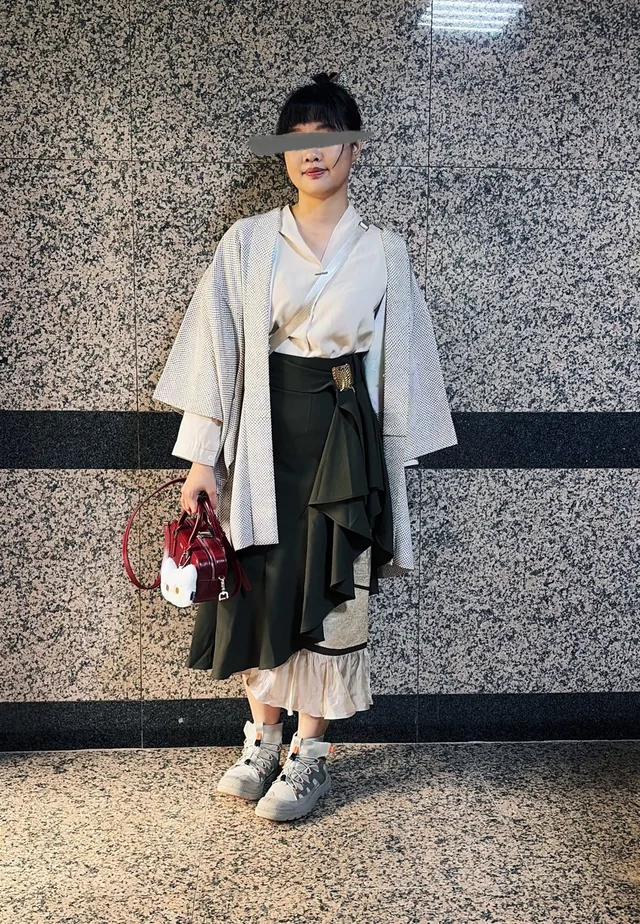
Wabisabi 1
Wabisabi 2
Wabisabi 3

Wabisabi

Summary. Wabi-sabi is a dress regime in which material degradation — fiber softening, dye loss, surface thinning, structural weakening, and accumulated repair — constitutes the aesthetic content rather than representing its failure. Originating in Japanese Buddhist philosophy as codified through sixteenth-century tea-ceremony practice, the system inverts Western fashion's quality logic (where garment value is defined by the maintenance of original appearance) by positioning temporal transformation as the generative process through which textiles acquire visual, tactile, and cultural worth. The aesthetic is governed by an impermanence-as-value logic: garments are evaluated not by how they resist aging but by how they age — which fibers develop character through wear, which dyes produce meaningful fade trajectories, which constructions accept repair as compositional enrichment rather than emergency correction, and which surfaces record use-history as legible patina rather than damage.

In Material Terms

Wabi-sabi's coherence depends on the aging behavior of cellulosic natural fibers — primarily linen and cotton — and the chemistry of traditional plant-based dyes, particularly indigo (ai, 藍) and persimmon tannin (kakishibu, 柿渋). Linen's crystalline cellulose structure produces a fiber that softens dramatically over time as mechanical wear disrupts inter-chain hydrogen bonding: new linen is stiff and papery; linen after hundreds of hours of wear and repeated washing becomes supple, almost liquid in drape, while retaining sufficient tensile strength to remain structurally functional for decades. Cotton's more amorphous cellulose structure produces a different aging signature — progressive surface thinning, nap development, and gradual transparency at stress points — that generates visual complexity through exposure of the weave's underlying geometry. Indigo bonds to cotton fiber surfaces through van der Waals forces rather than penetrating the fiber interior, meaning that every friction event physically removes dye molecules, producing a blue-to-white fade trajectory whose rate and pattern directly record the garment's contact history. Kakishibu polymerizes through UV exposure, progressively darkening from pale amber through chestnut to near-black over months and years, while simultaneously developing antimicrobial and water-resistant properties — a dyeing process in which the sun literally finishes the textile over time. These material behaviors are not incidental to the aesthetic; they are its operational mechanism.

At Category Level

Wabi-sabi occupies a uniquely reflexive position among fashion aesthetics because it explicitly theorizes the relationship between material decay and aesthetic value — a relationship that most fashion systems suppress or deny. Workwear values patina but frames it as evidence of use; vintage culture values aging but frames it as historical provenance; wabi-sabi uniquely frames degradation itself as the aesthetic event. This positioning makes wabi-sabi vulnerable to a distinctive failure mode: when the philosophical framework is detached from the material practice, the aesthetic collapses into "expensive linen" — textiles selected for their visual resemblance to aged garments without the temporal, philosophical, or craft commitments that make aging meaningful. The boundary between authentic wabi-sabi practice and its commercial simulation is therefore drawn not at the garment level but at the process level: does the wearer participate in the textile's transformation, or merely purchase its appearance?

Methodologically

This entry treats wabi-sabi as a material-transformation system: garments are analyzed by how their fibers, dyes, and constructions change through use, repair, and environmental exposure, and by how the philosophical framework originating in Japanese Buddhist aesthetics mediates the cultural interpretation of those changes across different institutional and geographic contexts.

Word (Etymology)

Wabi (侘) and sabi (寂) are separate Japanese aesthetic concepts with distinct etymological trajectories that became loosely paired in tea-ceremony discourse before being fused — somewhat misleadingly — into a compound term for Western consumption. Wabi derives from the verb wabu (侘ぶ), meaning to languish, to feel desolate, to be reduced to poverty. In medieval Japanese literary usage (twelfth through fourteenth centuries), wabi connoted loneliness, insufficiency, and the aesthetic quality that emerges when material abundance is stripped away — an appreciation not of richness but of what remains when richness is gone. Sabi derives from sabu (寂ぶ/錆ぶ), meaning to grow old, to rust, to become weathered. The character 寂 carries connotations of solitude and quietness; the related character 錆 means rust or patina directly. Sabi thus describes the visual and tactile evidence of time's passage — the moss on stone, the oxide on iron, the softening of wood grain through handling.

In Japanese aesthetic discourse, wabi and sabi function separately more often than they function as a compound. Wabi inflects the tea ceremony (as wabi-cha, the aesthetic of austere, humble tea practice codified by Sen no Rikyū in the late sixteenth century) and architectural space. Sabi inflects literary criticism (Matsuo Bashō's seventeenth-century haiku poetics use sabi as a key evaluative term for the quality of loneliness and aged beauty in verse). The hyphenated "wabi-sabi" is substantially a Western construction, solidified by Leonard Koren's 1994 book Wabi-Sabi for Artists, Designers, Poets & Philosophers, which synthesized the two concepts into a portable aesthetic category translatable across design disciplines. Japanese scholars — notably Yamada Shoji in Shots in the Dark — have criticized this synthesis as a reductive flattening that sacrifices the concepts' independent philosophical depth for cross-cultural marketability. In Japanese fashion and craft contexts, practitioners more commonly invoke wabi or sabi individually, or use adjacent terms — shibui (渋い, astringent elegance), mono no aware (物の哀れ, pathos of things), mujō (無常, impermanence) — that refine the aesthetic territory that English-language "wabi-sabi" covers with a single broad stroke.

This etymological imprecision is not merely academic; it structures the category's commercial adoption. When Western fashion brands invoke "wabi-sabi" as a design philosophy, they typically mean a visual effect (wrinkled linen, earth tones, rustic texture) detached from the specific philosophical traditions that wabi and sabi independently reference. The compound term's vagueness facilitates this detachment, permitting a philosophical sheen without philosophical obligation.

Subculture

Wabi-sabi fashion has no originating Western subculture. It entered Western dress discourse through a sequence of cross-cultural translations — from Japanese Buddhist philosophy to tea-ceremony practice, from craft to design theory, from design theory to lifestyle media, from lifestyle media to fashion retail — each of which preserved visual grammar while altering function, audience, and evaluative criteria.

Japanese craft and mingei communities. The most philosophically grounded wabi-sabi practice exists within Japanese folk-craft (mingei, 民藝) traditions as theorized by Yanagi Sōetsu (1889–1961). Yanagi's mingei movement, formalized through his 1931 essay "The Way of Craftsmanship" and the founding of the Japan Folk Crafts Museum (Nihon Mingeikan, 1936), elevated anonymous, handmade, utilitarian objects — including indigo-dyed cotton work garments, hand-woven linen textiles, and sashiko-stitched clothing — as embodying a beauty superior to that of self-conscious fine art. Within this tradition, textiles are evaluated not through novelty or luxury but through evidence of honest use, appropriate material selection, and the accumulated skill of anonymous makers. Boro (ぼろ) — the Japanese tradition of repeatedly patching and layering indigo-dyed cotton garments across multiple generations of rural working-class use — represents the most literal material expression of this philosophy: a single garment might accumulate decades of repair, each patch contributing to a visual stratigraphy of necessity, resourcefulness, and temporal depth. The mingei community's evaluative criteria — handmade over machine, anonymous over signed, used over new, repaired over replaced — constitute the most rigorous expertise economy in wabi-sabi culture.

Japanese textile artisan networks. Contemporary Japanese artisans working with traditional dyeing and weaving techniques — natural indigo fermentation (sukumo-based dyeing in Tokushima prefecture), kakishibu processing, hand-spun cotton (te-tsumugi), and bast-fiber weaving (ramie, hemp, wisteria) — maintain wabi-sabi material practice through production rather than consumption. These artisans evaluate textiles through process knowledge: the quality of indigo fermentation (measured by the dye vat's biological health, monitored through color, smell, and surface-film character), the seasonal timing of persimmon-tannin application (green persimmons harvested before ripening produce the highest tannin concentration), and the fiber preparation techniques that determine a textile's aging trajectory. Status in this community accrues through demonstrated craft mastery and apprenticeship lineage, not through purchasing power.

Western lifestyle adopters (2010s–present). The largest contemporary wabi-sabi community exists among Western consumers who encountered the concept through lifestyle media — Koren's book, Beth Kempton's Wabi Sabi: Japanese Wisdom for a Perfectly Imperfect Life (2018), Kinfolk magazine's slow-living editorial framing, and Instagram's "#wabisabi" tag (used predominantly for interior-design and pottery content before expanding to fashion). This community evaluates garments through visual effect — natural fibers, earth tones, rustic texture, visible imperfection — rather than through the process knowledge or philosophical framework that Japanese practitioners maintain. The expertise hierarchy is correspondingly shallower: status derives from curated presentation of lifestyle coherence rather than from material or philosophical literacy.

Sociologically, wabi-sabi fashion is structured by a cultural-translation gradient: Japanese craft communities maintain the deepest expertise and the most rigorous evaluative criteria; Western adopters access the aesthetic through increasingly mediated and simplified versions of those criteria. The gradient is not a simple authentic-versus-fake binary — genuine engagement occurs at every level — but it shapes how claims about "wabi-sabi" are adjudicated across different communities.

History

The material and philosophical history of wabi-sabi begins in Buddhist metaphysics and arrives at contemporary fashion retail through a series of translations, each of which transformed the concept's scope, audience, and institutional embedding.

Buddhist philosophical foundation (6th–12th centuries). The metaphysical substrate of wabi-sabi is mujō (無常, impermanence), one of the three marks of existence (sanbōin) in Buddhist doctrine alongside ku (空, emptiness) and dukkha (苦, suffering). Japanese reception of Buddhist impermanence — formalized through Heian- and Kamakura-period literary and religious texts including Hōjōki (Kamo no Chōmei, 1212) and Tsurezuregusa (Yoshida Kenkō, c. 1330) — emphasized the beauty of transience: cherry blossoms valued because they fall, autumn foliage because it fades, human life because it ends. This metaphysical framework established the philosophical precondition for an aesthetic that finds beauty in decay — not decay as an unfortunate condition to be remedied, but decay as the visible evidence of time's passage and thus of existence's fundamental impermanence.

Tea-ceremony codification (15th–16th centuries). Sen no Rikyū (1522–1591), the most influential tea master in Japanese history, formalized wabi-cha (侘茶, wabi tea) as a deliberate rejection of the ornate Chinese porcelain and gold-lacquer tea utensils favored by the ruling military aristocracy. Rikyū selected rough raku-ware tea bowls (irregular glazing, asymmetric form, hand-shaped rather than wheel-thrown), bamboo utensils, and straw-thatched tea rooms (the sōan style, modeled on rural hermitages) to create a ceremony environment in which material humility was the primary aesthetic achievement. The tea bowl's irregularity was not a defect but a demonstration: it made visible the maker's hand, the clay's resistance, and the firing's unpredictability — elements that machine production and luxury refinement suppress. Rikyū's aesthetic revolution — inverting the value hierarchy so that rough exceeded refined, humble exceeded luxurious, and aged exceeded new — established the evaluative framework that wabi-sabi textile practice would later inherit.

Mingei and folk-craft theory (1920s–1960s). Yanagi Sōetsu's folk-craft movement translated tea-ceremony aesthetics into a broader theory of material culture. Yanagi argued that the most beautiful objects were those made by anonymous craftspeople for daily use — including the indigo-dyed cotton and linen work garments, sashiko-stitched jackets, and boro-patched clothing of rural Japanese communities. This argument performed critical work: it revalued textiles that the Japanese class system had designated as poverty dress, treating them as aesthetic achievements superior to court textiles or luxury imports. The Japan Folk Crafts Museum (established 1936, current building in Meguro, Tokyo, opened 1936) institutionalized this revaluation by collecting, preserving, and displaying folk textiles alongside ceramics, lacquerware, and woodcraft. Yanagi's philosophy profoundly influenced Japanese textile artists including Serizawa Keisuke (designated a Living National Treasure for stencil dyeing in 1956) and Shimura Fukumi (Living National Treasure for tsumugi silk weaving, 1990), creating a lineage of practice that connects mingei theory to contemporary textile art.

Western design adoption (1990s–2000s). Koren's 1994 book introduced wabi-sabi to Western design audiences, translating it from a philosophically dense Japanese tradition into a portable aesthetic principle accessible to architects, product designers, and visual artists. The book's influence was enormous but narrowing: it extracted wabi-sabi from its Buddhist, tea-ceremony, and mingei contexts and repositioned it as a design attitude — "the beauty of things imperfect, impermanent, and incomplete" — that could be applied to any designed object. Tanizaki Jun'ichirō's In Praise of Shadows (1933, English translation 1977), though written decades earlier and addressing a broader aesthetic territory, circulated in conjunction with Koren's work, reinforcing Western interest in Japanese aesthetics of subtlety, patina, and material restraint. By the 2000s, Muji's global retail expansion provided a commercial vessel for watered-down wabi-sabi principles — unbleached materials, neutral palettes, minimal branding — though Muji's corporate-minimalist design logic differs fundamentally from wabi-sabi's embrace of irregularity and decay.

Fashion crystallization (2012–present). Wabi-sabi entered explicit fashion discourse through the convergence of several trends: Kinfolk magazine's launch (2011) establishing "slow living" as a lifestyle-media category that fused Scandinavian minimalism with Japanese aesthetic reference; the sustainability movement's search for philosophical frameworks beyond carbon metrics; and Instagram's curation of "natural," "organic," and "imperfect" visual identities. Brands including Toast (UK), Eileen Fisher, and Kotn began marketing linen basics using wabi-sabi language. COVID-19 lockdowns (2020) accelerated adoption by aligning comfort-first, home-oriented dressing with wabi-sabi's valorization of simplicity. By 2022, TikTok's aesthetic taxonomy included wabi-sabi as a lifestyle category, fully commodified and substantially divorced from the philosophical tradition that generated it.

Analytically, wabi-sabi's fashion history is a sequence of translations — from temple to tea room, from tea room to folk museum, from museum to design book, from design book to lifestyle magazine, from magazine to retail marketing — in which the visual grammar (natural materials, imperfection, earth tones, patina) is preserved while the philosophical content is progressively attenuated. Each translation makes the aesthetic more commercially accessible and less philosophically demanding.

Silhouette

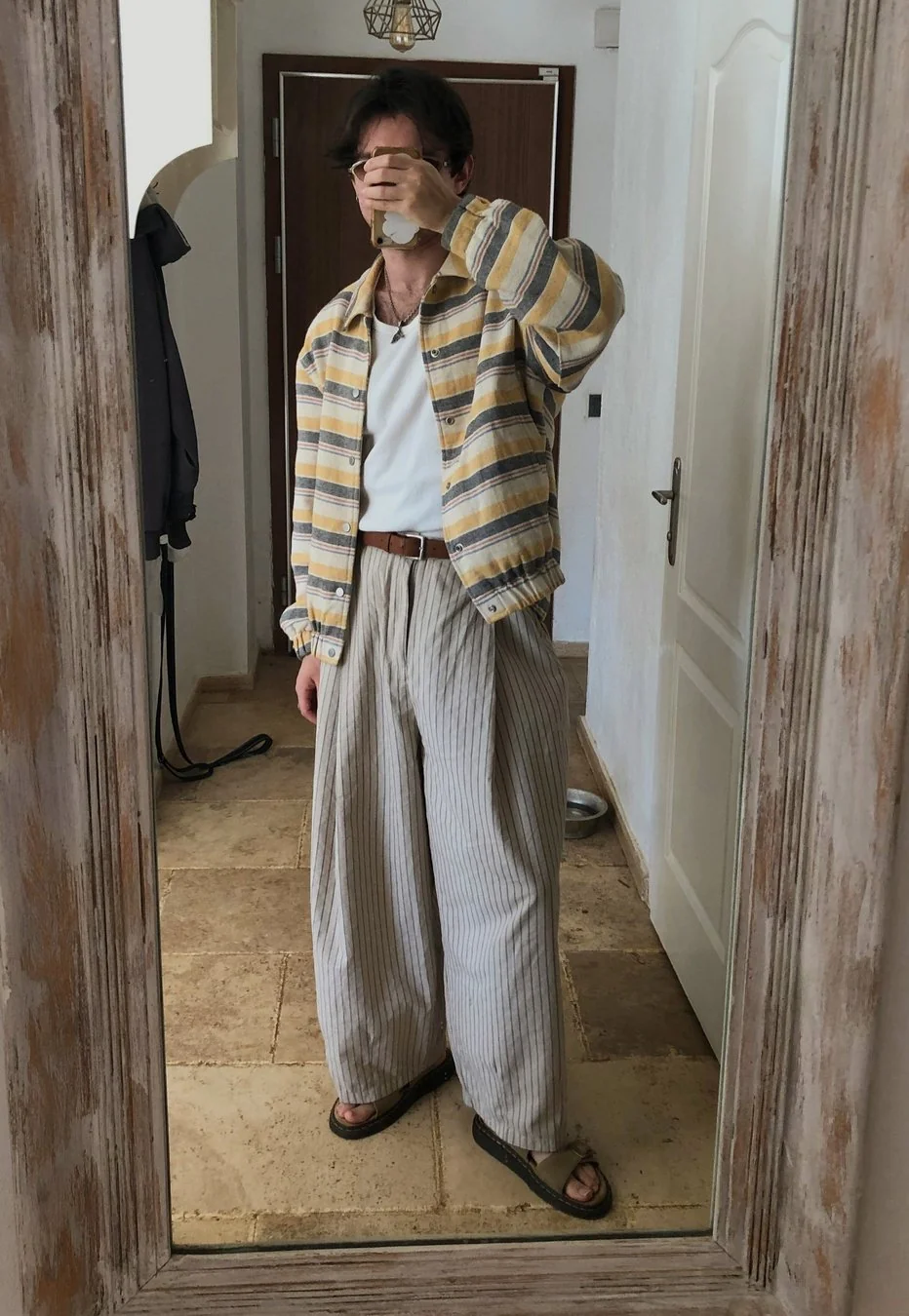
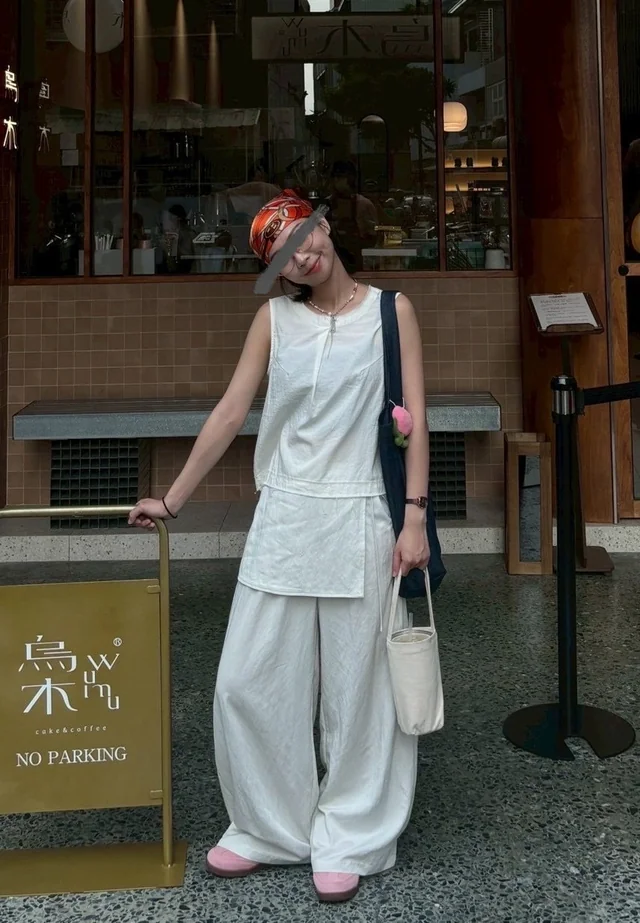
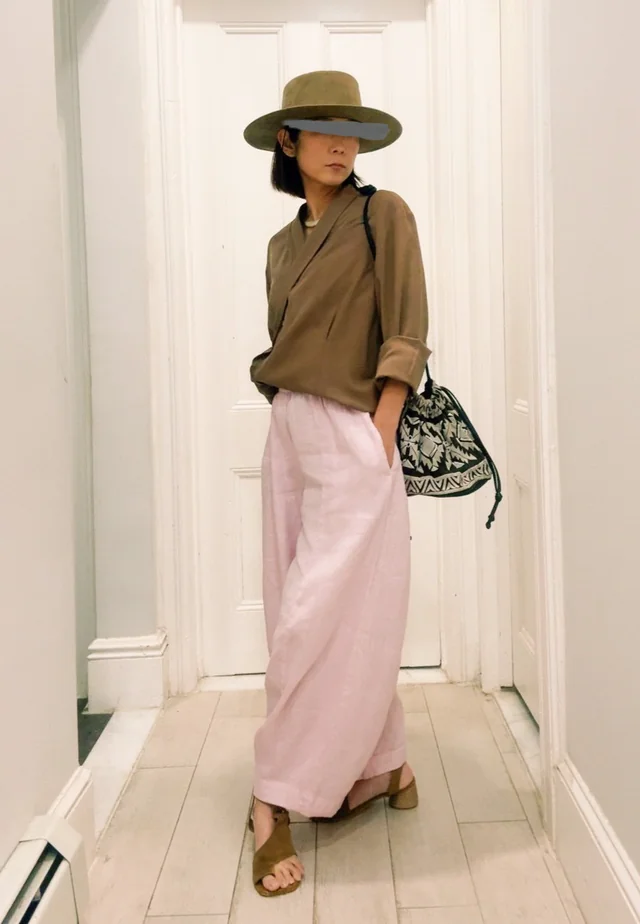
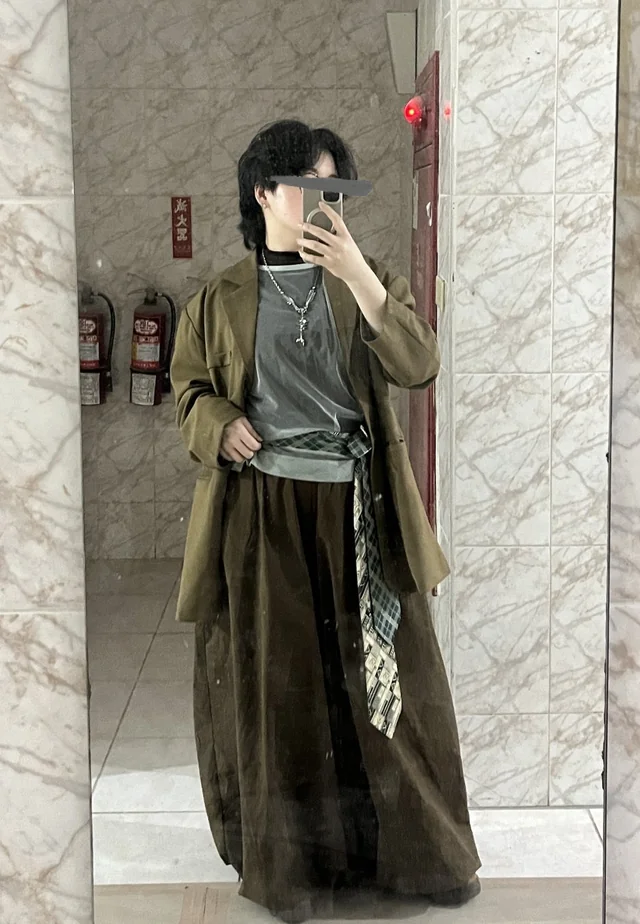
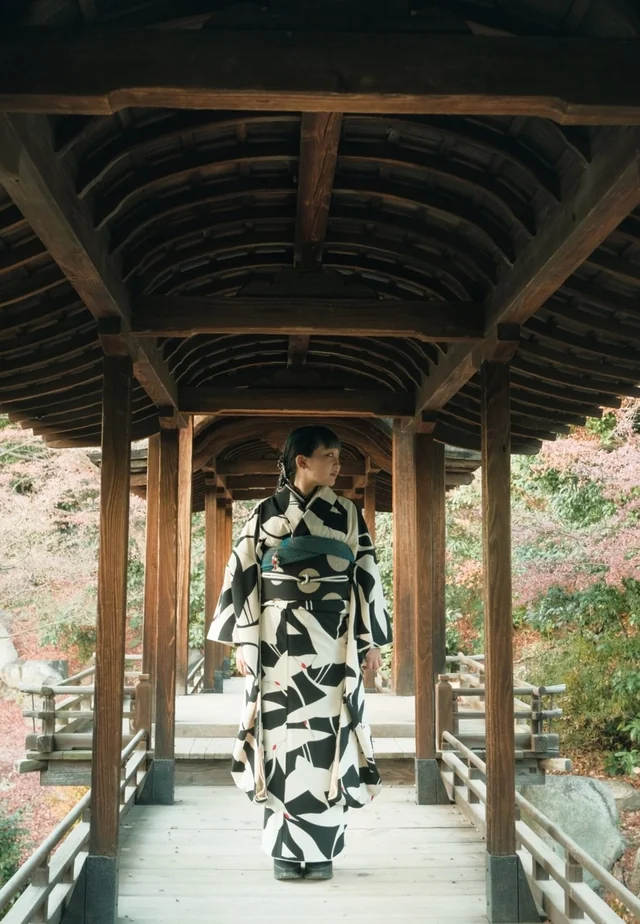
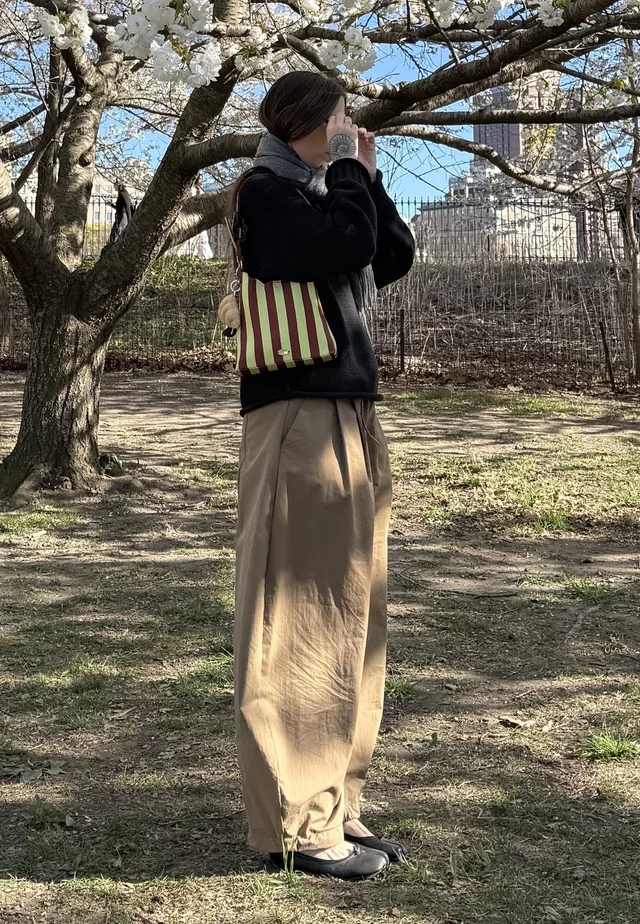
Wabi-sabi silhouette is governed by the interaction between fabric behavior and body geometry rather than by tailoring ideals or body-sculpting intent. The characteristic loose, enveloping, gender-neutral proportions derive from two structural commitments: allowing natural fibers to drape according to their inherent mechanical properties (rather than forcing them into predetermined shapes through darting, boning, or pressing), and accommodating the textile's dimensional changes over time as washing, wearing, and aging alter its hand, weight, and drape.

Rectangular construction and straight-seam geometry. Wabi-sabi garment construction draws heavily on the structural logic of the Japanese kimono, which is cut from standardized-width fabric bolts (tanmono, typically 36–38 cm wide) using straight seams, no curved pattern pieces, and no darts — the body's shape being determined by wrapping, folding, and tying rather than by cutting and fitting. This construction approach minimizes fabric waste (a kimono uses the entire bolt), permits flat storage and folding without garment stress, and — critically for wabi-sabi — allows the textile itself to determine the silhouette. A heavy hand-spun cotton in rectangular panels will hang differently from a fine linen in identical panels; the same linen will drape differently when new (stiff, angular) and after a year of wear (soft, fluid). Rectangular construction thus makes the aging process visible through silhouette change: the garment's form evolves as its material transforms.

Volume, ease, and body accommodation. Wabi-sabi silhouettes incorporate substantial ease — additional fabric beyond what the body requires — not for fashion exaggeration but for two functional reasons. First, ease permits air circulation between garment layers, which is practically necessary in the Japanese climate (humid summers, damp winters) and aesthetically significant because it allows fabric to move independently of the body, creating the gentle sway and fold behavior that the aesthetic values. Second, ease ensures that the garment does not strain at stress points (shoulders, elbows, crotch, knees), reducing the mechanical forces that would accelerate wear and allowing the textile to age gradually and evenly rather than failing catastrophically at concentrated stress zones.

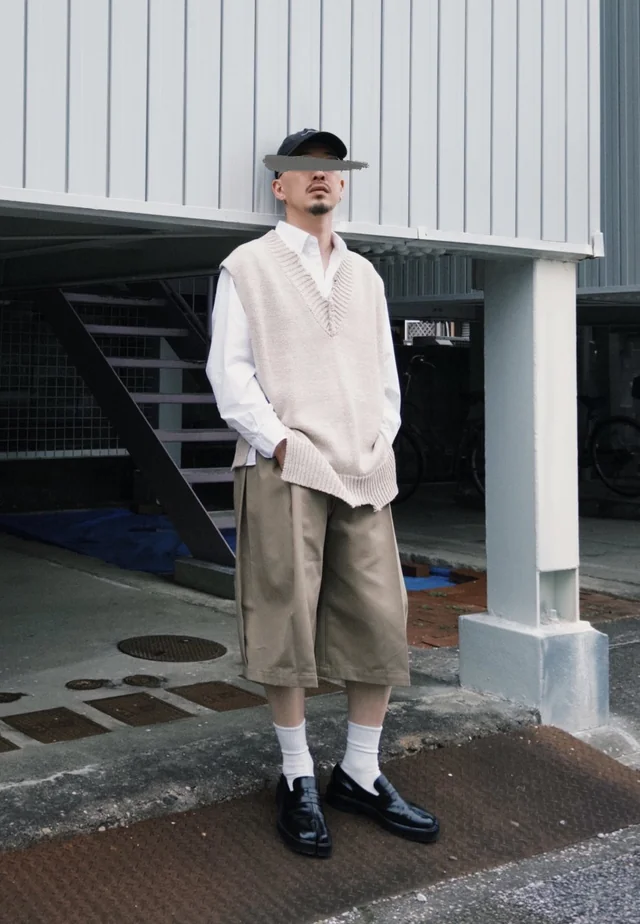
Proportions tend toward oversized tops layered over narrower bottoms, or uniform-width tunics falling to mid-thigh or knee. Hemlines are often unfinished (raw-cut, naturally fraying over time) or irregularly hand-stitched, and their precise shape may shift as the fabric relaxes through washing. Dropped shoulders, wide sleeves, and minimal collar construction reduce the tailoring complexity that would impose rigid geometry on naturally yielding textiles.

Materials

Material selection is wabi-sabi's primary truth-test — the domain where the aesthetic's philosophical claims are most empirically verifiable. Every fiber, dye, and construction technique in the wabi-sabi system is evaluated through its aging behavior: how it transforms through use, whether that transformation produces aesthetic complexity, and how long the material remains functionally viable while undergoing that transformation.

Linen (flax fiber). The foundational wabi-sabi textile. Flax fiber (Linum usitatissimum) is composed of highly crystalline cellulose organized in long, tightly packed fiber bundles. This crystalline structure gives linen its characteristic stiffness when new — the inter-chain hydrogen bonds resist bending — but it also means that mechanical disruption of those bonds through wearing and washing produces a pronounced and irreversible softening effect. New linen has a papery, angular drape and a tendency to hold sharp creases. After approximately 50–100 wash cycles, linen develops a liquid, almost limp drape as the crystalline regions are progressively disrupted, and its crease behavior changes from sharp and persistent to soft and mobile. This transformation is not degradation in the structural-failure sense: linen's tensile strength remains high even as its hand softens, because the long fiber bundles maintain their longitudinal integrity even when their lateral bonding loosens. Linen can remain functionally serviceable for decades — some European linen textiles survive from the seventeenth century — while its tactile and visual character continues to evolve across its entire lifespan. This makes linen the ideal wabi-sabi textile: it materially embodies the principle that aging produces beauty rather than diminishing it.

Linen's failure modes are specific and predictable. Fiber breakage occurs at fold lines where repeated creasing exceeds the fiber's flex endurance — particularly visible at collar folds, cuff edges, and hemlines, where white stress lines appear as the crease mechanically crushes and separates fiber bundles. Friction wear produces thinning and eventual transparency at high-contact zones (elbows, seat, inner thighs), making the weave structure visible through the fabric. Mildew susceptibility in humid storage conditions can degrade both fiber strength and color. Each of these failure modes, in wabi-sabi practice, becomes a site of aesthetic interest — the white stress line at a collar fold, the visible weave emerging through a thinned elbow — rather than a reason for garment disposal.

Cotton. Cotton cellulose is more amorphous (less crystalline) than flax, producing a softer initial hand but a different aging trajectory. Cotton softens through washing but also thins more rapidly under abrasion, losing fiber mass where friction is sustained. The aging signature is surface degradation: nap development (individual fibers lifting from the yarn surface), pilling at contact points, and progressive thinning that eventually produces the threadbare transparency prized in vintage cotton textiles. Cotton's more accessible price point and broader availability make it the dominant fiber in mass-market wabi-sabi fashion, but its aging lacks the dramatic drape transformation that makes linen the connoisseur's choice.

Indigo dyeing. Indigo is wabi-sabi's signature dye — its chemistry is uniquely aligned with the aesthetic's aging logic. The indigo molecule (indigotin, C₁₆H₁₀N₂O₂) bonds to cotton fiber surfaces through weak van der Waals intermolecular forces rather than forming covalent chemical bonds with the cellulose polymer. This surface-bonding mechanism means that any friction event physically dislodges dye molecules from the fiber, producing the progressive blue-to-white fade trajectory that constitutes indigo's visual aging language. The fade is not uniform — it concentrates at points of highest mechanical contact (knees, elbows, creases, seams), creating a topographic map of the wearer's body geometry and movement patterns.

The distinction between fermented natural indigo (sukumo or honzome indigo, produced through composting and fermenting the leaves of Polygonum tinctorium or Indigofera tinctoria) and synthetic indigo (industrially synthesized from aniline since Adolf von Baeyer's 1880 synthesis) is critical in wabi-sabi discourse. Fermented indigo requires a biologically active dye vat maintained through careful pH management, temperature control, and the addition of alkaline nutrients (traditionally wood ash, slaked lime, and wheat bran) that sustain the reduction bacteria converting insoluble indigo to soluble leuco-indigo. Each dipping in the vat deposits a thin layer of dye on the fiber surface; multiple dippings (sometimes 15–30 for deep indigo saturation) build up color intensity through laminar accumulation. The resulting depth of color and complexity of fade — with multiple blue tones emerging as successive dye layers are differentially abraded — are perceptibly different from the flatter, more uniform fade of synthetic indigo, which is applied through fewer, heavier dippings using chemical reducing agents (sodium hydrosulfite) rather than biological fermentation. This distinction — largely invisible at purchase, legible only through extended wear — constitutes one of the wabi-sabi expertise economy's most refined evaluative criteria.

Kakishibu (persimmon tannin). Kakishibu is a tanning and dyeing agent produced by crushing unripe green persimmons, pressing the juice, and fermenting it for one to three years. The resulting liquid contains high concentrations of condensed tannins (proanthocyanidins) that polymerize through UV exposure — meaning that kakishibu-dyed textiles literally continue dyeing themselves in sunlight. Freshly applied kakishibu produces a pale amber tone; after months of sun exposure, the polymerized tannins darken through chestnut, umber, and eventually near-black. This sun-finished dyeing process is the purest material expression of wabi-sabi's temporal aesthetic: the textile's final color is determined not at the moment of dyeing but through accumulated environmental exposure over months and years. Additionally, kakishibu's tannins provide antimicrobial properties (inhibiting bacterial and fungal growth), moderate water resistance (the polymerized tannin film partially seals fiber surfaces), and increased fiber stiffness (tannin cross-linking cellulose chains), producing a material that becomes functionally enhanced through the same aging process that transforms its appearance.

Other natural dyes and plant-based colorants. Madder root (Rubia tinctorum, producing warm reds that fade toward coral and salmon), walnut hull (producing brown that mutes toward grey), pomegranate rind (golden yellow with excellent lightfastness), and iron-mordanted tannins (producing the grey-black tetsu-zome iron dyeing used on cotton and linen) constitute the traditional wabi-sabi dye palette. Each dye ages differently — madder fades toward warmth, walnut toward coolness, pomegranate toward neutrality — and the combined aging behavior of multiple dyes on the same textile creates chromatic complexity that synthetic dyes, designed for colorfastness, cannot replicate.

Failure modes reframed. In most fashion systems, material degradation constitutes failure. In wabi-sabi, the same degradation phenomena — dye loss, fiber thinning, surface softening, structural weakening — constitute the aesthetic content. This reframing is not metaphorical; it operates at the material level. When indigo fades, the fade pattern becomes a visual record. When linen thins, the emerging weave structure becomes a textural feature. When a seam weakens and is repaired with sashiko stitching, the repair becomes a compositional element. The material reality is identical — fiber is breaking, dye is departing, structure is loosening — but the evaluative framework transforms each degradation event from a defect requiring correction into an aesthetic event requiring attention. This reframing is wabi-sabi's most radical philosophical contribution to material culture, and it is also its most vulnerable point: when the reframing is applied superficially (pre-distressed garments simulating aging without temporal investment), it collapses into decoration.

Color Palette

The palette derives from dye chemistry and aging behavior rather than from seasonal trend logic. Natural-dye processes produce an inherently muted, warm-neutral range: indigo blues from near-black through sky (determined by dipping count and oxidation); kakishibu ambers through chestnut (determined by UV exposure duration); madder corals through salmon; walnut browns through greys; iron blacks through slate. Undyed fibers contribute their own chromatic range: raw linen (pale gold through warm grey, depending on fiber quality and retting method), unbleached cotton (ecru through cream), hemp (silver-grey through beige).

Color interaction with aging is the palette's defining characteristic. Indigo garments do not merely "become lighter" — they develop differential fade patterns that create multiple blue tones within a single textile, producing chromatic complexity through subtraction. Kakishibu textiles do not merely "become darker" — they develop UV-exposure gradients where exposed surfaces darken faster than protected folds, producing tonal variation through addition. This aging-driven color logic means that a wabi-sabi garment's palette at the point of acquisition differs fundamentally from its palette after a year of wear — and the intermediate states are considered the most aesthetically interesting.

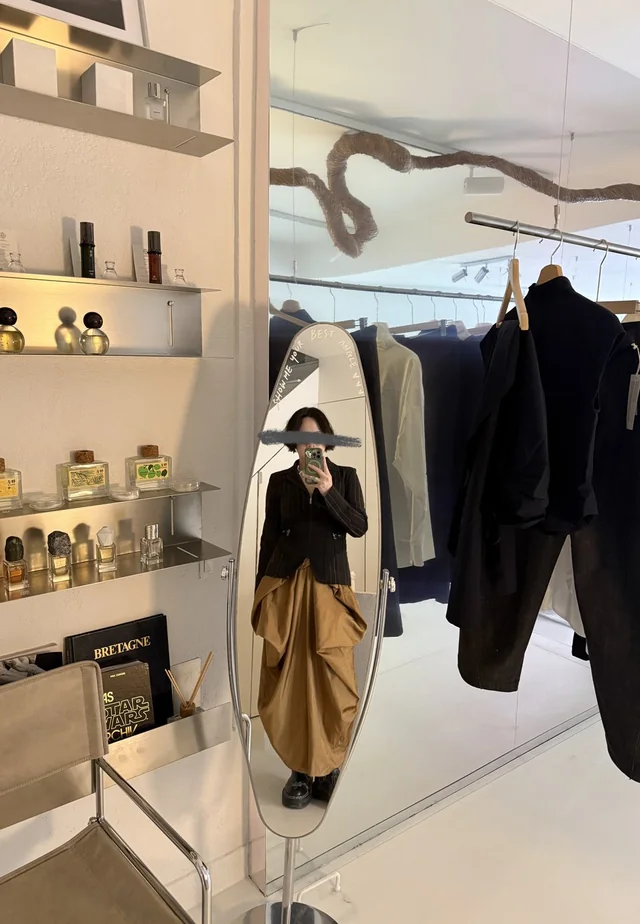
The palette excludes saturated brights, jewel tones, synthetic fluorescents, and any color that reads as "fresh" or "new." Colors should suggest mineral, botanical, or oxidative origins — as if derived from earth, plant, or weathering rather than from chemistry. Tonal coordination (warm neutrals layered on warm neutrals, cool neutrals layered on cool neutrals) replaces contrast-based color pairing, creating ensembles that read as gradations within a single chromatic family rather than as combinations of distinct hues.

Details

Details in wabi-sabi function as both structural interfaces and philosophical demonstrations — each element serves a practical purpose while simultaneously making visible the principles of imperfection, handcraft, and temporal accumulation that the aesthetic theorizes.

Sashiko stitching. Originally developed as a structural reinforcement technique in rural northern Japan (Tōhoku region, Edo period onward), sashiko (刺し子, literally "little stabs") uses running stitches in heavy cotton thread to reinforce weakened fabric areas, join patches, and increase fabric density at wear points. The stitching follows geometric patterns — moyōzashi (pattern stitching) employs named designs including asanoha (hemp leaf), bishamon-kikō (tortoiseshell), nowaki (wind-blown grass), and jūmonji (cross pattern) — that distribute reinforcement evenly across the repair zone while creating visual composition. Sashiko thread is typically white on indigo-dyed fabric (producing maximum contrast that makes the stitching's geometry maximally visible), though contemporary practice also uses indigo thread on undyed fabric or tonal matching for subtler effects. The stitching's slight irregularity — the natural variation in stitch length, tension, and alignment that hand stitching produces — is the detail's aesthetic signature: it demonstrates human presence in the construction, distinguishing it from machine stitching's perfect regularity. In wabi-sabi garments, sashiko appears both as applied-from-new decorative stitching and as actual repair on worn textiles; the evaluative hierarchy prizes the latter, where the stitching addresses a real structural need rather than simulating one.

Boro patchwork and accumulated repair. Boro (ぼろ, literally "rags" or "tattered") describes the Japanese tradition of repeatedly mending, patching, and layering cotton textiles — primarily indigo-dyed — across years and sometimes generations of use. In historical practice, boro was born of material scarcity: rural families in Tōhoku and other regions could not afford to replace worn textiles and instead extended them through continuous repair, layering patches upon patches until the original fabric was substantially replaced by its own repair history. The resulting textiles are visual stratigraphies — each patch records a repair event, and the overall composition documents the garment's accumulated life. In contemporary wabi-sabi fashion, boro appears both as collected antique textiles (with prices driven by Western collector demand far beyond the original garments' economic context) and as contemporary design practice that applies boro's compositional logic to new garments. This contemporary application raises adoption questions: boro's beauty originated in poverty and material necessity, and its adoption as luxury-fashion detail performs the same class inversion that workwear critique identifies — the aestheticization of scarcity by those who do not experience it.

Raw and unfinished edges. Unhemmed, raw-cut, or minimally overcast fabric edges that fray incrementally through wearing and washing constitute a temporal detail: the fringe lengthens, the edge softens, and the textile's boundary becomes gradually less defined over time. This detail is philosophically loaded — the refusal to bind, fold, and stitch a finished hem is a rejection of the Western tailoring principle that garments should have clearly defined, stable boundaries. The fray is a visible process, not a stable state, and it makes the textile's ongoing transformation evident to the eye.

Asymmetric and offset closures. Buttons placed off-center, ties rather than zippers, wrap closures derived from kimono construction, and fabric-loop fasteners replace precision hardware. These closures are lower-precision and lower-tension than Western tailoring alternatives, which aligns with the aesthetic's avoidance of rigid body-shaping while also reducing the stress concentrations that precise closures create. A wrap closure distributes fastening force across a broad fabric area; a single button concentrates it at one point. The distributed approach produces less wear at the closure site and permits fit variation as the body and garment shift throughout the day.

Natural hardware. Shell buttons (trochus, corozo nut, mother-of-pearl), wood toggles, horn closures, and oxidized or unfinished metal replace polished, uniform, machine-stamped hardware. Each piece exhibits individual grain, color variation, and surface irregularity — organic hardware functions as a wabi-sabi detail because no two pieces are identical, and each ages distinctively (corozo darkens with handling, shell develops surface scratching, horn mellows in color).

Accessories

Accessories extend the material-aging logic from garments to adjacent objects, forming an integrated aesthetic system in which every carried object participates in the patina economy.

Leather sandals and shoes constructed from vegetable-tanned leather develop pronounced patina through foot-contact wear: the insole molds to the wearer's foot over weeks of use, the upper creases at flex points (toe break, instep), and the surface absorbs oils that darken contact zones while lighter areas retain original color. This personalization — the accessory becoming a record of its wearer's specific body — is the material equivalent of denim fading in workwear.

Handwoven baskets and bags — bamboo, rattan, wisteria vine, or hemp construction — substitute for manufactured leather or synthetic bags. These vessels develop structural softening through use (rigid weave relaxing into a more pliant form), surface darkening through handling (oils depositing on contact surfaces), and character through minor damage (broken strands, worn edges, patched handles).

Ceramic jewelry featuring intentional glaze imperfections — crawling, crazing, uneven color distribution, or kintsugi (金継ぎ) gold-lacquer repair of broken pieces — translates wabi-sabi's material philosophy from textile to ceramic. Kintsugi has become the aesthetic's most widely recognized motif: the practice of repairing broken ceramics with gold-mixed lacquer, making the repair visible and precious rather than concealed, is a literal philosophical demonstration that breakage and repair can enhance rather than diminish an object's value.

Linen and cotton scarves with raw, fraying edges; hand-forged iron jewelry; oxidized brass or copper elements; and natural-fiber wrapping cloths (furoshiki, 風呂敷) complete the accessory vocabulary. Hardware is minimized; when present, it is deliberately unfinished or pre-oxidized. Logos are absent. Nothing is machine-perfect.

Body Logic

The wabi-sabi body is positioned as naturally aging, unbothered by perfection, and exempt from fashion's demand for physical optimization — a positioning that requires significant analytical scrutiny because it simultaneously claims to reject bodily discipline while imposing its own.

In its philosophical form, wabi-sabi body logic extends impermanence from textiles to the body itself: wrinkles, grey hair, sun-marked skin, and visible aging are framed as evidence of lived experience rather than defects requiring correction. This framing is genuinely counter-hegemonic — it challenges the anti-aging industrial complex and the beauty standards that treat bodily aging as failure. The draped, voluminous silhouettes of wabi-sabi garments accommodate body diversity more readily than fitted fashion categories, and the aesthetic's gender-neutral tendencies offer space for presentation that resists binary coding.

In practice, however, the aesthetic produces its own disciplinary demands. The "effortlessly natural" body that wabi-sabi styling requires is typically achieved through expensive skincare (to produce "glowing" skin without cosmetics), strategic hair management (to achieve "undone" texture that nonetheless reads as intentional), and body type that drapes well in oversized linen — a standard that tends to favor tall, slender frames, since heavy, stiff linen can add visual mass to shorter or rounder bodies. The aesthetic's aspiration to transcend fashion vanity is itself a form of fashion positioning: the body performs its indifference to appearance through highly curated material choices.

Gender presentation in wabi-sabi tends toward a soft androgyny that is more available to women than to men: women in oversized linen and earth tones gain the "artisan intellectual" reading that the aesthetic intends, while men in identical garments risk the "sloppy" or "homeless" misreading unless buffered by additional grooming and accessory signals. This asymmetry exposes the aesthetic's dependence on existing gender-presentation norms that it claims to have transcended.

Garment Logic

Wabi-sabi garment construction privileges draping over tailoring, natural behavior over imposed form, and repairability over disposability. The construction system addresses a distinctive engineering challenge: creating garments that perform well when new while being explicitly designed to perform differently — but not worse — as they age.

Pattern and seam construction. Patterning favors straight seams and rectangular panels derived from Japanese garment construction (kimono, haori, noragi work coat, monpe work trousers). Darts are minimized or eliminated; fit is achieved through tying, wrapping, and layering rather than through cut. This approach enables three wabi-sabi-specific benefits: (1) flat-pattern cutting minimizes fabric waste, aligning with the aesthetic's values of material respect; (2) straight seams distribute mechanical stress more evenly than curved seams with ease, reducing concentrated failure points; and (3) rectangular panels can be disassembled, repaired, and reassembled — or repurposed entirely — more readily than complex curved pieces. Seam construction in traditional wabi-sabi garments uses simple running stitches or flat-felled seams, often hand-stitched, producing a construction that is deliberately accessible to repair by the wearer rather than requiring professional intervention.

Aftercare protocols. Natural-fiber, naturally dyed garments require care calibrated to the materials' specific vulnerabilities. Indigo-dyed textiles should be washed infrequently in cold water with mild soap (traditional Japanese practice uses rice-bran water) and dried out of direct sunlight, which accelerates uneven dye loss. Kakishibu-dyed textiles require the opposite sunlight treatment: UV exposure is necessary to develop the dye's polymerization and color deepening, but extended UV also weakens cellulose fiber through photodegradation, requiring the wearer to balance color development against fiber preservation. Linen should be washed without fabric softener (which coats fibers and impedes their natural softening process) and line-dried to maintain fiber elasticity; machine drying accelerates flex-fatigue at crease points. Sashiko-repaired areas should be monitored for thread wear at stitch-hole points, where the reinforcement thread can abrade the already-weakened base fabric if tension is too high.

Failure modes and longevity. Wabi-sabi garments in natural fibers, properly maintained, can remain functionally serviceable for decades — linen for 30+ years, dense cotton for 10–20 years — with their aesthetic value increasing through this period rather than diminishing. Failure modes include: fiber breakage at persistent fold lines (collar, cuff, hemline creases), particularly in linen where crystalline cellulose fractures under repeated flex; mildew and rot in humid storage (cellulosic fibers provide a carbon source for fungal growth); moth damage in protein-fiber components (wool linings, silk details); dye migration and color contamination between garments in humid storage; and eventual loss of structural integrity when fabric weight falls below the threshold needed to maintain seam integrity. The critical distinction in wabi-sabi is that many of these "failure" events occur within the aesthetic's acceptable range — fiber thinning, dye fading, surface wear — before reaching functional failure. The garment occupies an extended zone between "new" and "unwearable" that constitutes the majority of its aesthetic lifespan. The wabi-sabi wearer's skill lies in maintaining the garment within this zone through appropriate care, timely repair, and the judgment to distinguish productive aging from destructive degradation.

Motifs / Themes

Dominant motifs encode the philosophical framework that distinguishes wabi-sabi from adjacent natural-fiber aesthetics. Impermanence made visible — the idea that material change reveals fundamental truths about temporal existence — is the master theme from which specific motifs derive.

Patina and wear record. Every visible mark of use — faded indigo, softened linen, worn edges, darkened kakishibu — functions as a temporal document. The garment is legible as a record of its own history, and this legibility is the aesthetic content. This motif connects wabi-sabi to workwear's fade culture (raw denim as wear record) but diverges in framing: workwear reads patina as evidence of labor performed; wabi-sabi reads patina as evidence of time passed. The distinction is between activity and duration.

Repair as composition. Sashiko stitching, boro patchwork, and visible mending transform structural repair into compositional elaboration. Each repair event adds a new visual element — contrasting thread, different-era fabric, geometric stitch pattern — that enriches the garment's surface complexity. This motif reframes the relationship between damage and value: damage creates the occasion for compositional addition, making the repaired garment more visually complex than the undamaged original.

Incompleteness and asymmetry. The deliberate avoidance of perfect symmetry, finished edges, and resolved composition references Rikyū's tea-ceremony principle that completeness implies stasis while incompleteness implies ongoing process. An asymmetric hemline suggests a garment still in the process of becoming; a fraying edge suggests a boundary that has not been permanently fixed.

Nature as process, not image. Unlike cottagecore's botanical motifs or floral prints, wabi-sabi references nature through process rather than representation — oxidation patterns, mineral staining, sun-fading, water marks. Nature appears as an agent that has acted upon the textile rather than as an image printed onto it.

Cultural Touchstones

Philosophy and literature. Kakuzō Okakura's The Book of Tea (1906), written in English for Western audiences, introduced tea-ceremony aesthetics — including wabi principles — to Anglo-American readers a century before Koren. Tanizaki Jun'ichirō's In Praise of Shadows (1933) articulated the aesthetic preference for dim, patinated, aged surfaces over bright, polished, new ones. Matsuo Bashō's haiku (seventeenth century) — particularly furu ike ya / kawazu tobikomu / mizu no oto (old pond / a frog jumps in / the sound of water) — demonstrate sabi as a literary-aesthetic principle: beauty residing in the aged, the quiet, the momentary.

Film and visual media. Yasujirō Ozu's cinema — particularly Tokyo Story (1953) and Late Spring (1949) — creates visual environments of material restraint, seasonal change, and quiet impermanence that serve as cinematic equivalents of wabi-sabi space. Wim Wenders' documentary Tokyo-Ga (1985), visiting Ozu's Tokyo, brought this visual sensibility to Western art-cinema audiences. Hayao Miyazaki's animated settings — particularly the lived-in, weather-worn, hand-built environments of My Neighbor Totoro (1988) and Spirited Away (2001) — present architectural and material worlds where age and imperfection produce warmth rather than decline.

Craft and design. Lucie Rie and Hans Coper's mid-twentieth-century studio pottery — irregular glazes, hand-thrown asymmetries, exposed clay bodies — translated wabi-sabi's ceramic principles into Western studio practice. The Japan Folk Crafts Museum (Nihon Mingeikan) remains the institutional touchstone for mingei textile and craft collection. The exhibition "Boro: Rags and Tatters from the Far North of Japan" (Amuse Museum, Tokyo, 2009–2019, curated from Tanaka Chūzaburō's collection) brought boro textiles to international attention and catalyzed their adoption by Western fashion designers.

Lifestyle media. Kinfolk magazine (2011–present) established the visual template for Western wabi-sabi lifestyle photography: muted tones, natural light, linen-draped interiors, ceramic vessels, unfinished wood. This editorial framing provided the aesthetic infrastructure through which wabi-sabi entered fashion retail marketing.

See Also

  • Boro: Japanese textile tradition of accumulated patching and repair that is wabi-sabi's most direct material expression
  • Monastic: Shared reduction, austerity, and rejection of ornament, though monastic derives from Western Christian asceticism rather than Buddhist impermanence
  • Workwear: Shared valuation of patina, aging, and visible repair, though workwear frames these through labor performed rather than time elapsed
  • Scandi / Hygge: Shared neutral palette and "slow living" rhetoric, though Scandinavian minimalism values perfection and cleanliness where wabi-sabi values imperfection and aging
  • Cottagecore: Overlapping pastoral, natural-fiber rhetoric, though cottagecore romanticizes rural life as image rather than engaging material processes of decay and repair
  • Mori-kei: Japanese forest-inspired layering aesthetic with overlapping fiber choices, though mori-kei emphasizes accumulation where wabi-sabi emphasizes reduction
  • Brutalism: Shared commitment to raw material honesty and rejection of decorative refinement

Brands and Designers

Japanese Originals and Artisan Producers:

  • Cosmic Wonder (Yukinori Maeda, founded 2000, Tokyo): philosophically closest to authentic wabi-sabi practice; small-batch natural dyeing (indigo, kakishibu, plant dyes), hand-spun cotton, exhibition-as-ceremony presentation
  • Kapital (1984, Okayama): workwear foundation with boro-inspired patchwork, indigo specialization, sashiko detailing; largest commercial-scale wabi-sabi brand
  • Visvim (Hiroki Nakamura, 2000, Tokyo): handcraft emphasis, natural dyeing (mud, indigo, persimmon), Americana-meets-Japanese artisanal philosophy
  • 45R (founded 1978, Tokyo): indigo dyeing specialization, ai-zome (indigo dye) across cotton, linen, and wool; calibrated fade engineering
  • Sasaki Shoten / SASAWASHi (natural fiber accessories and textiles from Washi paper yarn)
  • Nidom / BlueBlue Japan (indigo-dyeing specialists, cotton and linen basics in natural-dyed palettes)

Japanese Avant-Garde (Retro-Labeled as Wabi-Sabi):

  • Yohji Yamamoto (founded 1972, Tokyo): asymmetry, raw materials, draped volume; wabi-sabi principles operating through postmodern deconstruction rather than folk-craft reference
  • Rei Kawakubo / Comme des Garçons (1969, Tokyo): imperfection-as-concept, deliberate deconstruction; philosophically adjacent to wabi-sabi but operating in art-fashion rather than craft-fashion register
  • Issey Miyake (1970, Tokyo): late-career work with natural materials, irregular pleating, and textile-as-sculpture; Pleats Please line as machine-produced impermanence
  • Junya Watanabe (1992, Tokyo): textile experimentation and visible construction as design content

Western Interpreters:

  • Uma Wang (Shanghai/Milan): natural dyes, organic silhouettes, fabric treated to achieve aged appearance; strongest wabi-sabi commitment among non-Japanese designers
  • Toast (UK, founded 1997): explicitly uses wabi-sabi marketing language; linen basics, natural dyes, "slow fashion" positioning; accessible entry-tier
  • Eileen Fisher (1984, New York): markets "wabi-sabi style" through sustainable linen and organic cotton basics; Renew circular-fashion program aligns with repair ethos
  • Margaret Howell (1970, London): British minimalism overlapping with wabi-sabi through natural-fabric commitment, understated construction, and aging-friendly materials
  • Black Crane (California): linen and organic cotton in minimalist silhouettes; quiet construction, natural-dye experimentation
  • The Row (2006, New York): extreme minimalism intersecting wabi-sabi through material quality, invisible construction, and rejection of ornament; luxury-tier interpretation

Artisan and Craft Brands:

  • Story mfg. (UK, founded 2013): hand-woven, naturally dyed garments produced in India and Southeast Asia; explicit sustainability-craft positioning
  • Evan Kinori (San Francisco): small-batch, hand-dyed garments using Japanese natural-dye techniques; single-artisan production model
  • Jan-Jan Van Essche (Antwerp/Japan): Belgian designer working between European fashion and Japanese textile traditions; natural fibers, rectangular construction, minimal patterning
  • Toogood (London): oversized, gender-neutral, architecturally influenced garments in natural fibers; wabi-sabi adjacent through silhouette and material commitment

Citations

[1] Koren, Leonard. Wabi-Sabi for Artists, Designers, Poets & Philosophers. Stone Bridge Press, 1994. [Note: widely cited but critiqued by Japanese scholars as reductive.] [2] Juniper, Andrew. Wabi Sabi: The Japanese Art of Impermanence. Tuttle Publishing, 2003. [3] Yanagi, Sōetsu. The Unknown Craftsman: A Japanese Insight into Beauty. Adapted by Bernard Leach, Kodansha International, 1972. [4] Yanagi, Sōetsu. "The Way of Craftsmanship" (1927). In Mingei: Theory of Japanese Folk Art, 1931. [5] Tanizaki, Jun'ichirō. In Praise of Shadows. Translated by Thomas J. Harper and Edward G. Seidensticker, Leete's Island Books, 1977. [Original: 1933.] [6] Okakura, Kakuzō. The Book of Tea. Fox Duffield, 1906. [7] Suzuki, D.T. Zen and Japanese Culture. Princeton University Press, 1959. [8] Richie, Donald. A Tractate on Japanese Aesthetics. Stone Bridge Press, 2007. [9] Yamada, Shoji. Shots in the Dark: Japan, Zen, and the West. University of Chicago Press, 2009. [Critical analysis of Western wabi-sabi reception.] [10] Parkes, Graham, ed. "Japanese Aesthetics." Stanford Encyclopedia of Philosophy, 2011. https://plato.stanford.edu/entries/japanese-aesthetics/ [11] Kempton, Beth. Wabi Sabi: Japanese Wisdom for a Perfectly Imperfect Life. Piatkus, 2018. [12] Hara, Kenya. Designing Design. Lars Müller Publishers, 2007. [13] Moes, Robert. Mingei: Japanese Folk Art. Brooklyn Museum / Universe Books, 1985. [14] Brandt, Kim. Kingdom of Beauty: Mingei and the Politics of Folk Art in Imperial Japan. Duke University Press, 2007. [15] Sadako, Takeda, and Monica Bethe. Miracles and Mischief: Noh and Kyōgen Theater in Japan. Los Angeles County Museum of Art, 2002. [16] Wada, Yoshiko Iwamoto, Mary Kellogg Rice, and Jane Barton. Shibori: The Inventive Art of Japanese Shaped Resist Dyeing. Kodansha International, 2012. [17] Dusenbury, Mary. Flowers, Dragons and Pine Trees: Asian Textiles in the Spencer Museum of Art. Hudson Hills, 2004. [18] Balfour-Paul, Jenny. Indigo: Egyptian Mummies to Blue Jeans. British Museum Press, 2011. [19] Sandberg, Gösta. Indigo Textiles: Technique and History. A&C Black, 1989. [20] Clark, Hazel, and David Brody, eds. Design Studies: A Reader. Berg, 2009. [21] Kawamura, Yuniya. "The Japanese Revolution in Paris Fashion." Fashion Theory, vol. 8, no. 2, 2004, pp. 195–224. [22] Kawamura, Yuniya. Fashion-ology: An Introduction to Fashion Studies. 2nd ed., Bloomsbury Academic, 2018. [23] Entwistle, Joanne. The Fashioned Body: Fashion, Dress and Social Theory. 2nd ed., Polity, 2015. [24] Breward, Christopher. Fashion. Oxford University Press, 2003. [25] Fletcher, Kate. Sustainable Fashion and Textiles: Design Journeys. 2nd ed., Earthscan, 2013. [26] Hatch, Kathryn L. Textile Science. West Publishing, 1993. [27] Kadolph, Sara J., and Sara B. Marcketti. Textiles. 12th ed., Pearson, 2016. [28] Bourdieu, Pierre. Distinction: A Social Critique of the Judgement of Taste. Translated by Richard Nice, Harvard University Press, 1984. [29] Barthes, Roland. The Fashion System. Translated by Matthew Ward and Richard Howard, University of California Press, 1983. [30] Kamo no Chōmei. Hōjōki (An Account of My Hut). c. 1212. Translated by Moriguchi Yasuhiko and David Jenkins, Stone Bridge Press, 1996. [31] Yoshida, Kenkō. Tsurezuregusa (Essays in Idleness). c. 1330. Translated by Donald Keene, Columbia University Press, 1967. [32] Williams, Alex. "The Kinfolk Life: A Slow, Quiet Rebellion." The New York Times, October 7, 2016. [33] Tanaka, Chūzaburō. Boro: Rags and Tatters from the Far North of Japan. Aspect Corporation, 2009. [34] Rivoli, Pietra. The Travels of a T-Shirt in the Global Economy. 2nd ed., Wiley, 2014. [35] Marx, W. David. Ametora: How Japan Saved American Style. Basic Books, 2015.