Lekondo's
Ontology of Fashion Aesthetics

36 aesthetics

Clothing is expression without explanation. It influences how you’re seen and how you see yourself. Patterns of taste, mood, discipline, excess, and restraint repeat across time and culture. This is our guide to making that language visible.

Back to Ontology
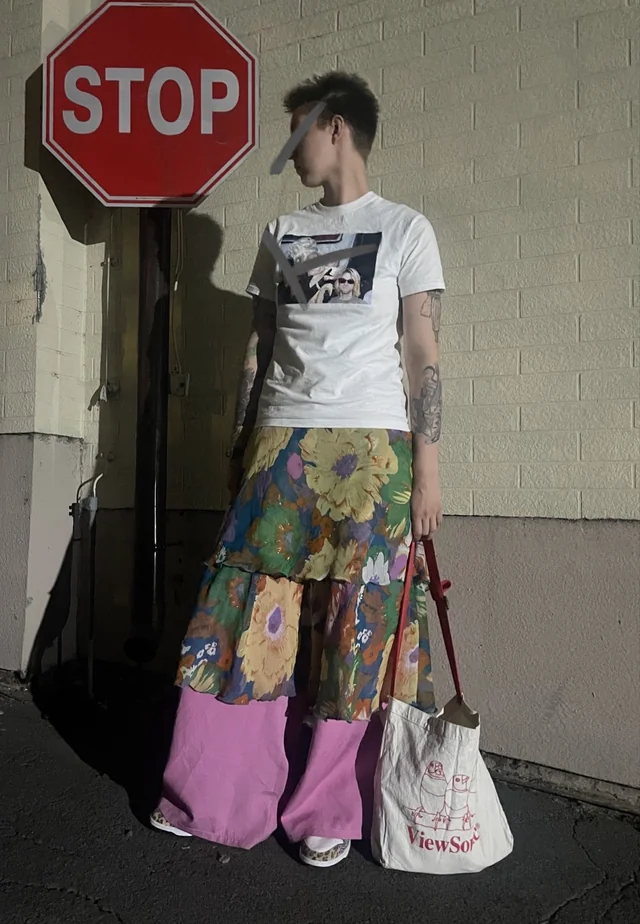
Streetwear 1
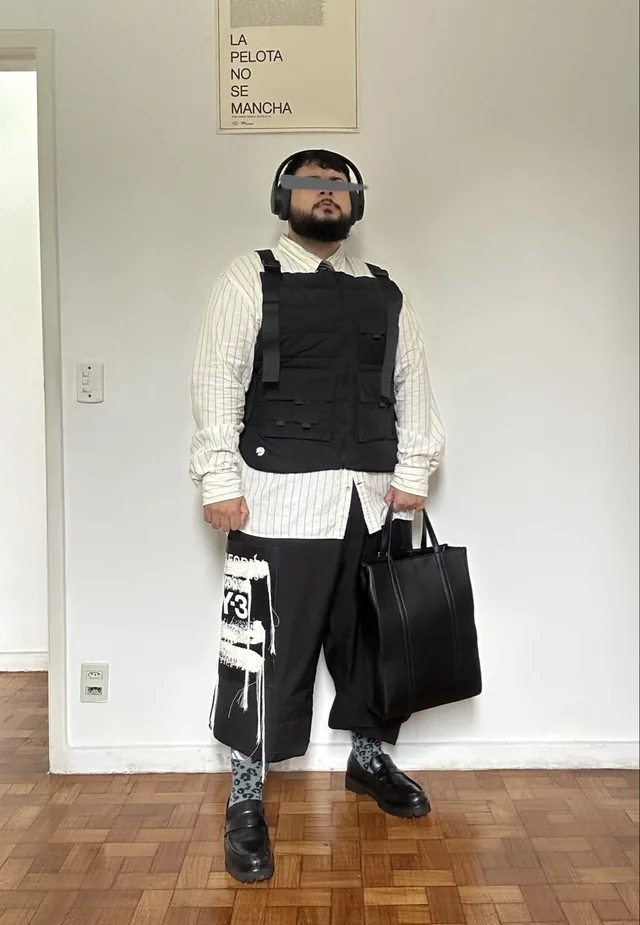
Streetwear 2
Streetwear 3

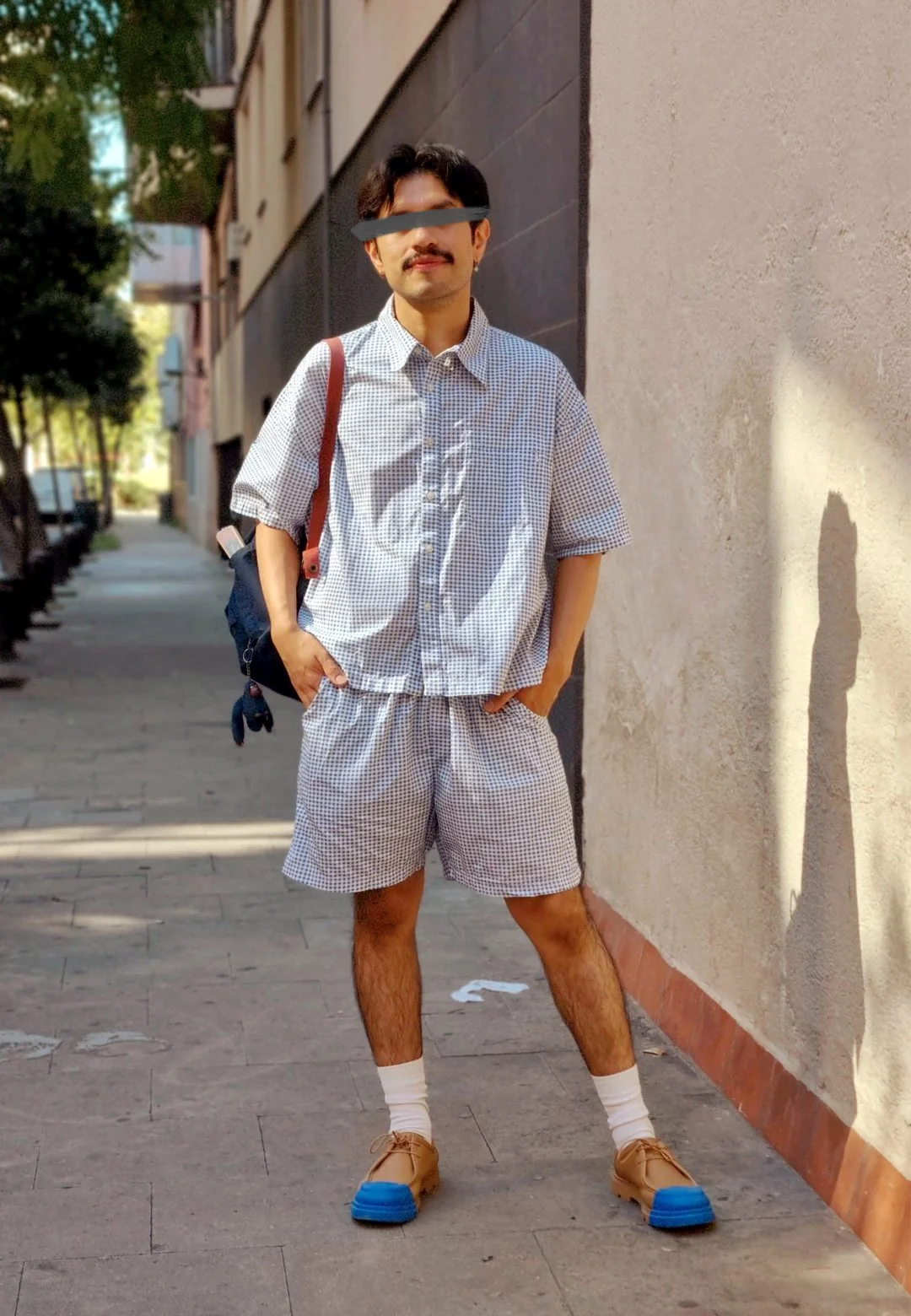
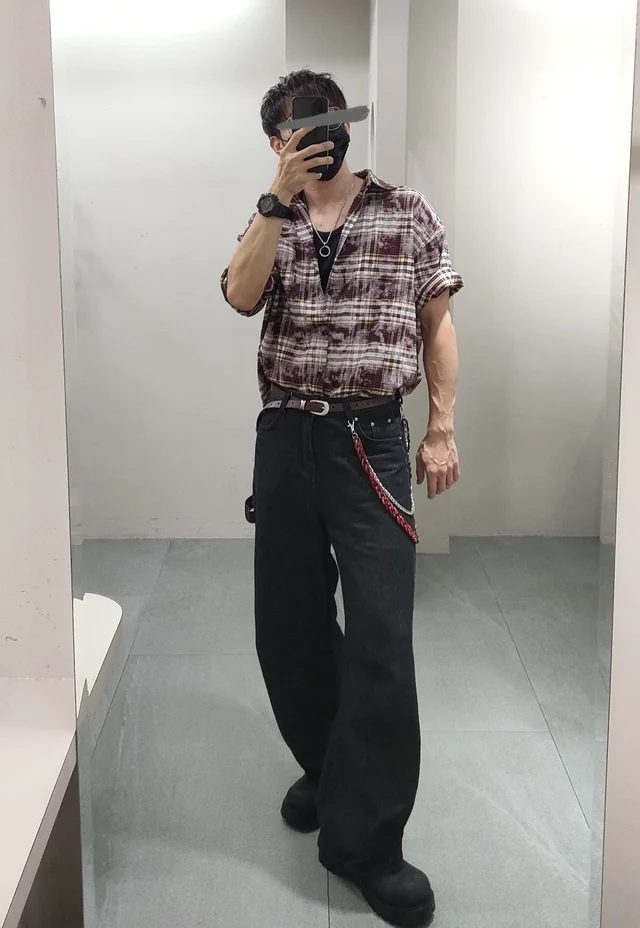
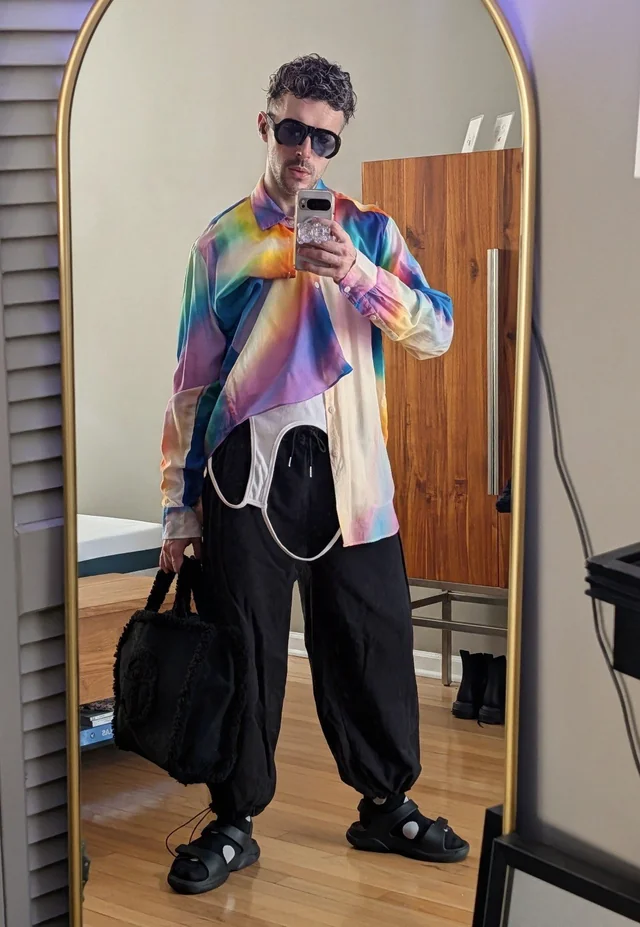
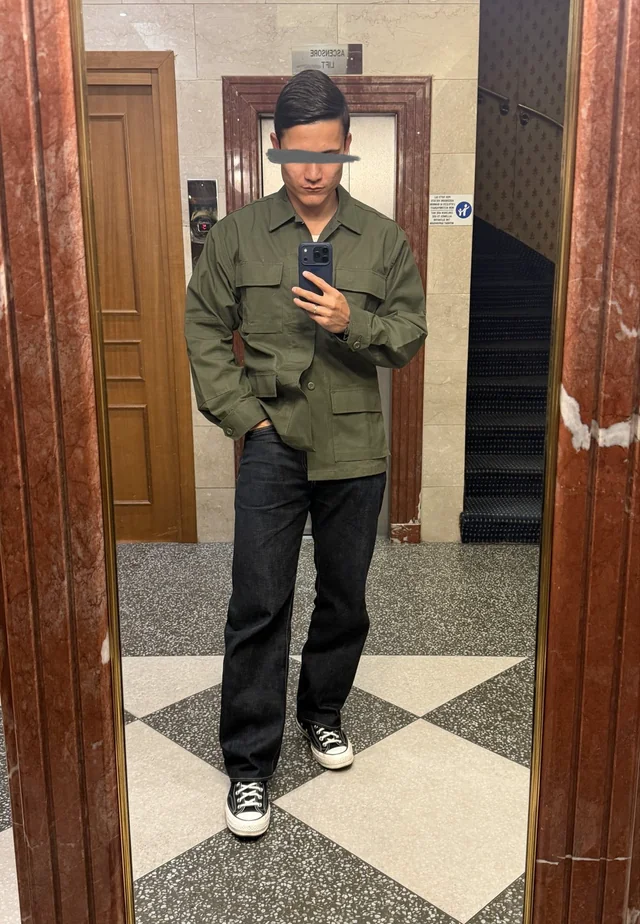
Streetwear

Summary. Streetwear is a dress system in which garments — graphic t-shirts, hoodies, sneakers, caps, and relaxed-fit separates — are designed, distributed, and evaluated through a scarcity-circulation-authentication logic that originates in late-twentieth-century Black, Latino, and skate-culture youth communities. The category is governed not primarily by textile engineering (as in techwear or gorpcore) or by construction durability (as in workwear) but by a cultural-production infrastructure: limited-quantity releases ("drops"), logo and graphic systems that encode subcultural knowledge, resale markets that extend garments' economic and symbolic lives, and authentication hierarchies that distinguish insiders from adopters through reference literacy rather than specification literacy.

In Material Terms

Streetwear's coherence depends on a specific construction substrate — heavyweight cotton jersey, full-grain leather sneakers, screen-printed and embroidered graphics, and hardware detailing — that must satisfy both durability-under-daily-wear requirements and aging-as-character expectations. A Supreme box-logo hoodie is not merely a branded garment; it is a material object whose cotton weight, print method, stitching quality, label placement, and aging behavior are scrutinized by a community that can authenticate or reject it based on construction details invisible to outsiders. When this material specificity is absent — as in counterfeit production that reproduces the graphic without matching the textile substrate — the category's authentication system exposes the gap between visual citation and material legitimacy.

At Category Level

Streetwear occupies a structurally unique position between subcultural production and luxury-fashion absorption. High-authenticity implementations (original-run Supreme, early BAPE, Stüssy IST-era) are evaluated through provenance, cultural context, and construction specificity. Luxury-tier implementations (Louis Vuitton × Supreme, Balenciaga's streetwear-derived collections, Dior × Air Jordan) translate streetwear's visual grammar into couture-level fabrication and luxury-brand distribution. Mass-market implementations (fast-fashion "streetwear-inspired" hoodies and graphic tees) reproduce the silhouette and graphic conventions while stripping away the scarcity mechanics, construction quality, and cultural context that give the originals their meaning. This stratification is central to streetwear discourse, because authenticity is judged not by silhouette alone but by a garment's position within the production-distribution-authentication system that the category has built.

Methodologically

This entry treats streetwear as a cultural-production and circulation system: garments are analyzed by how they are produced, distributed, authenticated, worn, aged, resold, and archived — not by visual novelty alone. The emphasis is on the material substrate that supports the category's cultural claims, the economic infrastructure that determines its value, and the political economy of credit, adoption, and institutional absorption that shapes its history.

Word (Etymology)

A transparent compound ("street" + "wear") whose simplicity belies classificatory complexity. In contemporary fashion discourse, "streetwear" does not mean all clothing worn on streets but designates a specific post-1970s casual-dress system rooted in skateboarding, hip-hop, graffiti, and DIY brand culture — distinguished from generic sportswear by its scarcity-distribution mechanics, from workwear by its graphic and logo emphasis, and from athleisure by its subcultural-authentication infrastructure.

The term gained currency in the 1990s as a market descriptor for brands like Stüssy, Supreme, and BAPE that operated outside the fashion-calendar system (no seasonal runway shows, no wholesale to department stores) and instead distributed through proprietary retail, limited drops, and community networks. By the 2010s, "streetwear" had expanded to encompass luxury-brand products that adopted streetwear's distribution tactics (limited releases, collaboration models, drop mechanics) — a semantic expansion that diluted the term's subcultural specificity while acknowledging its commercial triumph.

In Japanese fashion discourse, the concept circulates as "sutorīto" (ストリート) or "ura-Harajuku" (裏原宿, "back-Harajuku"), the latter referencing the back streets of Harajuku where Nigo's BAPE, Jun Takahashi's Undercover, and Hiroshi Fujiwara's various projects established a parallel streetwear ecosystem in the early 1990s. Korean fashion adopted "streetwear" (스트릿웨어) as a direct loanword, reflecting the category's global circulation through English-language digital platforms.

Subculture

Streetwear's subcultural structure is organized around intersecting communities with distinct but overlapping evaluative regimes, producing a layered expertise hierarchy that governs authentication, status, and cultural capital distribution.

Hip-hop communities. The foundational cultural engine. From the late 1970s through the present, hip-hop communities developed and codified the practice of evaluating clothing through cultural literacy rather than garment construction: knowing which artist wore what, which brand collaboration referenced which cultural moment, and which release date marked which shift in the category's trajectory. This evaluative regime is performative — it is demonstrated through wearing, styling, and discussing garments in ways that reveal depth of cultural knowledge. Dapper Dan's Harlem boutique (1982–1992) established the paradigm: custom-made garments using luxury-brand logos and materials served a community that was systematically excluded from the luxury houses whose visual language it adopted and transformed. Dan's clients — LL Cool J, Eric B. & Rakim, Salt-N-Pepa, Floyd Mayweather Sr. — were not imitating luxury fashion; they were creating a parallel system that valued cultural authorship over brand authorization.

Skate and surf communities. Southern California skate culture (1970s–1980s) contributed the graphic-tee tradition (DIY screen-printed designs for local skate teams and shops), the relaxed silhouette (garments sized for movement range and physical safety in falls), and the independent-brand ethos (small-batch production, direct sales, community distribution). Stüssy's evolution from hand-printed surfboard logos (1980) to global streetwear brand (by 1987) established the template: a founder's personal graphic vision, distributed initially through subcultural networks, scaling through word-of-mouth and scarcity, eventually reaching international distribution while maintaining independent identity.

Sneaker culture. The Air Jordan I (1985, designed by Peter Moore for Nike, worn by Michael Jordan despite NBA uniform-code fines that Nike paid as a marketing investment) established the sneaker as streetwear's most culturally weighted object. Sneaker evaluation operates through a multi-layered expertise system: design provenance (which designer, which collaboration partner, which cultural reference), material specification (leather quality, midsole technology, outsole compound), condition assessment (deadstock versus worn, original versus restored, yellowing versus preserved), and market positioning (retail price, resale premium, edition size). This expertise is transmitted through dedicated media (Sole Collector, founded 2003; Sneaker News; GOAT and StockX authentication platforms), in-person communities (sneaker conventions, campout lines, local Facebook groups), and platform content (YouTube unboxing and review culture, Instagram #sneakerhead). The sneaker community's authentication infrastructure — StockX's verification process, GOAT's multi-point inspection — represents the most formalized material-authentication system in streetwear.

Japanese ura-Harajuku. The back streets of Harajuku in the early 1990s produced a streetwear ecosystem that developed independently from but in dialogue with American sources. Nigo (A Bathing Ape, 1993), Jun Takahashi (Undercover, 1990), Hiroshi Fujiwara (fragment design, Goodenough), Tetsu Nishiyama (WTAPS, 1996), and Shinsuke Takizawa (Neighborhood, 1994) created brands that combined American streetwear's graphic energy with Japanese construction precision, limited-production ethics, and curatorial specificity. Fujiwara's role as the "godfather of streetwear" reflects his connective function: he linked New York hip-hop (friendship with Stüssy's Shawn Stussy), London punk (involvement in the Vivienne Westwood scene), and Tokyo fashion into a transpacific network that shaped the category's global development. This Japanese ecosystem contributed construction-quality expectations (heavier cotton, more precise printing, better hardware) that raised the material standard for the entire category.

Resale and authentication communities. The secondary market — eBay (from the late 1990s), Grailed (2013), StockX (2016), GOAT (2015) — created a parallel evaluative infrastructure organized around authentication, condition grading, and price discovery. These platforms institutionalized expertise that was previously informal: the ability to distinguish authentic from counterfeit production, to assess condition with granular precision, and to evaluate market positioning relative to edition size and cultural moment. Resale communities transmit knowledge through comparison guides, authentication tutorials, and price-history analysis that collectively constitute a sophisticated material-literacy practice.

The resulting expertise hierarchy operates across registers. At the top: brand founders, cultural-bridge figures (Hiroshi Fujiwara, Virgil Abloh), and veteran collectors whose knowledge spans decades of releases, collaborations, and cultural context. Mid-tier: dedicated enthusiasts who track current releases, maintain curated collections, and participate in resale markets with informed pricing. Entry-level: consumers who navigate the category through brand recognition and influencer recommendation. These tiers interact through platform discourse (Reddit's r/streetwear, Instagram, TikTok) where authentication claims are adjudicated through community consensus. The tension between "culture" and "hype" — between evaluating garments through subcultural knowledge and evaluating them through resale premium — remains the defining internal debate.

History

The material history of streetwear begins in the specific cultural-production conditions of late-twentieth-century American and Japanese youth communities. Each historical phase developed distribution innovations, graphic-production methods, and brand-building strategies that subsequently defined the category's infrastructure.

Hip-hop's material culture and the founding gesture (late 1970s–1986). Hip-hop culture in the South Bronx and Harlem developed a distinctive dress system organized around brand visibility, oversized silhouettes, and cultural self-determination in fashion. The material substrate was assembled from existing commercial sources — Adidas tracksuits, Kangol bucket hats, Cazal eyeglasses, Timberland boots, Polo Ralph Lauren (especially the "Lo Life" crew's organized shoplifting-as-cultural-practice of Ralph Lauren garments in the late 1980s) — but the cultural innovation was the recontextualization: these garments were evaluated, combined, and displayed according to hip-hop-specific criteria (brand literacy, styling boldness, physical condition) that the original manufacturers had not anticipated or intended.

Dapper Dan's Harlem boutique (1982–1992, 43 East 125th Street) produced custom garments using luxury-brand logos — Gucci, Fendi, Louis Vuitton, MCM patterns reproduced on leather and fabric and tailored into jackets, pants, car interiors, and accessories for hip-hop artists, athletes, and Harlem community figures. Dan's operation was simultaneously a fashion studio, a cultural institution, and a legal provocation: the luxury houses whose patterns he appropriated eventually shut him down through legal action (Fendi lawsuit, early 1990s), only for Gucci to partner with him officially in 2017 — a 25-year arc that encapsulates streetwear's trajectory from subcultural innovation to institutional absorption. Dan's contribution was foundational: he demonstrated that fashion authority could originate outside authorized channels, that cultural authorship could trump brand authorization, and that the communities excluded from luxury fashion could build parallel systems of greater cultural significance.

Run-D.M.C.'s "My Adidas" (1986) and subsequent endorsement deal (the first hip-hop sneaker endorsement) validated hip-hop's influence on sportswear and established the artist-brand partnership model that would become streetwear's dominant commercial structure.

Skate-surf graphics and independent branding (1980–1994). Shawn Stussy began hand-signing surfboards and screen-printing t-shirts with his distinctive signature in Laguna Beach, California (1980). By 1984, Stussy had established a mail-order operation; by 1987, the "International Stüssy Tribe" (IST) — a loose network of DJs, skaters, and cultural figures in New York, London, Tokyo, and Los Angeles who received free product and promotional materials — constituted streetwear's first intentional global community. Stussy's innovations were infrastructural rather than textile: he demonstrated that a fashion brand could be built through graphic identity, limited distribution, and community cultivation rather than through runway presentation or wholesale relationships.

Simultaneously, skate brands (Vision Street Wear, Powell-Peralta, Santa Cruz) developed the graphic-tee as a medium for artistic expression and subcultural identification. Screen-printed graphics using hand-drawn artwork, bold typography, and subcultural references (skate spots, music, comic art) established the visual language that streetwear would elaborate for decades.

Supreme, BAPE, and the drop system (1994–2005). Supreme, founded by James Jebbia in a small storefront at 274 Lafayette Street, New York (April 1994), established the operational model that defines streetwear's economic structure. Key innovations: weekly Thursday drops (limited-quantity product releases creating recurring events and community rhythms), a single retail location (later expanding, but maintaining scarcity through limited distribution), a rotating roster of collaborations (artists, brands, and cultural figures contributing designs to limited-edition releases), and a box logo that functioned as a shorthand for subcultural membership. The Supreme box logo tee — a white Futura Heavy Oblique logotype in a red rectangle, directly referencing Barbara Kruger's graphic-art format — became streetwear's single most recognizable and valuable graphic object. Early Supreme pieces, produced in runs of hundreds rather than thousands, now command resale prices of $1,000–$10,000+ depending on colorway, condition, and cultural significance.

A Bathing Ape (BAPE), founded by Nigo (Tomoaki Nagao) in Harajuku (1993), developed a parallel model with Japanese characteristics: even more extreme production scarcity, elaborate graphic systems (the ape-head logo, BAPE camouflage, shark hoodie), and a retail environment designed as a cultural destination. BAPE's Harajuku store — with its ape-head door, limited-access layout, and deliberately inhospitable customer experience — established the template for streetwear retail as controlled-access spectacle.

Digital acceleration and luxury convergence (2005–2018). Hypebeast (founded 2005 by Kevin Ma in Vancouver) and Complex (1999, pivoting to digital streetwear coverage in the late 2000s) created the media platforms that accelerated streetwear's global circulation. Online release information, rumor tracking, and community forums compressed the information cycle from weeks (magazine-era) to hours (blog-era) to minutes (social-media-era), intensifying drop-culture competition and enabling global participation in previously local release events.

Nike SB Dunk collaborations (2002 onward, particularly the "Pigeon Dunk" by Jeff Staple, 2005, which caused a near-riot at Reed Space in Lower Manhattan) demonstrated that collaborative sneaker releases could generate cultural events with physical consequences. Kanye West's Air Yeezy with Nike (2009) and subsequent Adidas Yeezy partnership (2015) demonstrated that a single cultural figure's creative vision could sustain an entire product ecosystem. Virgil Abloh's Off-White (founded 2013) and subsequent appointment as Louis Vuitton Men's Artistic Director (2018, the first Black American in the role) represented the category's most visible institutional absorption: a streetwear designer assuming creative control of the world's largest luxury brand.

The Supreme × Louis Vuitton collaboration (2017) — a co-branded collection presented at Louis Vuitton's menswear show — marked the formal dissolution of the boundary between streetwear and luxury fashion. A Supreme box-logo Louis Vuitton leather trunk, priced at approximately $68,500, demonstrated that streetwear's scarcity mechanics could command ultra-luxury pricing when combined with luxury-brand equity.

Post-absorption and fragmentation (2018–present). Virgil Abloh's death in November 2021 marked the end of an era in which streetwear's institutional absorption was driven by identifiable cultural-bridge figures. The subsequent period has seen fragmentation: "archive" streetwear (collecting and wearing original-run pieces from the 1990s–2000s as historical artifacts), "new wave" streetwear (brands like Corteiz, Broken Planet, and Denim Tears rebuilding community-first, scarcity-driven models outside luxury-partnership structures), and continued luxury-streetwear hybridization (Pharrell Williams at Louis Vuitton, 2023–present). The COVID-19 pandemic (2020–2021) accelerated casual-clothing adoption while disrupting in-person drop culture, shifting release mechanics toward online raffles and app-based draws that replaced the physical queue with algorithmic selection.

Analytically, streetwear's history is a sequence of context translations — from block party to skate park, from Harlem boutique to Harajuku backstreet, from blog to resale platform, from independent drop to luxury runway — in which the same cultural-production logic (scarcity, authentication, community, graphic identity) is preserved while its audience, price architecture, and institutional position are repeatedly renegotiated.

Silhouette

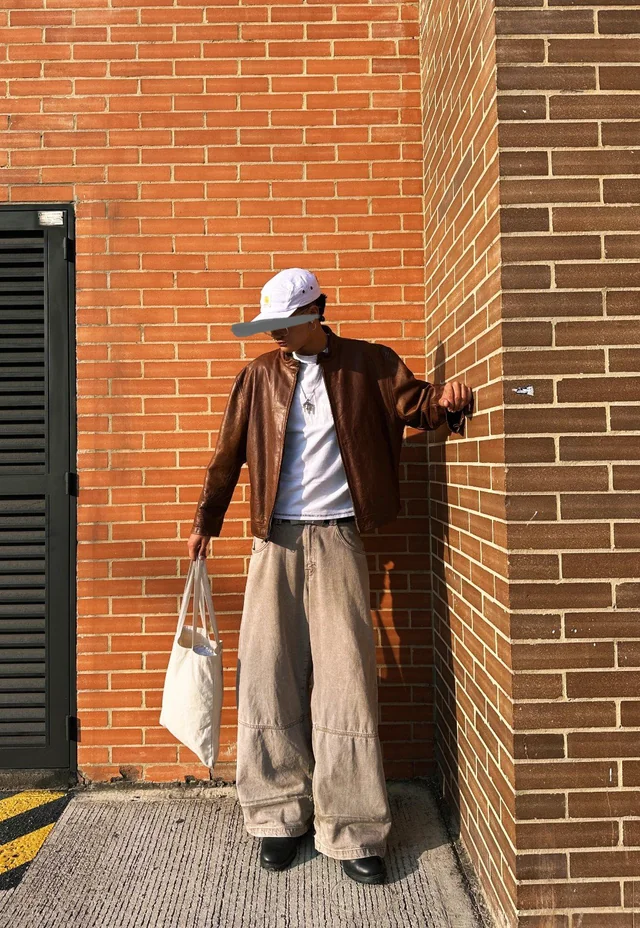
Streetwear silhouette is governed by movement accommodation, subcultural inheritance, and deliberate anti-tailoring rather than by body-sculpting intent or operational geometry. The characteristic proportions — oversized tops, relaxed or wide-leg bottoms, sneaker-anchored feet — are not arbitrary but trace to specific functional and cultural origins that have calcified into aesthetic convention.

Oversized upper body. Hoodies and t-shirts sized 1–3 sizes above the wearer's measured fit descend from two practical origins: skaters needed movement range (oversized fits accommodated the dynamic arm and torso positions of skating without riding up or restricting shoulder rotation), and hip-hop consumers in economically constrained communities accessed larger sizes more affordably (hand-me-down economics, bulk-discount sizing). The dropped shoulder (seam falling 5–8cm below the natural shoulder point) became streetwear's most recognizable tailoring departure from conventional menswear. The oversized hoodie — with its kangaroo pocket providing hand warming and small-item carry, its hood providing weather protection and social withdrawal, and its ribbed cuffs and hem providing closure against drafts — functions as streetwear's foundational layering piece: worn alone, under jackets, over long-sleeve tees, in combinations that create visual depth through overlapping hemlines and contrasting textures.

Relaxed and wide-leg bottoms. Baggy jeans (18–22 inch leg openings in the category's most extreme expressions, more moderate relaxed fits in contemporary iterations) derive from hip-hop's adoption of oversized proportions. The visual weight distribution — heavy, volume-forward from the knee down — contrasts with conventional fashion's emphasis on tapered leg silhouettes and produces a grounded, planted stance that communicates physical confidence. Cargo pants, fatigue trousers, and workwear-derived chinos provide alternative bottom silhouettes that share relaxed proportionality while adding pocket utility. Contemporary streetwear has diversified the bottom silhouette: straight-leg and slim-straight fits coexist with wider proportions, and the jogger (tapered elastic-cuff pant) bridges streetwear and athleisure.

Sneaker-anchored proportion. The sneaker is not merely footwear but the anchor point that determines the entire silhouette's proportional logic. Chunky, visually substantial sneakers (Air Jordan 1's high-top profile, Dunk's padded collar, Air Force 1's thick sole unit) require leg openings wide enough to display them — either through wide-leg jeans that stack over the shoe or through cropped/tapered pants that expose the full silhouette. The sneaker is streetwear's visual fulcrum: everything above it is proportioned to complement its volume and cultural weight.

Layering as visual depth. Streetwear layering creates depth through overlapping garment lengths and texture contrasts: a long-sleeve tee extending below a graphic t-shirt hem, a hoodie showing below a jacket hem, a flannel worn open over a printed tee. This stacking is not primarily thermal (unlike gorpcore's functional layering system) but visual — it creates the "effortful nonchalance" that streetwear styling values, where each layer reveals the layer beneath in a cascade of references (graphic, brand, texture, color) that legible viewers can decode.

The silhouette communicates cultural membership rather than institutional authority or operational readiness. The proportions signal that the wearer operates within streetwear's evaluative regime — they know the codes, own the references, and style according to the community's evolving conventions.

Materials

Material selection in streetwear serves a dual function: it must satisfy physical-durability requirements for daily urban wear, and it must support the authentication infrastructure that distinguishes legitimate production from counterfeit imitation. The category's material literacy is organized around cotton weight, print method, leather quality, and construction specificity.

Cotton jersey. The foundational textile. Streetwear evaluates cotton by weight (measured in ounces per square yard for cut-and-sew, grams per square meter for knitwear), hand feel (the combination of softness, body, and drape that a specific cotton produces), and aging behavior (how the fabric softens, pills, fades, and shrinks over repeated wear-wash cycles). Premium streetwear t-shirts use 6–7 oz/yd² (200–240 gsm) combed ring-spun cotton, producing a substantial hand feel with enough body to hold a screen-printed graphic flat without curling or distorting. Premium hoodies use 12–14 oz/yd² (400–475 gsm) heavyweight fleece, producing the dense, structured silhouette that defines the category's signature layering piece. The difference between a Supreme hoodie's 14 oz cotton fleece and a fast-fashion hoodie's 8 oz equivalent is immediately perceptible: the Supreme garment holds its shape, drapes with weight, and ages into a softer, more pliable version of itself, while the lighter garment pills, distorts, and thins within a single wear season.

Cotton quality within these weight classes varies further: combed cotton (shorter fibers removed, producing smoother yarn and softer hand) outperforms carded cotton (all fiber lengths retained, producing rougher, more uneven yarn). Ring-spun cotton (yarn produced by continuously twisting and thinning fiber strands) outperforms open-end cotton (yarn produced by spinning fiber into a tube, faster and cheaper but producing a rougher, weaker thread). These distinctions are invisible to visual inspection but detectable by hand feel and relevant to authentication: counterfeit production frequently matches a garment's visual appearance while substituting cheaper cotton grades that trained handlers can identify by touch.

Fleece construction. The hoodie's interior is typically either brushed fleece (cotton-polyester blend with a brushed interior nap providing soft warmth) or French terry (a looped-pile interior that provides lighter warmth and better moisture absorption). Premium streetwear uses higher cotton-content fleece (80% cotton/20% polyester or higher) for superior hand feel and aging; mass-market production uses higher polyester content (50/50 or polyester-dominant) for cost reduction and pill resistance at the expense of feel and breathability. Fleece weight, pile density, and cotton-to-polyester ratio are authentication markers: a knowledgeable handler can distinguish a premium 14 oz 80/20 fleece from a mass-market 10 oz 50/50 by weight, feel, and drape.

Graphic production methods. Screen printing (ink forced through a mesh stencil onto fabric) is streetwear's foundational graphic method. Print quality is evaluated through: ink opacity and coverage (how completely the design covers the fabric, with premium prints using multiple passes for full coverage), color vibrancy and accuracy (how faithfully the print reproduces the intended design), hand feel (the tactile quality of the print on the fabric surface — "plastisol" ink produces a raised, rubbery surface; "discharge" printing removes fabric dye and replaces it with ink, producing a softer, more integrated print; "water-based" ink produces the softest hand but with lower opacity on dark fabrics), and durability (resistance to cracking, fading, and peeling across wash cycles). Embroidery (thread stitched directly into the fabric) provides dimensional, permanent graphic application used for logos and smaller design elements: stitch density, thread quality, and backing stability determine embroidery quality. Heat-transfer printing (pre-printed design applied to fabric through heat and pressure) is faster and cheaper than screen printing but produces a surface feel and durability that experienced handlers can distinguish.

Sneaker materials. Full-grain leather (the outermost layer of animal hide, retaining the natural grain surface, providing superior durability, breathability, and patina development) is the prestige material for leather sneakers; the Air Jordan 1 "Chicago" in full-grain red-and-white leather is the category's paradigm object. Tumbled leather (mechanically softened, creating a pebbled texture) provides a softer hand at the cost of some structural firmness. Corrected-grain leather (sanded and refinished to remove imperfections, then coated with pigment) provides uniform appearance but reduced breathability and inferior aging behavior. Patent leather, suede (the inner surface of the hide, napped for a soft, fibrous texture), and nubuck (the outer surface of the hide, lightly buffed for a subtle nap) provide textural variation.

Midsole technology defines sneaker performance and visual profile: Nike Air (encapsulated gas cushioning, visible through "Air Max" windows), Adidas Boost (thermoplastic polyurethane pellets providing energy return), Nike React (foam cushioning), and various EVA (ethylene-vinyl acetate) formulations provide cushioning that determines both on-foot comfort and the visual height and profile of the sole unit. Outsole compounds (rubber formulations optimized for traction, durability, and non-marking properties) determine wear patterns that affect both function and resale value.

Aging and failure modes. Cotton jersey pills at friction points (underarm, where a bag strap contacts the shoulder, at the waist where a belt applies pressure), fades progressively through laundering (dark colors losing saturation, prints losing opacity), and shrinks incrementally through hot-water and heat-dry cycles (typically 3–5% in the first several washes, stabilizing thereafter in pre-shrunk fabrics). Screen prints crack and peel over repeated wash cycles, particularly plastisol prints that lose adhesion to the cotton substrate; this degradation is accelerated by heat (tumble drying) and agitation (heavy wash cycles). Sneaker materials degrade through: sole yellowing (oxidation of clear-rubber outsoles and visible Air units, a photochemical reaction accelerated by UV exposure), foam breakdown (midsole compression and crumbling, particularly in older Air Jordan models where polyurethane foam degrades through hydrolysis even unworn — a phenomenon called "sole separation" or "crumbling" that can destroy vintage sneakers worth thousands), leather cracking (desiccation from inadequate storage humidity), and general sole-unit delamination (adhesive failure between midsole and upper).

These failure modes are not peripheral to streetwear analysis — they determine resale value, collectibility, and the community's relationship to material objects. A "deadstock" (unworn) sneaker from 2001 may be worth $5,000 on paper but physically unwearable due to midsole hydrolysis. This material reality creates a tension between symbolic value (cultural significance, rarity) and use value (wearability, physical condition) that is unique to streetwear among fashion categories.

Color Palette

The palette operates on a reference-driven system where color choices encode specific cultural, brand, and temporal associations legible to community insiders.

Foundational neutrals — black, white, grey, navy, khaki — provide the base because they maximize garment interchangeability within a curated wardrobe and foreground graphic and logo elements without chromatic competition. An all-black outfit in streetwear communicates a different cultural position than an all-black outfit in goth or techwear: in streetwear, it emphasizes form, brand, and detail without the distraction of color.

Reference colorways carry specific cultural weight: "Chicago" (red, black, white — Air Jordan 1), "Bred" (black, red — Air Jordan 1/4/11), "Royal" (royal blue, black — Air Jordan 1), "Shadow" (grey, black), "University Blue" (light blue, white). These colorway names function as a chromatic shorthand that identifies specific sneaker releases, collaboration histories, and cultural moments. Wearing a garment in a recognizable colorway is a reference act — it positions the wearer within the category's temporal and cultural map.

Bold primaries and color-blocking derive from sportswear and skate-graphic traditions: the saturated reds, blues, and yellows of early Supreme, Stüssy, and Palace designs. Earth tones (olive, rust, tan, brown) entered through workwear and military crossover. Seasonal trend colors cycle more rapidly in streetwear than in most categories, driven by drop-culture's weekly refresh cycle and brand-specific seasonal palettes.

Camouflage operates distinctly in streetwear: BAPE's custom camo (replacing standard disruptive shapes with ape-head logos), Stüssy's and Supreme's camo prints, and military-surplus integration all treat camouflage as graphic pattern rather than optical engineering — concealment inverted into display, military function converted to brand identity.

Details

Details in streetwear are best understood as authentication interfaces and cultural-reference systems — elements that encode provenance, collaboration history, and subcultural positioning in material form.

Logo and graphic systems. The logo is streetwear's primary detail. Supreme's box logo (Futura Heavy Oblique in a red rectangle, referencing Barbara Kruger's graphic-art format) is the category's most iconic singular detail: it communicates brand membership, subcultural literacy, and (depending on colorway and season) specific release provenance. Logo placement, size, and execution method serve as authentication markers: a legitimate Supreme box-logo tee uses a specific screen-print method, ink weight, and placement coordinate that counterfeit production frequently fails to replicate precisely. BAPE's ape head, Stüssy's interlocking-S, Palace's tri-ferg, and Off-White's diagonal stripes each function as brand-identity systems whose execution specifics (stitch count in embroidery, print registration accuracy, tag and label formatting) constitute the material basis for authentication.

Graphic tees function as cultural-reference objects: imagery drawn from skateboarding, hip-hop, anime, fine art (Supreme's collaborations with artists including Damien Hirst, Jeff Koons, KAWS, Takashi Murakami, and photographers including Larry Clark and Nan Goldin), film, and subcultural ephemera positions each design within a web of cultural associations that legible viewers can decode. The graphic tee is streetwear's closest equivalent to a readable text — it communicates through image, typography, and reference rather than through construction.

Collaboration markers. Co-branded labels, dual logos, special packaging (dust bags, collectors' boxes, numbered certificates), and collaboration-specific details (unique colorways, material choices, or construction features that distinguish a collaborative release from standard production) mark garments and sneakers as products of specific brand partnerships. These markers function as scarcity authenticators: they prove that the object belongs to a defined, limited production run rather than to general-release inventory.

Hardware and closure details. Streetwear hardware tends toward the visible and oversized: chunky YKK zippers (often in metallic finishes), metal-tipped aglets on drawstrings, D-ring and carabiner attachments, snap closures on coach jackets, and toggle systems on outerwear. These details are partly functional (the hoodie drawstring adjusts the hood opening; the jacket zipper opens and closes the garment) and partly communicative (visible hardware signals construction investment and design intentionality). The distinction between branded hardware (YKK-stamped zipper pulls, brand-specific snap buttons) and generic hardware serves as an authentication marker: premium streetwear consistently uses branded or custom hardware that counterfeit production often substitutes with unbranded equivalents.

Label and tag systems. Interior labels (neck labels, size tags, care labels, and "made in" country-of-origin labels) serve as the streetwear community's most scrutinized authentication interface. Label typography, printing method, tag material, stitching attachment method, and information formatting are examined with forensic precision by authentication services and community experts. StockX, GOAT, and Legit Check (a community-driven authentication service) evaluate these details as primary indicators of legitimate production. The label is streetwear's equivalent of a provenance certificate: it attests to the garment's origin within the authorized production system.

Accessories

Sneakers are streetwear's most culturally weighted accessory category, carrying more evaluative complexity, economic value, and community attention than any other single object type in fashion.

Sneaker culture as material practice. The Air Jordan line (1985–present, 38+ mainline models) constitutes the single most important product series in streetwear history. Each numbered Jordan model carries specific cultural associations: the Jordan 1 (1985, Peter Moore design, banned-by-the-NBA mythology) represents origin and rebellion; the Jordan 3 (1988, Tinker Hatfield's first Jordan design, elephant-print panels, visible Air unit) represents design innovation; the Jordan 4 (1989, Do the Right Thing, Mars Blackmon campaign) represents hip-hop integration; the Jordan 11 (1995, patent-leather formal-sneaker hybrid, worn by Jordan in the 1996 NBA Finals) represents performance-luxury convergence. The Nike Dunk (1985, originally a college basketball shoe, relaunched as Nike SB Dunk in 2002 for skateboarding) accumulated streetwear significance through collaborative limited editions. The Air Force 1 (1982, Bruce Kilgore design, first basketball shoe with Nike Air technology) became hip-hop's default sneaker through adoption by Baltimore, New York, and Philadelphia communities in the late 1980s.

Sneaker condition is evaluated with granular precision: "deadstock" (unworn, in original packaging with original lace sets), "VNDS" (very near deadstock — tried on or worn once indoors), "lightly worn" (minimal creasing, clean soles), and progressively degraded condition grades. Resale pricing tracks condition with algorithmic precision on platforms like StockX and GOAT. The condition economy creates a paradox: sneakers are cultural objects meant to be worn, but wearing them reduces their economic value — producing a community split between "wear your kicks" (cultural-use advocates) and "keep 'em icy" (value-preservation collectors).

Caps, bags, and accessories. Fitted caps (New Era 59FIFTY, the standard since MLB's adoption in the 1990s), snapback caps, and five-panel camp caps carry brand logos and collaborative designs. Crossbody bags, tote bags, and backpacks (Supreme's branded accessories, BAPE's collaborative bags, Palace's tri-ferg bags) extend brand identity to carry items. Jewelry (chain necklaces, signet rings, branded pendants) and watches (Casio G-Shock as streetwear's foundational timepiece, now joined by collaborations with luxury watch brands) complete the accessory system.

Body Logic

Streetwear conceptualizes the body as a display surface for cultural literacy rather than as an athletic instrument (athleisure), a labor-performing machine (workwear), or an environmental-interface platform (techwear/gorpcore). The body is dressed not to optimize movement or manage exposure but to communicate identity, knowledge, and community membership through a curated arrangement of references.

The oversized silhouette partially obscures the body's contours, redirecting evaluation from physique to styling — from "what does this body look like?" to "what does this person know?" The streetwear body is read through the garments' cultural content (brand, collaboration, release date, condition, styling context) rather than through the body's physical characteristics. This produces a relatively egalitarian body logic: the same Supreme hoodie communicates the same cultural position on bodies of different sizes, shapes, and physical conditions.

Gender coding in streetwear is historically masculine-default — the category developed in communities (skateboarding, hip-hop, sneaker collecting) that were overwhelmingly male, and its core garment types (hoodies, graphic tees, sneakers, caps) derive from menswear traditions. Women's participation, while always present, was historically underrepresented in media and brand narrative. The 2010s and 2020s saw significant expansion: brands like Aries (2011, Sofia Prantera), Online Ceramics, and Stüssy's women's-specific collections, alongside the broader normalization of unisex streetwear dressing, have broadened gender participation without fundamentally altering the category's masculine-origin silhouette logic.

Racial embodiment is central to streetwear's body logic in ways that the category's global success can obscure. Streetwear's visual language was created primarily by Black and Latino communities; its most significant cultural figures (from Dapper Dan to Virgil Abloh) are Black; and its embodied display practices (sneaker presentation, hoodie styling, graphic-tee combination) were developed within Black cultural contexts. When non-Black bodies wear streetwear, they participate in a visual system whose body logic was developed by and for communities they may not belong to — a dynamic that is not automatically appropriative but that carries credit and power implications that critical analysis must acknowledge.

Garment Logic

Streetwear construction operates across a wider quality spectrum than most fashion categories, from mass-market basics to luxury-tier fabrication, with construction quality serving as both functional differentiator and authentication evidence.

Cut-and-sew construction. Premium streetwear uses single-needle stitching at visible seam lines (producing a cleaner, flatter seam than double-needle overlocked construction), reinforced seaming at stress points (shoulder seams, pocket attachments, hem joins), and pre-shrunk or garment-washed fabrics that maintain dimensional stability across laundering. Pattern cutting emphasizes the oversized proportions the category requires: dropped shoulders, extended body length, wide sleeve circumference, and relaxed armhole. Premium brands develop proprietary fit blocks — Supreme's hoodie cut, Stüssy's tee pattern, BAPE's shark-hoodie construction — that become authentication markers in themselves: the garment's drape and proportion serve as visual evidence of legitimate production.

Graphic application engineering. Screen printing on streetwear garments uses either plastisol ink (PVC-based, producing a raised, opaque, rubbery print surface with high color vibrancy and durability) or water-based ink (using water as the carrier instead of PVC, producing a softer, more fabric-integrated print with lower opacity on dark substrates). Discharge printing (using a chemical agent to remove the fabric's existing dye and replace it with new pigment) produces the softest hand because the graphic becomes part of the fabric rather than sitting on its surface. DTG (direct-to-garment, essentially inkjet printing on fabric) offers photographic-quality detail and low-run economical production but inferior durability and hand feel compared to traditional screen printing. The print method is authentication-relevant: a legitimate Supreme box-logo tee uses a specific print technique, ink type, and application pressure that produces a tactile and visual signature distinguishable from counterfeit production.

Sneaker construction. Athletic-footwear construction combines: upper assembly (leather, synthetic, or textile panels cut, stitched, and cemented to a structural base), midsole integration (cushioning unit — Air, Boost, React, EVA — bonded to the upper through adhesive or strobel construction), and outsole attachment (rubber outsole cemented or stitched to the midsole). Quality differentiation operates through material grade (full-grain versus synthetic leather), adhesive quality (premium cement bonds resist sole separation under sustained wear; inferior bonds delaminate within months), and finishing precision (paint consistency, stitch uniformity, quality-control inspection). Retro/reissue production of classic models (Air Jordan "retros") frequently uses different materials and construction methods than originals, producing garments that look similar but feel, wear, and age differently — a distinction that the sneaker community tracks and debates extensively.

Aftercare and failure modes. Cotton streetwear garments require cold-water washing and hang drying to preserve print integrity and minimize shrinkage. Screen prints crack and peel under heat (tumble drying accelerates adhesion failure), agitation (heavy wash cycles), and chemical exposure (bleach, harsh detergent). Embroidery is more durable than screen printing but can pucker or distort if the fabric substrate shrinks unevenly beneath the stitched area.

Sneaker aftercare is a specialized practice: leather cleaning (specific cleaners for each leather type — Jason Markk, Reshoevn8r), sole protection (Sole Protector adhesive films, clear-coat sealants to prevent yellowing), storage (silica gel packets for humidity control, acid-free tissue for shape maintenance, UV-blocking containers for yellowing prevention), and restoration (sole repainting, midsole swap, re-gluing). Sneaker enthusiasts invest significant time and resources in preservation practices that extend the material lifespan of objects whose cultural value may far exceed their production cost.

The primary failure modes: cotton garment pilling and distortion through repeated laundering; screen-print cracking and peeling; sneaker sole yellowing through oxidation; sneaker midsole hydrolysis and crumbling (particularly in polyurethane-based midsoles on vintage models, where chemical degradation occurs even in unworn shoes over 10–20 years); adhesive delamination causing sole separation; and leather cracking through desiccation. These failure modes create the category's central material tension: streetwear objects are cultural artifacts whose significance increases with time while their material substrate degrades with time — making preservation simultaneously more valuable and more difficult as objects age.

Motifs / Themes

Dominant themes include scarcity as value, the logo as cultural text, the drop as communal ritual, authentication as community practice, and the street as site of cultural production. Streetwear's thematic infrastructure positions fashion authority as originating from cultural communities rather than from institutional hierarchies — "the street" rather than "the runway" — even as the category's most successful trajectory has been absorption into precisely those institutional hierarchies.

The "collaboration" motif structures the category's creative model: two brands or a brand and an artist merge visual identities to produce limited objects that carry double cultural weight. The collaboration is not merely a commercial partnership but a cultural statement — it declares mutual recognition between entities that may occupy different positions in the cultural hierarchy (Supreme × Louis Vuitton, Nike × Off-White, Stüssy × Dior).

The "archive" motif — collecting, preserving, and wearing original-run pieces from the category's history — positions streetwear within a material-culture framework where garments function as historical documents. An original 1994 Supreme box-logo tee is not merely a t-shirt; it is an artifact of the category's founding moment, carrying temporal and cultural significance that no reproduction can replicate.

Cultural Touchstones

Dapper Dan's Harlem boutique (1982–1992): foundational institution of streetwear's cultural-authorship model. Run-D.M.C.'s "My Adidas" (1986): first hip-hop sneaker endorsement, validating subcultural influence on sportswear. Shawn Stussy's International Stüssy Tribe (1987): first intentional global streetwear community network. Supreme's Lafayette Street opening (1994): establishing the drop-driven retail model. The Pigeon Dunk riot (2005, Jeff Staple × Nike SB Dunk release at Reed Space, NYPD intervention): demonstrating that sneaker releases could generate physical-consequence cultural events. Kanye West × Nike Air Yeezy (2009): celebrity creative vision as sneaker-ecosystem driver. Virgil Abloh's Off-White "The Ten" Nike collection (2017): deconstructed sneaker aesthetics as design-theory statement. Supreme × Louis Vuitton (2017): formal dissolution of streetwear-luxury boundary. Virgil Abloh appointed Louis Vuitton Men's Artistic Director (2018): institutional absorption at the highest level. Virgil Abloh's death (November 28, 2021): cultural-bridge loss marking the end of a consolidation era. Pharrell Williams at Louis Vuitton (2023): continuation of streetwear-luxury integration.

Tremaine Emory's Denim Tears (2019) and Kerby Jean-Raymond's Pyer Moss (2013) represent a critical turn: streetwear brands that explicitly center Black history, slavery's legacy, and diasporic identity in their design work, refusing to separate cultural production from cultural analysis.

See Also

  • Hip-hop fashion: Foundational cultural engine and visual-language source
  • Skate culture: Parallel street origins, graphic-tee tradition, movement-derived silhouette
  • Sneaker culture: Streetwear's most culturally weighted material-object category
  • Athleisure: Shared casualization and sneaker-driven styling
  • Gorpcore: Technical outdoor crossover through shared brand ecosystems
  • Workwear heritage: Carhartt, Dickies, and denim as shared material substrate
  • Drop culture: The distribution model that defines streetwear's economic structure
  • Resale markets: The secondary economy that extends garments' financial and cultural lives
  • Japanese ura-Harajuku: The parallel ecosystem that raised construction standards globally
  • Luxury fashion absorption: The institutional convergence that transformed the category's position

Brands and Designers

Foundational / Category-Defining:

  • Stüssy (1980, Laguna Beach, Shawn Stussy): hand-signed graphics origin, International Stüssy Tribe global community network, streetwear-as-independent-brand template
  • Supreme (1994, New York, James Jebbia): box logo, weekly Thursday drops, collaboration model, Lafayette Street retail as cultural destination
  • A Bathing Ape / BAPE (1993, Harajuku, Nigo): extreme scarcity model, custom camouflage, shark hoodie, Japanese construction precision
  • Dapper Dan (1982, Harlem, Daniel Day): custom luxury-logo garments, cultural-authorship model, foundational institution of streetwear's relationship to luxury
  • Carhartt WIP (Work In Progress, 1994, European distribution): workwear-to-streetwear pipeline, Edwin Faeh's European recontextualization of American workwear

Contemporary / New Wave:

  • Off-White (2013, Milan, Virgil Abloh): quotation marks as design language, "The Ten" Nike deconstructed sneakers, luxury-streetwear bridge
  • Palace (2009, London, Lev Tanju): tri-ferg logo, British skate-culture roots, irreverent branding
  • Kith (2011, New York, Ronnie Fieg): sneaker-centric retail, Kith Treats experiential store, collaborative capsule model
  • Corteiz (2017, London, Clint): community-first scarcity model, guerrilla drops, post-hype streetwear
  • Aimé Leon Dore (2014, New York, Teddy Santis): elevated streetwear-Americana hybrid, New Balance collaboration partner, borough identity

Luxury-Streetwear Integration:

  • Balenciaga (Demna Gvasalia, 2015–present): ironic luxury-streetwear, Triple S sneaker as category-defining object
  • Vetements (2014, Demna Gvasalia): DHL t-shirt, oversized silhouette, luxury-subversion positioning
  • Fear of God (2013, Los Angeles, Jerry Lorenzo): elevated essentials, fog-ESSENTIALS diffusion line, quiet-streetwear positioning
  • Rhude (2015, Los Angeles, Rhuigi Villaseñor): luxury streetwear with Filipino-American cultural positioning

Japanese Streetwear:

  • Neighborhood (1994, Tokyo, Shinsuke Takizawa): military-motorcycle-Americana hybrid, distressed aesthetic, construction precision
  • Undercover (1990, Tokyo, Jun Takahashi): punk-streetwear-fashion art, "We Make Noise Not Clothes" philosophy
  • WTAPS (1996, Tokyo, Tetsu Nishiyama): military-specification streetwear, subdued tonal design
  • visvim (2000, Tokyo, Hiroki Nakamura): Americana-streetwear through Japanese artisanal lens, natural dyeing and hand-finishing
  • fragment design (Hiroshi Fujiwara): collaborative practice, cultural-bridge function, "godfather of streetwear" positioning

Hip-Hop-Founded:

  • Rocawear (1999, Jay-Z and Damon Dash): hip-hop entrepreneurship as brand
  • Sean John (1998, Sean Combs): hip-hop-luxury crossover
  • Billionaire Boys Club / Ice Cream (2005, Pharrell Williams and Nigo): transpacific hip-hop-streetwear collaboration
  • Denim Tears (2019, Tremaine Emory): Black history and diaspora as design content, cotton-wreath motif as slavery memorial
  • Pyer Moss (2013, Kerby Jean-Raymond): streetwear-fashion as political-historical critique

Sneaker-Centric:

  • Nike (Jordan Brand, Nike SB, Air Max line): the dominant sneaker ecosystem, Air Jordan as category-defining product series
  • Adidas (Yeezy partnership 2015–2022, Y-3 with Yohji Yamamoto, Samba revival): three-stripe heritage, Boost technology, cultural-collaboration model
  • New Balance (990 series lifestyle adoption, Aimé Leon Dore and JJJJound collaborations): heritage-performance-lifestyle bridge
  • Converse (Chuck Taylor as subcultural staple, Comme des Garçons PLAY collaboration): canvas sneaker heritage

Citations

[1] Hypebeast and Strategy&. "Streetwear Impact Report." 2019. https://strategyand.hypebeast.com/ [2] Sims, Josh. Cult Streetwear: From the Sidewalk to the Catwalk. Thames & Hudson, 2019. [3] Highsnobiety. The Incomplete: Highsnobiety Guide to Streetwear. Gestalten, 2020. [4] Vogel, Steven. Streetwear: The Insider's Guide. Thames & Hudson, 2007. [5] Bain, Marc. "Streetwear is what happens to fashion when consumers start dictating the terms." Quartz, May 22, 2019. [6] DeLeon, Jian. "How Hip-Hop Left a Lasting Influence on Streetwear & Fashion." Highsnobiety, October 2, 2018. [7] Dapper Dan (with Mikael Awake). Dapper Dan: Made in Harlem. Random House, 2019. [8] Chang, Jeff. Can't Stop Won't Stop: A History of the Hip-Hop Generation. St. Martin's Press, 2005. [9] Rose, Tricia. Black Noise: Rap Music and Black Culture in Contemporary America. Wesleyan University Press, 1994. [10] Romero, Elena. Free Stylin': How Hip Hop Changed the Fashion Industry. Praeger, 2012. [11] Ford, Tanisha C. Dressed in Dreams: A Black Girl's Love Letter to the Power of Fashion. St. Martin's Press, 2019. [12] Tulloch, Carol, editor. Black Style. V&A Publications, 2004. [13] Marx, W. David. Ametora: How Japan Saved American Style. Basic Books, 2015. [14] Kawamura, Yuniya. Sneakers: Fashion, Gender, and Subculture. Bloomsbury Academic, 2016. [15] Garcia, Bobbito. Where'd You Get Those? New York City's Sneaker Culture: 1960–1987. Testify Books, 2003. [16] Gill, Alison, editor. "Streetwear." Special issue, Fashion Practice, vol. 11, no. 1, 2019. [17] Entwistle, Joanne. The Fashioned Body: Fashion, Dress and Social Theory. 2nd ed., Polity, 2015. [18] Kawamura, Yuniya. Fashion-ology: An Introduction to Fashion Studies. 2nd ed., Bloomsbury Academic, 2018. [19] Breward, Christopher. Fashion. Oxford University Press, 2003. [20] Wilson, Elizabeth. Adorned in Dreams: Fashion and Modernity. Revised ed., Rutgers University Press, 2003. [21] Crane, Diana. Fashion and Its Social Agendas: Class, Gender, and Identity in Clothing. University of Chicago Press, 2000. [22] Lipovetsky, Gilles. The Empire of Fashion: Dressing Modern Democracy. Princeton University Press, 1994. [23] Hebdige, Dick. Subculture: The Meaning of Style. Routledge, 1979. [24] Barthes, Roland. The Fashion System. Translated by Matthew Ward and Richard Howard, University of California Press, 1983. [25] Bourdieu, Pierre. Distinction: A Social Critique of the Judgement of Taste. Translated by Richard Nice, Harvard University Press, 1984. [26] Simmel, Georg. "Fashion" (1904). In Simmel on Culture: Selected Writings, edited by David Frisby and Mike Featherstone, SAGE, 1997. [27] Benjamin, Walter. "The Work of Art in the Age of Mechanical Reproduction" (1936). In Illuminations, translated by Harry Zohn, Schocken Books, 1969. [28] Baudrillard, Jean. The System of Objects. Translated by James Benedict, Verso, 1996. [29] Hatch, Kathryn L. Textile Science. West Publishing, 1993. [30] Fletcher, Kate. Sustainable Fashion and Textiles: Design Journeys. 2nd ed., Earthscan, 2013. [31] StockX. "How Authentication Works." https://stockx.com/how-it-works [32] GOAT. "Authentication Process." https://www.goat.com/ [33] Nike. "Air Jordan History." https://www.nike.com/jordan [34] Supreme. https://www.supremenewyork.com/ [35] Complex. "The 50 Greatest Sneaker Collaborations in History." Complex, 2020.