Lekondo's
Ontology of Fashion Aesthetics

36 aesthetics

Clothing is expression without explanation. It influences how you’re seen and how you see yourself. Patterns of taste, mood, discipline, excess, and restraint repeat across time and culture. This is our guide to making that language visible.

Back to Ontology
Sartorial 1
Sartorial 2
Sartorial 3

Sartorial

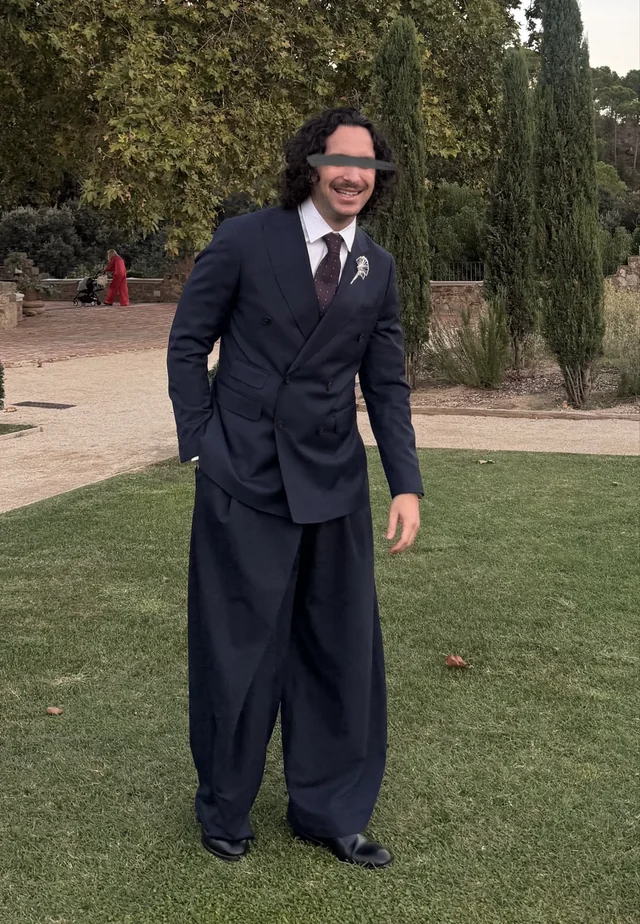
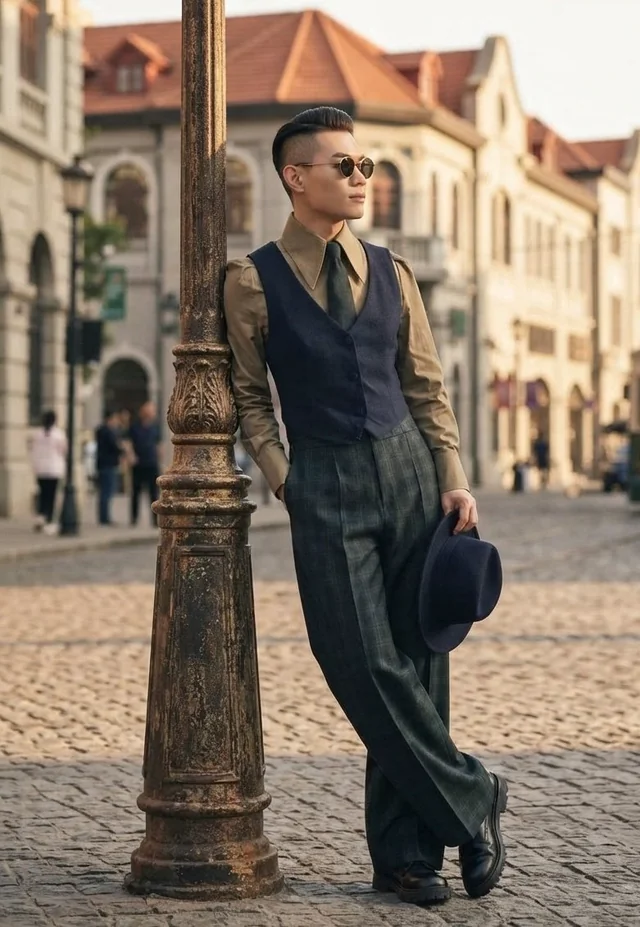
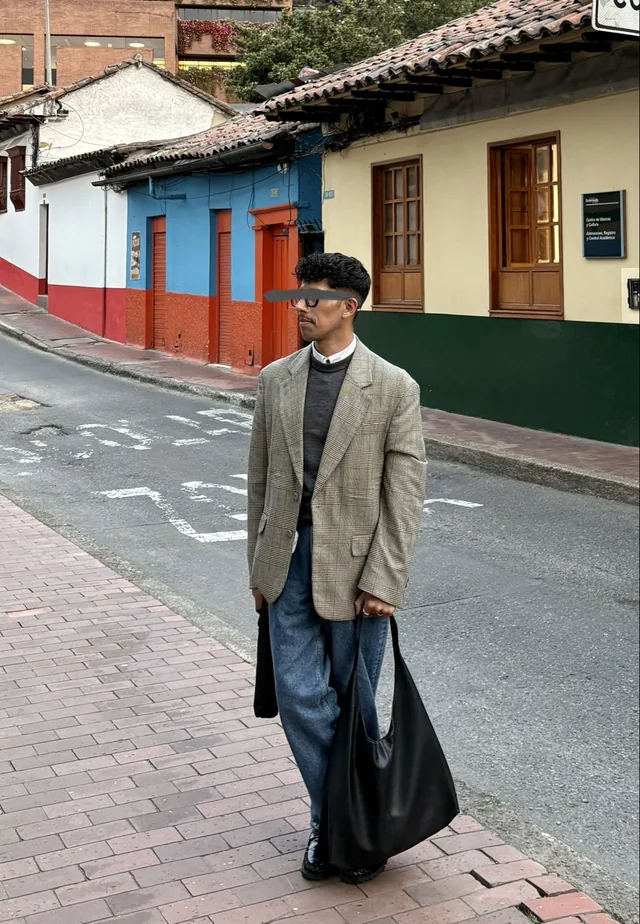
Summary. Sartorial is a dress regime in which garments are designed, constructed, and evaluated through the engineering principles of bespoke and high-craft tailoring: full-canvas or half-canvas chest-piece architectures that mold to the wearer's body over hundreds of hours of wear, pattern-drafted shoulder constructions that distribute garment weight across the trapezius through precisely calibrated wadding and sleeve-head roll, lapel geometries governed by the physics of bridle-stay tension and canvas stiffness, and trouser systems where the crease line, rise, and drape are determined by cloth weight, fiber diameter, and pressing technique rather than by decorative preference. The aesthetic is governed by a construction-legibility logic: garments are judged by how their internal engineering — invisible to the untrained eye — produces external effects of fit, proportion, and movement that are readable only by participants with sufficient technical literacy to distinguish a hand-padded lapel from a fused one, a spalla camicia from a roped English shoulder, or a full-canvas front from a floating chest piece.

In Material Terms

Sartorial's coherence depends on the performance properties of fine animal-fiber textiles — primarily worsted wool, but extending to cashmere, mohair, linen, and silk — evaluated through the Super-number system (where Super 100s denotes a mean fiber diameter of 18.5 microns, Super 120s corresponds to 17.5 microns, Super 150s to 16.0 microns, and Super 200s to 13.5 microns), cloth weight measured in grams per linear meter or ounces per yard, and weave structure (plain, twill, hopsack, fresco) that determines drape, wrinkle recovery, breathability, and durability under seated compression and daily friction. When these textile parameters are correctly matched to construction method and intended use scenario — a 280 g/m tropical-weight high-twist worsted for summer suiting, a 370 g/m flannel for autumn-winter — the system produces garments that regulate temperature, manage moisture, retain shape through a full working day, and improve in hand and fit over years of wear and pressing. When the system is reduced to visual quotation — suit silhouettes executed in fused construction with polyester-blend cloth — the category collapses into costume that mimics tailoring's forms while lacking its engineering substance.

At Category Level

Sartorial occupies the historical core of Western men's formal dress and its contemporary extensions into gender-fluid, women's, and deconstructed tailoring. High-specification implementations are evaluated through construction criteria: canvas type and attachment method, handwork density (pick stitching, buttonhole execution, pad stitching on lapels and collar), cloth provenance (mill, fiber source, selvedge identification), pressing quality, and fit behavior across the five critical posture positions (standing, seated, reaching, walking, one-button fastened with arms at sides). Lower-tier implementations reproduce the visual grammar — notch-lapel jacket, flat-front trouser, spread-collar shirt — while substituting fused interlinings, machine-sewn buttonholes, and blended fabrics that degrade under dry-cleaning solvents and lose shape within months. This stratification is not merely commercial but epistemological: it separates participants who evaluate garments through construction science from those who evaluate through brand recognition or trend compliance, and this separation structures the entire discourse of sartorial culture.

Methodologically

This entry treats sartorial as a construction-engineering system embedded in specific institutional, economic, and cultural contexts: garments are analyzed by how their internal architecture produces external legibility, how cloth science determines performance and aging, how maintenance regimes sustain or destroy garment integrity, and how the political economy of tailoring labor shapes who can produce, access, and evaluate sartorial dress.

Word (Etymology)

From Latin sartor ("one who patches or mends," from sarcire, "to patch"), through medieval Latin sartorialis and Italian sartoria (a tailor's workshop). The English adjective "sartorial" entered common usage in the early nineteenth century, coinciding with the emergence of Savile Row as London's bespoke tailoring district and the codification of men's tailoring as a professional discipline distinct from general dressmaking. The etymological root in mending and repair — rather than in creation or design — is significant: it locates the tailor's original craft not in artistic invention but in structural maintenance, the skilled manipulation of cloth to restore, reinforce, and reshape. This repair-centered origin persists in contemporary sartorial practice, where pressing, re-canvassing, relining, and alteration are central to garment longevity and treated as extensions of construction rather than as concessions to wear.

In Italian, sartoria denotes both the physical workshop and the craft system it houses — a semantic unity between place and practice that English separates into "tailoring" (the craft), "tailor's shop" (the place), and "bespoke" (the service model). Neapolitan tailors use sarto with a specificity that distinguishes their handwork tradition from industrial confezione (factory confection), encoding in the term itself a quality hierarchy that operates across Italian cloth culture. In Japanese menswear discourse, the loanword satoriaru (サルトリアル) circulates alongside the native shitateya (仕立て屋, "tailor" or "fitting shop"), with the English-derived term typically signaling awareness of the Anglo-Italian sartorial community rather than Japanese tailoring traditions such as Isetan Men's styling or Beams F curation — a linguistic marker that indexes subcultural positioning within global menswear networks.

Subculture

Sartorial subculture developed through institutional lineage systems rather than through scene-based youth culture: tailoring houses transmitting craft knowledge across generations of cutters and coat-makers, cloth merchants cultivating relationships with weavers spanning decades, military and professional dress codes establishing the occasions and environments where tailored garments were mandatory, and menswear journalism creating the editorial infrastructure for construction analysis and taste arbitration. Contemporary participation spans bespoke clients who commission garments through multi-fitting processes, made-to-measure consumers who select from pre-existing patterns adjusted to individual measurements, ready-to-wear enthusiasts who evaluate factory-produced tailoring through construction literacy, and a growing community of alteration-focused consumers who purchase ready-to-wear and invest in skilled local tailoring to achieve bespoke-adjacent fit.

The bespoke hierarchy. At the apex of the sartorial expertise economy sits the bespoke client-tailor relationship, structured by a fitting protocol that itself encodes quality. A genuine bespoke suit requires a minimum of three fittings: the first establishes the paper pattern through detailed body measurement (typically 25–40 individual measurements including shoulder slope angle, blade-to-blade distance, chest prominence, seat curve, and stance break), the second tests the basted garment (assembled in white basting thread with minimal finishing) for structural fit and movement, and the third refines details — lapel width, gorge placement, button stance, pocket positioning, trouser break — before final construction. Four or five fittings indicate either complex body geometry or exceptional attention to detail. Fewer than three fittings, particularly when advertised as "bespoke," typically indicate a made-to-measure process relabeled for marketing purposes — a distinction that the Savile Row Bespoke Association has formally codified to protect the term's meaning. The number of fittings thus functions as a quality signal legible within the community: it communicates both the complexity of the garment and the seriousness of the client-tailor engagement.

The pattern-cutting lineage. Savile Row's expertise economy is organized through lineage: a cutter (the craftsperson who drafts the pattern and manages the fitting process) typically trained under a master cutter for five to eight years before achieving independent status, and the stylistic DNA of the training house propagates through subsequent work. Anderson & Sheppard's soft, draped cut descends from the innovations of Per Olof Gustaf "Frederick" Scholte, who dressed the Duke of Windsor; Huntsman's firm, structured silhouette reflects a military-influenced cutting tradition emphasizing defined shoulder and suppressed waist; Henry Poole's house style balances structure with comfort, reflecting its claim as Savile Row's oldest surviving firm. These lineage markers are legible to insiders — a knowledgeable observer can identify the likely house of origin from silhouette, shoulder construction, and lapel behavior — and constitute a form of embodied cultural capital that resists codification in trend media.

Digital and forum communities. The internet produced a secondary sartorial expertise economy organized around construction analysis, brand evaluation, and fit documentation. StyleForum (founded 2002), Ask Andy About Clothes, and later Instagram accounts and YouTube channels (@dieworkwear, The Rake, Permanent Style by Simon Crompton) created platforms where participants without access to Savile Row or Neapolitan sartorie could develop construction literacy through comparative discussion — debating the merits of Neapolitan spalla camicia versus English roped shoulders, analyzing Loro Piana versus Holland & Sherry cloths, documenting alterations and their effects on fit. This digital community democratized sartorial knowledge that was previously transmitted only through in-person client-tailor relationships, but simultaneously produced a discourse susceptible to brand fetishism and specification recitation divorced from embodied wear experience.

Expertise economies and gatekeeping. Sartorial is structured by layered expertise that evaluates garments through different registers. At the top, master cutters, cloth merchants, and long-term bespoke clients command authority through direct production knowledge and decades of fitting experience. Mid-tier authority belongs to menswear journalists, content creators, and made-to-measure retailers who translate construction specifications into consumption narratives. At the entry level, participants navigate brand recognition, lapel-width trends, and fit conventions absorbed from social media. These tiers are connected by the ability to "read" a jacket: to identify canvas construction by pinching the front panel, to assess lapel roll by observing how the lapel curves away from the chest without breaking, to evaluate shoulder construction by watching how the sleeve head moves during arm extension. This legibility hierarchy — who can see what in a garment — is the sartorial community's primary gatekeeping mechanism.

History

The material history of sartorial dress begins not in fashion but in military, professional, and court dress systems that gradually produced the modern suit as a solution to specific social-performance requirements: projecting authority, signaling institutional membership, and accommodating the body in environments ranging from horseback riding to parliamentary debate.

Court-to-street transformation (1790s–1840s). George Bryan "Beau" Brummell (1778–1840) is conventionally credited with establishing modern sartorial principles: the rejection of aristocratic ornament (brocade, lace, powdered wigs, bright colors) in favor of dark cloth, precise tailoring, clean linen, and personal hygiene as the basis of masculine elegance. Brummell's innovation was as much philosophical as sartorial — he replaced wealth-display dress with fit-display dress, shifting the evaluative criterion from how much the garment cost to how well it was cut. This required the tailor's skill to become visible through subtlety rather than through ornament, establishing the paradox that defines sartorial aesthetics to this day: the most expensive and labor-intensive garments should appear the most restrained. Brummell patronized tailors in the streets around what would become Savile Row, establishing the geographic and cultural association between London's Mayfair district and bespoke tailoring that persists into the present.

Savile Row codification (1840s–1900s). Henry Poole & Co. (established at 32 Savile Row in 1846, though the firm's origins date to 1806) anchored the street as a tailoring destination, attracting a cluster of competing houses that collectively established Savile Row's reputation. The Victorian era codified the lounge suit — a three-piece ensemble of matching jacket, waistcoat, and trousers, cut from the same cloth — as standard professional dress for the expanding middle class. Tailoring technology advanced in parallel: the introduction of the tape measure (replacing body-tracing methods), the development of proportional pattern-drafting systems, and the spread of the sewing machine (patented by Isaac Singer in 1851, adopted incrementally by tailoring houses for long seams while preserving handwork for structural elements) industrialized some aspects of production while keeping the core craft — cutting, canvassing, pad stitching, pressing — in skilled hands.

The Duke of Windsor and international influence (1920s–1940s). Edward, Prince of Wales (later King Edward VIII, then Duke of Windsor), became the twentieth century's most consequential menswear figure, popularizing the Prince of Wales check, the Windsor knot (though he himself reportedly favored a four-in-hand tied with a thick lining), double-breasted suiting, turn-back cuffs on trousers, and the general principle that sartorial rules existed to be broken with elegant self-assurance — a disposition the Italians would later term sprezzatura. The Duke's patronage of both English and continental tailors helped internationalize sartorial culture, establishing a transatlantic dialogue between London's structured tradition and the softer, lighter approaches developing in Italy and America.

Neapolitan and Italian sartorial traditions (1930s–1970s). While Savile Row emphasized structure — firm canvas, defined shoulders, precise silhouette — Neapolitan tailoring developed a contrasting philosophy centered on softness, lightness, and natural body movement. The spalla camicia ("shirt shoulder") construction gathers the sleeve head into the shoulder seam without padding or roping, allowing the fabric to fall naturally and creating a relaxed, slightly rumpled appearance that signals handwork through apparent imperfection. Rubinacci (founded 1932 by Gennaro Rubinacci on Via Filangieri, Naples), Cesare Attolini (the tailor credited with inventing the unstructured Neapolitan jacket in the 1930s), and later Kiton (founded 1968 by Ciro Paone) and Isaia (1920s origins as fabric merchants, ready-to-wear since the 1950s) codified this tradition into a recognizable school. In Milan and Rome, Brioni (founded 1945 by Nazareno Fonticoli and Gaetano Savini) pioneered luxury ready-to-wear tailoring, staging the first men's fashion show in 1952 and establishing the model of Italian sartorial elegance as sensuous, body-conscious, and cloth-forward — distinct from both English structure and Neapolitan softness.

Armani, deconstruction, and the power suit (1970s–1990s). Giorgio Armani's 1975 debut collection removed the suit's internal architecture — stripping out canvas, reducing padding, softening shoulders — to produce a deconstructed jacket that draped over the body rather than shaping it. This was simultaneously a technical revolution (proving that a jacket could maintain visual coherence without traditional canvas construction) and a cultural one (aligning tailoring with the era's relaxation of gender codes and rejection of rigid formality). The 1980s power suit — exaggerated shoulders, bold pinstripes, double-breasted closures, worn by both men and women in corporate contexts — represented a counter-reaction: tailoring as armor, using the suit's structure-projecting capacity to signal authority in newly competitive financial and corporate environments. Yves Saint Laurent's Le Smoking (1966) had already disrupted gendered tailoring by presenting a women's tuxedo that borrowed masculine authority markers; the 1980s generalized this gender-crossing move into mainstream professional dress.

Decline, revival, and contemporary transformations (1990s–present). The spread of business-casual dress codes through the 1990s technology sector (Dress-Down Fridays, Silicon Valley's anti-suit culture) produced the most significant contraction in suitwear consumption since the lounge suit's adoption a century earlier. Men's suit sales in the United States declined steadily from the late 1990s through the 2010s, and tailoring houses that had served a captive professional market were forced to reposition around occasion wear, luxury lifestyle, or niche enthusiast communities. Mad Men (2007–2015) produced a visible tailoring revival — narrow lapels, skinny ties, trim silhouettes — that increased interest in mid-century menswear but was absorbed and discarded within a single trend cycle. The 2010s #menswear movement (centered on Tumblr, Instagram, and forum communities) fetishized Neapolitan sprezzatura, unstructured shoulders, and Pitti Uomo peacocking, creating a digital-visual culture of sartorial display that was simultaneously a genuine knowledge-sharing community and a brand-driven marketing ecosystem. Post-2020, COVID-19 accelerated suit-wearing decline while paradoxically intensifying interest in "investment dressing" and "quiet luxury" — categories that repackaged sartorial principles (quality construction, restrained design, natural fibers) for an audience that had largely abandoned the suit as daily uniform. Thom Browne's shrunken-proportioned suiting, Harris Reed's gender-fluid tailoring, and Grace Wales Bonner's diasporic menswear expanded the sartorial vocabulary beyond its traditional masculine-conservative parameters.

Silhouette

Sartorial silhouette is governed by the three-dimensional engineering of the jacket's internal architecture rather than by surface-level proportion trends. The characteristic forms — defined shoulder, clean chest, suppressed waist, skirt that covers the seat — are not arbitrary style preferences but engineering consequences of how canvas, wadding, and pressing interact to shape flat cloth into a three-dimensional structure that accommodates the body's asymmetries while projecting an idealized geometry of balance and proportion.

Shoulder construction. The shoulder is the jacket's primary structural statement and the most immediate identifier of tailoring tradition. The English roped shoulder (Huntsman, Gieves & Hawkes) uses a structured sleeve head — wadding or domette inserted between the outer fabric and the lining at the top of the sleeve — combined with a tightly set armhole that positions the sleeve seam at or slightly beyond the natural shoulder point. The result is a defined, slightly extended shoulder line with a visible "rope" of fabric at the sleeve-head junction, creating a military-influenced silhouette that broadens the upper body and projects authority. The Neapolitan spalla camicia achieves the opposite effect: the sleeve head is gathered into the shoulder seam without wadding, the armhole is cut higher and tighter to the body, and the excess fabric at the sleeve-head junction is eased in by hand to create a subtle shirt-like gather. This construction allows the shoulder to follow the body's natural slope, producing a relaxed silhouette that signals handcraft through controlled irregularity — the gather is deliberate, not accidental, and achieving it cleanly requires exceptional skill. The American natural shoulder (Brooks Brothers, J. Press) represents a middle position: minimal padding, no rope, a clean sleeve-head set that follows the shoulder's natural line without either extending or gathering it.

Chest and lapel geometry. The jacket's chest shape is determined by the canvas — a layer of horsehair, cotton, and linen interfacing that spans from the shoulder to the hem and around the lapel, providing shape, body, and resilience without stiffness. In full-canvas construction, this interfacing extends the entire length of the jacket front and is attached to the outer fabric through pad stitching — small, diagonal hand stitches that incrementally shape the canvas to follow the body's chest contour. The lapel's roll — the curve where the lapel turns back from the chest, creating the three-dimensional fold visible in profile — is engineered through the bridle stay (a reinforcing tape sewn along the roll line) and the angle and density of pad stitching on the lapel canvas. A well-rolled lapel should curve smoothly away from the chest, lying flat along the collarbone without pressing into the shirt or gapping outward. This is perhaps the most immediate visual indicator of construction quality: fused jackets, which replace canvas with thermoplastic adhesive bonded directly to the outer fabric, produce flat, lifeless lapels that lack the organic roll of a canvassed front.

Trouser and balance. Sartorial trousers are governed by drape: the fabric's behavior under gravity, determined by cloth weight, fiber diameter, and weave structure. A properly draped trouser falls in a clean, unbroken line from waist to hem, with a single crease running from the pleat (if present) to the break point at the shoe. The rise (distance from crotch seam to waistband) is typically higher than casual-trouser convention — sitting at the natural waist rather than the hip — because a higher rise allows the trouser to hang from the body's narrowest point, producing cleaner drape and eliminating the belt-line gap and bunching that low-rise trousers create when seated. The break (the fold of fabric where the trouser meets the shoe) is calibrated by tradition and personal preference: a full break (fabric pools visibly over the shoe) was standard through mid-century; a half-break (slight fold at the shoe) became dominant in contemporary tailoring; no break (trouser hem lands precisely at the shoe's opening without any fold) signals either Italian-influenced taste or Thom Browne-derived cropped proportions. Each choice communicates position within the sartorial community's internal taste hierarchy.

Materials

Material selection is the sartorial system's primary performance substrate and the domain where cloth science, trade geography, and construction logic intersect most densely.

The Super-number system. Wool fiber quality is graded by the Super-number designation, which corresponds to mean fiber diameter: Super 80s (19.75 microns), Super 100s (18.5 microns), Super 110s (18.25 microns), Super 120s (17.5 microns), Super 150s (16.0 microns), Super 180s (15.0 microns), Super 200s (13.5 microns), and Super 250s (11.0 microns, the theoretical limit of commercially available Merino). As fiber diameter decreases, the cloth gains softness, drape, and luster — Super 150s feels markedly silkier than Super 100s — but simultaneously loses durability, wrinkle recovery, and abrasion resistance. This inverse relationship between fineness and resilience is sartorial cloth science's central trade-off: a Super 180s suit will drape beautifully at a two-hour dinner but crumple irreversibly during a full working day of seated desk work and public-transit commuting, while a Super 100s worsted will maintain its shape through twelve hours of wear but lack the luxurious hand that justifies premium pricing. Experienced sartorial participants navigate this trade-off by matching fiber grade to use scenario: Super 100s–120s for daily business suiting, Super 130s–150s for occasion wear and lighter-use garments, and Super 160s and above reserved for ceremonial or limited-wear applications where durability is not a primary concern.

Weave structures. Plain weave (tabby) — the simplest interlacing, one warp over one weft — produces a crisp, smooth fabric with high wrinkle resistance, used in tropical worsteds and summer-weight suiting. Twill weave — warp floats over two or more weft yarns, producing a diagonal rib — creates softer, more drapey fabrics with greater recovery and comfort; the standard 2/2 twill is the basis of serge and many worsted suitings. Hopsack (basket weave) — pairs of warp and weft yarns interlaced together — creates an open, breathable fabric ideal for summer jackets and unstructured blazers. Fresco (a high-twist, open-weave worsted developed by Hardy Minnis) is engineered specifically for hot-weather tailoring: the aggressive yarn twist creates a springy, resilient fabric that resists wrinkles and allows air circulation, while the open weave structure prevents heat buildup against the body. Flannel — a soft, slightly napped fabric produced from carded (rather than combed) yarn, with fibers brushed to create a fuzzy surface — provides warmth and a rich, matte texture suited to autumn-winter suiting; it is more susceptible to seat shine (compression-induced luster at points of prolonged contact) than smooth worsteds but is prized for its depth of color and tactile warmth.

The three great milling regions. England's Yorkshire mills (Huddersfield cluster: Abraham Moon, Joseph H. Clissold, W.T. Johnson & Sons; wider Yorkshire and English mills: Holland & Sherry, W. Bill, Bower Roebuck) produce cloth characterized by firm hand, crisp finish, and durability — reflecting the tradition of suiting for London's climate and the structured English tailoring that demands cloth with enough body to hold a defined shoulder and clean lapel roll. Italy's Biella district (Loro Piana, Ermenegildo Zegna, Vitale Barberis Canonico, Drapers — formerly E. Thomas and Reda, now consolidated under the Reda Group, Carlo Barbera) produces cloth characterized by softness, lightness, and drape — reflecting the Neapolitan and Milanese tailoring traditions that favor unstructured construction and body-conscious silhouettes. Scotland (Johnstons of Elgin, Harris Tweed producers across the Outer Hebrides, Lochcarron of Scotland) specializes in tweed and estate cloths — heavyweight, textured fabrics with natural color achieved through undyed wool blending, suited to country tailoring and heavyweight overcoats. These regional identities are not merely marketing narratives; they reflect genuine differences in loom configuration, finishing processes, and the cloth-tailoring feedback loop through which each region's mills evolved their product to serve the tailoring traditions of their primary markets.

Shirting fabrics. The sartorial dress shirt is constructed from cotton shirting in specific weaves: poplin (a tight plain weave with a fine ribbed surface, producing a smooth, slightly lustrous fabric suitable for formal business contexts), twill (a soft, diagonal-ribbed weave with greater texture and wrinkle resistance than poplin), Oxford cloth (a coarser basket weave with visible texture, more casual than poplin but foundational to Ivy League and American tailoring), Royal Oxford (a finer, denser variant of Oxford with a subtle diamond pattern visible on close inspection), and Sea Island cotton (grown primarily in the Caribbean, with extra-long staple fibers exceeding 36mm, producing a silky, lustrous fabric with exceptional drape that represents the pinnacle of shirting luxury). Two-ply construction (two-ply warp and weft yarns, producing a denser, more resilient fabric) is the quality standard for dress shirting; single-ply construction is lighter and less durable but appropriate for casual or summer shirts.

Silk and accessory textiles. Neckties are woven from silk — primarily printed silk (screen-printed patterns on plain-weave silk), jacquard-woven silk (patterns created in the weave structure itself, producing more textured, three-dimensional designs), or grenadine (an open, mesh-like silk weave that produces a textured, almost knitted appearance with exceptional resistance to creasing). English silk (Robert Keyte, Vanners) tends toward denser weave and more restrained pattern; Italian silk (Seteria Bianchi, Stefano Ricci) favors softer hand and bolder color. Pocket squares use silk (for smooth, lustrous folds), linen (for puffed, matte folds), or cotton (for casual applications), each material producing a different fold behavior and formality signal.

Failure modes in sartorial textiles. High-Super-number wools develop seat shine (localized compression polish where the fabric is pressed flat against seating surfaces), elbow shine (abrasion-induced luster at the outer elbow from desk contact), and eventually fabric thinning at points of maximum abrasion. These are not manufacturing defects but inherent consequences of fine-fiber physics: thinner fibers compress and polish more readily than thicker ones. Flannel's napped surface traps lint and develops pill (fiber balls from surface abrasion) over extended use. Linen suiting creases aggressively and cannot maintain a pressed appearance for more than a few hours — a property that sartorial purists either accept as the cloth's natural character or avoid by selecting linen-wool or linen-silk blends that mitigate creasing through fiber blending.

Color Palette

The palette operates on a principle of calibrated restraint where each color carries institutional and social coding developed over two centuries of tailoring convention. Navy, charcoal grey, and medium grey constitute the foundational business-suiting triad, with navy signaling approachable authority (the "job interview suit"), charcoal signaling formal gravitas, and medium grey signaling versatility across business and social contexts. Black suiting is reserved for evening wear (dinner suits, morning dress) and funerals in Anglo-American convention; wearing a black suit in daytime business contexts marks either deliberate fashion-world subversion or unfamiliarity with traditional coding — a shibboleth that functions as an entry-level gatekeeping signal.

Beyond the core triad, the palette extends into tan and camel (spring-summer, Southern European influence, strong Neapolitan association), dark brown (underrepresented in corporate environments but central to country and sporting tailoring), burgundy (bold but restrained accent, typically in odd jackets or knitwear), and olive and forest green (Ivy League and country-tailoring associations). Pattern introduces chromatic complexity within this narrow range: pinstripes (white or chalk stripe on navy or charcoal ground, corporate and banking associations), windowpane checks (open grid pattern, typically in lighter colors on dark grounds, signaling confidence and sartorial awareness), Prince of Wales check (a complex composite check combining glen plaid with an overcheck, the Duke of Windsor's signature pattern), houndstooth and dogtooth (small-scale checks used in sport coats and country tailoring), and herringbone (a broken twill creating a zigzag pattern, used in both suiting and overcoating, from fine worsted to heavyweight tweed).

Shirting color follows a parallel restraint logic: white is the default formal shirt, signaling laundering discipline and professional conformity; pale blue is the secondary standard, softening the face and offering chromatic relief from dark suiting; pink represents the third-tier option, acceptable in Anglo-American business culture but carrying stronger style-awareness signaling. Bengal stripes, university stripes, and graph checks provide pattern within this narrow chromatic band. The tie introduces the strongest chromatic expression permitted within traditional sartorial coding: deep reds, burgundies, navy, forest green, and gold grounds carry institutional associations (regimental stripes referencing military units, club ties signaling membership, school and university ties encoding educational lineage).

Details

Details in sartorial dress are best understood as construction-quality interfaces — engineering indicators that communicate the garment's internal architecture and the level of handwork invested in its production.

Buttonholes. The surgeon's cuff — working buttonholes on the jacket sleeve, functional enough to unbutton — is perhaps the most cited sartorial detail, serving as an immediate indicator of bespoke or high-end made-to-measure construction because functional sleeve buttonholes cannot be easily altered after construction (making them incompatible with the sizing adjustments that ready-to-wear garments require). A hand-stitched buttonhole (the asola a occhiello in Italian) is identifiable by slight irregularity in stitch spacing and the use of gimp thread (a cord-like thread that reinforces the buttonhole's lips against button friction); a machine-cut buttonhole shows perfectly uniform stitching and a cleaner-cut keyhole. On the jacket front, the buttonhole's position relative to the waist — the button stance — determines the jacket's proportional impression: a higher button stance elongates the torso and shortens the lapel; a lower stance lengthens the lapel and exposes more shirt and tie.

Pick stitching (AMF stitching). Visible hand stitching along the lapel edge, pocket flaps, and front edge of the jacket, executed in a small running stitch that catches the outer fabric and the underlying canvas. Pick stitching serves a dual function: it secures the fabric layers to the canvas edge, preventing edge rippling over time, and it visually communicates handwork investment. The stitch spacing and thread weight encode quality: tight, fine stitching in tonal thread indicates refined production; widely spaced, heavy-thread stitching in contrasting color can indicate either decorative emphasis or lower skill execution.

Pockets. Jetted pockets (also called besom pockets — two narrow welts forming a horizontal opening) are the most formal option, creating a clean, uninterrupted jacket front. Flap pockets (a fabric flap covering a jetted opening) are standard on business jackets, combining formality with functionality. Patch pockets (fabric panels stitched onto the jacket's exterior) signal casualness, appearing on sport coats, summer blazers, and unstructured jackets. The ticket pocket — a smaller secondary pocket above the right main pocket — is a British tailoring detail historically used for train tickets that now functions purely as a house-style marker and decorative element. Pocket placement is precise: the breast pocket's angle, the flap pocket's distance from the jacket hem, and the pocket's lateral positioning relative to the button all contribute to the jacket's visual balance and are adjusted by the cutter during pattern drafting.

Collar and gorge. The gorge — the seam where the collar meets the lapel — is positioned higher or lower on the chest depending on fashion period and house style: low gorge (1970s–1980s influence) creates a more open, expansive chest display; high gorge (contemporary standard) creates a tidier, more compact appearance. The collar must sit cleanly against the shirt collar without gapping (pulling away from the neck at the back, exposing the shirt's collar band). Collar gap is the most common fit failure in ready-to-wear tailoring and the one most immediately visible to trained observers.

Trouser details. Single or double forward pleats (fabric folds at the waistband, directing toward the pockets) provide volume and movement ease, particularly in heavier cloths; flat fronts produce a sleaner appearance but sacrifice comfort in fuller cuts. The trouser crease — a pressed fold running from the pleat to the break — is maintained through steam pressing over a tailor's ham and can be semi-permanently set through treatments like the London Shrunk process. Side adjusters (fabric tabs with buttons at the waistband) replace the belt as the traditional trouser-fastening method in sartorial dress, preserving the trouser's clean waistline and allowing micro-adjustment of fit. Cuffs (turn-ups) add weight to the trouser hem, improving drape and creating a visual "frame" at the shoe — their presence or absence encodes another tier of sartorial preference.

Accessories

The sartorial accessory system is hierarchical, with each element calibrated to reinforce the garment system's authority while signaling knowledge of convention and appropriate deviation.

Footwear. Oxford shoes (closed lacing, where the eyelet facings are stitched under the vamp, creating a clean, V-shaped throat) are the formal standard; Derby shoes (open lacing, where the eyelet facings are stitched on top of the vamp, creating a wider, adjustable opening) are slightly less formal but more comfortable and accommodating of higher insteps. Within these two families, cap-toe Oxfords represent the most formal business shoe, whole-cuts (a shoe cut from a single piece of leather) represent the most refined, and brogued versions (perforated decorative patterns) reduce formality while adding visual texture. Construction quality is evaluated through welt type: Goodyear welt (a strip of leather stitched between upper and sole, allowing multiple resolings) indicates investment-grade footwear; Blake stitch (the upper stitched directly to the sole) produces a slimmer profile at the cost of resolability and water resistance; cemented (glued) construction indicates disposable manufacturing. Loafers (penny, tassel, or bit styles), monk-strap shoes (single or double buckle closures), and Chelsea boots provide alternatives calibrated by formality level and sartorial tradition.

Watches. The mechanical watch — a hand-wound or automatic movement timepiece — functions as the sartorial community's primary accessory status marker. Dress watches (thin cases, leather straps, minimal complications) align with suit-wearing conventions; the case should slip cleanly under a shirt cuff without catching. Sport watches (thicker cases, metal bracelets, additional complications) are technically less appropriate with formal tailoring but have become normalized through cultural evolution. The refusal of smartwatches and digital timepieces in traditional sartorial circles is not merely technophobia but an aesthetic commitment to mechanical craft that mirrors the tailoring garment's own handwork values.

Ties, pocket squares, and small goods. The necktie's width should approximate the lapel's width at its widest point — a proportional principle that self-corrects across fashion cycles. A four-in-hand knot (asymmetric, slightly dimpled) is the standard sartorial knot; the full Windsor (large, symmetric, triangular) is widely considered inelegant within knowledgeable sartorial circles despite its popular association with formality. The pocket square provides the outfit's color accent and is explicitly not meant to match the tie — matching signals unfamiliarity with the convention. Cufflinks, tie bars (positioned between the third and fourth shirt buttons), and collar stays (metal or plastic stiffeners inserted into dress-shirt collar points) complete the accessory layer with precision hardware that reinforces the system's attention-to-detail ethos.

Body Logic

Sartorial dress constructs the body as a surface of institutional authority, projecting competence, discipline, and social belonging through the engineering of fit and proportion. The canvassed jacket operates as a reshaping interface: shoulder padding (even minimal) broadens the upper body, chest canvas smooths the torso's contours, waist suppression creates an hourglass silhouette regardless of the wearer's actual shape, and the jacket's skirt extends to cover the seat, creating a continuous vertical line from shoulder to mid-thigh. The suited body reads as deliberate, composed, and institutional — it enters a room as a constructed presentation rather than an unmediated physical form.

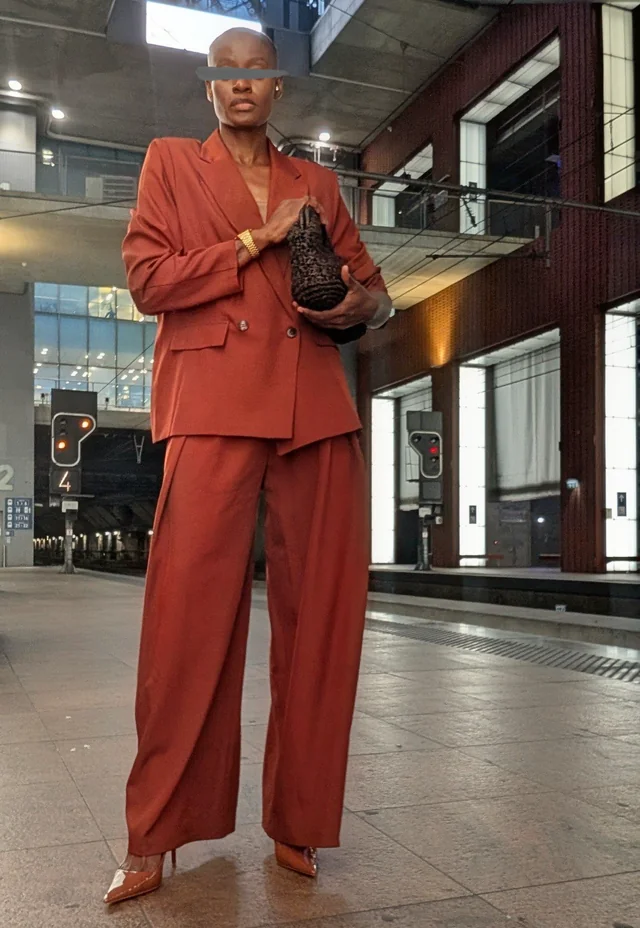
Gender coding in sartorial dress is both foundational and increasingly contested. The suit's forms were developed for and calibrated to the male body: the shoulder extension references military bearing, the trouser replaces the earlier stocking-and-breeches combination that exposed leg shape, and the entire system constructs a silhouette of contained masculine authority. Women's entry into sartorial dress — from Marlene Dietrich's cross-dressing provocations (1930s) through Saint Laurent's Le Smoking (1966) to contemporary gender-fluid tailoring (Harris Reed, Grace Wales Bonner) — has been consistently boundary-crossing precisely because it borrows masculine authority markers, redeploying them to challenge traditional gender norms. The suited female or nonbinary body disrupts the system's assumed legibility, and this disruption has been both the source of its political charge and the occasion for its gradual normalization.

The maintenance labor that sartorial dress demands is itself a class signal. Pressing requires either a professional pressing service or a domestic steam iron, pressing ham, sleeve board, and cloth, plus the knowledge of how to press (not iron — pressing lifts and places the iron with steam, while ironing drags the iron across fabric, crushing the nap and creating unwanted shine). Shoe polishing requires cream polish, wax polish, brushes, and buffing cloths, plus the 15–20 minutes per pair that proper polishing demands. Dry cleaning requires access to a reliable professional service. This maintenance infrastructure — time, equipment, knowledge, money — is invisible but constant, and its absence produces rapid garment degradation that undermines the investment-dressing premise.

Garment Logic

Sartorial construction is organized around the jacket's internal architecture, which determines every external characteristic of fit, drape, and movement behavior.

Canvas construction. Full-canvas construction uses a layer of horsehair-and-cotton or horsehair-and-linen interfacing that extends from the shoulder to the hem across the entire jacket front. This canvas is attached to the outer fabric through pad stitching — thousands of small, diagonal hand stitches that incrementally shape the flat canvas into a three-dimensional form matching the wearer's chest contour. The canvas functions as the jacket's skeleton: it provides shape without stiffness, supports the lapel's roll line, prevents the jacket front from collapsing or wrinkling, and — critically — molds to the wearer's body over time as repeated wear compresses and reshapes the horsehair fibers. This progressive conformity is the primary reason bespoke tailoring advocates claim that a well-made suit "improves with wear." Half-canvas construction extends the canvas only through the chest and lapel area, with the lower jacket front stabilized by fusible interlining (thermoplastic adhesive bonded to the fabric under heat and pressure). This represents a cost-engineering compromise that preserves the critical chest-and-lapel performance of canvas while reducing handwork hours. Fully fused construction replaces all canvas with fusible interlining, reducing production cost dramatically but sacrificing the organic drape, lapel roll, breathability, and long-term moldability that canvas provides. Fusing also introduces a specific failure mode: delamination, where the thermoplastic adhesive separates from the outer fabric under repeated dry-cleaning exposure (perchloroethylene, the standard dry-cleaning solvent, is aggressive toward fusible adhesives), heat, or moisture, producing visible bubbling on the jacket front that cannot be repaired.

Pressing as three-dimensional construction. Tailoring pressing is a shaping process, not a cleaning process. Steam, heat, and pressure are applied over curved pressing surfaces — the tailor's ham (a firmly stuffed, curved cushion used for pressing darts, seams, and shoulder areas), the sleeve roll (a cylindrical form for pressing sleeves without creating creases), and the clapper (a wooden block pressed onto steamed fabric to set shape through rapid cooling under pressure). Pressing shrinks, stretches, and shapes wool cloth in ways that alter the garment's three-dimensional form: the back of a jacket is pressed to cup inward, following the body's shoulder-blade contour; the front is pressed to cup outward, accommodating chest prominence; the sleeve cap is pressed and eased to create a smooth, rounded sleeve head. This pressing — performed at multiple stages during construction and again during finishing — is what transforms flat pattern pieces into a garment that appears to have been sculpted around a body. It is also a maintenance requirement: professional pressing periodically restores the three-dimensional shape that daily wear gradually flattens.

Aftercare and maintenance regimes. Wool suiting should be rested between wearings (at minimum 24 hours, ideally 48) to allow the fibers' natural elasticity to recover from the compression and creasing of wear. Cedar hangers (wide, contoured, with trouser bars) support the jacket's shoulders and allow gravity to smooth the body while cedar's aromatic oils provide mild moth deterrence. Brushing with a natural-bristle clothes brush after each wearing removes surface dust and lint while realigning the fabric's nap. Dry cleaning should be minimized — the perchloroethylene solvent strips natural oils from wool fibers, accelerating dryness, brittleness, and color fading — and replaced where possible by steaming, spot cleaning, and airing. When dry cleaning is necessary, GreenEarth (a silicone-based solvent) or wet-cleaning processes are gentler alternatives to perc, though availability varies by market. Moth prevention requires a multi-layered strategy: cedar blocks or lavender sachets provide deterrence through aromatic compounds; pheromone traps (sticky traps baited with synthetic moth pheromone) provide monitoring and early detection; garments in long-term storage should be cleaned (moths are attracted to body oils and food residue, not to clean wool) and sealed in breathable garment bags.

Failure modes. Seat shine and elbow shine (compression-induced surface polish) are the most common and earliest visible failures, particularly in higher-Super-number cloths. Collar-roll collapse (the jacket collar separating from the shirt collar, creating a visible gap at the back of the neck) indicates either poor original fitting, body-posture change, or canvas degradation. Button-thread failure (buttons detaching from weakened thread) is a minor but persistent issue, especially on machine-stitched buttons where thread is not reinforced with a shank-wrap technique. Lining degradation — particularly in acetate linings, which are less durable and more susceptible to perspiration damage than Bemberg cupro (a regenerated cellulose fiber derived from cotton linter, prized for its silk-like hand, moisture absorption, and longevity) — produces visible wear at the sleeve lining, armhole junction, and center-back vent. Fusing delamination, as described above, is the catastrophic and irreversible failure specific to non-canvassed construction.

Motifs / Themes

Restraint as power. The sartorial system's recurring motif is the paradox that the most expensive and labor-intensive garments should appear the least ostentatious — Brummell's original principle, persisting through two centuries of sartorial evolution. This motif manifests in specific conventions: no visible logos (contrast with streetwear's logo-centrality), no bright colors in suiting (contrast with fashion's seasonal palette rotation), and quality expressed through hand feel, internal construction, and fit behavior rather than through surface decoration. The "initiated eye" — the capacity to identify quality markers invisible to outsiders — is the motif's epistemological corollary: sartorial dress rewards knowledge, not display.

Sprezzatura — the Italian concept of studied nonchalance, drawn from Baldassare Castiglione's Il Libro del Cortegiano (1528) — functions as the system's anti-perfectionism corrective. The undone top button, the slightly rumpled pocket square, the spalla camicia's deliberate shoulder gather, the four-in-hand knot's asymmetry: these controlled imperfections signal mastery of the rules sufficient to know when breaking them communicates confidence rather than ignorance. In contemporary sartorial discourse, sprezzatura has been so thoroughly commodified — Instagram peacocking at Pitti Uomo, deliberately mismatched patterns photographed for content — that it has become its own form of studied display, inverting its original meaning.

Permanence and generational investment. Sartorial dress positions itself as temporally resistant to fashion cycles: "buy the best and it will serve you for years" is the category's sustainability promise, materialized in garments designed for relining, repressing, and alteration as the wearer's body changes. This temporal motif aligns sartorial with anti-fast-fashion values but operates in tension with the community's actual consumption patterns, where enthusiasts accumulate multiple high-cost garments across seasons and houses.

Cultural Touchstones

Cary Grant in North by Northwest (1959) — the grey flannel suit maintained through a crop-dusting attack and a Mount Rushmore chase — established the modern sartorial-in-cinema ideal: tailoring as armor that remains composed under duress. The Duke of Windsor's decades-long sartorial documentation provided the most comprehensive visual archive of early-twentieth-century menswear. Sean Connery as James Bond (1962–1967), dressed by Anthony Sinclair in conduit-cut suits, established the suit-as-sophistication-and-danger archetype that Daniel Craig's Tom Ford Bond suits (2006–2021) would later amplify with Italian softness replacing English structure. Mad Men (2007–2015) produced the most commercially consequential tailoring revival of the twenty-first century, though its influence was aesthetically narrow (slim, high-gorge, 1960s-derived) and trend-cycle-limited.

Gianni Agnelli (Fiat chairman, 1921–2003) embodied sprezzatura as personal mythology: the watch worn over the shirt cuff, the unbuttoned shirt collar under a suit, the general air of effortless wealth expressed through controlled sartorial deviation. Contemporary digital touchstones include Permanent Style (Simon Crompton's blog, founded 2007, emphasizing construction analysis and commissioning narratives), The Rake (luxury menswear magazine emphasizing sartorial culture and heritage), Pitti Uomo (the Florence menswear trade fair whose outdoor photography circuit became the visual engine of 2010s sartorial social media), and Die, Workwear! (Derek Guy's blog and Twitter/X account, providing accessible sartorial education to a broad audience). In television, Succession (2018–2023) reframed sartorial dress through wealth-class specificity — Kendall Roy's Loro Piana cashmere and Tom Ford suiting, Logan Roy's bespoke restraint — demonstrating how contemporary prestige television encodes power through sartorial literacy.

See Also

  • Quiet luxury / stealth wealth: Overlapping restraint-as-status logic, but broader than tailoring-specific construction
  • Ivy League / preppy: American sartorial tradition emphasizing natural shoulder, Oxford cloth, and institutional dress codes
  • Sprezzatura: Italian studied nonchalance as sartorial performance principle
  • Power dressing: 1980s exaggerated tailoring as corporate-authority signaling
  • Androgynous / gender-fluid tailoring: Contemporary expansion of sartorial vocabulary across gender boundaries
  • Dandyism: Historical predecessor and ongoing parallel tradition of dress as self-conscious art
  • Military fashion: Shared structural heritage in shoulder construction, button systems, and formality coding
  • Workwear: Contrasting construction philosophy (durability under labor vs. refinement under social performance) with shared craft values

Brands and Designers

Savile Row Bespoke:

  • Henry Poole & Co. (est. 1806, Savile Row since 1846): claimed oldest surviving Savile Row house, diplomatic and royal clientele, classic English structure
  • Huntsman (1849): firm-shouldered, military-influenced cutting, high armhole, defined waist
  • Anderson & Sheppard (1906): soft, draped English cut, Scholte lineage, minimal internal structure relative to Savile Row peers
  • Gieves & Hawkes (1771/1785, merged 1974): military-tailoring heritage, No. 1 Savile Row address
  • Richard James (1992): contemporary Savile Row, bolder color and pattern within bespoke framework
  • Edward Sexton (1969): wide-lapel, 1970s-influenced cutting, rock-and-roll Savile Row tradition
  • Dege & Skinner (1865): military and diplomatic tailoring, livery expertise

Neapolitan Tailoring:

  • Kiton (1968): ultra-luxury RTW and bespoke, Super-number cloth investment, 150+ hours per jacket
  • Isaia (1920s origins, RTW from 1950s): workshop production in Casalnuovo, "coral hand" signature, soft Neapolitan shoulder
  • Rubinacci (1932): foundational Neapolitan house, Mariano Rubinacci's contemporary direction, cloth-merchant heritage
  • Cesare Attolini (1930s cutting tradition, brand since 2000s): credited with originating unstructured Neapolitan jacket
  • Sartoria Formosa (family workshop): small-production Neapolitan tailoring, accessible relative to Kiton/Isaia
  • Liverano & Liverano (1936, Florence): Florentine tailoring tradition, Antonio Liverano as master cutter

Milanese and Roman Tailoring:

  • Brioni (1945): luxury RTW pioneer, first men's fashion show (1952), James Bond association
  • Ermenegildo Zegna (1910): vertically integrated from mill to garment, cloth-and-tailoring empire
  • Corneliani (1958): Milanese RTW tailoring, strong value positioning in luxury segment

American Tailoring:

  • Brooks Brothers (1818): invented the American sack suit (natural shoulder, no darts, boxy cut), Ivy League association, Oxford-cloth button-down shirt originator
  • J. Press (1902): academic Ivy League tailoring, natural-shoulder house style, Yale and Princeton heritage
  • Thom Browne (2001): shrunken-proportioned suiting as conceptual fashion statement, grey flannel as signature
  • The Armoury (Hong Kong/New York): multi-brand retailer and commissioning platform, sartorial curation model
  • Todd Snyder (2011): accessible American tailoring with contemporary proportions and lifestyle integration

Contemporary / Gender-Fluid:

  • Harris Reed (2020): gender-fluid tailoring with romantic, maximal silhouettes
  • Grace Wales Bonner (2014): diasporic menswear, tailoring through Afro-Atlantic cultural lens
  • Palomo Spain (2015): romantic, historically referenced menswear challenging masculine dress conventions
  • The Row (2006): women's tailoring as quiet-luxury precision, construction quality as brand premise
  • Lemaire (2014, Christophe Lemaire and Sarah-Linh Tran): minimal, gender-balanced tailoring and soft construction

Industrial RTW:

  • Suitsupply (2000, Amsterdam): Chinese manufacturing, aggressive value positioning, online fit guidance
  • Spier & Mackay (Toronto): half-canvas construction at accessible price points, enthusiast-community engagement
  • Ring Jacket (1954, Osaka): Japanese-made RTW tailoring, Neapolitan-influenced soft construction
  • Caruso (1958, Parma): Italian manufacturing partner for multiple luxury brands, own-brand RTW tailoring

Accessible / Entry:

  • Paul Smith (1970): British tailoring with color and pattern irreverence
  • Tiger of Sweden (1903): Scandinavian slim tailoring, accessible European suiting
  • Charles Tyrwhitt (1986): entry-level dress shirting and suiting, British high-street positioning
  • Kamakura Shirts (1993, Japan): quality dress shirting at accessible prices, strong collar and construction

Citations

[1] Antongiavanni, Nicholas. The Suit: A Machiavellian Approach to Men's Style. Collins, 2006. [2] Flusser, Alan. Dressing the Man: Mastering the Art of Permanent Fashion. HarperCollins, 2002. [3] Sherwood, James. Savile Row: The Master Tailors of British Bespoke. Thames & Hudson, 2010. [4] Walker, Richard. The Savile Row Story: An Illustrated History. Prion, 1988. [5] Anderson, Horatio. Bespoke: Savile Row Ripped and Smoothed. Simon & Schuster, 2009. [6] Musgrave, Eric. Sharp Suits: A Celebration of Men's Tailoring. Pavilion, 2009. [7] Chenoune, Farid. A History of Men's Fashion. Translated by Deke Dusinberre, Flammarion, 1993. [8] Hollander, Anne. Sex and Suits: The Evolution of Modern Dress. Kodansha International, 1994. [9] Hollander, Anne. Seeing Through Clothes. University of California Press, 1993. [10] Breward, Christopher. The Suit: Form, Function and Style. Reaktion Books, 2016. [11] Breward, Christopher. Fashion. Oxford University Press, 2003. [12] Entwistle, Joanne. The Fashioned Body: Fashion, Dress and Social Theory. 2nd ed., Polity, 2015. [13] Kawamura, Yuniya. Fashion-ology: An Introduction to Fashion Studies. 2nd ed., Bloomsbury Academic, 2018. [14] Wilson, Elizabeth. Adorned in Dreams: Fashion and Modernity. Revised ed., Rutgers University Press, 2003. [15] Crane, Diana. Fashion and Its Social Agendas: Class, Gender, and Identity in Clothing. University of Chicago Press, 2000. [16] Lipovetsky, Gilles. The Empire of Fashion: Dressing Modern Democracy. Princeton University Press, 1994. [17] Barthes, Roland. The Fashion System. Translated by Matthew Ward and Richard Howard, University of California Press, 1983. [18] Bourdieu, Pierre. Distinction: A Social Critique of the Judgement of Taste. Translated by Richard Nice, Harvard University Press, 1984. [19] Simmel, Georg. "Fashion" (1904). In Simmel on Culture: Selected Writings, edited by David Frisby and Mike Featherstone, SAGE, 1997. [20] Veblen, Thorstein. The Theory of the Leisure Class. Macmillan, 1899. [21] Castiglione, Baldassare. The Book of the Courtier (1528). Translated by George Bull, Penguin, 1967. [22] Hebdige, Dick. Subculture: The Meaning of Style. Routledge, 1979. [23] Roetzel, Bernhard. Gentleman: A Timeless Guide to Fashion. Konemann, 1999. [24] Cabrera, Roberto, and Patricia Flaherty Meyers. Classic Tailoring Techniques: A Construction Guide for Men's Wear. Fairchild, 1983. [25] Whife, A.A. The Bespoke Tailor's Handbook. Tailors' Benevolent Association, 1951. [26] Hatch, Kathryn L. Textile Science. West Publishing, 1993. [27] Kadolph, Sara J., and Sara B. Marcketti. Textiles. 12th ed., Pearson, 2016. [28] Tortora, Phyllis G., and Sara B. Marcketti. Survey of Historic Costume. 6th ed., Fairchild Books, 2015. [29] Marx, W. David. Ametora: How Japan Saved American Style. Basic Books, 2015. [30] Crompton, Simon. The Finest Menswear in the World: The Craftsmanship of Luxury. Thames & Hudson, 2014. [31] Boyer, G. Bruce. True Style: The History and Principles of Classic Menswear. Basic Books, 2015. [32] Foulkes, Nicholas. The Trench Book. Assouline, 2007. [33] Savile Row Bespoke Association. "What Is Bespoke?" https://www.savilerowbespoke.com/ [34] Permanent Style. https://www.permanentstyle.com/ [35] Heddels. "Suits." https://www.heddels.com/category/top/suits/ [36] Crompton, Simon. "Guide to Cloth: Understanding Wool Specifications." Permanent Style, 2018. [37] Loro Piana. "Fibres." https://www.loropiana.com/