Military
Summary. Military fashion is a dress system in which garments originally developed through armed-forces procurement — designed to military specifications (mil-spec) for performance under conditions of combat, extreme weather, sustained physical exertion, and institutional regimentation — migrate into civilian wardrobes and are adopted as everyday clothing, subcultural uniform, luxury fashion, or political statement. The aesthetic is governed by a dual logic: specification engineering on one side (every military garment originates in a procurement document that defines material composition, construction tolerances, hardware specifications, and field-performance requirements) and symbolic authority on the other (the uniform's visual grammar communicates discipline, rank, national identity, and institutional power regardless of who wears it).
In Material Terms
Military fashion's coherence depends on the engineering substrate developed through state-funded research: waterproof-breathable shell systems, insulation architectures tested to specific temperature ratings, abrasion-resistant textiles rated to defined tensile-strength standards, and camouflage patterns designed through optical science for specific terrain concealment. When these engineering systems are translated into fashion contexts, they carry performance residue — the garment retains capability that exceeds its civilian use scenario — while simultaneously functioning as a sign system that communicates power, rebellion, or stylistic authority depending on wearer, context, and historical moment.
At Category Level
Military fashion occupies a uniquely contested position between state authority and countercultural resistance. The same M-65 field jacket issued to soldiers in Vietnam was worn by anti-war protesters at the 1968 Democratic National Convention. The same officer's coat that signifies institutional command on the parade ground signifies punk subversion on a London stage. This double coding — the garment's capacity to serve both the state and its opponents — is not a paradox to be resolved but the structural engine that has kept military fashion culturally productive for over two centuries.
Methodologically
This entry treats military fashion as a procurement-to-civilian migration system: garments are analyzed by how they translate between specification-driven military engineering and civilian dress contexts, and by how that translation alters function, legibility, and political valence at each stage.
Word (Etymology)
The label borrows directly from "military" (from Latin militaris, pertaining to soldiers) and applies it adjectivally to civilian dress. As an aesthetic category, "military fashion" denotes not actual military dress but civilian clothing that quotes, adapts, or recombines martial silhouettes, construction logic, material systems, insignia conventions, and color codes for non-military purposes.
The distinction between military dress and military fashion is culturally significant. Military dress is regulated by institutional authority — uniform codes specify exact garment configurations, materials, insignia placement, and wearing occasions, with violations subject to disciplinary action. Military fashion is the selective adoption of this regulated system by actors outside its authority structure, who extract visual elements from their regulatory context and deploy them for personal expression, subcultural signaling, or commercial value. This extraction is the founding gesture of the category: every military-fashion garment represents an act of decontextualization in which specification becomes style.
Related terminology includes "mil-spec" (military specification — the technical standard to which a garment was manufactured, now used colloquially to signify high-durability construction), "surplus" (government-excess inventory sold to civilian markets, the primary material pipeline through which military garments historically entered fashion), and "tactical" (a contemporary sub-category emphasizing law-enforcement and special-operations equipment aesthetics, distinct from historical military fashion in its focus on modular gear systems rather than uniform tradition).
Subculture
Military fashion does not coalesce around a single community but permeates multiple subcultural formations, each extracting different elements from the military source material and subjecting them to distinct evaluative regimes.
Surplus and militaria collectors. The oldest civilian community engaging with military garments: collectors, historians, and surplus-store regulars who evaluate items through provenance, period accuracy, and material condition. Knowledge in this community is organized around identification: recognizing contract dates from label typography, distinguishing original-issue garments from commercial reproductions, dating construction methods by stitch type and hardware specification. U.S. military garment specifications (MIL-SPEC documents, e.g., MIL-J-7823 for the MA-1 flight jacket, MIL-C-43455 for the M-65 field jacket) provide the documentary infrastructure for authentication. Status accrues to those who can read a garment's specification label and reconstruct its production history, issue context, and field-use evidence. Online communities (Vintage Military Threads forums, Reddit's r/militariacollecting, dedicated Facebook groups) transmit this knowledge through image-based identification requests and comparative analysis.
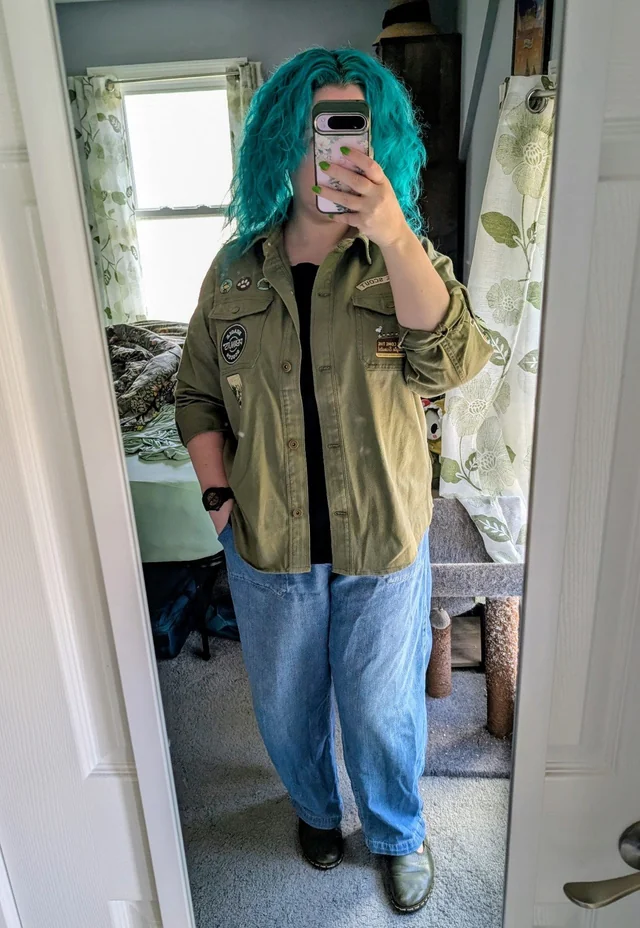
Punk, post-punk, and countercultural adoption. From the late 1960s onward, surplus military garments entered countercultural wardrobes as anti-establishment signifiers. The adoption was deliberately confrontational: wearing the state's uniform against the state. Vietnam-era field jackets, combat boots, and fatigue pants became the material base for punk, skinhead, and anarchist dress, where military garments were decontextualized, customized (painted, patched, safety-pinned), and displayed as evidence of opposition rather than compliance. This community evaluated garments through subcultural legibility rather than mil-spec authenticity: the garment's meaning came from its modification and context, not from its specification compliance.
Japanese mil-spec fashion. Japanese brands — WTAPS (founded 1996 by Tetsu Nishiyama), Neighborhood (1994, Shinsuke Takizawa), Buzz Rickson's (1993, Toyo Enterprise), The Real McCoy's (1988, Hitoshi Tsujimoto) — developed the most technically rigorous civilian engagement with military garment engineering. These brands reverse-engineered original military garments to specification level: sourcing period-correct fabrics, replicating original hardware (reproduction Talon zippers, correct-spec snap fasteners, period-accurate thread), and matching construction methods (chain-stitch hemming, single-needle tailoring, correct seam allowances). Buzz Rickson's B-15 and MA-1 flight jacket reproductions, for example, replicate not only the garment's pattern and materials but the specific knitting gauge of its ribbed cuffs, the weave density of its nylon shell, and the insulation weight of its quilted lining — all documented in the original military specification. This community's evaluative criteria represent the most specification-literate civilian expertise economy in military fashion.
Luxury and runway reinterpretation. Designers from Yves Saint Laurent (safari jackets, 1968) to Balmain (Olivier Rousteing's jeweled officer jackets, 2010s) to Junya Watanabe (patchwork military-workwear hybrids) have translated military garments into haute couture and luxury ready-to-wear. This community evaluates garments through design authorship, material luxury, and cultural positioning rather than specification fidelity. The military reference operates as a formal vocabulary — structured shoulders, gold braiding, insignia-derived embellishment — stripped of functional or historical specificity and redeployed as fashion language.
Tactical and operator culture. A contemporary subcultural formation organized around law-enforcement, special-operations, and private-security equipment: plate carriers, MOLLE-compatible modular systems, tactical pants with integrated knee-pad pockets, and subdued-color utility clothing from brands like 5.11 Tactical, Crye Precision, and Arc'teryx LEAF. This community evaluates garments through operational functionality — does the garment perform under the conditions of its intended use (active duty, range training, emergency response)? — creating an expertise hierarchy based on professional experience and equipment testing.
Sociologically, military fashion is structured by divergent expertise economies that rarely intersect: the militaria collector's specification literacy, the punk's symbolic subversion, the Japanese brand's engineering fidelity, the luxury designer's formal abstraction, and the tactical operator's functional pragmatism all engage the same source material through incompatible evaluative frameworks. This fragmentation is itself analytically significant — it demonstrates that military garments carry enough semantic density to support multiple, contradictory cultural projects simultaneously.
History
The material history of military fashion begins in state procurement systems that developed garment engineering to unprecedented levels of specification, testing, and documentation. Each historical phase produced construction innovations, material systems, and garment typologies that subsequently entered civilian fashion through surplus markets, subcultural adoption, and designer reinterpretation.
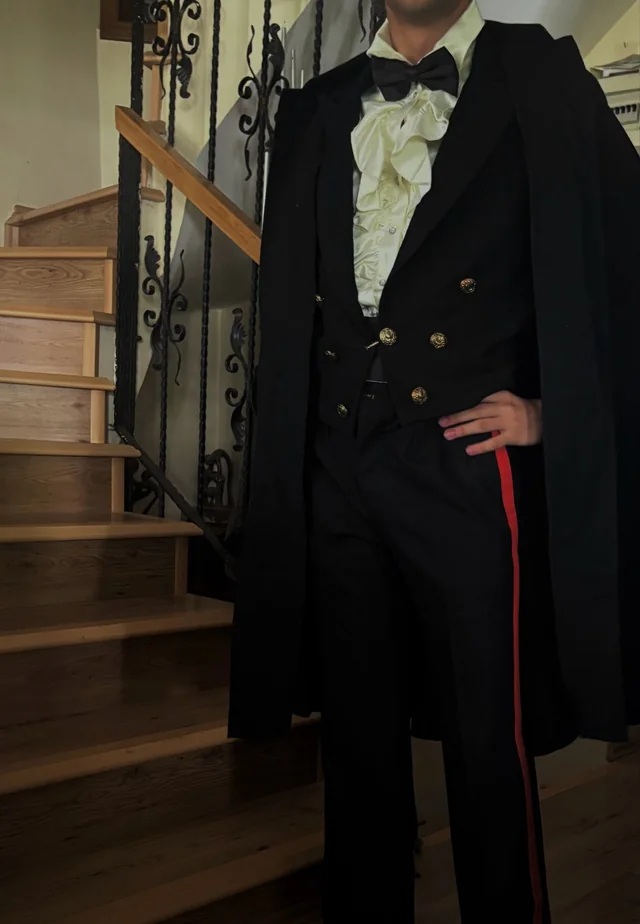
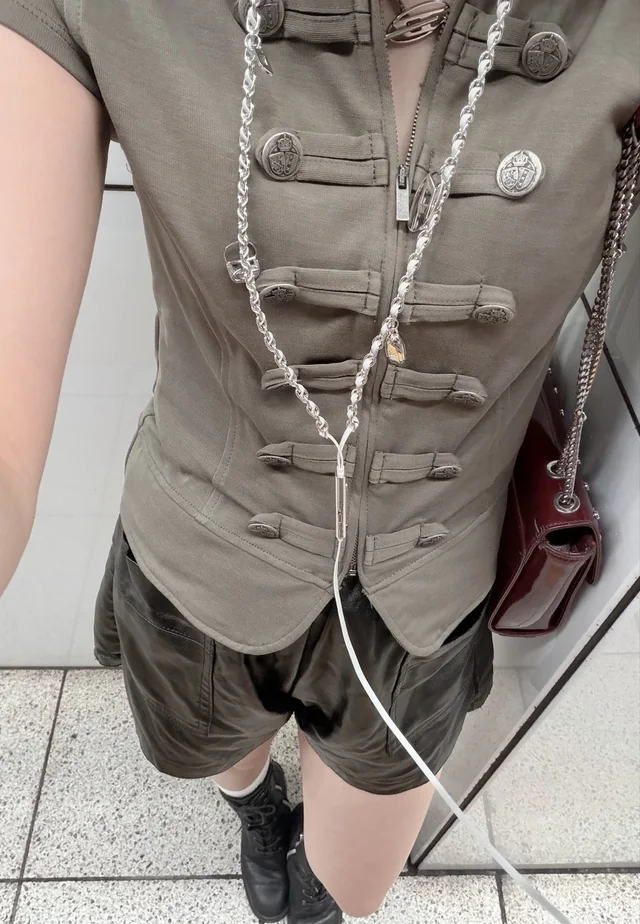
Napoleonic and nineteenth-century officer dress (1790s–1900s). The Napoleonic Wars (1803–1815) established the officer's uniform as a European fashion template. Frogging (ornamental braiding and loop closures, derived from Hungarian hussar dress), epaulettes (shoulder-mounted insignia boards indicating rank), aiguillettes (braided cord decorations, originally functional — used to fasten documents to the uniform), and gold braiding codified a visual grammar of rank and authority that civilian tailors immediately began quoting for women's riding habits and men's formal coats. The Crimean War (1853–1856) introduced the cardigan (named after Lord Cardigan, commander of the Light Brigade) and the raglan sleeve (named after Lord Raglan, who needed a sleeve accommodating his amputated arm) — garment innovations driven by specific military needs that became permanent fashion vocabulary.
Trench warfare and the Burberry trench coat (1914–1918). Thomas Burberry's gabardine trench coat, developed from his 1879 patent for tightly woven, yarn-dyed cotton that resisted water penetration without rubber coating, was adopted by British officers in World War I. The garment's design is a compendium of military interface engineering: the storm flap (a double-breasted front panel directing rain away from the closure), D-rings at the waist belt (originally for attaching grenades, map cases, and equipment), shoulder epaulettes (originally for securing rifle straps and equipment webbing), a back yoke with rain shield (directing water away from the spine), and adjustable cuff straps (sealing the sleeve against wind and rain). Every detail that now reads as "classic tailoring" originated as a specific solution to a trench-warfare exposure problem. The garment's migration from military procurement to civilian fashion — accelerated by the post-war surplus market and by Hollywood's adoption (Humphrey Bogart in Casablanca, 1942) — is the paradigmatic case of military-to-civilian translation.
World War II mass production and the surplus economy (1939–1950s). WWII industrialized military garment production at unprecedented scale, generating the engineering innovations and surplus inventory that would fuel military fashion for decades. Key garment typologies:
- The MA-1 flight jacket (MIL-J-8279, introduced 1950s, developed from the WWII B-15): a nylon shell with knit cuffs, collar, and waistband, designed for cockpit wear in jet aircraft where the B-15's fur collar interfered with parachute harness straps. The MA-1's reversal from sage green to rescue orange (high-visibility interior lining) is a dual-function design that entered fashion as a distinctive stylistic element.
- The M-1943 field jacket (the "M-43"): the U.S. Army's first systematically layered field garment, establishing the base-mid-shell layering principle that would later underpin outdoor and techwear engineering.
- The Eisenhower jacket (officially the "Wool Field Jacket M-1944"): a waist-length, fitted jacket designed by General Dwight D. Eisenhower for ease of movement in vehicles, establishing the blouson silhouette in military and civilian dress.
- N-1 deck jacket: a navy-issue cold-weather jacket with alpaca pile lining and juniper-green cotton shell, designed for carrier-deck duty in extreme wind and spray conditions.
- Herringbone Twill (HBT) fatigues: the standard U.S. military work uniform from 1941 to the early 1950s, using a dense herringbone-weave cotton that distributed stress more evenly than plain weave, making it preferred for ground-contact and high-abrasion duties.
Postwar surplus stores — Army Navy stores, government liquidation auctions — distributed millions of these garments into civilian markets at prices far below commercial equivalents, creating the material pipeline through which working-class, student, and subcultural communities accessed military clothing. This surplus economy democratized access to high-specification garments and established the economic logic that military fashion has never fully abandoned: government-funded engineering, mass-produced at scale, distributed at below-market prices through surplus channels.
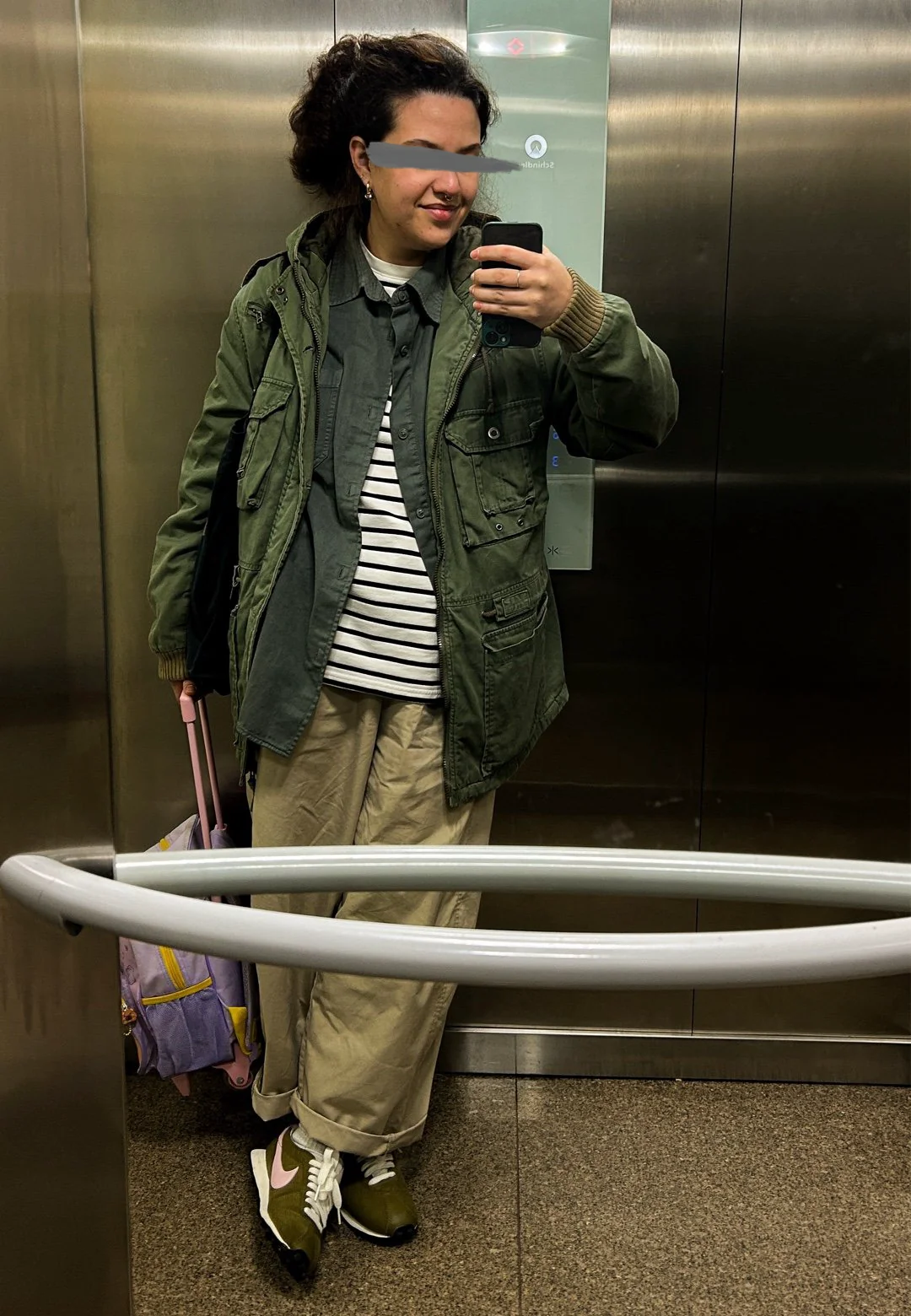
Vietnam era and countercultural inversion (1965–1975). The M-65 field jacket (MIL-C-43455, introduced 1965) — with its four cargo pockets, concealed hood, drawstring waist, and olive-drab cotton-nylon blend shell — became the most politically charged garment in American fashion history. Issued to soldiers fighting in Vietnam, it was simultaneously adopted by anti-war protesters, civil rights activists, and counterculture figures who wore the state's own uniform as a statement against the state's war. Robert De Niro's Travis Bickle in Taxi Driver (1976) wearing a customized M-65 crystallized the garment's ambiguity: soldier and outsider, patriot and threat, discipline and breakdown. This period established the countercultural adoption pattern that subsequent military-fashion cycles would repeat: the garment's authority is borrowed and inverted, its institutional meaning overwritten with oppositional content.
Punk and New Romantic reinterpretation (1976–1985). Punk treated military surplus as raw material for bricolage: combat boots, fatigue pants, and field jackets were customized with paint, patches, safety pins, and destruction. Vivienne Westwood's Pirates collection (Autumn/Winter 1981) recontextualized eighteenth-century naval dress — frogging, sashes, tricorn hats — through punk irreverence, demonstrating that historical military forms could be quoted across centuries without losing stylistic force. The MA-1 flight jacket entered skinhead and mod dress as a subcultural uniform, where its specification-level construction (warm, durable, compact) served practical needs while its military provenance served identity-signaling needs.
Camouflage as fashion print (1980s–2000s). Camouflage patterns — originally developed through optical science to disrupt the human form's outline against specific terrain backgrounds (Woodland for temperate forest, Desert for arid terrain, Flecktarn for European mixed environments, DPM for British contexts) — migrated into fashion as decorative prints. A Bathing Ape (BAPE, founded 1993 by Nigo) created custom camouflage patterns that replaced traditional disruptive shapes with the brand's ape-head logo, making concealment function as brand maximalism — a precise inversion of camouflage's original purpose. This translation exemplifies the broader military-fashion dynamic: a functional system (visual disruption for survival) becomes a symbolic system (brand identity for commercial recognition).
Luxury militarism and post-9/11 fashion (2001–present). The post-September 11 cultural environment intensified military reference in fashion while complicating its politics. Balmain under Olivier Rousteing (appointed creative director 2011) developed the most commercially visible luxury-military vocabulary: jeweled epaulettes, gold braid, structured officer-coat silhouettes, and military-derived embellishment rendered in couture materials and worn by Rihanna, Beyoncé, and the Kardashians. Simultaneously, the "tactical" aesthetic — subdued colors, modular attachment systems, body-armor-derived silhouettes — entered streetwear and techwear through brands like Stone Island Shadow Project, Acronym, and Arc'teryx LEAF (Law Enforcement and Armed Forces), creating a contemporary military-fashion register organized around special-operations imagery rather than historical uniform tradition.
Analytically, military fashion's history is a sequence of context translations — from procurement specification to surplus market, from surplus to subculture, from subculture to runway, from runway to mass market — in which the same engineering substrate and visual grammar are preserved while their political valence, social function, and economic value are repeatedly renegotiated. The garment is constant; its meaning is not.
Silhouette
Military silhouette is governed by three distinct geometric logics that correspond to different branches, eras, and functions of military dress, each producing distinctive forms that have migrated independently into fashion.
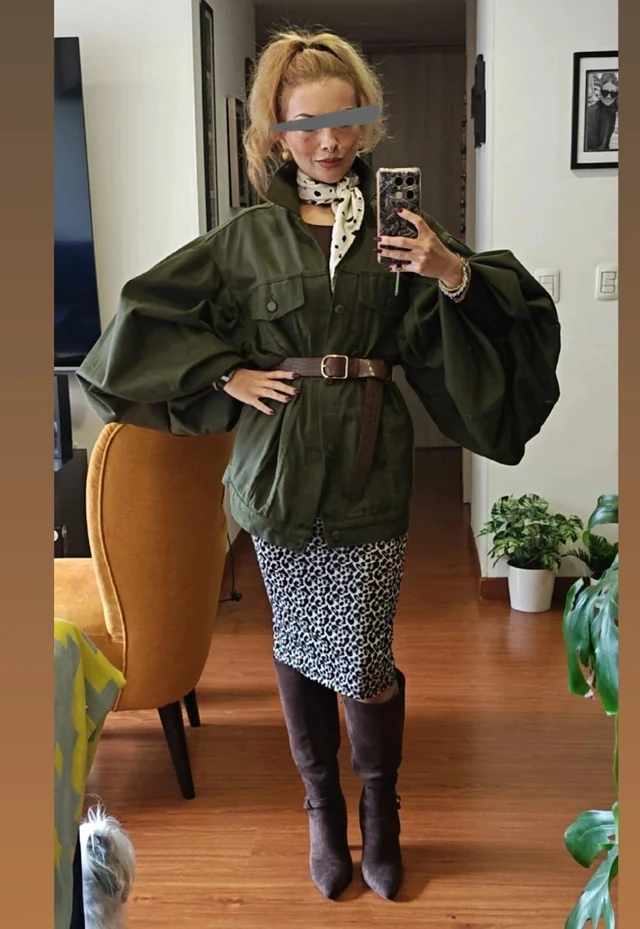
Officer and ceremonial geometry. The officer's coat derives its silhouette from a disciplinary logic: the body is organized into an ideal of controlled authority. Structured shoulders (padded, squared, often extended through epaulettes or shoulder boards) broaden the upper body to project physical command. Waist suppression through belting, darting, or fitted construction creates an hourglass that codes as regimented composure. A-line or flared skirt below the waist permits stride while maintaining the garment's formal drape. Standing collars and high closures frame the head and restrict casual posture, enforcing an upright bearing. This geometry is not primarily about movement accommodation but about disciplined self-presentation — the body is shaped into an image of institutional authority. In fashion, this officer geometry provides the template for structured luxury outerwear: Balmain's double-breasted jackets, Saint Laurent's military-derived blazers, and the persistent trench-coat silhouette all derive their proportional logic from officer dress.
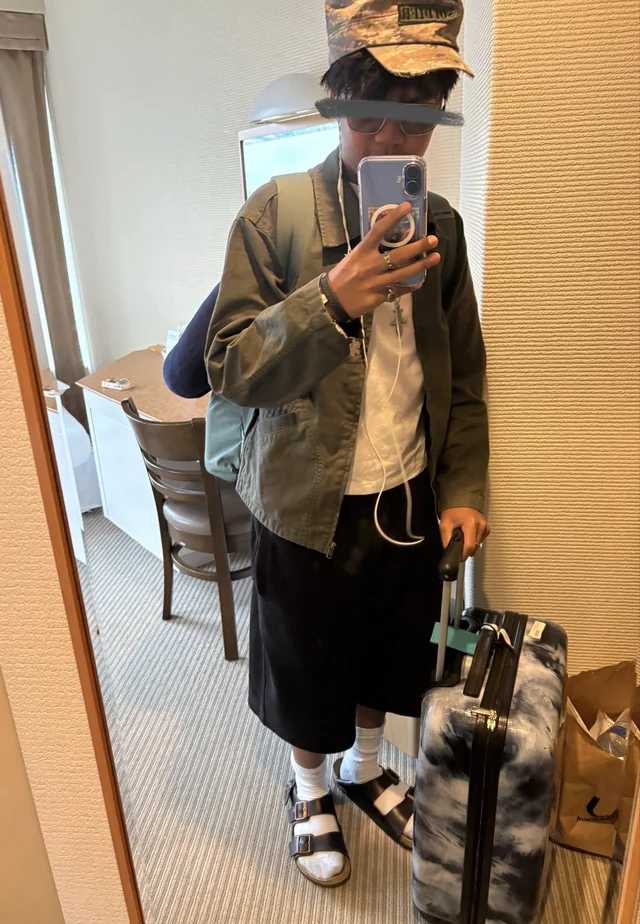
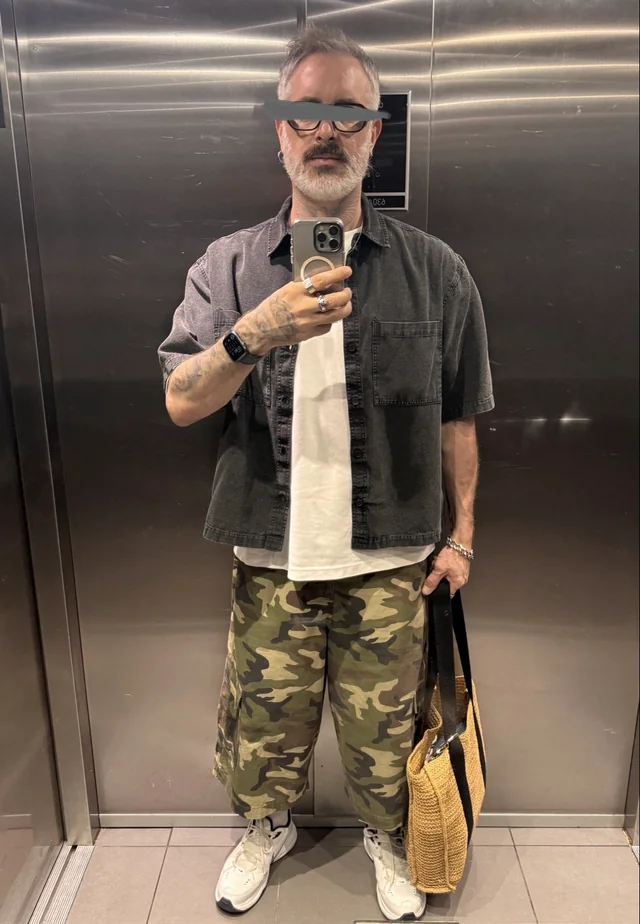
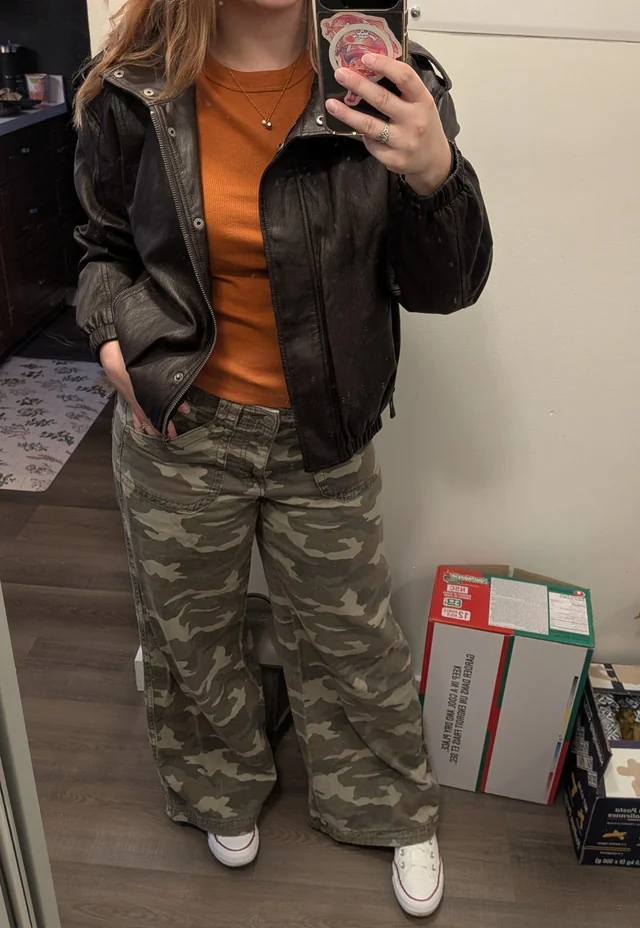
Field and combat utility geometry. Field garments — the M-43, M-65, BDU (Battle Dress Uniform), and ACU (Army Combat Uniform) — are governed by operational geometry: the body must be accommodated through a full range of combat movements (crawling, sprinting, climbing, prone shooting position, loaded-pack carry) without garment restriction or excess fabric that could snag, catch, or impede. Shoulder yokes distribute garment weight across the trapezius. Articulated elbows (gusseted or pre-curved patterning) maintain arm mobility without fabric pooling. Bellowed cargo pockets expand for gear without permanent protrusion. Adjustable waist drawstrings create variable fit that accommodates layering beneath the shell. Hem drawcords seal the garment's lower opening against wind, debris, and insect entry. In fashion, this field geometry provides the template for utilitarian outerwear and cargo pant silhouettes: boxy, roomy, multi-pocketed, adjustable — the "dressed for action" proportional language that gorpcore, techwear, and workwear all share.
Flight and technical geometry. Flight jackets (A-2, B-15, MA-1, G-1) are governed by cockpit ergonomics: the garment must permit seated arm movement (reaching overhead instrument panels, lateral control inputs) without riding up at the waist or restricting shoulder rotation. Knit cuffs and waistband seal body heat inside the garment while permitting wrist and waist flexibility. Blouson cut (fullness above a fitted waist) accommodates torso movement without the garment hem pulling free of the trouser waist. Short length (waist or just below) prevents bulk under parachute harness straps and seat-belt systems. In fashion, the bomber jacket's proportions — short, fitted waist, roomy chest and shoulder, ribbed closures — descend directly from this cockpit geometry.
Each geometric system communicates different military values: officer geometry communicates authority and discipline; field geometry communicates operational readiness and utility; flight geometry communicates technical competence and mobile precision. Fashion adoption selectively quotes these geometries, often combining elements (officer shoulders on a field-jacket body, bomber proportions with luxury fabrication) to produce hybrid silhouettes that carry multiple military references simultaneously.
Materials
Material selection in military garments is determined by procurement specification rather than aesthetic preference — every military textile has been tested, rated, and documented against defined performance requirements. This specification rigor makes military fashion's material substrate the most systematically documented in any fashion-adjacent category.
Wool gabardine. The foundational officer and dress-uniform textile. Gabardine is a tightly woven twill (typically 2×1 or 2×2) using worsted wool yarns, producing a smooth, diagonal-ribbed face with natural water resistance due to the density of the weave and the lanolin content of wool fiber. The fabric holds a pressed crease indefinitely, maintains its drape under sustained wear, and provides moderate warmth through wool's natural temperature-regulating properties (hygroscopic — absorbs up to 30% of its weight in moisture before feeling wet). Gabardine's failure modes include moth damage in storage (wool's protein-fiber structure is vulnerable to Tineola bisselliella larvae), shine development at high-friction points (where fiber surface compression creates light reflection), and pilling under sustained abrasion. Thomas Burberry's innovation was applying tight-weave density to cotton yarns, creating a cotton gabardine with rain resistance sufficient for trench-warfare conditions.
Cotton drill and twill. The standard field-garment textile: a dense, woven cotton in twill weave (2×1 or 3×1), producing a durable, breathable fabric that withstands the abrasion of ground contact, equipment friction, and repeated laundering in field conditions. Weight ranges from lightweight poplin (used in tropical uniforms, ~4 oz/yd²) to heavyweight twill (used in cold-weather garments, 8–10 oz/yd²). OG-107 (Olive Green shade 107) cotton sateen — the fabric of Vietnam-era field uniforms — uses a sateen weave (4×1 float) that produces a smoother face than standard twill, improving comfort against skin while maintaining durability. The M-65 field jacket uses a cotton-nylon blend (50/50 or similar) that combines cotton's comfort and breathability with nylon's abrasion resistance and quick-drying properties.
Nylon and synthetic shell fabrics. The MA-1 flight jacket's shell (MIL-J-8279) uses flight-satin nylon — a dense, smooth-surfaced nylon with a slight sheen, originally specified because its slick surface prevented snagging on cockpit equipment and parachute harness components. Ripstop nylon (a reinforced nylon with grid-pattern threads preventing tear propagation) entered military use in the 1960s for parachutes, ponchos, and lightweight field shelters, and subsequently migrated into combat-uniform construction and civilian outdoor garments. Ballistic nylon (originally developed for World War II flak jackets, a high-denier nylon with exceptional abrasion and puncture resistance) represents the extreme end of military textile engineering and provides the material ancestor for contemporary Cordura fabrics.
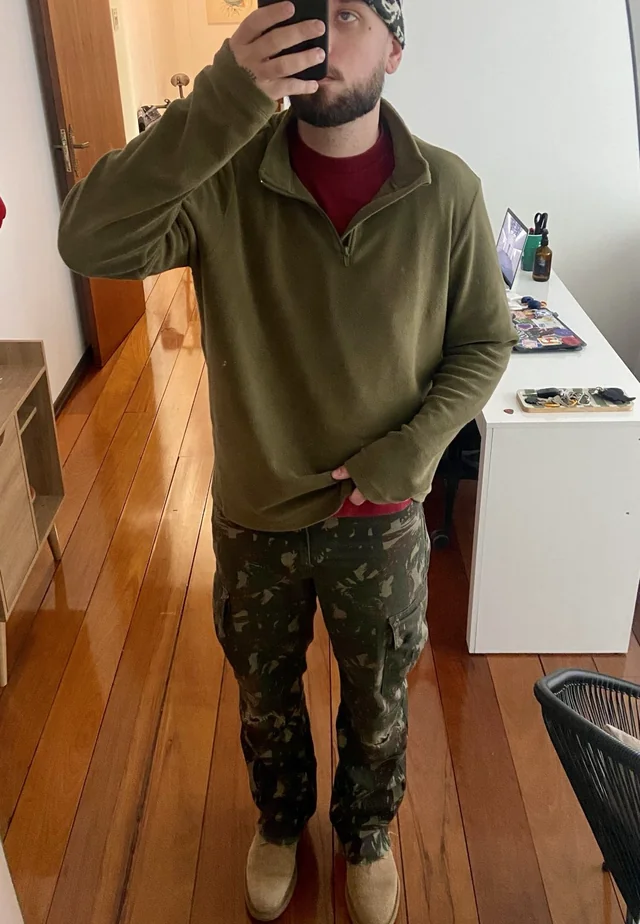
Camouflage as material system. Camouflage patterns are not decorative prints but optical engineering — each pattern is designed through visual-perception research to disrupt the human silhouette's outline against specific terrain backgrounds at specific viewing distances. U.S. Woodland (M81, introduced 1981: four-color pattern of green, brown, black, and sand) was designed for temperate-forest concealment. Desert Camouflage Uniform (DCU, "coffee stain," 1990s: three-color sand/brown/tan) was designed for arid environments. MARPAT (Marine Pattern, 2002: digital pixelated pattern based on Canadian CADPAT, using irregular micro-squares to disrupt form at multiple viewing distances simultaneously) represented a significant optical-engineering advance. MultiCam (Crye Precision, 2004: a gradient-blended pattern designed to function across multiple terrain types) is now the dominant pattern in Western special-operations and fashion-tactical contexts. Each pattern encodes specific optical science — and fashion adoption that uses camouflage as decorative print fundamentally inverts its functional purpose: concealment becomes display.
Insulation systems. Military cold-weather systems historically used wool (blanket-weight, for extreme cold), alpaca pile (the N-1 deck jacket's lining), down (limited use due to wet-condition failure), and synthetic fills (increasingly dominant from the 1980s onward). The Extended Cold Weather Clothing System (ECWCS), developed by the U.S. Army Natick Soldier Research, Development, and Engineering Center, established the seven-layer system used by contemporary military and subsequently adopted by outdoor-industry and techwear engineering: each layer serves a specific thermal-management function from base-layer moisture transport through insulating mid-layers to waterproof-breathable outer shells.
Failure modes and field durability. Military textiles are tested to defined standards: tensile strength (force required to break the fabric, measured in pounds per inch or Newtons), tear resistance (force required to propagate a tear), abrasion resistance (cycles to failure on Martindale or Taber machines), colorfastness (resistance to fading under wash, light, and friction), and dimensional stability (shrinkage under defined wash conditions). These test protocols generate the quantitative data that mil-spec labels reference and that specification-literate communities use for authentication. Fashion-tier military garments rarely undergo comparable testing, meaning that visually identical garments may diverge radically in field durability — a saga green MA-1 from Alpha Industries (a current military contractor) and a visually similar bomber from a fast-fashion brand share silhouette but not engineering.
Color Palette
The military palette is governed by operational requirement and institutional regulation rather than by aesthetic trend. Each color carries specific branch, era, and theater associations that specification-literate participants can read.
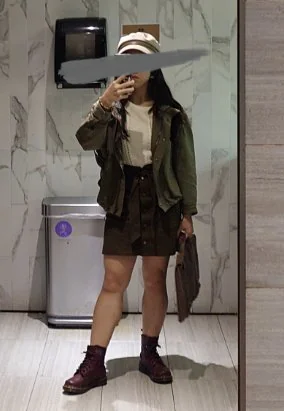
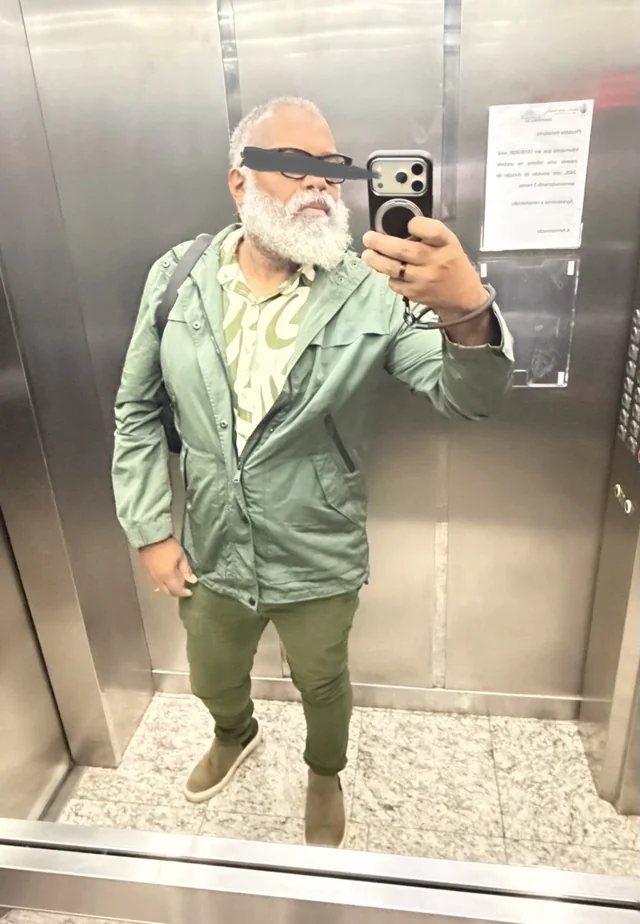
Olive drab (OD, specifically OG-107 and OG-507 shade designations) was the standard U.S. Army field color from World War II through the 1980s, chosen for its visual blend with temperate vegetation. Khaki (from the Hindi/Urdu khākī, "dusty") entered military use through British forces stationed in India (1840s) and became the standard for tropical and desert uniforms. Navy blue (the Royal Navy's foundational color, adopted from the 1740s) provided low-visibility dress for naval service. Black serves tactical and ceremonial functions. Desert tan and coyote brown are contemporary operational colors designed for arid-environment compatibility.
Camouflage patterns constitute a separate chromatic system: multi-color disruptive patterns that violate the single-color logic of dress uniforms. Fashion adoption often treats camouflage as a single "color" when it is actually a complex optical system — reducing it to visual texture rather than functional engineering.
High-visibility elements — rescue orange (MA-1 flight jacket lining), reflective strips on safety equipment, fluorescent panels on maritime gear — appear selectively where detection is necessary. White serves ceremonial naval dress. Scarlet and gold serve ceremonial and regimental functions in traditions where visible identification (which regiment, which rank) supersedes concealment.
The palette's operational logic produces the same functional consequence as techwear's and gorpcore's chromatic restraint: it redirects evaluation from ornamental color play toward material performance and specification literacy. You do not choose olive drab because it trends; you wear it because it references a specific garment from a specific era with a specific specification history.
Details
Details in military fashion are best understood as standardized interfaces — solutions to specific combat, equipment, and operational problems that were specified, tested, and documented by procurement agencies before becoming legible style markers through civilian adoption.
Pocket systems. Military pocket architecture is constrained by equipment compatibility and task-access requirements. The M-65 field jacket's four cargo pockets (two chest, two skirt) are each designed for specific gear: upper pockets for immediately accessible items (compass, notebook, cigarettes, radio handset), lower pockets for larger items (maps, rations, spare magazines). Bellowed construction allows pockets to expand for content without permanent protrusion, and snap-flap closures secure contents against loss during dynamic movement while permitting one-handed opening. BDU (Battle Dress Uniform) trousers place cargo pockets on the outer thigh — positioned for hand-reach access while standing, kneeling, or prone — with button-flap closures that resist opening under the garment's own movement. This pocket logic was specified in procurement documents (MIL-T-44047 for BDU trousers) that defined exact pocket dimensions, placement coordinates, and closure requirements.
Closure and adjustment systems. Military closures are specified for reliability under adverse conditions: cold (gloved operation), wet (corrosion resistance), and stress (resistance to accidental opening under equipment pressure). The trench coat's double-breasted front provides redundant rain coverage — each layer of the overlap adds wind and water protection. Storm flaps over pocket openings and front closures add weather-shielding layers. Throat latches (a small tab securing the collar closed at the neck) seal the garment's top opening against wind. Waist drawstrings on field jackets create adjustable microclimate control (tightened for wind protection, loosened for ventilation during exertion). Each adjustment corresponds to a specific environmental variable: the garment is engineered as a system of independently controllable interfaces between the body and its conditions.
Hardware specification. Military hardware is subject to specific procurement standards: buttons must withstand defined pull-force testing (preventing loss under equipment friction), zippers must pass cycling-durability tests (number of open-close repetitions before failure), and snap fasteners must maintain retention force within defined tolerances across temperature ranges. Brass is the traditional hardware metal for non-magnetic requirements (compass interference avoidance) and corrosion resistance in maritime environments. Blackened (oxidized or phosphate-coated) hardware replaced brass in field contexts where light reflection could compromise concealment. The shift from brass to subdued hardware tracks the broader military evolution from visible, ceremonial dress toward operational concealment — a transition that fashion adoption can quote by hardware color choice.
Insignia and rank systems. Epaulettes, rank stripes, unit patches, qualification badges, and medal ribbons constitute the military garment's information-display system — a standardized visual language that communicates the wearer's rank, unit, qualifications, and service history. Fashion adoption of insignia creates the category's most politically sensitive interface: wearing medals, rank insignia, or unit patches without authorization raises "stolen valor" concerns (legally codified in the U.S. Stolen Valor Act of 2013, which criminalizes fraudulent claims of military decoration). Fashion designers typically abstract insignia into decorative motifs (embroidered braiding, metallic button patterns, stylized badges) rather than reproducing actual insignia, maintaining visual reference while avoiding legal and ethical violation.
Camouflage as surface system. Camouflage patterns function as a detail system layered over the garment's structural construction. In military contexts, the pattern is applied to the fabric before garment assembly, meaning the disruptive pattern is disrupted again at seam lines — an unavoidable optical compromise. In fashion contexts, designers sometimes align patterns across seams (an expensive construction choice that demonstrates material investment) or deliberately misalign them (creating visual fragmentation that reads as deconstructed or avant-garde). The relationship between pattern and construction is thus a detail-level quality indicator in both military and fashion evaluation.
The distinction between specified interface and decorative citation is central to military-fashion analysis. In procurement-grade garments, every detail addresses a documented operational requirement. In fashion implementations, details accumulate as stylistic reference — epaulettes that carry no strap, cargo pockets that hold only phones, D-rings that attach nothing — and the gap between specification origin and symbolic function defines the category's authenticity gradient.
Accessories
Accessory systems in military fashion extend the same specification logic as garments, forming an integrated operational kit that migrates to civilian contexts with varying degrees of functional retention.
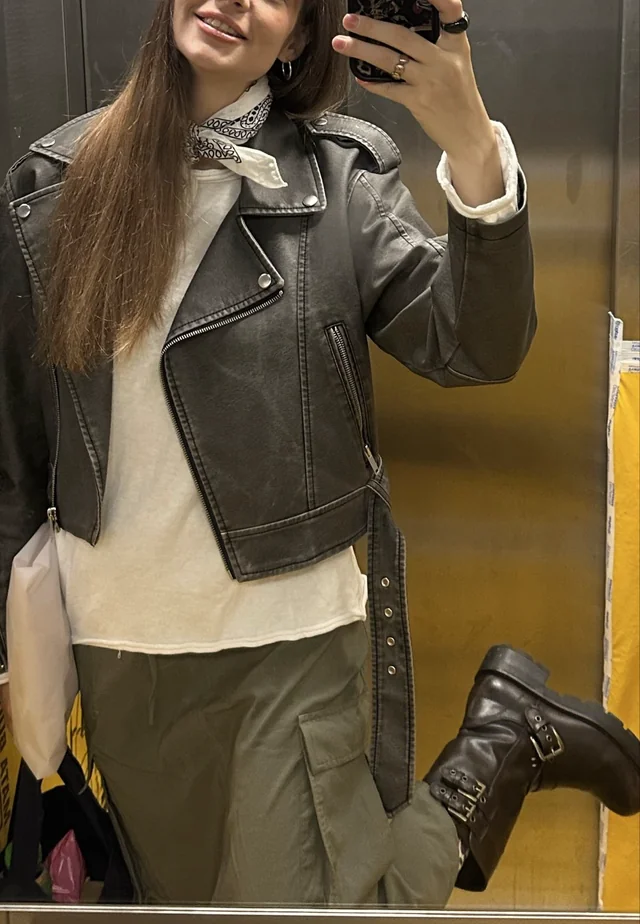
Combat boots. The category's most recognizable accessory. Military boot construction is governed by specific performance requirements: ankle support under loaded movement, sole traction on variable terrain, water resistance under immersion, and durability under sustained march conditions (the U.S. Army's standard requires combat boots to withstand a minimum mileage under full-pack load). Dr. Martens 1460 (1960, originally a British work boot with air-cushioned sole, adopted by military and subsequently by punk, skinhead, and mainstream fashion) became the paradigm of military-to-subcultural-to-fashion boot migration. Altama, Belleville, and Danner supply current military contracts; their civilian versions retain specification-grade construction at consumer price points.
Belts, webbing, and load-bearing systems. Military belts use full-grain leather (dress) or nylon webbing (field) with metal buckles specified for pull-strength durability. ALICE (All-purpose Lightweight Individual Carrying Equipment, introduced 1973) and MOLLE (Modular Lightweight Load-carrying Equipment, 1997) systems provide standardized attachment interfaces for pouches, holsters, and equipment — modular systems that techwear and tactical fashion have adopted as visual and functional vocabulary.
Headgear. Berets (color-coded by military branch and specialization: maroon for airborne, green for Special Forces, tan for Rangers), peaked caps (officer dress), patrol caps (field), and aviator sunglasses (originally designed to protect pilots from high-altitude UV exposure, developed by Bausch & Lomb for the U.S. Army Air Corps in the 1930s, later marketed as Ray-Ban Aviators) constitute the headwear vocabulary. Dog tags (metal identification tags worn on a chain, bearing name, serial number, blood type, and religious preference) have been adopted as jewelry — perhaps the most direct example of military-to-fashion accessory translation, in which a mortality-related identification device becomes a decorative object.
Body Logic
Military fashion conceptualizes the body through two competing logics that correspond to its dual civilian heritage: the disciplined body and the resistant body.
The disciplined body derives from the officer and ceremonial tradition. The uniform shapes the body into an image of institutional authority: squared shoulders, upright posture, suppressed waist, controlled stride. This is Foucault's "docile body" made literal in cloth — the uniform's structure enforces the posture, bearing, and self-presentation that military discipline demands. The garment does not merely dress the body; it trains it. Structured shoulders broaden the torso to project command. High collars restrict casual neck movement. Belted waists eliminate slouch. In fashion adoption, this disciplinary body logic provides the template for power dressing: Balmain's officer jackets, Saint Laurent's military blazers, and the persistent trench coat all instrumentalize the body toward an appearance of controlled authority.
The resistant body derives from the surplus and countercultural tradition. The field jacket, fatigue pants, and combat boots clothe a body that is not disciplined but mobilized — prepared for conflict, endurance, or protest. This body is not shaped by the garment but armored by it: the garment provides protection, utility, and durability rather than discipline and display. In subcultural adoption, military garments clothe bodies that are explicitly positioned against the institutions that produced the garments, creating a body logic of borrowing and reinterpretation.
Gender coding in military fashion is historically complex. Military dress was designed for male bodies within institutions that enforced rigid gender segregation (WACs, WAVES, and WASPs had separate uniform programs with distinct silhouettes). Fashion adoption has selectively queered this coding: Marlene Dietrich in a military cap and tuxedo (1930), Grace Jones in military tailoring (1970s–80s), and Rihanna in Balmain's officer jackets (2010s) all deploy military-masculine garments on female bodies to produce gender destabilization as stylistic effect. The military silhouette's structured geometry is sufficiently formal to communicate authority regardless of the gendered body it clothes — making it one of fashion's most productive resources for androgynous and gender-disrupting presentation.
Garment Logic
Military garment construction is governed by procurement specification and failure analysis rather than by trend, drape, or aesthetic preference. Every construction decision in a mil-spec garment corresponds to a documented requirement: seam type is specified, stitch count per inch is defined, hardware tensile strength is rated, and material composition is tested against defined performance standards. This makes military garments the most systematically engineered and documented clothing in history.
Seam and stitch engineering. Load-bearing seams in field garments use double-needle lockstitch with polyester-core cotton-wrap thread (combining polyester's tensile strength with cotton's heat resistance and sewability). Stitch count per inch (SPI) is specified by garment type: typically 7–9 SPI for structural seams, higher for finishing seams. Felled seams (flat-felled or lap-felled, stitching through four fabric layers with enclosed raw edges) are standard for field garments because they provide maximum strength while preventing interior fraying that could cause chafing under sustained wear with body armor and load-bearing equipment. Bar tacks reinforce stress-concentration points: pocket openings, belt-loop ends, fly attachment, and all points where strap or equipment attachment generates pulling force.
Layering system architecture. The U.S. military's ECWCS (Extended Cold Weather Clothing System) represents the most systematically engineered layering system ever developed for human garment wear. Its seven layers — from lightweight base layer (moisture wicking) through mid-weight base layer (light insulation) through fleece (high-loft insulation) through wind jacket (convective heat-loss reduction) through soft shell (weather resistance with stretch) through insulated jacket (primary thermal layer) through outer shell (waterproof-breathable hard shell) — each address a specific thermal-management function and are designed for interoperability: any combination of layers functions as a coherent system. This architecture was developed through decades of cold-weather research at Natick Laboratories and represents the engineering foundation that civilian outdoor and techwear layering systems subsequently adopted.
Quality stratification across market tiers. Military fashion's construction quality spans a wider range than most categories:
- Contract-grade originals (Alpha Industries MIL-SPEC, Cockpit USA, current-issue military garments): manufactured to procurement specification with defined testing and quality-control protocols. These garments are the only civilian-accessible items that can legitimately claim "mil-spec" construction.
- Reproduction and heritage (Buzz Rickson's, The Real McCoy's, Nigel Cabourn): manufactured to match or exceed original specification through reverse-engineering and period-correct sourcing. Typically more expensive than originals because small-batch production cannot achieve the economies of scale that military contracts provide.
- Fashion reinterpretation (Balmain, Saint Laurent, Junya Watanabe): translates military visual vocabulary into luxury materials and fashion-context silhouettes. Construction quality is high (luxury-garment standards) but evaluation criteria are fashion-directed rather than specification-directed.
- Fast-fashion quotation (Zara, H&M, ASOS "military" offerings): reproduces military silhouettes and color palettes in mass-market construction without specification compliance. These garments share visual reference with military originals but not engineering substance.
Aftercare and failure modes. Military garments require maintenance specific to their material and construction systems. Wool gabardine requires dry cleaning or careful cold-water washing to prevent felting and shrinkage; moth protection during storage (cedar blocks, sealed containers, or naphthalene) is essential for long-term preservation. Cotton field garments are engineered for field laundering (the original garments were designed to withstand boiling-water wash cycles used in military laundry facilities) and are correspondingly durable under domestic washing. Nylon flight jackets require cold-water washing and hang drying; heat (tumble dryers) can damage nylon's fiber structure and melt or deform synthetic insulation batting. Hardware (brass buttons, snap fasteners, zipper pulls) develops patina through oxidation — verdigris on brass, dulling on nickel — that can be preserved as aging evidence or removed through polishing, depending on the wearer's aesthetic preference.
Primary failure modes include: seam failure under load stress (the most common structural failure in heavily used field garments), fabric wear-through at high-abrasion contact points (elbows, knees, cuffs), hardware failure (snap-retention loss, zipper tooth damage, button shank breakage), and insulation degradation (loft loss in quilted linings, alpaca pile matting in vintage pieces). Vintage military garments carry additional risks: fabric weakening through decades of storage (cellulose degradation in cotton, acid hydrolysis in older synthetic fibers), hardware corrosion, and moth damage in wool components.
Motifs / Themes
Dominant themes include authority and its reinterpretation, discipline as aesthetic, operational readiness, surplus as democratic access, and the garment's dual life as institutional uniform and countercultural resource. Military fashion's thematic richness derives from its source material's historical depth — these are garments developed across centuries of military history, and their aesthetic adoption carries that layered heritage into contemporary dress.
Camouflage operates as a paradox motif: a system designed for concealment that, in fashion, functions as display. The camouflage-print garment does not blend into urban environments; it announces its wearer's relationship to military visual culture. This inversion — concealment as announcement — recurs as a structuring paradox of military fashion.
Heritage and nostalgia motifs organize the category's relationship to time. Vintage military garments carry the temporal residue of specific conflicts, theaters, and eras; their adoption in fashion mobilizes this history as atmosphere without necessarily engaging its substance. A WWII-era flight jacket in a contemporary outfit borrows the aura of the Greatest Generation; a Vietnam-era M-65 borrows the aura of countercultural resistance. These temporal borrowings give military fashion much of its emotional resonance and narrative depth.
Cultural Touchstones
Marlene Dietrich in military cap and tuxedo, Morocco (1930): foundational image of military-fashion gender inversion. Humphrey Bogart in Burberry trench coat, Casablanca (1942): the trench coat as civilian-military-romantic icon. Jimi Hendrix in Hussars jacket, Monterey Pop Festival (1967): historical military dress as psychedelic-counterculture costume. Robert De Niro in customized M-65 field jacket, Taxi Driver (1976): the field jacket as emblem of alienated, dangerous individualism. Grace Jones in military tailoring (1970s–1980s): the Black female body in military-masculine dress as radical gender and racial provocation. Madonna in Jean Paul Gaultier military-inspired cone bra and jacket, Blond Ambition Tour (1990): military authority recoded as female sexual power. Rihanna in Balmain jeweled officer jackets (2010s): luxury military as contemporary pop-star armor. Zendaya in Law Roach-styled military coats (2020s): military precision as red-carpet strategy.
The "Fit for Duty: Form and Function in Military Dress" exhibition at Cornell University (2025) provided institutional-academic framing for military fashion as a subject of material-culture study, analyzing how "garments designed for function become instruments of fashion."
See Also
- Workwear: Shared utilitarian construction logic and surplus-to-civilian migration pattern
- Techwear: Shared mil-spec engineering substrate, divergent aesthetic direction (cyberpunk versus military-historical)
- Gorpcore: Overlapping material technologies through shared military-research origins (layering systems, nylon, ripstop)
- Punk: Surplus adoption as countercultural uniform
- Streetwear: Camouflage, cargo, and military-brand crossover (WTAPS, Neighborhood, BAPE)
- Power dressing: Shared structured-authority silhouette logic
- Androgyny: Military tailoring as gender-crossing resource
- Safari: Overlapping structured outerwear and heritage styling
- Surplus / thrift culture: Military gear as accessible cross-class material pipeline
Brands and Designers
Heritage Contractors / Original Manufacturers:
- Alpha Industries (founded 1959, Knoxville, Tennessee): current U.S. military contractor, MA-1 and M-65 production, military-to-civilian direct pipeline
- Schott NYC (1913, New York): Perfecto leather jacket, military flight-jacket production history, American manufacturing
- Cockpit USA (successor to Avirex, 1975): flight-jacket reproductions and current military-adjacent production
- Buzz Rickson's (1993, Tokyo, Toyo Enterprise): museum-grade WWII flight-jacket and military-garment reproductions, period-correct specification
- The Real McCoy's (1988, Kobe): military and workwear reproductions to specification-grade fidelity
- Burberry (1856, Basingstoke, England): trench coat originator, military-heritage luxury positioning
Japanese Mil-Spec Fashion:
- WTAPS (1996, Tokyo, Tetsu Nishiyama): military specification as design philosophy, subdued tonal palettes, precision construction
- Neighborhood (1994, Tokyo, Shinsuke Takizawa): military-motorcycle-workwear hybrid, distressed and worn-in aesthetic
- Nigel Cabourn (Newcastle, England): British and Allied military heritage, vintage-sourced reproduction, Mallory expedition narrative
- Engineered Garments (Daiki Suzuki, 1999, New York): military-workwear-ivy fusion, asymmetric detailing
- Kapital (1984, Okayama): military-adjacent through workwear lineage, boro-influenced customization
Luxury / Runway:
- Balmain (Olivier Rousteing, 2011–present): jeweled military, structured officer silhouettes, celebrity-cultural positioning
- Saint Laurent (various creative directors): military-influenced tailoring, le smoking tuxedo military adjacency
- Givenchy: military-gothic fusion under various creative directors
- Junya Watanabe (Comme des Garçons): patchwork military-workwear deconstruction, technical collaborations
- Dries Van Noten: military prints and embellishment within maximalist layering
- Maison Margiela: deconstructed military forms, conceptual reinterpretation through garment manipulation
Tactical / Operator:
- Arc'teryx LEAF (Law Enforcement and Armed Forces): specification-grade technical garments for military and law-enforcement professionals
- Crye Precision (1999, Brooklyn): MultiCam camouflage patent, combat-uniform innovation, plate-carrier engineering
- 5.11 Tactical (2003, Irvine, California): law-enforcement and tactical lifestyle, broadest tactical market reach
- Stone Island Shadow Project: military-technical experimental line, DPM-influenced design
Streetwear / Cultural Crossover:
- A Bathing Ape (1993, Tokyo, Nigo): custom camouflage as brand-identity system
- maharishi (1994, London, Hardy Blechman): military-surplus reworking, embroidered camouflage, DPM recycling
- Carhartt WIP: workwear-military overlap, surplus-adjacent positioning
- Paria Farzaneh (London): Iranian-military textile heritage, cross-cultural military-fashion dialogue
- GR10K (Milan): military-industrial-technical hybrid, post-tactical experimentation
Citations
[1] Tynan, Jane. "Military Dress and Men's Outdoor Leisurewear: Burberry's Trench Coat in First World War Britain." Textile History, vol. 42, no. 2, 2011, pp. 195–213. [2] Tynan, Jane. British Army Uniform and the First World War: Men in Khaki. Palgrave Macmillan, 2013. [3] Craik, Jennifer. Uniforms Exposed: From Conformity to Transgression. Berg, 2005. [4] Joseph, Nathan. Uniforms and Nonuniforms: Communication Through Clothing. Greenwood Press, 1986. [5] Fussell, Paul. Uniforms: Why We Are What We Wear. Houghton Mifflin, 2002. [6] Newark, Tim. Camouflage. Thames and Hudson, 2007. [7] Blechman, Hardy. DPM: Disruptive Pattern Material. DPM, 2004. [8] Foucault, Michel. Discipline and Punish: The Birth of the Prison. Translated by Alan Sheridan, Pantheon, 1977. [9] Entwistle, Joanne. The Fashioned Body: Fashion, Dress and Social Theory. 2nd ed., Polity, 2015. [10] Kawamura, Yuniya. Fashion-ology: An Introduction to Fashion Studies. 2nd ed., Bloomsbury Academic, 2018. [11] Breward, Christopher. Fashion. Oxford University Press, 2003. [12] Wilson, Elizabeth. Adorned in Dreams: Fashion and Modernity. Revised ed., Rutgers University Press, 2003. [13] Crane, Diana. Fashion and Its Social Agendas: Class, Gender, and Identity in Clothing. University of Chicago Press, 2000. [14] Lipovetsky, Gilles. The Empire of Fashion: Dressing Modern Democracy. Princeton University Press, 1994. [15] Barthes, Roland. The Fashion System. Translated by Matthew Ward and Richard Howard, University of California Press, 1983. [16] Hollander, Anne. Seeing Through Clothes. University of California Press, 1993. [17] Hebdige, Dick. Subculture: The Meaning of Style. Routledge, 1979. [18] Simmel, Georg. "Fashion" (1904). In Simmel on Culture: Selected Writings, edited by David Frisby and Mike Featherstone, SAGE, 1997. [19] Benjamin, Walter. The Arcades Project. Harvard University Press, 1999. [20] Bourdieu, Pierre. Distinction: A Social Critique of the Judgement of Taste. Translated by Richard Nice, Harvard University Press, 1984. [21] Veblen, Thorstein. The Theory of the Leisure Class. Macmillan, 1899. [22] De Certeau, Michel. The Practice of Everyday Life. Translated by Steven Rendall, University of California Press, 1984. [23] Virilio, Paul. War and Cinema: The Logistics of Perception. Translated by Patrick Camiller, Verso, 1989. [24] Sontag, Susan. "Fascinating Fascism." The New York Review of Books, February 6, 1975. [25] Marx, W. David. Ametora: How Japan Saved American Style. Basic Books, 2015. [26] Hayashida, Teruyoshi, et al. Take Ivy. Powerhouse Books, 2010. [27] Renbourn, E.T., and W.H. Rees. Materials and Clothing in Health and Disease. H.K. Lewis, 1972. [28] Watkins, Susan M. Clothing: The Portable Environment. 2nd ed., Iowa State University Press, 1995. [29] Fletcher, Kate. Sustainable Fashion and Textiles: Design Journeys. 2nd ed., Earthscan, 2013. [30] Cornell University. "Fit for Duty: Form and Function in Military Dress." Exhibition, 2025. [31] U.S. Military Specification MIL-C-43455 (M-65 Field Jacket). [32] U.S. Military Specification MIL-J-8279 (MA-1 Flight Jacket). [33] U.S. Military Specification MIL-T-44047 (BDU Trousers). [34] Alpha Industries. "Heritage." https://www.alphaindustries.com/pages/heritage [35] Crye Precision. "MultiCam." https://www.cryeprecision.com/