Guochao
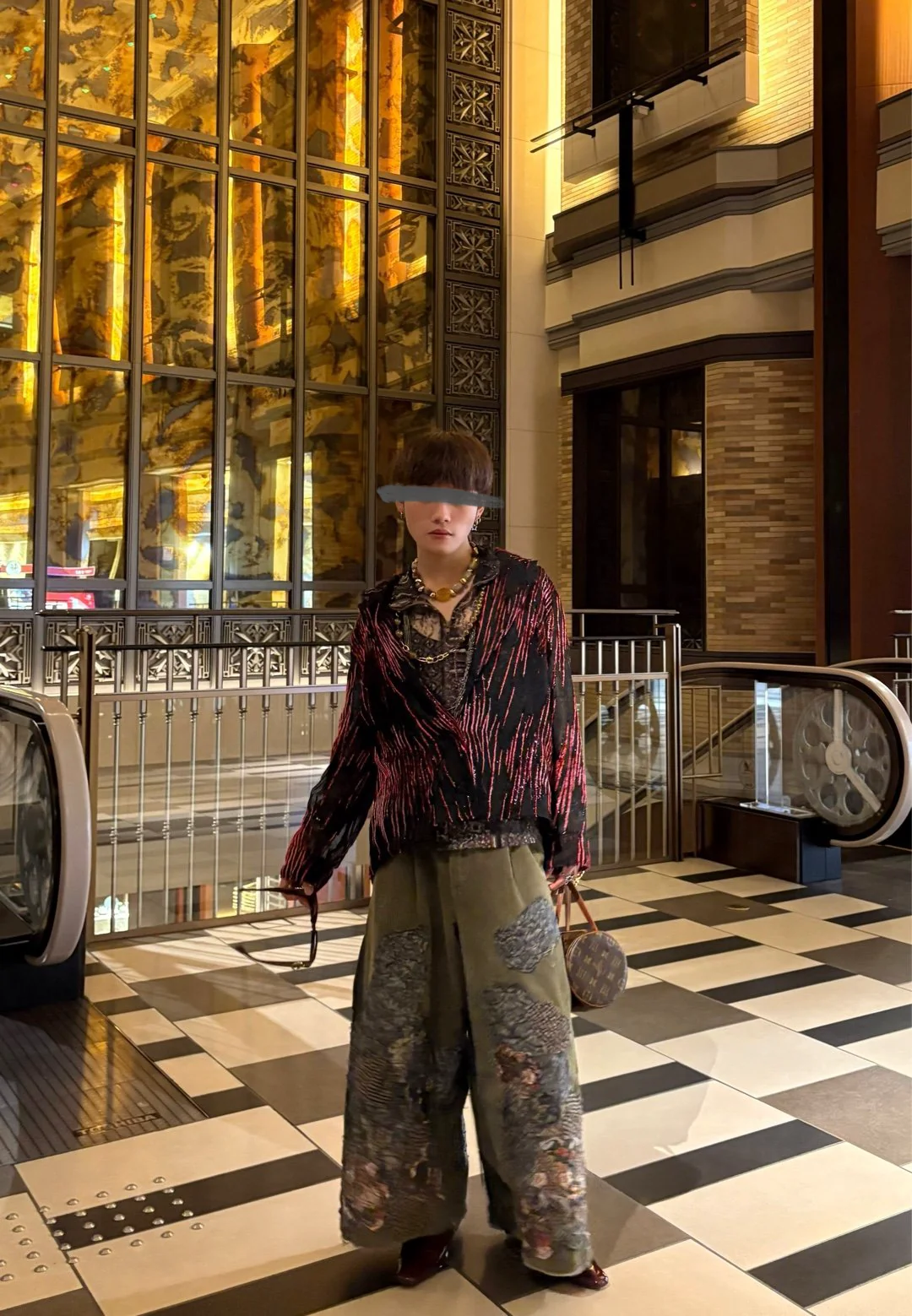
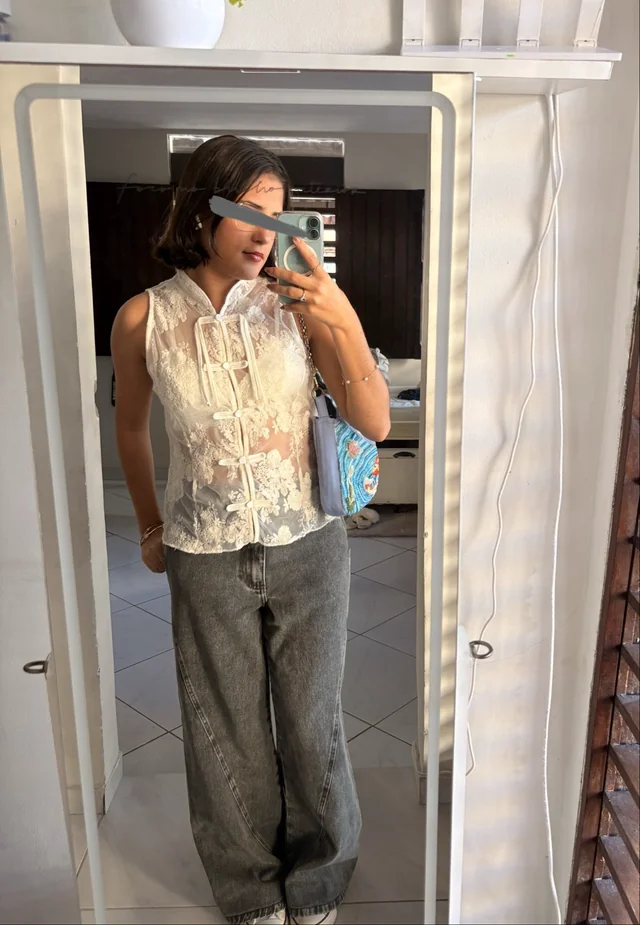
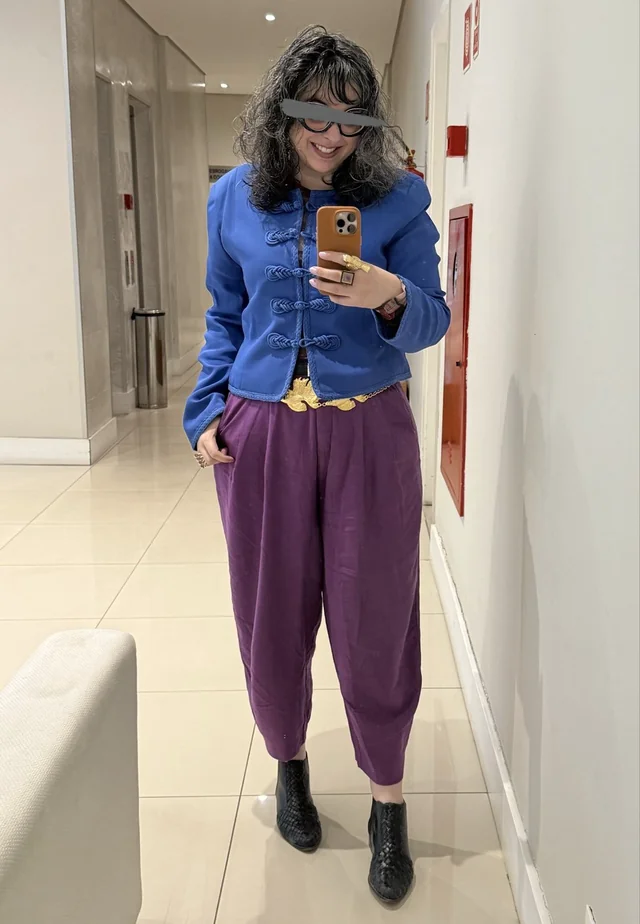
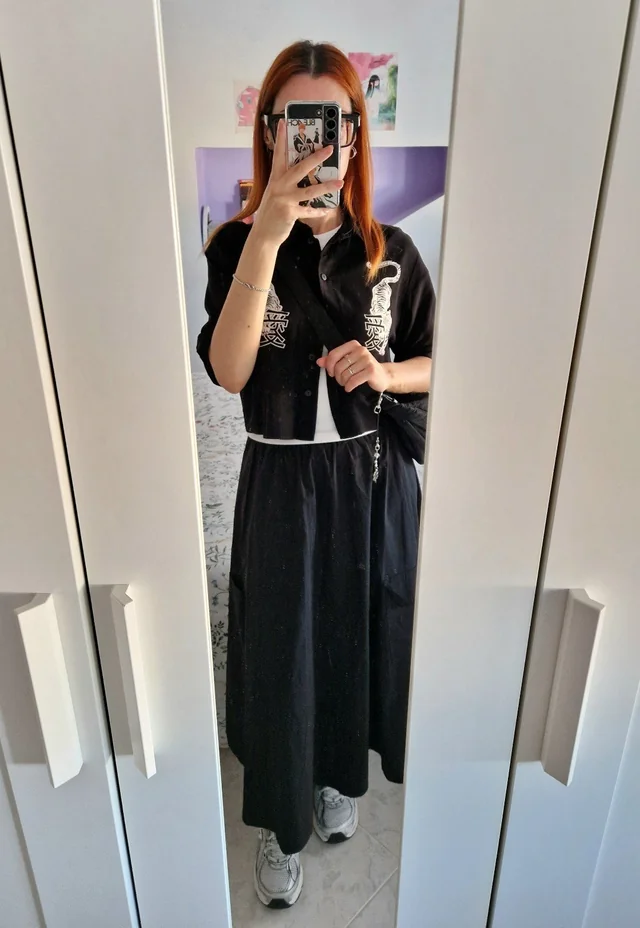
Summary. Guochao (国潮, "national tide") is a dress system in which Chinese heritage textile technologies — silk brocade weaving, regional embroidery traditions, structured closure engineering, and cross-collar garment construction developed across two millennia of dynastic craft specialization — are translated into contemporary fashion silhouettes and evaluated through a dual-legibility logic: garments must simultaneously register as culturally Chinese (through material, motif, or construction citation) and as contemporary streetwear, sportswear, or designerwear (through proportion, fabrication, and distribution channel). The aesthetic is governed by a heritage-transfer regime: yunjin cloud brocade from Nanjing, Suzhou embroidery thread densities, pan kou frog-closure engineering, and mandarin-collar geometry developed for court dress and ceremonial garments are recontextualized as both cultural signifier and commercial product within a domestic consumer market that increasingly evaluates Chinese provenance as a value-positive attribute rather than a discount-tier default. Unlike hanfu revival, which stages historical reconstruction as its primary aim, guochao retains the contemporary market as its referent — garments carry the trace of imperial workshop, regional atelier, and dynastic silhouette even when deployed on Douyin livestreams and Xiaohongshu outfit posts.
In Material Terms
Guochao's coherence depends on the negotiation between heritage textile traditions — mulberry silk (Bombyx mori, filament fiber with 11-17 denier fineness and 300-600 meter continuous filament length per cocoon), tussah silk (Antheraea pernyi, wilder hand and darker natural color from oak-fed silkworm), jacquard-woven brocade constructions, and hand-embroidery traditions requiring 2,000-8,000 stitches per square centimeter in premium Su xiu work — and the industrial textile systems that contemporary fashion production demands: polyester-silk blended jacquards produced on electronic Jacquard looms at Hangzhou mills, digitally printed motifs replacing hand-embroidered panels, and injection-molded frog closures substituting for hand-knotted pan kou that traditionally required 30-45 minutes of skilled labor per unit. When this negotiation succeeds, heritage craft intelligence is preserved within commercially viable garment systems. When it fails — when brocade becomes polyester print, when embroidery becomes screen-printed simulation, when frog closures become adhesive-backed decorative appliques — the category collapses into heritage-themed costume devoid of the material logic that justified its forms.
At Category Level
Guochao occupies a contested boundary between cultural-heritage preservation and consumer-nationalist brand marketing. High-fidelity implementations are evaluated through craft-specification criteria: silk fiber grade and weave density (momme weight for silk, with heritage brocade typically ranging from 16-22 momme versus fashion-tier silk at 12-14 momme), embroidery thread composition and stitch technique (split stitch versus satin stitch versus seed stitch, with thread material ranging from twisted silk filament to metallic-wrapped core yarns), and closure construction method (hand-knotted versus machine-formed frog closures, with tension calibration determining whether the closure functions structurally or merely decoratively). Lower-tier iterations reproduce the visual grammar — dragon prints, calligraphic logos, red-and-gold colorways, mandarin-collar styling — while stripping away the textile engineering substrate that originally gave those forms their material authority. This stratification is not merely commercial but epistemic: it separates participants who evaluate garments through Chinese textile-heritage literacy from those who evaluate through nationalist-brand recognition and platform trend compliance.
Methodologically
This entry treats guochao as a heritage-translation system: garments are analyzed by how they convert Chinese textile and construction traditions into contemporary fashion products, and by how that conversion alters material integrity, cultural legibility, and economic value at each stage of the translation pipeline — from artisanal workshop to industrial mill, from regional craft tradition to global fashion market, from dynastic reference to platform-era aesthetic.
Word (Etymology)
The compound 国潮 (guócháo) couples 国 (guó, "nation" or "national") with 潮 (cháo, "tide," "trend," or "current"), producing a term that translates variously as "national tide," "national trend," "China-chic," or "patriotic wave" depending on context and ideological inflection. The term entered Chinese commercial discourse in the mid-2010s as domestic brands — particularly Li-Ning, Anta, and Warrior Shanghai — began integrating explicitly Chinese cultural signifiers into product lines that had previously modeled themselves on Western sportswear and streetwear templates. The word was not coined by a single author but emerged from marketing copy, social-media commentary, and retail-platform categorization simultaneously, reflecting the speed at which Chinese digital platforms convert consumer sentiment into market taxonomy.
Linguistically, the character 潮 carries aquatic connotations — tidal surge, flood, rising water — that embed the term in a rhetoric of inevitability and collective force: guochao is not a choice but a tide, not an individual preference but a national current. This framing serves both commercial interests (presenting domestic-brand consumption as participation in an unstoppable cultural movement) and political interests (aligning consumer behavior with state narratives of national rejuvenation, or zhonghua minzu weida fuxing 中华民族伟大复兴). The semantic overlap between consumer trend and political project is not accidental; it is the conceptual architecture through which guochao operates.
In fashion-studies discourse, guochao is analytically distinguished from adjacent Chinese terms: hanfu (汉服, historical Han Chinese dress reconstruction), xinzhongshi (新中式, "neo-Chinese style," emphasizing quieter, more integrated heritage elements in daily dress), and zhongguo feng (中国风, "Chinese wind/style," a broader term for Chinese-inspired aesthetics in any medium). These terms describe overlapping but distinct phenomena: hanfu prioritizes historical accuracy, xinzhongshi prioritizes contemporary wearability, zhongguo feng operates at the level of visual atmosphere, and guochao specifically denotes the commercial movement of domestic brands leveraging Chinese cultural identity as market differentiator. The taxonomy matters because conflating these terms obscures the different institutional logics — museum preservation, fashion design, brand marketing, state cultural policy — that produce them.
Comparatively, guochao finds structural parallels in Korean hanbokism (the contemporary reinterpretation of hanbok for daily wear, accelerated by K-drama costuming and government cultural subsidy), Japanese wa-modern (和モダン, the integration of kimono elements into Western-silhouette garments, practiced by designers like Issey Miyake and Junya Watanabe), and Indian khadi revivalism (the political and commercial rehabilitation of handspun cotton as national identity cloth). Each of these movements negotiates similar tensions between heritage authenticity and commercial viability, between cultural preservation and commercial dynamics, and between organic consumer preference and state cultural engineering. Guochao's distinctive feature is the scale and speed at which Chinese digital platforms — Douyin, Xiaohongshu, Tmall, JD.com — compress these negotiations into real-time market feedback loops, where heritage elements are tested, iterated, and discarded within product cycles measured in weeks rather than seasons.
Subculture
Guochao emerged at the intersection of several distinct communities whose convergence produced a new evaluative regime for Chinese fashion consumption. Young Chinese consumers — predominantly Gen Z and millennial urban professionals — constituted the primary adopter base, driven by a combination of genuine cultural interest, consumer-nationalist sentiment, and platform-mediated trend exposure. Within this community, cultural literacy operated as the primary expertise currency: the ability to identify a yunjin brocade pattern versus a generic jacquard print, to recognize pan kou knotwork styles associated with specific regional traditions, or to articulate the difference between Su xiu (Suzhou embroidery) and Xiang xiu (Hunan embroidery) conferred status that mere brand ownership could not replicate. Platforms such as Xiaohongshu (小红书, "Little Red Book," China's dominant lifestyle-sharing platform with 200+ million monthly active users) and Douyin (抖音, the Chinese version of TikTok) transmitted this knowledge through tutorial videos, outfit breakdowns, and heritage-craft documentaries that functioned simultaneously as entertainment and education.
When this cultural-literacy community intersected with the sportswear market — driven by Li-Ning's 2018 New York Fashion Week debut, Anta's acquisition of international brands (Fila China, Descente, Amer Sports), and the broader "buy Chinese" sentiment amplified by US-China trade tensions — a second community formed around brand allegiance and nationalist consumption rather than craft knowledge. This produced a structural tension that heritage-craft purists articulated through critiques of "surface guochao" (表面国潮, biǎomiàn guócháo): brands applying dragon prints and calligraphic logos to generic streetwear blanks without engaging the material traditions those symbols reference. The tension is not merely aesthetic resentment; it indexes a genuine epistemic split between communities that evaluate garments through heritage-craft specification and communities that evaluate through brand-national-identity signaling.
A third, mediating community emerged from China's independent designer ecosystem: graduates of Central Saint Martins, Parsons, the London College of Fashion, and China's own Donghua University and Beijing Institute of Fashion Technology who possessed both Western fashion-system training and Chinese cultural-heritage knowledge. Designers like Angel Chen, Samuel Gui Yang, Shushu/Tong, and Uma Wang occupied this mediating position, producing garments that translated heritage textile intelligence into internationally legible contemporary fashion without reducing it to nationalist graphics. This designer community complicated any simple authentic/commercial binary by demonstrating that heritage-translation could be simultaneously culturally substantive and market-viable.
Sociologically, guochao is structured by layered expertise economies. At the apex, traditional craft masters — the recognized inheritors of intangible cultural heritage traditions (非物质文化遗产 fēiwùzhì wénhuà yíchǎn, UNESCO-designated and nationally registered), including yunjin weavers, embroidery masters, and traditional tailors — command authority through decades of apprenticeship-transmitted skill. Mid-tier authority belongs to designers who translate craft knowledge into contemporary product, and to content creators (KOLs, or Key Opinion Leaders) who interpret heritage references for platform audiences. At the entry level, participants navigate brand recognition and trend-compliance through purchasing decisions influenced by platform algorithms. These tiers are not sealed — mobility between them is possible through demonstrated cultural knowledge and craft engagement — but the hierarchy shapes how authenticity claims are adjudicated in platform discourse, and the speed of platform-era information circulation means that formerly specialist knowledge (embroidery stitch types, brocade weaving traditions) rapidly becomes common reference, compressing expertise differentials and requiring continuous escalation of cultural-literacy claims to maintain status.
History
The material prehistory of guochao begins not in marketing departments but in the workshop traditions of Chinese textile production, which developed some of the world's most sophisticated fiber, weave, and embroidery technologies across more than four thousand years of continuous innovation.
Ancient textile substrate (3000 BCE–960 CE). China domesticated the silkworm (Bombyx mori) approximately 5,000 years ago, developing sericulture — the cultivation of mulberry trees, the management of silkworm lifecycle, and the reeling of continuous silk filament from cocoons — into the world's most technically advanced fiber-production system. Archaeological evidence from Hemudu (河姆渡, Zhejiang province, c. 5000 BCE) documents early silk fragments; by the Shang dynasty (1600-1046 BCE), Chinese workshops produced woven silk textiles of remarkable fineness. The Han dynasty (206 BCE-220 CE) established the Silk Road trade network that distributed Chinese silk across Central Asia, Persia, and Rome, making silk simultaneously a trade commodity, a diplomatic instrument, and a material technology that other civilizations could not replicate for centuries. The Tang dynasty (618-907 CE) represented a peak of textile cosmopolitanism: Central Asian, Persian, and Buddhist visual traditions merged with Chinese weaving technology to produce polychrome brocades of extraordinary complexity. Court regulation codified textile quality by rank — specific weave patterns, colors, and motif systems were legally restricted to particular social positions — establishing the precedent that textile specification carried political meaning, a logic that guochao would inherit in radically different form.
Regional brocade specialization (960–1912). The Song (960-1279), Yuan (1271-1368), Ming (1368-1644), and Qing (1644-1912) dynasties saw the consolidation of China's three great brocade traditions, each developing distinct technical characteristics that contemporary guochao designers cite as heritage references. Yunjin (云锦, "cloud brocade") from Nanjing uses a large draw-loom requiring two operators — one controlling the warp and shed, one selecting pattern threads from above on a raised platform — to produce silk brocade with gold and silver metallic thread supplementary wefts that create a luminous, cloud-like surface texture. The most complex yunjin patterns require up to 14,000 individual warp threads and can only advance 5-6 centimeters per day of weaving, making a single bolt of court-grade yunjin a multi-month production effort. Song brocade (宋锦) from Suzhou developed a tighter, flatter weave structure using smaller pattern repeats, suitable for book covers, scroll mounting, and garment panels where a smoother surface was preferred. Shu brocade (蜀锦) from Sichuan specialized in multicolor warp-faced patterns, producing geometric and floral designs through complex warp-thread color sequences rather than supplementary weft insertion. Each tradition was geographically anchored to specific workshops, raw-material sources (mulberry groves, reeling facilities, dyeing operations), and apprenticeship lineages that transmitted technical knowledge through master-student relationships spanning generations. The Qing dynasty's imperial workshops in Beijing, Nanjing, and Suzhou coordinated these regional traditions into a centralized luxury-textile production system that supplied court dress, diplomatic gifts, and ritual textiles.
Embroidery traditions and the Four Great Schools. Alongside brocade weaving, China developed embroidery traditions of remarkable technical specificity. The "Four Great Embroideries" (四大名绣, sì dà míngxiù) — Su xiu (苏绣, Suzhou embroidery), Xiang xiu (湘绣, Hunan embroidery), Yue xiu (粤绣, Guangdong embroidery), and Shu xiu (蜀绣, Sichuan embroidery) — each evolved distinct stitch vocabularies, thread-handling techniques, and aesthetic sensibilities. Su xiu, the most celebrated, uses split silk filament (a single silk strand divided into 2, 4, 8, 16, or even 48 thinner threads) to achieve embroidered surfaces of near-photographic smoothness; the finest Su xiu work uses threads so fine that the embroiderer works by touch rather than sight, producing images with tonal gradients achieved through thread-density variation rather than color mixing — a technique requiring 10-20 years of apprenticeship to master. Xiang xiu favors bolder forms with a characteristic "huaniao" (花鸟, flowers-and-birds) naturalism, using heavier thread and more visible stitch texture. Yue xiu, influenced by Guangdong's trade-port cosmopolitanism, incorporates gold-thread couching and dimensional padding techniques. Shu xiu, associated with Sichuan's tradition of satin-weave ground fabrics, uses a "yunduan" (晕缎, gradient satin) technique to create color transitions within a single motif.
Garment construction traditions. Chinese garment construction developed along fundamentally different engineering principles from Western tailoring. Traditional Chinese garments use minimal cutting and maximal folding: the jiaoling youren (交领右衽, cross-collar, right-over-left closure) creates the neckline through fabric overlap rather than collar attachment; the body of a traditional robe is often cut from a single width of fabric folded at the shoulder, with side-seam gussets providing width expansion without the complex darting and shaping that Western tailoring requires. The qipao/cheongsam (旗袍), which emerged in the 1920s-1930s as a modernized form of Manchu banner dress, introduced Western-influenced tailoring elements — bust darts, waist suppression, high side slits (开衩, kāichà) for mobility, and stand-up collar (立领, lǐlǐng) engineering with collar-bone support — into a Chinese silhouette, creating the hybrid construction logic that guochao would later draw upon. The pan kou (盘扣, frog closure) developed as an engineered alternative to buttons: a continuous cord knotted into a ball-and-loop closure system where the ball's diameter, cord tension, and loop geometry must be precisely calibrated to provide secure closure under movement while permitting easy one-handed opening — an interface-design problem solved through generations of iterative craft refinement.
Modern disruption and industrial transition (1912–2000). The fall of the Qing dynasty (1912), the Republican period's cultural modernization campaigns, and the People's Republic's revolutionary cultural politics (particularly the Cultural Revolution, 1966-1976, which explicitly targeted traditional craft practices as feudal remnants) severely disrupted the transmission of Chinese textile heritage. Imperial workshops were disbanded; master weavers and embroiderers were persecuted or forced into other occupations; apprenticeship lineages were broken. The post-1978 reform era's integration into global manufacturing supply chains positioned Chinese textile production primarily as low-cost contract manufacturing for Western brands rather than as continuation of indigenous craft traditions. By the 2000s, China produced approximately 50% of the world's garments while its own heritage textile traditions survived primarily in museums, UNESCO intangible-heritage registrations, and small numbers of aging master practitioners.
Li-Ning's NYFW watershed and guochao emergence (2018-2020). Li-Ning's February 2018 New York Fashion Week presentation — the "Wuxia" (武侠, martial-hero) collection featuring streetwear silhouettes printed with traditional Chinese calligraphy, red-and-gold colorways, and martial-arts-inspired graphics — became the symbolic milestone that made guochao globally legible. The collection's viral circulation on Weibo and WeChat demonstrated that Chinese heritage signifiers could generate commercial excitement rather than cultural embarrassment among young Chinese consumers, inverting a decades-long dynamic in which Western brand preference was the default aspiration. Li-Ning's stock price surged 800% between 2018 and 2021; Anta Group's market capitalization overtook Adidas in the Chinese market. Angel Chen's "Lady Qing" (清夫人) SS19 collection at Shanghai Fashion Week's LABELHOOD platform merged Peking Opera costuming with electronic-music aesthetics, demonstrating heritage translation at the designer level. MUKZIN (密扇) built an entire brand identity around heritage-coded campaigns integrating traditional craft into contemporary casualwear. Warrior Shanghai (回力) revived its 1930s-era sneaker brand with guochao typography and colorways.
Trade tensions, pandemic, and consolidation (2020–2023). US-China trade tensions (tariff escalation from 2018, entity-list restrictions, supply-chain developments) and COVID-19 pandemic conditions accelerated the guochao movement's commercial velocity. The "buy Chinese" sentiment intensified from cultural preference into economic and political imperative. Western luxury brands faced backlash incidents (Dolce & Gabbana's 2018 advertising controversy, and supply-chain statements by Western retailers producing significant Chinese consumer backlash). Domestic brands filled the resulting market space: Li-Ning and Anta expanded aggressively; new entrants like Bosideng (波司登, repositioned from discount down-jacket manufacturer to premium outerwear brand with guochao styling) captured market share. The Beijing 2022 Winter Olympics amplified cultural-confidence aesthetics through the ceremony's visual design and the global platform it provided for Chinese cultural expression.
Xinzhongshi evolution and maturation (2023–present). The guochao category has evolved toward xinzhongshi (新中式, "neo-Chinese style") — a more refined, less graphically loud iteration that integrates heritage elements into daily wardrobe rather than staging them as statement pieces. This shift reflects market maturation: early guochao's bold dragon prints and calligraphic logos have been supplemented (though not replaced) by subtler heritage references — brocade-weave texture in neutral tones, modified mandarin collars on otherwise Western-cut shirts, embroidery-inspired digital prints at reduced scale. Designers like Samuel Gui Yang, Uma Wang, and Xu Zhi bridge heritage and contemporary minimalism; Douyin and Xiaohongshu micro-aesthetic communities generate rapid mutations within the xinzhongshi subcategory, testing new heritage-integration strategies in real time through platform-mediated consumer feedback.
Analytically, guochao's history is a sequence of disruptions and recoveries — dynastic craft development, revolutionary destruction, industrial displacement, and commercial rehabilitation — in which Chinese textile heritage is repeatedly broken from its transmission context and reconstituted within new institutional logics. Each reconstitution preserves some technical knowledge while altering its social function, economic value, and cultural meaning, which is why contemporary guochao can appear historically continuous with imperial brocade traditions while operating under entirely different production, distribution, and consumption systems.
Silhouette
Guochao silhouette is governed by a hybrid geometry that negotiates between two fundamentally different garment-engineering traditions: Chinese construction logic, which favors flat-cut, minimal-dart, wrap-and-fold pattern systems that drape from the shoulder and fasten at the side, and Western construction logic, which favors darted, suppressed, center-front-closure systems that sculpt to the body's three-dimensional contour. The aesthetic's characteristic forms emerge at the intersection of these systems, producing garments that are legibly Chinese in specific structural elements while conforming to contemporary fit expectations shaped by Western-derived sportswear and streetwear proportions.
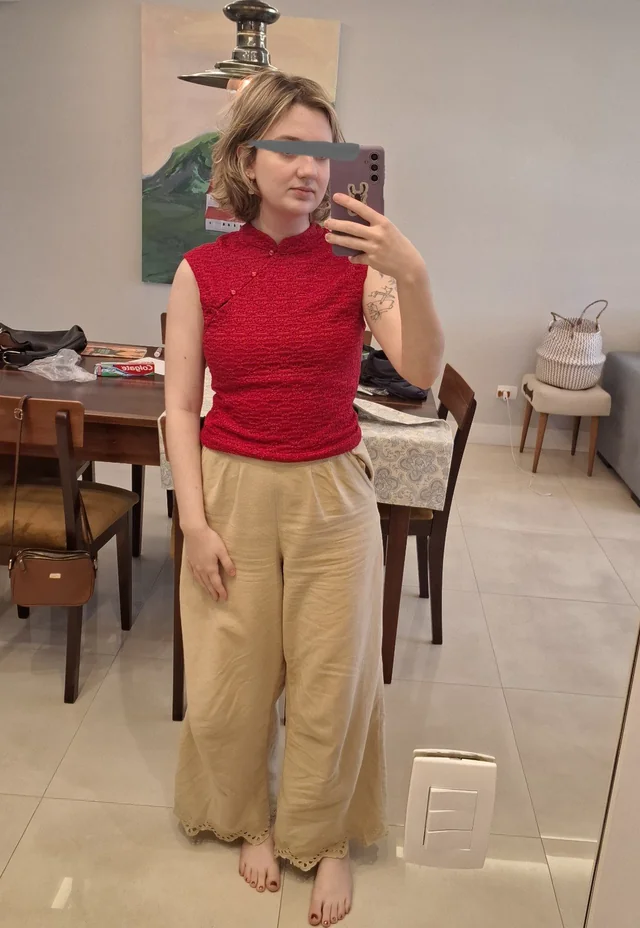
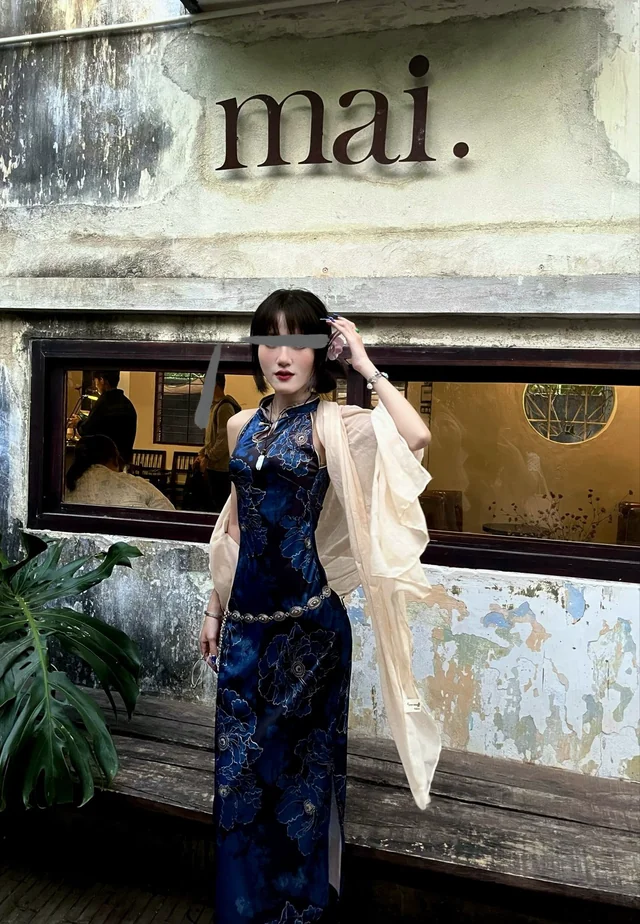
Modified heritage silhouettes. The contemporary qipao/cheongsam adaptation reduces the original garment's body-sculpting precision (which required individual fitting through multiple toile iterations in the 1930s-1950s golden age of Shanghai tailoring) into ready-to-wear sizing while preserving its defining structural features: the stand-up mandarin collar (typically 3-5cm height, with internal collar-bone wire or stiffening to maintain vertical posture), the diagonal front-closure line (大襟, dàjīn) running from the right collar point to the underarm and down the right side seam, the figure-skimming torso with bust darts replacing the historical practice of body-specific patterning, and the high side slit (typically rising 15-25cm above the knee) that provides walking mobility within a narrow-hem silhouette. The engineering challenge is that the qipao's elegance depends on precise body-garment relationship — too loose and it reads as a shapeless tube; too tight and it restricts breathing and movement — and this precision is difficult to achieve in standard sizing without the individual fitting that artisanal production provides.
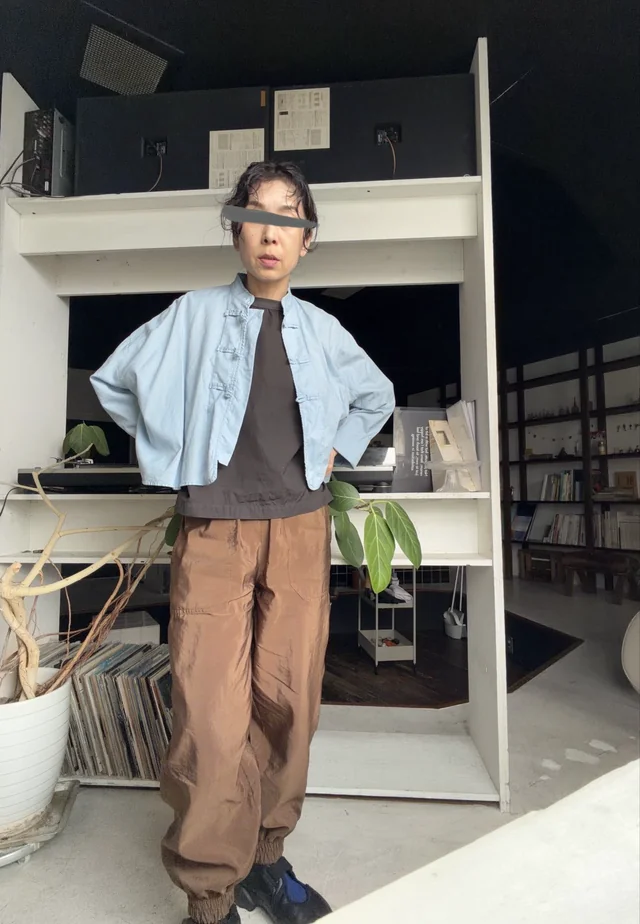
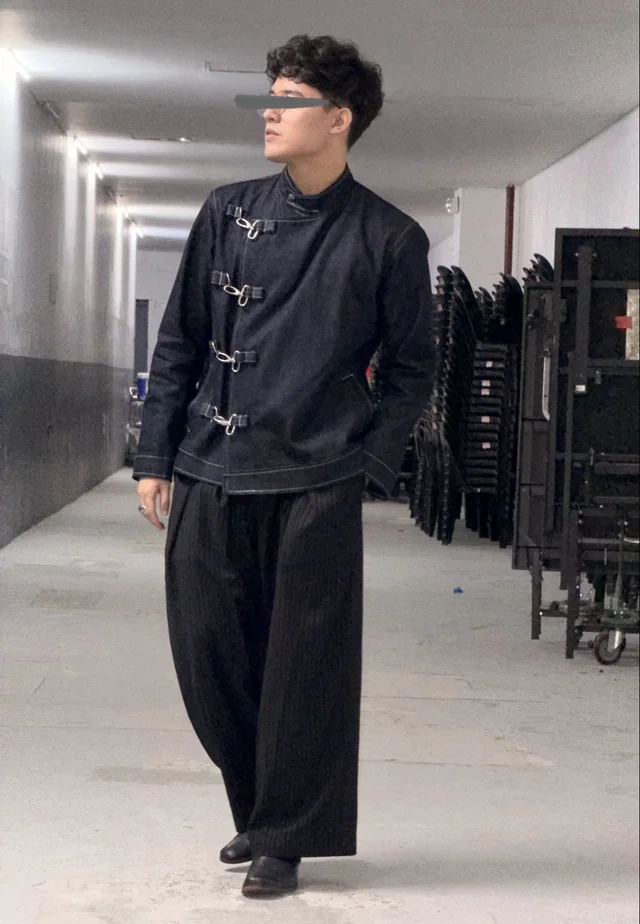
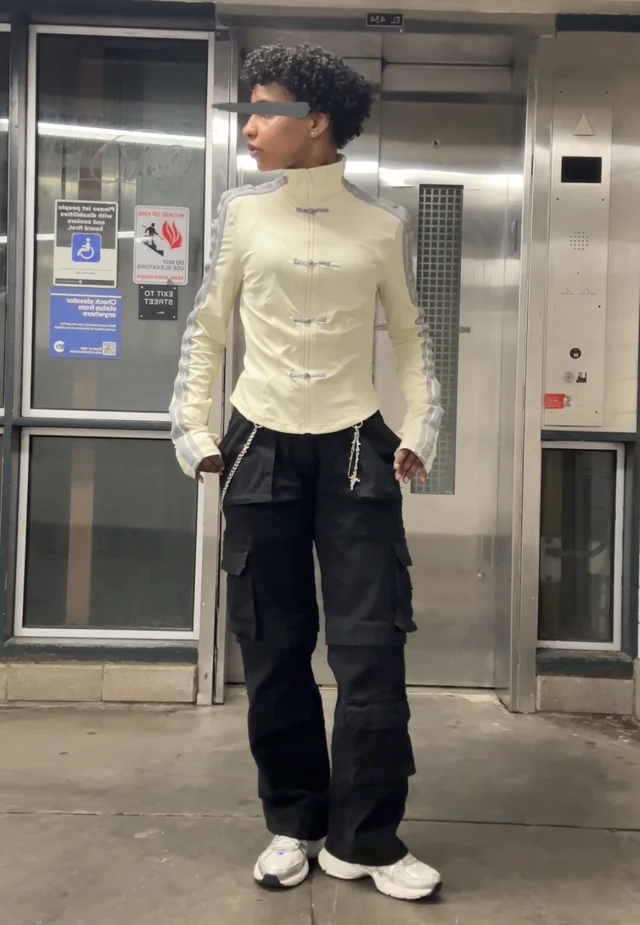
Streetwear-heritage hybrids. The dominant guochao silhouette in commercial terms: oversized hoodies, dropped-shoulder tees, wide-leg trousers, and puffer jackets bearing heritage surface treatments (brocade panels, embroidered patches, calligraphic prints) or heritage structural citations (mandarin-collar detailing on bomber necks, frog-closure accents on zip-front jackets, cross-collar wrap elements on oversized cardigans). These garments operate on streetwear pattern blocks — raglan sleeves, ribbed cuffs, kangaroo pockets — with heritage elements applied as modular cultural signifiers that can be added, modified, or removed without altering the base garment's construction logic. Li-Ning's runway collections exemplify this approach: Western sportswear silhouettes serve as the structural chassis, with Chinese cultural references layered on as surface treatment and detail vocabulary.
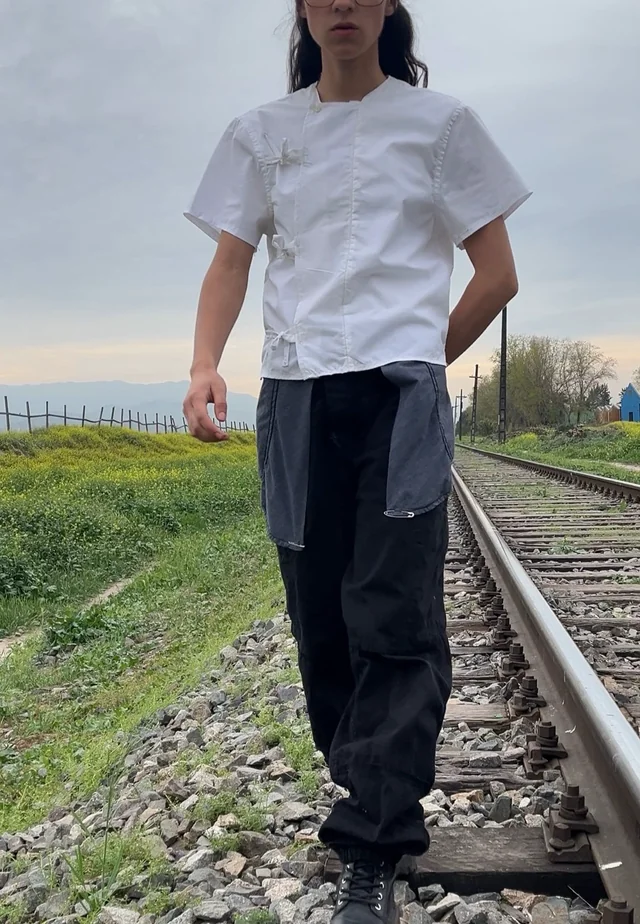
Neo-traditional volumes. Wide-sleeve tops referencing Tang dynasty (唐朝) court robes, floor-length straight coats echoing Qing dynasty changshan (长衫), and wrap-front constructions citing jiaoling cross-collar tradition expand the silhouette beyond streetwear proportions into more dramatic territory. These garments typically use lighter fabrics (silk, tencel, linen blends) to achieve the volume-through-drape effect that Chinese textile traditions historically produced, rather than the volume-through-structure approach that Western formal garments employ. The silhouette reads as Chinese primarily through proportion and closure, not through explicit motif — a subtlety that distinguishes xinzhongshi from earlier, more graphically assertive guochao iterations.
As a result, guochao silhouette communicates cultural affiliation through structural citation rather than through decorative application alone. The body appears instrumented for cultural legibility — positioned within a visual grammar that references Chinese garment history through collar geometry, closure placement, and drape behavior — even when the garment's underlying construction follows Western industrial patterning. This dual engineering is the silhouette's defining achievement and its persistent vulnerability: when the heritage citation is purely surface (a mandarin collar on an otherwise standard polo shirt), the structural claim is exposed as decorative rather than constructive.
Materials
Material selection is guochao's primary authentication mechanism and the domain where the category's heritage claims are most empirically verifiable. The gap between genuine heritage textiles and their industrial simulations defines the central quality hierarchy and determines whether a guochao garment operates as cultural preservation or cultural citation.
Silk fiber systems. Mulberry silk (桑蚕丝, sāngcánsī) — the filament fiber produced by Bombyx mori silkworms fed exclusively on mulberry leaves — is the foundational luxury fiber of Chinese textile heritage. Each cocoon yields 600-900 meters of continuous filament with a triangular cross-section that refracts light to produce silk's characteristic luster. Raw silk fiber has a tenacity of 3.5-5.0 grams per denier (comparable to nylon) and an elongation at break of 20-25%, providing a combination of strength and drape that no synthetic fiber fully replicates. Silk fabric weight is measured in momme (mm): light habotai ranges from 5-8mm, standard charmeuse from 12-16mm, heavy crepe de chine from 16-22mm, and heritage brocade from 16-25mm depending on supplementary weft density. Tussah silk (柞蚕丝, zuòcánsī), produced by Antheraea pernyi silkworms fed on oak leaves, yields a coarser, more textured fiber with natural tan coloration (due to tannin absorption from the oak diet) that resists bleaching — a "wilder" silk traditionally used for everyday textiles rather than court dress. Dupioni silk, produced from double cocoons where two silkworms spin together, creates an irregular slub-textured yarn that produces a distinctive crisp, nubby fabric prized for its visual texture and body.
Brocade and jacquard weave structures. Heritage brocade (锦, jǐn) is a supplementary-weft-patterned fabric in which additional colored or metallic threads are interlaced with the ground weave to create raised patterns, producing a textile with both structural and decorative complexity. Yunjin (cloud brocade) from Nanjing uses a monumental draw loom — 5.6 meters long, 4 meters high, requiring an upper-platform weaver (挽花工, wǎnhuā gōng) to select pattern threads and a lower-platform weaver (织手, zhīshǒu) to operate the shuttle — to produce brocade with metallic gold (wrapped around silk core yarn, called 捻金线 niǎnjīnxiàn) and peacock-feather filament (孔雀羽线, kǒngquè yǔxiàn) supplementary wefts. This technique was designated a UNESCO Intangible Cultural Heritage in 2009, with fewer than 50 active master practitioners remaining. Song brocade uses a more compact loom producing finer-scaled geometric and botanical patterns in multicolor silk weft on silk warp, historically used for imperial book-cover mounting and garment panels. Shu brocade specializes in warp-faced patterning where complex color sequences in the warp threads create the design, producing a distinctively smooth, tight-surfaced fabric.
Contemporary guochao garments rarely use handloom heritage brocade (which costs 3,000-50,000 RMB per meter depending on complexity, versus 50-200 RMB per meter for electronic jacquard). Instead, they use electronic Jacquard loom reproductions that approximate heritage patterns at industrial speed — a substitution that preserves visual reference while fundamentally altering material character. Handloom brocade has slight irregularities in weft tension that produce a living, breathing surface texture; machine-produced jacquard has uniform precision that can read as flat by comparison. The substitution is commercially necessary but materially consequential: it transfers heritage brocade from the domain of textile art into the domain of industrial pattern reproduction, and guochao's material credibility depends on how honestly this transfer is acknowledged rather than concealed.
Embroidery thread and technique. Heritage-grade Chinese embroidery uses twisted silk filament thread (绣花线, xiùhuāxiàn) in which the base silk strand is split into progressively finer divisions — from full strand (1/1) through half (1/2), quarter (1/4), eighth (1/8), sixteenth (1/16), and in masterwork Su xiu, thirty-second (1/32) or sixty-fourth (1/64) divisions — to achieve tonal gradation and surface smoothness impossible with full-weight thread. Metallic threads for couching work use gold or silver leaf wrapped around a silk core (called 盘金绣, pánjīnxiù for laid-gold technique), with the metal leaf applied in a spiral wrap at consistent intervals to produce uniform light reflection. Contemporary guochao embroidery substitutes polyester embroidery thread (consistent, durable, machine-compatible, but lacking silk thread's light-refractive complexity), metallic-look synthetic threads (Lurex-type, without genuine metal content), and computerized embroidery machines (which reproduce pattern geometry at high speed but cannot replicate the thread-tension variations that hand embroidery uses to create dimensional depth). The difference is readable at close inspection: machine embroidery produces uniform stitch density and consistent surface level; hand embroidery varies density and tension to create highlight, shadow, and textural contrast within a single motif — an effect that functions like oil-painting brushwork versus inkjet printing.
Pan kou (frog closure) construction. Heritage pan kou uses a continuous bias-cut silk-wrapped cord, typically 3-5mm diameter, hand-knotted into paired ball-and-loop elements. The ball (扣头, kòutóu) is formed by wrapping the cord around itself in a specific knot pattern (ranging from simple sphere knots to elaborate flower, butterfly, and double-happiness forms); the loop (扣环, kòuhuán) is sized to accommodate the ball with slight friction resistance to prevent accidental opening during movement. Structural integrity depends on cord tension during knotting, the firmness of the internal wadding (traditionally cotton or silk floss), and the precision of the ball-loop size relationship — variables that hand production controls through tactile feedback and that machine production standardizes at the cost of individual calibration. Heritage pan kou adds 3-7 grams per closure point; contemporary machine-made versions weigh 1-3 grams, revealing the material reduction that industrial production imposes. The failure mode of frog closures under repeated use is cord-surface abrasion at the ball-loop contact point, leading to eventual fraying and loosening — a degradation pattern that heritage silk cord undergoes more gracefully (developing a soft patina) than synthetic cord (which pills and roughens).
Failure modes and material degradation. Silk brocade is vulnerable to light damage: ultraviolet radiation breaks peptide bonds in the silk fibroin protein, causing yellowing, embrittlement, and tensile-strength loss. Archival studies demonstrate 50% strength loss in silk exposed to direct sunlight for 200 hours. Metallic threads in brocade tarnish through sulfide exposure (atmospheric pollution, skin oils) and can corrode at wrap junctions where the metal leaf is thinnest. Embroidery thread loosens through cyclic stress — the expansion and contraction of the ground fabric during wearing, washing, and thermal change — causing stitches to gradually lift from the surface and eventually catch on external objects, accelerating unraveling. These degradation patterns are not peripheral to guochao analysis; they are central to how the category evaluates quality, because a garment that degrades rapidly under normal wear exposure fails the heritage-durability claim that guochao implicitly makes.
Color Palette
The palette operates on a dual axis of historical signification and contemporary market legibility. Heritage colors derive from Chinese dynastic color theory, which assigned specific hues to cosmological, political, and ceremonial functions with the precision of a codified language.
Cinnabar red (朱红, zhūhóng) — the vermilion produced from mercuric sulfide pigment and its textile-dye equivalents — carries the strongest cultural charge: associated with celebration, prosperity, authority, and the Chinese state itself (the Forbidden City's walls, national flag, Spring Festival decorations). In guochao garments, cinnabar red signals maximum cultural assertion and is typically deployed in statement pieces rather than neutrals. Imperial yellow (明黄, mínghuáng) — historically restricted to the emperor's person under Qing sumptuary law — carries residual associations of supreme status and is used more sparingly, often as an accent rather than a dominant field. Jade green (翡翠绿, fěicuì lǜ) references both the mineralogical jade that served as China's paramount prestige material for five millennia and the Daoist-Buddhist associations of purity and spiritual cultivation. Porcelain blue-and-white (青花, qīnghuā) — the cobalt-blue-on-white combination of Ming dynasty ceramics — provides a cultural color pairing so distinctive that it functions as an immediate heritage citation in any medium.
Ink black (墨黑, mòhēi) carries dual associations: the sober authority of scholar-official dress and the aesthetic tradition of ink-wash (水墨, shuǐmò) painting, where black ink on white paper produces an entire chromatic universe through dilution, layering, and brushwork variation. Contemporary guochao leverages this association by using ink-wash-gradient printing techniques that translate calligraphic aesthetics into textile surfaces.
Newer xinzhongshi iterations have shifted toward desaturated, earth-toned interpretations of heritage colors: muted tea-stain warm whites (牙白, yábái, "tooth white"), aged-parchment tans, stone greys, washed indigo blues, and oxidized copper browns that read as heritage references rendered through contemporary minimalist sensibility. This desaturation performs a double function: it distinguishes the wearer from the "red-and-gold maximalism" of early-stage guochao (which has become associated with mass-market tourism products and Spring Festival kitsch), and it aligns the aesthetic with the global luxury palette of quiet, tonal dressing — making heritage legibility available to audiences who might resist overt nationalist color coding.
Details
Details in guochao are best understood as heritage interfaces — traditional construction solutions and decorative technologies that, through contemporary recontextualization, have become both functional elements and legible cultural markers.
Collar engineering. The mandarin collar (立领, lǐlǐng, literally "standing collar") is a stand-up collar band, typically 2.5-5cm in height, that encircles the neck without folding over. Structural integrity depends on interfacing weight and collar-bone placement: heritage qipao collars use starched cotton interfacing or thin bamboo strips to maintain vertical posture; contemporary versions use fusible interfacing (iron-on stabilizer, typically non-woven polyester or woven cotton) that achieves similar stiffness with lower production labor. The collar's fit-critical dimension is the gap between collar top and jawline — too close and it restricts head movement; too far and it reads as a loose band rather than a structured collar — and this fit relationship varies with neck length, chin prominence, and posture angle, making mandarin-collar garments more sizing-sensitive than flat or spread collars. In guochao's streetwear applications, the mandarin collar is often reduced to a visual citation — a 2cm band on a bomber jacket or hoodie — that references the form without performing its structural function.
Closure systems. Pan kou frog closures, described in the Materials section, function as the quintessential guochao detail: a visible, tactile interface element that communicates Chinese garment heritage through hand-operated closure rather than through Western zipper or button systems. The engineering distinction is significant: buttons require a buttonhole (a reinforced slit that weakens fabric at the opening), zippers require a tape-and-slider mechanism (adding weight, bulk, and potential failure points), while frog closures distribute stress across a cord length, creating a flexible, self-reinforcing closure that accommodates fabric movement. This structural advantage made frog closures the dominant fastening system for silk garments, where buttonhole cutting would damage delicate fabric and metal hardware would snag fine thread. Contemporary guochao deploys frog closures in three tiers: hand-knotted silk-cord closures on premium garments (functional, heritage-authentic, labor-intensive), machine-formed cord closures on mid-tier products (visually similar but lacking hand-knotted tension calibration), and adhesive-backed or pre-sewn decorative appliques on mass-market items (purely ornamental, with no closure function). The tier is readable through inspection: hand-knotted closures show slight irregularities in cord tension and knot density; machine-formed closures are uniform; appliques sit flat against the fabric surface rather than standing proud with functional dimension.
Embroidery and embellishment placement. Heritage Chinese garment embroidery follows codified placement systems: rank badges (补子, bǔzi) centered on the chest and back of Qing dynasty court robes identified the wearer's position through specific animal motifs (cranes for first-rank civil officials, lions for first-rank military officials, with descending ranks assigned correspondingly less prestigious creatures). Contemporary guochao translates this placement logic into branded embroidery — logo or motif placement on the chest, back, or sleeve — that echoes the positional language of rank badges without their political content. Shoulder and yoke embroidery references the dragon-robe tradition where imperial motifs cascaded from shoulders across the garment body. Edge piping (滚边, gǔnbiān) — narrow bias-cut fabric strips applied to seam edges, collar edges, and closure lines — provides both edge finishing (preventing fraying) and decorative contrast (typically a contrasting color or metallic fabric against the ground), serving the same dual structural-decorative function as welt piping in Western tailoring but with a distinct visual vocabulary derived from Chinese construction practice.
Calligraphic and motif integration. Chinese calligraphy (书法, shūfǎ) as a textile-surface element operates differently from Western typography in fashion. Calligraphic characters carry semantic content (the words mean something), aesthetic content (the brushwork has artistic value independent of meaning), and cultural-authentication content (the style of calligraphy signals specific historical periods and cultural traditions). Guochao garments deploy calligraphy at multiple scales: large-format characters as graphic statements (comparable to Western logo placement), medium-format poetry or classical text excerpts as pattern-field filling, and small-format seal-script or grass-script characters as texture-creating all-over prints. The quality hierarchy is legibility-dependent: calligraphy by recognized practitioners (or faithful reproductions thereof) carries cultural authority; randomly selected characters or grammatically incoherent combinations (a common failure in non-Chinese-designed "oriental" fashion) immediately expose cultural illiteracy.
Accessories
Accessory systems in guochao extend heritage-material and motif logic beyond garments into a coordinated cultural-identity kit.
Footwear bridges heritage reference and contemporary performance. Traditional cloth shoes (布鞋, bùxié) — flat-soled, cotton-upper shoes with hand-stitched layered-cotton soles (千层底, qiāncéngdǐ, "thousand-layer sole") — persist as heritage objects but have limited street presence. The guochao footwear mainstream centers on sneakers: Li-Ning's Wade series, Anta's KT (Klay Thompson) series, and Warrior Shanghai's retro-revival canvas sneakers carry Chinese cultural signifiers (traditional cloud patterns on midsoles, calligraphic branding, heritage colorways) within contemporary athletic-shoe construction. The Feiyue (飞跃, "flying forward") canvas sneaker — originally a 1920s martial-arts training shoe from Shanghai, revived as a guochao lifestyle product — occupies a position analogous to Converse Chuck Taylors: a heritage-sports shoe adopted as cultural-identity footwear.
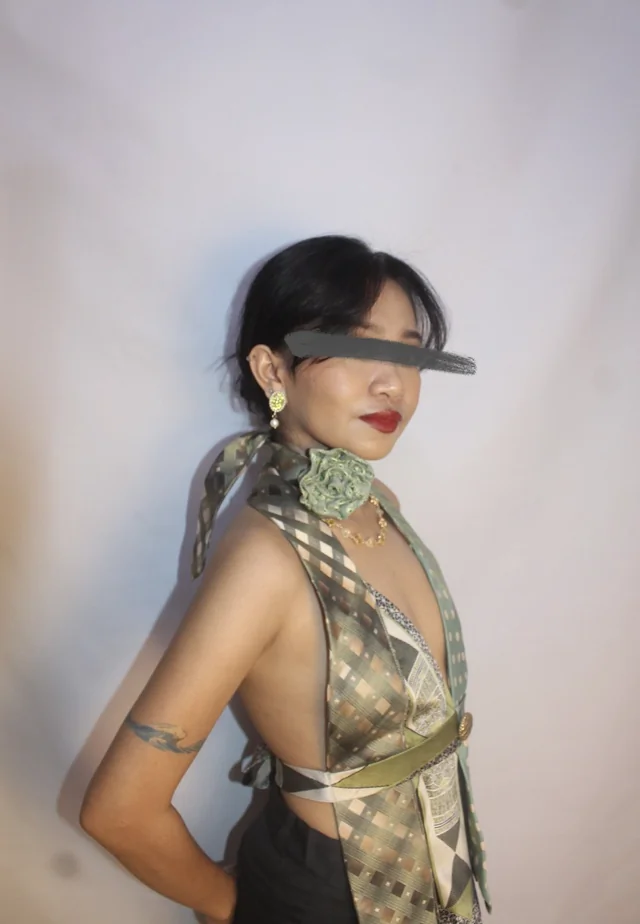
Jewelry and personal accessories deploy jade (玉, yù) — China's paramount prestige mineral, culturally valued above gold — in contemporary settings: jade pendants on modern chains, jade-inlaid rings in minimalist metal settings, and jade-beaded bracelets that reference Buddhist mala counting beads while functioning as fashion accessories. Silk scarves reproducing heritage brocade patterns or calligraphic compositions serve both as neck accessories and as visible textile-culture signifiers. Hair ornaments — particularly contemporary reinterpretations of traditional hairpins (簪子, zānzi) and hair combs (发梳, fàshū) — have gained traction through Xiaohongshu styling content, extending guochao into personal grooming territory.
Bag design incorporates heritage closure and material references: crossbody bags with frog-closure flaps, clutches in brocade-weave fabric, and structured handbags with jade or enamel hardware details. The cultural-institution collaboration is a significant accessory category: museum partnerships (Forbidden City/故宫, National Museum of China, Dunhuang Research Academy) produce licensed accessory lines — phone cases, tote bags, cosmetic pouches — that carry institutional cultural authority as authentication devices, positioning the wearer's consumption as cultural engagement rather than mere shopping.
Body Logic
Guochao conceptualizes the body as a carrier of collective cultural identity rather than as an individual display surface optimized for personal expression. The dressed body in guochao is legible not primarily as attractive, fashionable, or individually distinctive, but as culturally positioned — located within a specific civilizational tradition that the garment's material, construction, and motif systems make visible. This produces a distinctive body-evaluation regime in which fit, proportion, and gesture are assessed through cultural-legibility criteria rather than through the body-sculpting standards that govern Western fashion or the subcultural-code standards that govern streetwear.
Gender coding in guochao is historically complex. Traditional Chinese dress was less gender-dimorphic in construction than Western dress: both men's and women's robes used similar flat-cut, wrap-and-fold construction, with gender distinction achieved primarily through fabric choice, color, embroidery motif, and accessories rather than through fundamentally different garment architectures. The qipao represents a significant exception — its body-sculpting, gender-differentiating construction was itself a modernizing hybrid that imported Western tailoring concepts into Chinese dress — and its revival in guochao contexts reintroduces gender-specific body shaping into a tradition that was, in many historical periods, comparatively gender-neutral in silhouette. Contemporary guochao streetwear tends toward the gender-attenuated proportions of its streetwear base (oversized, layered, unisex sizing), while guochao formalwear and designer iterations may reassert gender-specific heritage forms (fitted qipao for women, structured changshan for men).
The body in guochao also encodes political position. Wearing domestic brands with Chinese cultural signifiers in post-2018 China communicates alignment with a cultural-confidence narrative that has both organic consumer dimensions (genuine pride in Chinese design) and state-mediated dimensions (the "buy Chinese" imperative amplified through platform algorithms and media coverage). The dressed body therefore operates at the intersection of personal taste and collective politics in ways that are more explicit than in most Western fashion categories, where consumer nationalism operates but is rarely thematized as a defining feature of the aesthetic.
Class encoding operates through the heritage-authenticity gradient: a garment with genuine Su xiu embroidery (costing 5,000-50,000+ RMB) communicates different economic position than a machine-embroidered mass-market alternative (200-500 RMB), and the ability to distinguish between them — embroidery-literacy as class marker — reproduces social hierarchy through cultural-knowledge capital.
Garment Logic
Guochao construction negotiates between two distinct garment-engineering traditions and their respective quality criteria, producing a hybrid construction logic that must satisfy heritage-authenticity evaluators and contemporary-performance evaluators simultaneously.
Heritage construction principles. Traditional Chinese garment construction is engineered for minimal fabric waste and maximal textile preservation. The jiaoling (cross-collar) neckline is formed by overlapping two fabric panels, eliminating the need for a separate collar-piece cut that wastes fabric. Side-seam closures — either continuous ribbon ties (系带, xìdài) or frog closures — avoid the fabric-weakening buttonholes and the metal-stress-point buttons of Western construction. Seam finishing uses bias-cut silk-strip binding (滚边) rather than overlocking, producing a seam enclosure that is itself a decorative element visible on the garment's interior. This construction logic was developed for precious silk textiles where fabric waste was economically significant and where metal hardware could damage delicate fiber — practical constraints that produced aesthetic conventions.
Contemporary hybrid construction. Most commercially available guochao garments use Western industrial construction methods (overlocked seams, fusible interfacing, machine buttonholes, zipper insertion) as their base, with heritage elements applied as surface treatment or detail substitution. A typical Li-Ning guochao jacket is constructed on a standard Western bomber-jacket block (raglan or set-in sleeve, center-front zip, ribbed cuffs and hem), with Chinese cultural reference provided by: brocade-weave or jacquard fabric in heritage-patterned panels, frog-closure accents at collar or pocket flaps, mandarin-collar band at neck, and calligraphic or motif embroidery at chest or back. This hybrid approach enables industrial-scale production while maintaining cultural legibility — the heritage citation is modular, attachable, and replaceable without redesigning the garment's fundamental construction.
Quality stratification across market tiers.
- Artisanal/heritage-grade (master-crafted qipao, handwoven brocade garments, hand-embroidered ceremonial dress): constructed using heritage methods with hand-knotted closures, hand-bound seams, and hand-embroidered decoration. Production time ranges from 40 hours (simple qipao) to 2,000+ hours (fully embroidered court-robe reconstruction). Price range: 5,000-500,000+ RMB. Market: collectors, cultural preservation, ceremonial/event wear.
- Designer/premium (Angel Chen, Samuel Gui Yang, Uma Wang, CLOT, Shushu/Tong): heritage materials and techniques selectively integrated into contemporary construction. May use genuine silk, semi-handwork embroidery, or artisan-produced closures combined with industrial base construction. Price range: 2,000-30,000 RMB. Market: fashion-conscious consumers with cultural-literacy capital.
- Commercial guochao (Li-Ning premium lines, Bosideng guochao collections, MUKZIN): machine-produced heritage-patterned fabrics, computer-embroidered motifs, and machine-formed closures on industrial garment blocks. Price range: 300-3,000 RMB. Market: mainstream domestic consumers participating in guochao as brand-identity practice.
- Mass-market/fast-fashion (Tmall guochao vendors, Taobao micro-brands, Shein guochao category): digitally printed heritage motifs on polyester or cotton-poly blended basics, adhesive-backed decorative closures, and screen-printed calligraphy. Price range: 30-300 RMB. Market: trend-responsive consumers engaging guochao at minimum commitment level.
Aftercare and failure modes. Silk-based guochao garments require careful maintenance: dry cleaning or cold hand-washing with pH-neutral detergent (silk's protein fiber is damaged by alkaline detergents and high temperatures above 40 degrees Celsius); flat drying away from direct sunlight (ultraviolet-accelerated degradation); storage in breathable garment bags with acid-free tissue (preventing oxidation staining from contact with metal hangers or wood storage). Embroidered garments should be turned inside-out before cleaning and never wrung (which stresses thread-to-ground-fabric attachment points). Brocade garments are particularly vulnerable to abrasion damage: the raised supplementary weft threads that create brocade's surface pattern are the first fibers to catch on external objects — seatbelt edges, bag straps, rough surfaces — and once these threads are pulled, the damage propagates along the weft line, unraveling the pattern irreversibly.
Frog closures fail through cord-surface abrasion (the ball-loop friction point wears through cord covering after several hundred closure cycles), cord-core compression (the internal wadding compresses over time, reducing ball diameter and loosening the closure's friction fit), and attachment-point thread fatigue (the stitching securing the closure to the garment body loosens through cyclic stress of opening and closing). These failures are repairable by a skilled tailor — replacement frog closures can be hand-knotted and attached — but the repair skill is specialized and increasingly rare outside heritage-tailoring ateliers in Shanghai, Suzhou, and Hong Kong.
The most consequential failure mode in commercial guochao is not material but semantic: when heritage citations become so abstracted from their source traditions that they lose cultural specificity and degrade into generic "Asian-themed" decoration, the garment fails its cultural-identity function even if its material construction remains intact. This semantic degradation — dragon print that could be from any culture, calligraphy that is decorative rather than meaningful, "gold-and-red" colorways that reference a stereotype rather than a specific tradition — is guochao's equivalent of gorpcore's membrane delamination: an invisible failure that undermines the garment's categorical claim.
Motifs / Themes
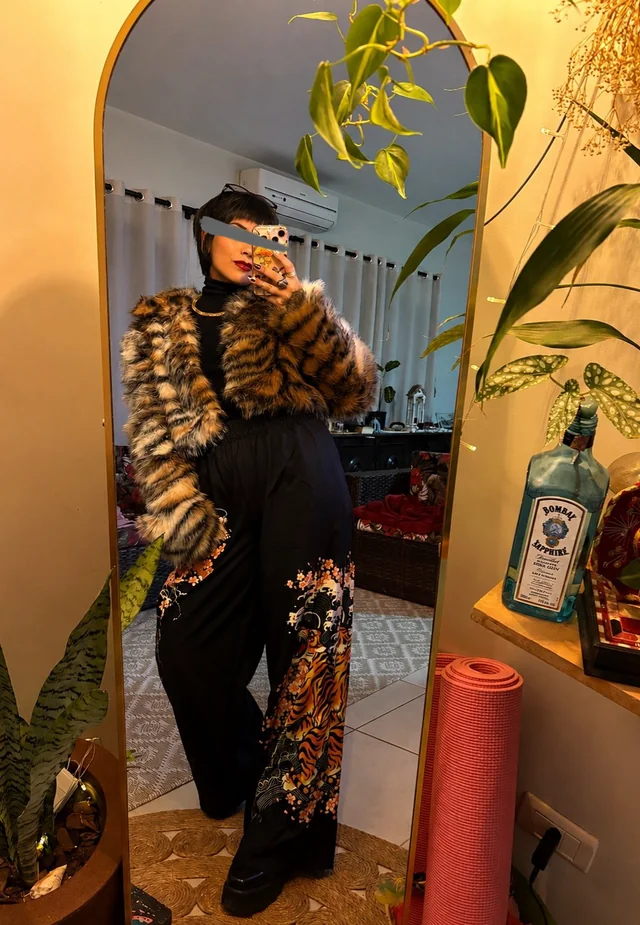
Dominant motifs derive from Chinese visual-culture traditions spanning cosmological symbolism, dynastic iconography, and literary reference. The dragon (龙, lóng) — China's paramount mythological symbol, associated with imperial authority, masculine potency, and cosmic power — appears across all guochao tiers, from embroidered masterwork to screen-printed graphics. The phoenix (凤, fèng) serves as the dragon's complement, traditionally associated with feminine grace, imperial consorts, and auspicious harmony. The pairing of dragon and phoenix (龙凤呈祥, lóngfèng chéngxiáng, "dragon and phoenix presenting auspiciousness") constitutes one of Chinese visual culture's most recognizable dyads.
Cloud patterns (云纹, yúnwén) — the stylized scrolling forms that give yunjin "cloud brocade" its name — function as both decorative filling and cosmological reference, representing the boundary between earthly and celestial realms. Crane imagery (仙鹤, xiānhè) references longevity, wisdom, and scholarly cultivation. Peony motifs (牡丹, mǔdān) encode prosperity and feminine beauty. Lotus patterns (莲花, liánhuā) carry Buddhist purity associations. These motifs are not interchangeable decoration but semantically specific symbols whose combinations and placements carry legible meaning within Chinese visual literacy — a literacy that guochao simultaneously assumes and teaches through its deployment of motif systems.
Calligraphic and literary references extend motif logic beyond image into text: classical poetry excerpts, philosophical maxims (Confucian, Daoist, Buddhist), and historical-figure references provide intellectual-heritage signifiers that position the wearer within a tradition of scholar-cultivation rather than mere visual display. Seal-script (篆书, zhuànshū) and grass-script (草书, cǎoshū) calligraphic styles serve as texture-creating elements whose aesthetic value operates independently of semantic content — the beauty of the brushwork itself functioning as cultural signal.
Porcelain blue-and-white (青花) motif language — the botanical, figural, and geometric designs developed for Ming and Qing dynasty export ceramics — provides a color-and-pattern system so culturally distinctive that it functions as an immediate China-reference in any medium. Ink-wash landscape (水墨山水, shuǐmò shānshuǐ) gradients translate the aesthetic tradition of Chinese landscape painting into textile surfaces, using digital printing to reproduce the tonal range of diluted ink on paper.
Cultural Touchstones
Li-Ning's "Wuxia" collection at New York Fashion Week (February 2018) — the runway presentation that made guochao globally legible, demonstrating that Chinese heritage signifiers could function as fashion-forward rather than backward-looking, and that a Chinese sportswear brand could command international fashion attention. The collection's viral circulation generated an estimated 150+ million social-media impressions in China within 48 hours.
Angel Chen's "Lady Qing" (清夫人) SS19 collection at Shanghai Fashion Week LABELHOOD — a theatrical presentation merging Peking Opera costuming vocabulary with electronic-music-scene styling, demonstrating designer-level heritage translation that exceeded brand-marketing guochao by integrating construction intelligence, not merely surface reference.
The Forbidden City (故宫) cultural IP licensing program — launched 2016, generating annual revenue exceeding 1.5 billion RMB by 2019 — established the template for museum-fashion collaboration in China, positioning heritage-institution partnership as a legitimacy mechanism for consumer products and demonstrating the commercial scale of cultural-heritage monetization.
Beijing 2022 Winter Olympics opening ceremony (February 4, 2022) — directed by Zhang Yimou, deploying Chinese heritage visual language (calligraphy, snow-pine motifs, traditional color symbolism) within cutting-edge technological presentation, providing a global-audience reference point for the aesthetic confidence that guochao channels at the consumer level.
CLOT's "Silk Royale" Air Force 1 collaboration with Nike (2009, rereleased 2019) — a red silk-upper sneaker whose outer layer tears away through wear to reveal a jade-patterned inner layer beneath, literalizing guochao's core metaphor: contemporary surface revealing heritage depth through use and time. The shoe became one of the most valuable sneaker collaborations in resale history (exceeding $15,000 on secondary markets).
Douyin and Xiaohongshu xinzhongshi content ecosystem (2022-present) — the platform-mediated micro-aesthetic communities that generate real-time heritage-integration experiments, testing new combinations of traditional elements and contemporary styling at a pace that exceeds traditional fashion-season cycles by orders of magnitude. These platforms function as both distribution channels and creative laboratories for guochao's ongoing evolution.
See Also
- Hanfu revival (汉服运动): Historical Chinese dress reconstruction, prioritizing dynastic accuracy over contemporary wearability
- Xinzhongshi (新中式): "Neo-Chinese style," the quieter, more integrated iteration of heritage-contemporary fusion that guochao is evolving toward
- Streetwear: The commercial-distribution and silhouette system through which most guochao garments reach consumers
- K-fashion / hanbokism: Korean parallel movement of heritage-contemporary fusion with different institutional support structures
- Wa-modern (和モダン): Japanese heritage-contemporary integration, operating within a longer-established luxury-craft economy
- Chinoiserie (historical): The European decorative tradition of Chinese-inspired design, analytically relevant as guochao's inversion — Chinese designers claiming heritage authority that European designers once borrowed
- Cultural branding / soft power: The political-economy framework within which guochao's state-adjacent dimensions operate
- Wabi-sabi: Shared valuation of material aging and craft tradition, though from a different civilizational and aesthetic framework
Brands and Designers
Heritage / Artisanal:
- Nanjing Yunjin Research Institute (南京云锦研究所): UNESCO-designated heritage institution preserving cloud-brocade weaving, producing museum-grade textiles and limited heritage garments
- Suzhou Embroidery Research Institute (苏州刺绣研究所): institutional center for Su xiu preservation, training, and production, bridging heritage craft and contemporary commissions
- Ruyi Group (如意集团, Shandong): vertically integrated textile conglomerate controlling heritage-grade silk and wool production from fiber to finished fabric
- Shanghai Tang (上海滩, founded 1994 by David Tang, Hong Kong): the first internationally positioned Chinese luxury brand integrating heritage tailoring (qipao, changshan) with contemporary luxury retail — now ICICLE Group-owned
Sportswear / Streetwear Fusion:
- Li-Ning (李宁, founded 1990 by Olympic gymnast Li Ning, Beijing): NYFW 2018 breakout; "China Li-Ning" sub-brand as guochao's commercial flagship; Wade basketball line with heritage colorways and motif integration
- Anta (安踏, founded 1991, Jinjiang, Fujian): China's largest sportswear group by revenue; acquired Amer Sports (Salomon, Arc'teryx, Wilson) in 2019; guochao product lines leverage scale across domestic market
- Warrior Shanghai (回力, founded 1927, Shanghai): heritage rubber-soled sneaker brand revived with guochao typography and colorways, occupying the "authentic Chinese sneaker" position
- Feiyue (飞跃, founded 1920s, Shanghai): martial-arts training shoe revived as heritage-lifestyle sneaker, internationally distributed through Feiyue International (French-registered brand with contested Chinese trademark)
- CLOT (founded 2003 by Edison Chen and Kevin Poon, Hong Kong): streetwear bridge between Chinese heritage and global sneaker/street culture; Nike collaborations integrating silk and jade motifs into Air Force 1 and Air Max platforms
- Bosideng (波司登, founded 1976, Changshu, Jiangsu): China's leading down-jacket manufacturer, repositioned from mass-market to premium through guochao-styled collections and Milan Fashion Week presentations
Contemporary Designers:
- Angel Chen (陈安琪, Shanghai/London): Central Saint Martins graduate; Peking Opera, mythology, and martial-arts visual language translated into streetwear-adjacent contemporary fashion; "Lady Qing" SS19 as genre-defining collection
- Samuel Gui Yang (杨桂东, London/Shanghai): heritage-minimalist integration; quiet mandarin-collar and silk-construction references within contemporary tailoring
- Shushu/Tong (树所同, Shanghai): founded by Liushu Lei and Yutong Jiang; feminine heritage references (embroidery, silk, traditional color) within youthful contemporary silhouettes
- Uma Wang (王汝元, Shanghai/Milan): textured knitwear and draped construction incorporating Chinese textile-philosophy references; Armani Group distribution
- Xu Zhi (许至, London/Shanghai): Central Saint Martins graduate; weaving-inspired textile construction; braid, fringe, and lattice techniques referencing Chinese craft traditions
- MUKZIN (密扇, founded 2014, Shenzhen): heritage-coded brand identity integrating traditional craft narratives into accessible contemporary product
Mass-Market / Platform Brands:
- Tmall/Taobao guochao category: thousands of micro-brands producing heritage-referenced products at mass-market price points; quality ranges from genuine craft integration to surface-level heritage printing
- Shein guochao category: ultra-fast-fashion heritage-motif products at minimum price points, representing guochao's maximum commercial dilution
- Peacebird (太平鸟, founded 1996, Ningbo): domestic fast-fashion brand with periodic guochao capsule collections integrating heritage motifs into contemporary basics
Citations
[1] Zhao, Jianhua. The Chinese Fashion Industry: An Ethnographic Approach. Bloomsbury Academic, 2013. [2] Finnane, Antonia. Changing Clothes in China: Fashion, History, Nation. Columbia University Press, 2008. [3] Wu, Juanjuan. Chinese Fashion: From Mao to Now. Berg, 2009. [4] Tsui, Christine. China Fashion: Conversations with Designers. Bloomsbury Academic, 2010. [5] Roberts, Claire, editor. Evolution and Revolution: Chinese Dress, 1700s–1990s. Powerhouse Publishing, 1997. [6] Wang, Zhe. "Implementation of Chinese-styled branding in global fashion: 'Guochao' as a rising cultural identity." Fashion, Style & Popular Culture, vol. 9, no. 1-2, 2022, pp. 11-29. Intellect. [7] Huang, J. et al. "Consumer ethnocentrism and Guochao: The mediating role of national identity." Humanities & Social Sciences Communications (Nature Portfolio), vol. 11, 2024. [8] Kuhn, Dieter. Science and Civilisation in China, Volume 5: Chemistry and Chemical Technology, Part 9: Textile Technology: Spinning and Reeling. Cambridge University Press, 1988. [9] Sheng, Angela. "Textiles from Well-Stratified Tang and Song Deposits at Famen Temple." Bulletin of the Museum of Far Eastern Antiquities, vol. 73, 2001, pp. 77-120. [10] Vollmer, John E. Silks for Thrones and Altars: Chinese Costumes and Textiles from the Liao through the Qing Dynasty. Myriad, 2004. [11] Wilson, Verity. Chinese Dress. Bamboo Publishing/Victoria and Albert Museum, 1986. [12] Garrett, Valery M. Chinese Clothing: An Illustrated Guide. Oxford University Press, 1994. [13] Clark, Hazel, editor. The Cheongsam. Oxford University Press, 2018. [14] Laing, Ellen Johnston. "Visual Evidence for the Evolution of 'Politically Correct' Dress for Women in Early Twentieth-Century Shanghai." Nan Nu: Men, Women, and Gender in China, vol. 5, no. 1, 2003, pp. 69-114. [15] Silberstein, Rachel. A Fashionable Century: Textile Artistry and Commerce in the Late Qing. University of Washington Press, 2020. [16] Bray, Francesca. Technology and Gender: Fabrics of Power in Late Imperial China. University of California Press, 1997. [17] Li, Lillian M. China's Silk Trade: Traditional Industry in the Modern World, 1842-1937. Harvard University Press, 1981. [18] Schoeser, Mary. Silk. Yale University Press, 2007. [19] Scott, Philippa. The Book of Silk. Thames and Hudson, 1993. [20] Kadolph, Sara J., and Sara B. Marcketti. Textiles. 12th ed., Pearson, 2016. [21] Hatch, Kathryn L. Textile Science. West Publishing, 1993. [22] "National Pride Marketing Is High-Risk, High-Reward." Business of Fashion, China Briefing. https://www.businessoffashion.com/briefings/china/ [23] "Guochao & Made in China." Jing Daily. https://jingdaily.com/trends/guochao-and-made-in-china [24] "Can Guochao Give Chinese Brands an Edge Globally?" Jing Daily. https://jingdaily.com/posts/can-guochao-give-chinese-brands-an-edge-globally [25] IMD. "Guochao: China's national trend." https://www.imd.org/research-knowledge/strategy/articles/guochao-chinas-national-trend/ [26] Entwistle, Joanne. The Fashioned Body: Fashion, Dress and Social Theory. 2nd ed., Polity, 2015. [27] Kawamura, Yuniya. Fashion-ology: An Introduction to Fashion Studies. 2nd ed., Bloomsbury Academic, 2018. [28] Crane, Diana. Fashion and Its Social Agendas: Class, Gender, and Identity in Clothing. University of Chicago Press, 2000. [29] Bourdieu, Pierre. Distinction: A Social Critique of the Judgement of Taste. Translated by Richard Nice, Harvard University Press, 1984. [30] Said, Edward W. Orientalism. Pantheon Books, 1978. [31] Hebdige, Dick. Subculture: The Meaning of Style. Routledge, 1979. [32] Barthes, Roland. The Fashion System. Translated by Matthew Ward and Richard Howard, University of California Press, 1983. [33] UNESCO. "Nanjing Yunjin Brocade." Intangible Cultural Heritage, 2009. https://ich.unesco.org/en/RL/nanjing-yunjin-brocade-00200 [34] Riello, Giorgio, and Tirthankar Roy, editors. How India Clothed the World: The World of South Asian Textiles, 1500-1850. Brill, 2009. [35] Ko, Dorothy. Every Step a Lotus: Shoes for Bound Feet. University of California Press, 2001. [36] Lipovetsky, Gilles. The Empire of Fashion: Dressing Modern Democracy. Princeton University Press, 1994. [37] Wilson, Elizabeth. Adorned in Dreams: Fashion and Modernity. Revised ed., Rutgers University Press, 2003.