Lekondo's
Ontology of Fashion Aesthetics

36 aesthetics

Clothing is expression without explanation. It influences how you’re seen and how you see yourself. Patterns of taste, mood, discipline, excess, and restraint repeat across time and culture. This is our guide to making that language visible.

Back to Ontology
Grunge 1
Grunge 2
Grunge 3

Grunge

Summary. Grunge is a dress system in which garments sourced through secondhand economies — thrift stores, surplus shops, hand-me-downs, and discarded wardrobes — are assembled into layered, deliberately unpolished outfits that encode both the economic constraints and the anti-aspirational values of the Pacific Northwest independent music scene from which the aesthetic emerged. The category is governed by a refusal logic: grunge's material choices, silhouette proportions, and styling conventions are defined by what they reject (1980s excess, body-conscious display, fashion-calendar seasonality, newness as value) as much as by what they present. Garments are evaluated not through specification literacy, construction quality, or brand provenance, but through evidence of lived use — thrift-store patina, genuine wear damage, accumulated softness from repeated washing — that distinguishes authentic material history from manufactured simulation.

In Material Terms

Grunge's coherence depends on the specific textile behaviors of repeatedly worn and washed natural fibers: cotton flannel that has been brushed, laundered, and body-softened through dozens of wear cycles; denim that has faded, frayed, and thinned at stress points through actual physical use; cotton jersey that has stretched, pilled, and developed the semi-transparent thinness that signals extensive service life. These degradation behaviors are not defects but the aesthetic's material content — the garment's wear history IS the garment's value. When fashion production simulates these aging effects through industrial distressing (sandblasting, chemical washing, laser fading, pre-tearing), it reproduces the visual output while eliminating the temporal and economic input that gives authentic grunge garments their meaning. This distinction — between lived wear and simulated wear — is grunge's central authentication criterion.

At Category Level

Grunge occupies a uniquely paradoxical position: it is an anti-fashion formation that became one of the most commercially exploited fashion movements of the twentieth century. The same aesthetic that emerged from economic necessity (Seattle musicians who couldn't afford new clothes) was translated into luxury product ($1,500 silk flannel shirts on Marc Jacobs's Perry Ellis runway, 1992) within months of reaching mainstream visibility. This compression — from subcultural necessity to commercial commodity in less than two years — makes grunge the paradigmatic case study in fashion's capacity to absorb and monetize its own negation.

Methodologically

This entry treats grunge as a thrift-cycle material system: garments are analyzed by how they enter secondhand economies, accumulate wear history, layer into anti-aspirational presentations, and generate meaning through temporal evidence rather than construction specification or brand identity.

Word (Etymology)

"Grunge" derives from American English slang "grungy" (dirty, grimy, in disrepair), attested from the mid-twentieth century. The term was applied to the late-1980s Seattle music scene — initially by local journalists and the Sub Pop Records marketing apparatus — to describe both the sonic quality (distorted, heavy, raw) and the visual presentation (unwashed, thrifted, unconcerned with appearance) of bands including Green River, Mudhoney, Soundgarden, and Nirvana.

As a fashion label, "grunge" designates not merely dark or distressed clothing but a specific anti-fashion position: the deliberate adoption of garments that signal non-participation in the fashion system's evaluative hierarchy. This distinction matters because "grunge fashion" is an oxymoron that the category has never resolved — the moment grunge becomes intentional fashion, it violates the non-intentionality that defines its authenticity. Marc Jacobs's 1992 Perry Ellis collection, Anna Sui's plaid-and-combat-boot styling, and every subsequent designer "grunge collection" confronts this paradox: the attempt to produce grunge through design contradicts grunge's founding premise that style is a byproduct of circumstance rather than a product of intention.

The New York Times lexicographer William Safire traced the word's migration from slang to cultural category in a 1992 column that noted the term's rapid semantic expansion from music descriptor to lifestyle label — a compression that reflected the speed at which media culture was metabolizing subcultural production in the early 1990s.

Subculture

Grunge formed in a specific microeconomic and geographic context — the Pacific Northwest independent music scene of the late 1980s — and its subcultural structure was inseparable from the material conditions that produced its aesthetic.

Seattle music scene and material conditions (1986–1991). The pre-mainstream grunge community was small, geographically concentrated, and economically constrained. Musicians and audience members in Seattle's independent music scene — centered on venues like the Crocodile Café, the Off Ramp, and various house-show basements — occupied the same economic stratum: low-income, often working part-time service-industry or manual-labor jobs, sharing houses in low-rent neighborhoods (Capitol Hill, the University District, Belltown before gentrification). Clothing was sourced through necessity from the material available: Goodwill and Value Village thrift stores (the Pacific Northwest had an exceptionally dense thrift-store infrastructure, fed by the region's relatively affluent suburban populations discarding wardrobes), army surplus stores, parental and sibling hand-me-downs, and garage-sale finds.

The climate was a material determinant. Seattle's maritime climate — cool, damp, and overcast for 8–9 months annually, with average winter temperatures of 3–8°C and annual rainfall of 950mm — demanded layering for thermal regulation and water resistance. Cotton flannel shirts (warm, breathable, inexpensive at thrift stores), thermal underwear (base-layer warmth), denim jackets and jeans (wind resistance, durability), and waterproof or water-resistant outerwear (military surplus rain gear, secondhand outdoor jackets) constituted a practical wardrobe optimized for the local environment. The layered, oversized, flannel-and-denim aesthetic that became "grunge fashion" was not a stylistic choice but a climate-and-budget response that developed its visual character through the specific material properties of the garments available in Pacific Northwest thrift stores.

Expertise and authentication. Grunge's subcultural expertise economy was unusual: it valorized non-expertise. Unlike goth (which rewards cosmetic skill and musical knowledge), techwear (which rewards specification literacy), or streetwear (which rewards brand-and-release knowledge), grunge rewarded the appearance of not trying — of assembling an outfit without apparent thought, effort, or investment. This produced a paradoxical authentication system: the most "authentic" grunge presentation was one that appeared to have no intention behind it, making intentional replication inherently suspect. The hierarchy was organized around proximity to the music scene rather than visual competence: musicians occupied the top (their clothing was genuinely the product of economic constraint and band-life wear), scene regulars occupied the middle (their wardrobes accumulated through the same thrift-store and hand-me-down channels), and outsiders who adopted the look occupied the bottom (their imitation, however visually accurate, lacked the material history that authenticated the originals).

This authentication structure made grunge uniquely vulnerable to commercial appropriation: because the aesthetic's value resided in non-intentionality, any institutional attempt to reproduce it (brand, designer, retailer) was automatically inauthentic. The subculture had no defense mechanism against appropriation because its defining feature (not caring) precluded organized resistance.

Post-mainstream fragmentation (1992–present). After Nevermind's commercial explosion (September 1991, reaching #1 on the Billboard 200 by January 1992), the grunge community fractured along the mainstream-exposure fault line. Musicians who had dressed from necessity found their wardrobes analyzed, imitated, and commodified. Kurt Cobain's ambivalent relationship with fame — wearing thrifted garments while being photographed for magazine covers — embodied the contradiction. Post-Cobain (after his death on April 5, 1994), grunge's subcultural infrastructure largely dissolved, leaving the aesthetic as a historical reference available for periodic revival rather than an active community.

Contemporary grunge engagement operates primarily through vintage markets (original-era band t-shirts, 1990s Levi's, period-correct flannel), fashion-designer quotation (Saint Laurent under Hedi Slimane, Vetements, Balenciaga under Demna), and platform-mediated revival (#grunge on TikTok, Tumblr-era "soft grunge" and "pale grunge" sub-aesthetics). These engagements cite grunge's visual grammar without reproducing its subcultural conditions — an inevitable consequence of the economic and geographic specificity that produced the original aesthetic.

History

The material history of grunge begins in the specific economic geography of the Pacific Northwest and the independent music infrastructure that created the conditions for the aesthetic's emergence.

Pacific Northwest economic and cultural context (1980s). The Pacific Northwest in the 1980s was economically peripheral to the cultural power centers of New York and Los Angeles: lower cost of living, weaker fashion-industry presence, smaller media markets, and a cultural identity organized around outdoor recreation, environmental consciousness, and independent music rather than fashion or entertainment. This peripherality was materially productive: it freed young creative communities from the fashion-awareness pressure of coastal media cities and created the economic conditions (low rent, available part-time work, cheap food) that permitted semi-voluntary poverty as a lifestyle.

The region's thrift-store infrastructure was fed by suburban affluence: middle-class Pacific Northwest households donated wardrobes to Goodwill, Value Village, and Salvation Army stores at rates that kept secondhand clothing abundant and cheap (flannel shirts for $2–5, jeans for $3–8, outerwear for $5–15 in late-1980s pricing). This economic circuit — suburban disposal funding subcultural acquisition — was the material pipeline that produced grunge's wardrobe.

Sub Pop Records and the pre-mainstream scene (1986–1991). Sub Pop Records, founded by Bruce Pavitt and Jonathan Poneman in Seattle in 1986, established the institutional infrastructure for the grunge music scene through a strategy that combined sonic identity (heavy, distorted guitar music), visual branding (Charles Peterson's high-contrast live-music photography, which documented the physical reality of basement shows and small-venue performances), and deliberate mythologization of Seattle as a cultural scene. Sub Pop's marketing — including a famously inflated press campaign that presented Seattle as a seething underground — attracted both attention and bands: Green River, Mudhoney, Soundgarden, TAD, and Nirvana all released early material on the label.

The visual aesthetic of the pre-mainstream scene was documented in Charles Peterson's photography and in Mark Arm and Steve Turner's (Mudhoney) and Kurt Cobain and Krist Novoselic's (Nirvana) public appearances: flannel over t-shirts, torn jeans, uncombed hair, thrift-store cardigans, and visible indifference to appearance. These were not style choices being documented; they were material conditions being photographed. The distinction matters because it determines grunge's authenticity structure: the visual output was a byproduct of circumstance, not a product of design.

Mainstream explosion and the Perry Ellis crisis (1991–1993). Nirvana's Nevermind (released September 24, 1991; sold 30 million copies worldwide) detonated grunge into mainstream consciousness. MTV's heavy rotation of "Smells Like Teen Spirit" (directed by Samuel Bayer, shot for $50,000) introduced the flannel-and-torn-jeans visual to a global audience. Pearl Jam's Ten (August 1991), Soundgarden's Badmotorfinger (October 1991), and Alice in Chains' Dirt (September 1992) consolidated grunge as both musical genre and visual category.

The fashion industry's response was immediate. Marc Jacobs's Spring 1993 collection for Perry Ellis (shown March 1992) translated grunge's thrift-store aesthetic into luxury ready-to-wear: silk flannel shirts priced at $1,500, cashmere beanies at $240, and combat boots styled with slip dresses. The collection was critically reviled by the fashion establishment and commercially unsuccessful; Jacobs was fired from Perry Ellis. But the collection's significance was structural rather than commercial: it demonstrated that the fashion system could absorb even an explicitly anti-fashion movement, translating non-participation into product. Anna Sui's concurrent grunge-inflected collections (plaid, Doc Martens, dark floral) were more commercially viable, and Calvin Klein's stripped-down 1990s advertising (featuring Kate Moss in minimal, unglamorous styling) absorbed grunge's anti-aspirational register into mainstream brand positioning.

Heroin chic and the darkening of grunge (1993–1997). The fashion industry's grunge absorption mutated into "heroin chic" — a visual register characterized by extreme thinness, pallor, dark under-eye circles, and vacant expressions, exemplified by photographer Corinne Day's images of Kate Moss in The Face (the "Third Summer of Love" editorial, 1990) and Davide Sorrenti's fashion photography. This mutation took grunge's aesthetic of non-participation and economic constraint and reframed it as glamorized self-destruction. The relationship between grunge culture and actual heroin use was not metaphorical: multiple figures in the Seattle scene, including Kurt Cobain, Layne Staley (Alice in Chains), and Andrew Wood (Mother Love Bone), struggled with heroin addiction, and the overlap between grunge's aesthetic of deterioration and drug culture's physical effects was substantive. President Clinton publicly criticized heroin chic in 1997 after Davide Sorrenti's death from a heroin overdose, and the fashion industry's most explicit grunge-derived visual cycle subsided.

Kurt Cobain's death and afterlife as icon (April 5, 1994 — present). Cobain's suicide at 27 transformed him from musician into icon and his wardrobe into artifact. The moss-green mohair cardigan he wore for MTV Unplugged in New York (recorded November 18, 1993, aired December 16, 1993) sold at auction for $334,000 in 2019 (Julien's Auctions) — a garment whose estimated thrift-store acquisition price was under $5, inflated by over 60,000× through the alchemy of celebrity death and cultural canonization. This price inversion — near-worthless garment becoming six-figure artifact — crystallizes grunge's central paradox: the aesthetic that rejected market value has produced some of fashion history's most dramatic market valuations.

Designer revival and post-grunge citation (2010s–present). Hedi Slimane's tenure at Saint Laurent (2012–2016) revived grunge's silhouette (skinny jeans, band t-shirts, leather jackets, Chelsea boots) within luxury-brand infrastructure. Demna Gvasalia's Vetements (2014) and Balenciaga (2015–present) deployed grunge's oversized proportions and distressing at luxury price points, treating grunge's anti-aspirational codes as ironic fashion material. These revivals demonstrate grunge's durability as a visual reference while confirming its subcultural exhaustion: the aesthetic is cited without the community, economics, or music scene that produced it.

Silhouette

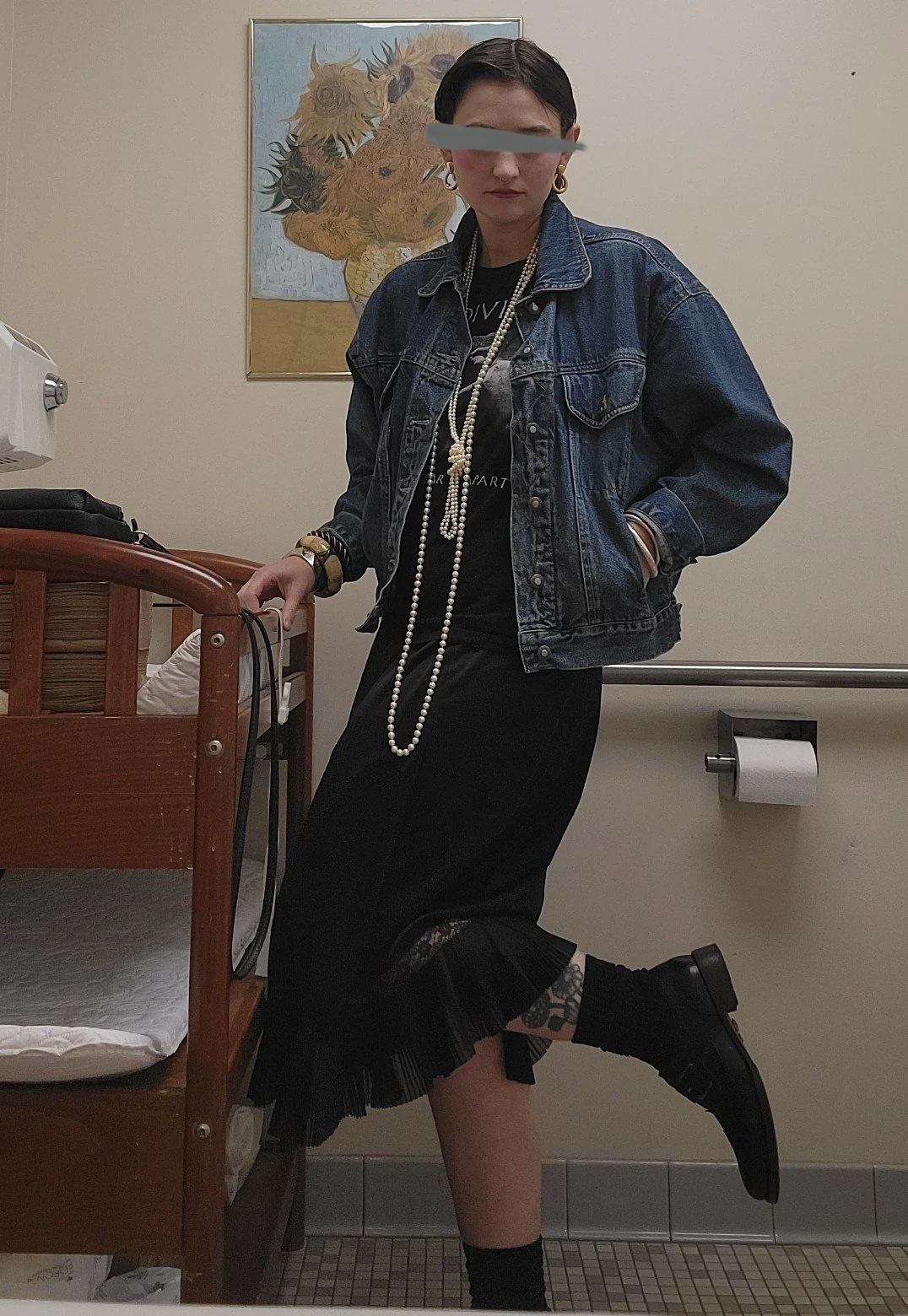
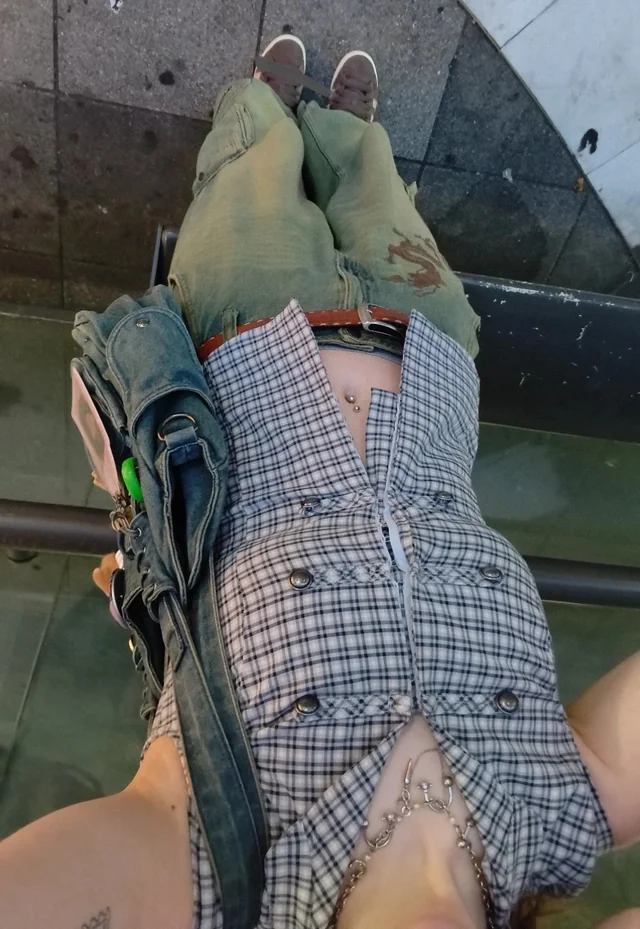
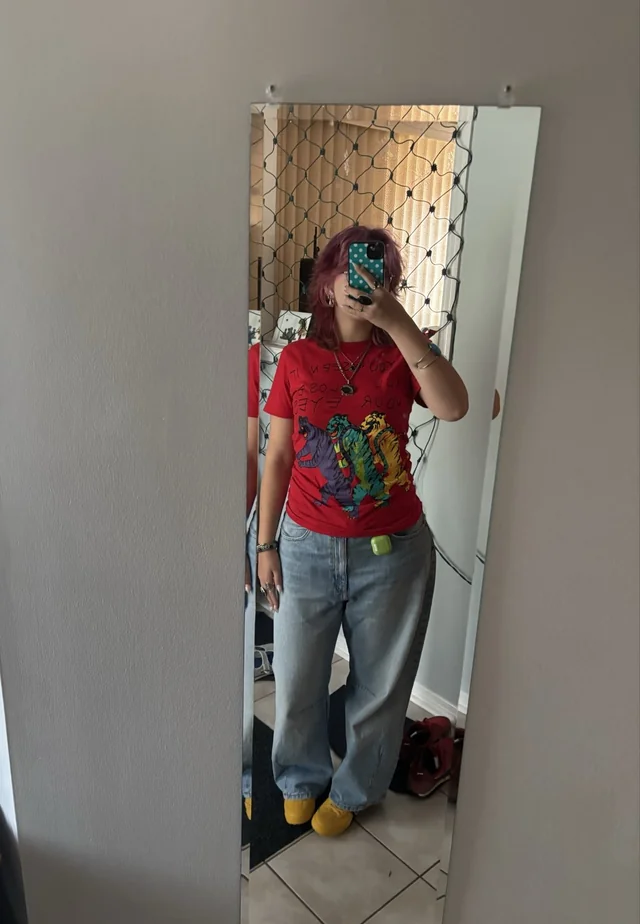
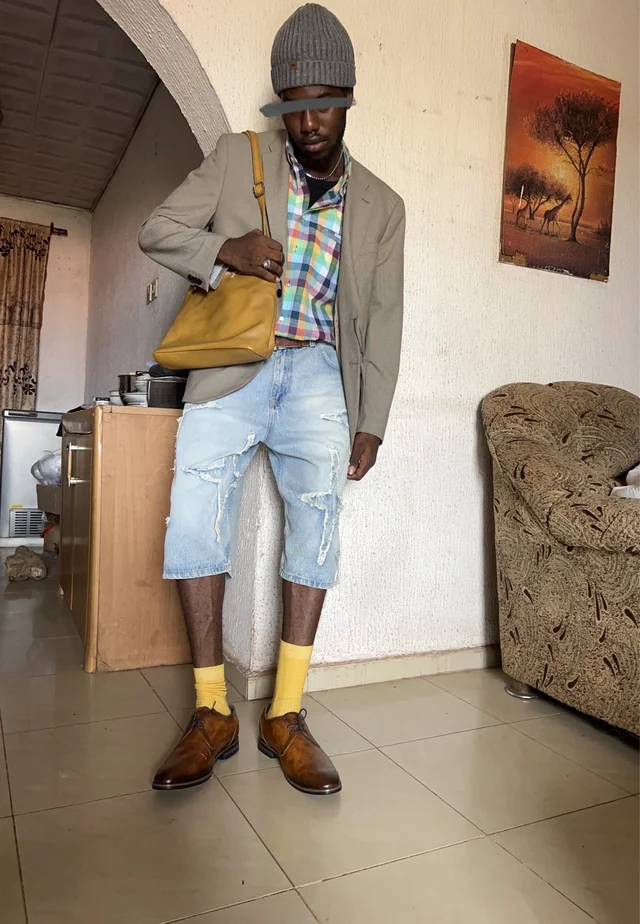
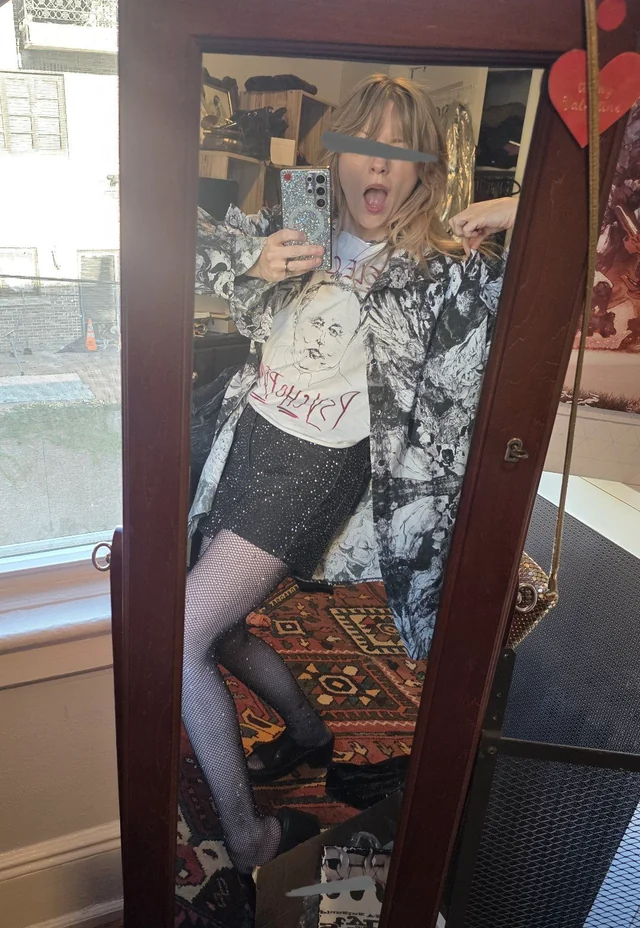
Grunge silhouette is governed by anti-display geometry: garments are sized, layered, and combined to conceal the body's contours, reject body-conscious tailoring, and communicate non-participation in the fashion system's evaluative hierarchy. The characteristic proportions — oversized tops, relaxed or torn bottoms, layered mid-pieces, heavy boots — are consequences of the material conditions that produced the aesthetic.

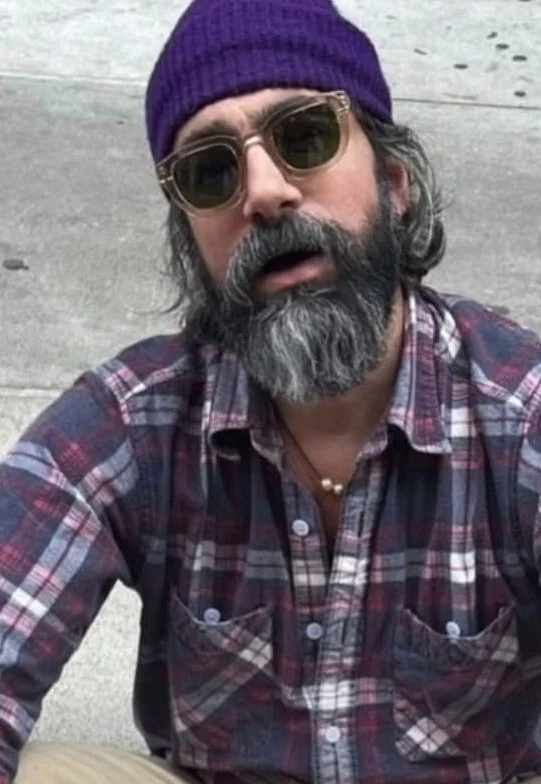
Oversized upper body. Flannel shirts, band t-shirts, and cardigans are worn 1–3 sizes above fitted measurement, producing dropped shoulders, extended sleeves (often pushed up or rolled to the forearm), and hemlines that fall to mid-thigh or below. This oversizing derives from two material conditions: thrift-store sizing is unpredictable (you buy what fits approximately, not precisely), and hand-me-down garments are often from larger relatives or previous owners. The visual effect — a body receding beneath excess fabric — communicates withdrawal from display. The flannel shirt worn open over a band t-shirt is grunge's foundational layering unit: the flannel provides warmth (Pacific Northwest climate), visual interest (plaid pattern), and body concealment (the open front creates a frame around the t-shirt without defining the torso), while the band t-shirt beneath provides cultural identification and skin-contact softness.

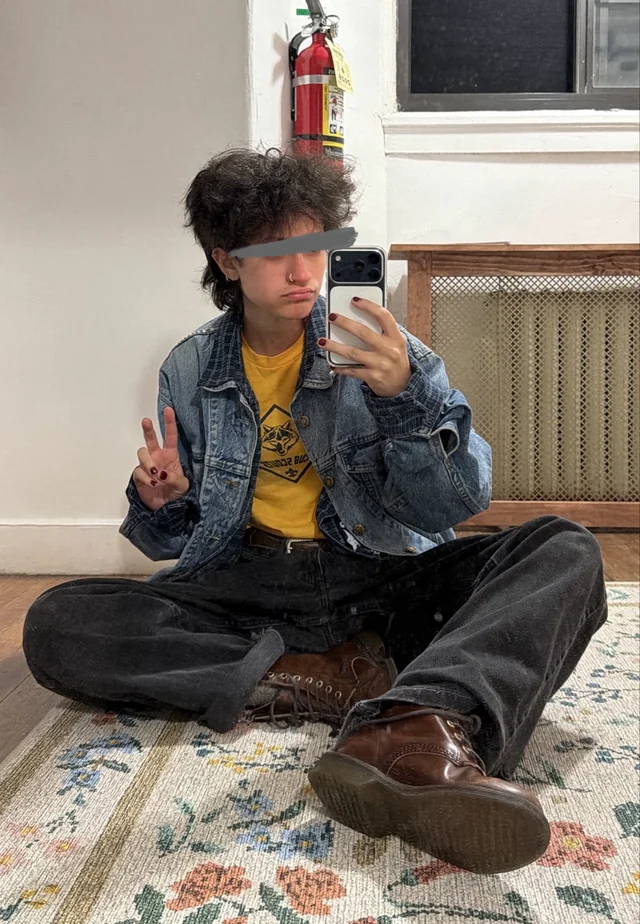
Distressed bottoms. Jeans — preferably Levi's 501s or similar straight-leg denim, acquired from thrift stores — are worn with genuine distressing: knee blowouts, frayed hems from dragging on wet sidewalks, fading from actual wear rather than factory treatment. The denim is relaxed or straight-fit, rejecting the skinny-jean body-consciousness that preceded grunge (1980s spandex and tight denim) and that would follow it (2000s skinny jeans). Rips and tears are repairs as much as damage — safety-pinned closures, visible patches, or simply open holes through which thermal underwear or skin is visible. The jeans' condition is the garment's temporal record: each rip, fade, and stain documents a specific physical history.

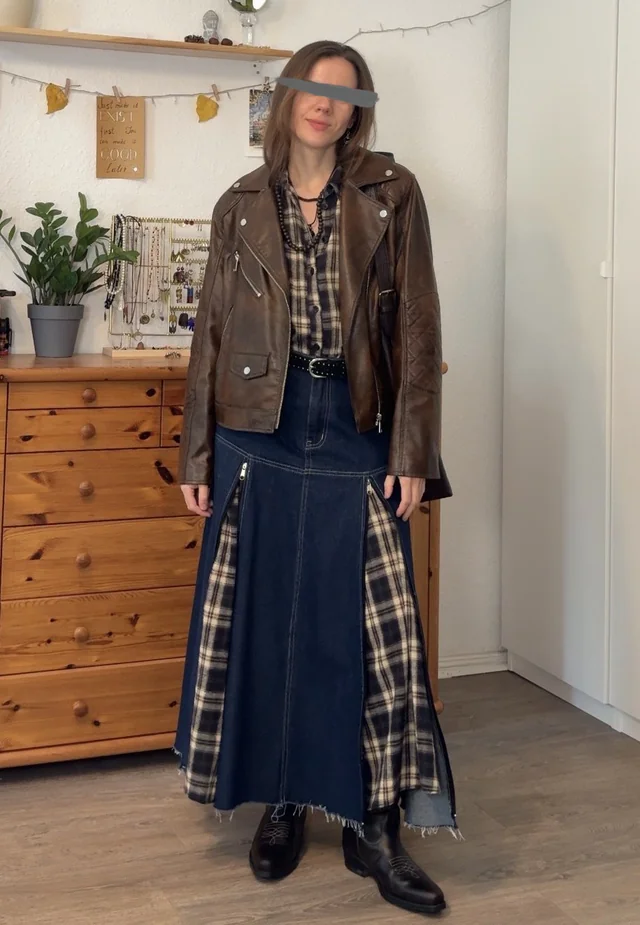
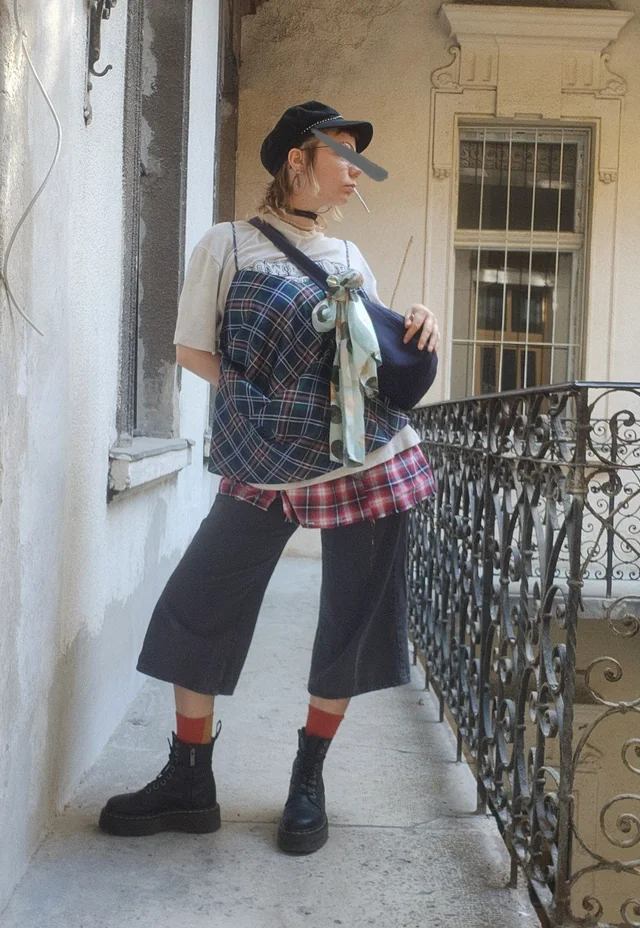
Layering as climate response and visual accumulation. Grunge layering is practical before it is aesthetic: a waffle-knit thermal base layer for warmth, a cotton t-shirt for comfort and identity (band logo), a flannel or plaid shirt for insulation and wind resistance, and a denim or surplus jacket as outer shell. Each layer is visible at hem and cuff, creating a visual stratigraphy that reveals the garment stack from the bottom up. This layering logic is functionally similar to outdoor and military layering systems (base-mid-shell) but assembled from found materials rather than engineered components, and maintained through tolerance of imperfect fit rather than through systems optimization.

The slip dress and kinderwhore variant. Courtney Love's "kinderwhore" styling — baby-doll dresses, ripped stockings, smeared lipstick, tiara or barrettes in uncombed hair — introduced a gendered grunge variant that combined thrift-store femininity (cheap slip dresses, vintage nightgowns worn as outerwear) with deliberate destruction (torn fabric, smeared cosmetics, aggressive juxtapositions of "innocent" garments with "damaged" presentation). This variant's silhouette inverted grunge's body-concealment logic: the slip dress revealed the body while the deliberate destruction of the garment signaled refusal of the conventional femininity the garment type referenced.

Materials

Material selection in grunge is determined by thrift-store availability, Pacific Northwest climate requirements, and the aesthetic's valorization of wear-damaged natural fibers. The category's material specificity is organized around the aging behavior of cotton and denim textiles — how they degrade, soften, fade, and develop character through repeated use.

Cotton flannel. Grunge's signature textile. Flannel is a woven cotton (or cotton-blend) fabric that has been mechanically brushed on one or both sides, raising a nap of fiber ends that creates a soft, insulating surface. The brushing process damages the fabric's surface fibers (breaking them free from the woven structure to create the fuzzy nap), which means flannel begins its life with a deliberately degraded surface that continues to evolve through wear and washing. After 20–50 wash cycles, cotton flannel develops the soft, pliable, slightly thinned quality that grunge values: the fabric drapes more loosely, the plaid pattern fades slightly (colors losing saturation through progressive dye loss), and the nap wears flat at high-friction points (elbows, collar, cuff edges). This aging trajectory — from stiff and bright to soft and faded — is flannel's specific contribution to grunge's temporal-evidence aesthetic.

Flannel quality is determined by fiber content (100% cotton flannel provides better breathability and softer aging than polyester-blend flannel, which pills more aggressively and retains less warmth), weight (measured in grams per square meter; heavier flannel provides more warmth but less drape), and weave density (tighter weaves resist tearing longer but feel stiffer new). Thrift-store flannel has already passed through its stiffest, brightest phase, making it immediately comfortable — a practical advantage that reinforced the thrift-acquisition habit.

Flannel's specific performance in the Pacific Northwest maritime climate is relevant: it provides moderate insulation when dry (the raised nap traps dead air against the body, similar to fleece's insulation mechanism), but its insulation capacity drops significantly when wet (cotton absorbs up to 27× its weight in water, and saturated flannel becomes heavy, cold, and slow-drying). This wet-climate limitation explains grunge's characteristic layering: the flannel provides insulation but requires an outer layer (denim jacket, surplus rain gear) for rain protection. The aesthetic is thus a visible record of an engineering compromise imposed by material limitation — natural-fiber insulation in a wet climate, managed through layering rather than through performance textiles.

Denim. Grunge denim derives from the same textile tradition as workwear denim (see workwear entry for detailed denim material science), but the evaluative framework is inverted: where workwear and raw-denim communities value controlled fade development through careful wear, grunge values uncontrolled degradation through indifferent use. Grunge jeans are worn daily regardless of weather, washed frequently (accelerating indigo loss), dragged on wet pavement (fraying hems), kneeled on concrete or club floors (developing knee wear and eventual blowout), and repaired minimally or not at all. The resulting denim — pale, thin, ripped at stress points, soft from hundreds of wash cycles — encodes a use history that is opposite in care method but parallel in material logic to raw-denim enthusiasts' carefully developed fades. Both communities produce garments whose visual character derives from temporal wear; they differ in the intentionality and control applied to that process.

Grunge-era denim is predominantly thrifted Levi's 501s (button-fly, straight-leg, the same jean that workwear and raw-denim communities value) in pre-worn condition. The 501's non-stretch construction (100% cotton, no elastane) means it develops rigid creases, sharp fade lines, and pronounced whisker-and-honeycomb patterns that record the wearer's body geometry with high fidelity — a material behavior that makes well-worn 501s visually more complex and individualized than stretch-denim alternatives.

Cotton jersey (band t-shirts). The band t-shirt is grunge's primary identity-signaling garment, and its material condition carries specific subcultural meaning. Vintage band t-shirts — genuinely worn at or purchased from concerts in the 1980s and early 1990s — develop a set of aging characteristics that authenticate their provenance: the cotton thins and becomes semi-transparent (especially at the collar and shoulder), the screen print cracks and fades (losing opacity and developing the "vintage print" texture that modern reproductions attempt to simulate), the collar stretches and loses its ribbed structure (developing the wide, loose neckline characteristic of extensively worn t-shirts), and the fabric softens to a drape and hand feel that new cotton cannot replicate.

These aging characteristics function as authentication markers: a genuinely vintage Nirvana "In Utero" t-shirt from 1993 has material properties (thinness, print condition, collar distortion, fabric hand) that a 2024 reproduction, however accurately it reproduces the graphic, cannot match. The vintage band-t-shirt market (eBay, Grailed, specialized vintage dealers) prices accordingly, with original-era grunge band t-shirts in good condition commanding $200–$1,000+ — another instance of grunge's central paradox, where garments originally acquired for under $20 at concerts or thrift stores appreciate into collectible-tier pricing.

Thermal knit. Waffle-knit thermal underwear (also called "waffle weave" — a cotton or cotton-blend knit with a raised-grid texture that traps insulative dead air in its recessed cells) provides grunge's base layer. Originally designed as undergarment (visible only at cuff and collar beneath outer layers), grunge's layering conventions made thermal fabric visible as a deliberate style element — the waffle texture exposed at the sleeve beneath a pushed-up flannel cuff, or the thermal shirt worn as a standalone garment with a band t-shirt over it. The fabric's gridded texture and cream or natural color provide visual interest and layering depth.

Corduroy. A supplementary grunge textile: wide-wale corduroy (8–14 wales per inch) in brown, forest green, or mustard provides seasonal variation from flannel and denim. The fabric's ridged surface wears distinctively — the ridge tops abrade and fade while the valleys retain color, producing a streaked, directional patina that adds visual complexity. Corduroy's failure mode is "cording out" — the ridges flatten and lose definition through sustained abrasion, producing a smooth, shiny surface that signals extreme age.

Failure modes and thrift-cycle economics. Grunge garments fail through predictable degradation pathways: flannel thins and eventually tears at high-stress points (elbows, back yoke where the shoulder blades flex); denim blows out at the crotch and knee; cotton jersey t-shirts develop holes at the collar, shoulder, and hem; corduroy cords out and wears through at the knee and seat. In the grunge economy, these failures are not endpoints but transitions: a garment that has failed beyond wearable use becomes a source of patches, a component of a modified garment, or simply continues to be worn in its compromised state as evidence of the wearer's commitment to non-replacement.

The thrift-cycle itself constitutes a material system: garments are donated (by middle-class consumers discarding functional clothing for seasonal or trend-driven reasons), sorted and priced (by thrift-store organizations using condition and brand as rough value guides), purchased (by grunge participants selecting for aesthetic, fit, and price), worn through additional use cycles, and eventually discarded or re-donated, continuing the circulation. This secondhand economy is the infrastructure that makes grunge's material aesthetic possible — without abundant, inexpensive thrift-store inventory, the aesthetic cannot be assembled.

Color Palette

The palette is governed by thrift-store availability and anti-coordination rather than by trend or intentional selection. The resulting color register — muted plaids, faded indigos, washed-out blacks, cream thermals, army olive — reads as accidentally cohesive because the same aging processes (dye loss, sun fade, wash-cycle saturation reduction) affect all garments in the same direction: toward muted, desaturated, low-contrast tones.

Flannel plaids — red-and-black buffalo check, green-and-navy tartan, brown-and-cream checks — provide the palette's most saturated elements, but even these are muted by thrift-store aging. Denim runs from medium indigo to pale, washed-out blue. Black garments (t-shirts, jeans, cardigans) fade toward grey or green-black. Cream and natural-colored thermal knits provide the lightest tones. Army-surplus olive drab and khaki provide earth-tone alternatives.

The palette's anti-coordination is deliberate: nothing matches, nothing is selected to harmonize, and the visible clash between garment colors communicates the absence of fashion-directed selection. This chromatic indifference is as much a style choice as techwear's achromatic discipline — it is just organized around a different principle (non-selection versus deliberate selection).

Details

Details in grunge are best understood as damage interfaces — evidence of material degradation that, through subcultural revaluation, has become legible style content.

Visible wear and damage. Knee rips, frayed hems, collar stretching, elbow thinning, staining, and general fabric deterioration are grunge's primary details. In authentic grunge, these are not applied but accumulated: each instance of damage corresponds to a specific physical event (a fall, a drag, repeated flexion, a spill) that the garment has recorded in its material. Industrial pre-distressing (sandblasting, laser-cutting, chemical washing) simulates these damage patterns but produces uniformly distributed wear that lacks the anatomical specificity of genuine use: a real knee rip aligns precisely with the wearer's patella; a factory rip is placed generically at "knee height."

Safety pins. Adopted from punk, safety pins function in grunge as both repair and decoration — closing a rip that the wearer either cannot afford or does not bother to sew, while simultaneously signaling subcultural lineage (punk's founding bricolage). The safety pin's dual function (structural repair and cultural reference) makes it grunge's most efficient detail.

Layering visibility. The visible edges of underlayers — thermal cuffs beneath flannel sleeves, t-shirt hems extending below flannel hems, undershirt collar visible at the neckline — function as details that reveal the garment stack. This visibility is structurally similar to streetwear's layered-hemline technique but motivated by climate-management practicality rather than intentional styling.

Hair and grooming. Unwashed or infrequently washed hair, uncombed or finger-combed rather than styled, left in its natural texture rather than straightened, curled, or blow-dried. Facial hair (on men) left untrimmed. Makeup (when present) minimal and smudged — eyeliner applied and then allowed to migrate, lipstick applied without precision. This grooming register communicates the same anti-effort message as the garment choices: the body is not prepared for evaluation.

Accessories

Footwear. Dr. Martens 1460 (the 8-eyelet boot, shared with goth and punk) in black or oxblood, worn until the leather scuffs white at the toe and the sole separates at the rand. Converse Chuck Taylor All Stars (canvas, low or high top) in worn condition — a shoe whose canvas-and-rubber construction degrades visibly, developing holes, sole-separation, and yellowing that records its use history. Combat boots from military surplus (cheap, durable, weather-resistant). The footwear is unified by its condition: everything is scuffed, worn, and visibly aged.

Minimal carry. No bags, or canvas messenger bags (army surplus, thrift-store finds). Wallets with chains (borrowed from workwear and biker traditions). Nothing precious, nothing maintained, nothing that signals investment in accessories as a category.

Jewelry. Chokers (thin leather or fabric, referencing 1990s revival of the Victorian choker), simple silver rings (often multiple, stacked, from thrift stores or cheap retail), hoop earrings, and studs. Band pins and patches on jackets or bags provide additional subcultural-identification surface.

Body Logic

Grunge conceptualizes the body as a site of withdrawal rather than display — a form to be concealed beneath layers, de-emphasized through oversized proportions, and presented in a state of deliberate non-preparation that rejects mainstream culture's evaluative gaze. The grunge body does not invite assessment; it refuses it.

The oversized silhouette obscures the body's contours, redirecting evaluation from physique to attitude. Where athleisure reveals and optimizes the body, where streetwear dresses the body as a cultural-reference surface, and where techwear instrumentalizes the body as an environmental-interface platform, grunge withdraws the body from these evaluative regimes entirely. The body is present but not offered for consumption.

Gender presentation in grunge is complex. The default silhouette (oversized flannel, baggy jeans, boots) is functionally androgynous — it conceals gender-differentiating body contours beneath undifferentiated bulk. Male and female grunge participants wore substantially similar wardrobes, producing a de facto gender neutrality that anticipated (but did not theorize) contemporary unisex fashion. However, Courtney Love's kinderwhore variant introduced an explicitly gendered grunge register: the baby-doll dress, ripped tights, and smeared makeup deployed exaggerated feminine signifiers in a state of deliberate destruction, weaponizing femininity by presenting it as already damaged. This gendered sub-register complicates any claim that grunge was simply gender-neutral; it was, rather, a category within which different gender strategies operated simultaneously.

The "heroin chic" body — extreme thinness, pallor, dark-circled eyes, vacant expression — represents the fashion industry's adoption of grunge's physical register into a body ideal that glamorized the physiological effects of drug use and malnutrition. This adoption was culturally consequential: it transformed the bodies of economically marginalized musicians into an aspirational aesthetic for fashion consumers, obscuring the material conditions (poverty, addiction, mental illness) that produced the physical appearance being aestheticized. Kate Moss's early-career styling, Corinne Day's photography, and Calvin Klein's advertising of this period represent the most commercially successful — and most ethically contested — examples of this adoption.

Garment Logic

Grunge garment construction operates through a found-materials logic rather than through purchase-and-maintain or design-and-produce models. The aesthetic is assembled from pre-existing garments whose construction was determined by their original manufacturer (Levi's, Pendleton, Fruit of the Loom, Hanes, surplus military contractors) and whose current condition is determined by their previous use history. Grunge's "construction" is therefore curatorial rather than manufacturing: it consists of selecting, combining, and wearing garments whose material properties (weight, softness, fade level, damage pattern) have been shaped by prior ownership.

Thrift-store curation as construction practice. Assembling a grunge wardrobe from thrift-store inventory requires a set of skills that, while informal and uncodified, constitutes a genuine material-evaluation practice: assessing fabric condition by touch (distinguishing genuinely softened cotton from fabric that is merely thin or degraded beyond wearable use), evaluating denim fade and stretch (determining whether the jeans will hold their shape or have passed the point of structural integrity), checking seam condition (identifying garments that will survive additional wear cycles versus garments about to fail), and matching plaid patterns and color tones across garments sourced from different manufacturers and eras. This curation skill is invisible in grunge discourse — which emphasizes not-caring as the aesthetic's defining posture — but it is real, and its presence distinguishes effective grunge assembly from random thrift-store accumulation.

Pre-distressing and the simulation problem. Fashion-industry grunge uses industrial processes to simulate aging: sandblasting (directing pressurized sand at denim to abrade indigo from specific zones — a process that has been banned in several countries due to silicosis risk to workers), laser distressing (using computer-controlled lasers to burn fade patterns and wear marks into denim), chemical washing (using bleach, enzymes, or pumice to accelerate dye removal and surface softening), and mechanical tearing (cutting and fraying fabric at predetermined points). These processes can reproduce the visual appearance of aged garments with high accuracy, but they operate on new textiles that lack the fiber-level softening, dimensional change, and structural weakening that genuine use produces. The result: factory-distressed garments look worn but feel new — a material contradiction that experienced grunge participants can detect.

Aftercare — or the absence of it. Grunge's maintenance logic is anti-maintenance: garments are washed in whatever cycle is convenient (often warm or hot water with regular detergent, which accelerates color loss and fabric degradation), tumble-dried (which accelerates shrinkage and fiber breakdown), and not sorted by color (which produces dye-transfer effects that further mute the palette). This anti-care practice is functionally the opposite of raw-denim culture's careful no-wash wear and techwear's specific maintenance protocols — but it produces parallel material outcomes: garments that develop visible use histories over time. The difference is that grunge's aging is accelerated and uncontrolled, producing faster degradation and shorter garment lifespans.

Failure modes and garment death. Grunge garments fail through the standard natural-fiber degradation pathways (see flannel and denim material analysis above), and the aesthetic's tolerance for damage means garments remain in circulation longer than in most categories — a flannel shirt with elbow holes, a t-shirt with collar tears, jeans with knee blowouts are not retired but continue to be worn. The garment's "death" in grunge occurs only when structural integrity fails beyond the wearer's tolerance — typically when the garment can no longer stay on the body (waistband failure in jeans, total shoulder-seam separation in shirts). Even then, the garment may be repurposed: cut into patches, tied around the waist, or cannibalized for material.

Motifs / Themes

Dominant themes include refusal of aspiration (the aesthetic defines itself against the 1980s excess it rejected), working-class pragmatism (garments chosen for function and affordability rather than fashion), Pacific Northwest regionalism (climate and geography as aesthetic determinants), music as identity (grunge remains, in historical memory, a music-derived aesthetic before it is a fashion category), generational exhaustion (Generation X's disaffection with Reagan-era optimism and consumer culture), and the body as not-for-consumption (withdrawal from display culture's evaluative gaze).

The "authenticity paradox" functions as grunge's meta-theme: an aesthetic founded on non-intentionality becomes, the moment it is recognized as an aesthetic, intentional — and therefore inauthentic by its own criteria. This paradox is not a flaw in grunge's logic but its defining structural condition, and it produces the recurring cycles of emergence, commodification, rejection, and nostalgic revival that characterize grunge's cultural afterlife.

Cultural Touchstones

Kurt Cobain in the moss-green mohair cardigan, MTV Unplugged in New York (November 18, 1993): grunge's single most iconic garment-in-context, later sold at auction for $334,000. Courtney Love in kinderwhore baby-doll dress, tiara, and smeared lipstick: the gendered grunge variant as feminist provocation. Winona Ryder in Reality Bites (1994, Ben Stiller): grunge as Generation X lifestyle comedy. Claire Danes in My So-Called Life (1994–1995): grunge as suburban-teenage identity vehicle. Kate Moss and Johnny Depp (early 1990s): grunge-adjacent celebrity coupling that collapsed subcultural aesthetic into fashion-media spectacle. Cameron Crowe's Singles (1992): Seattle grunge scene as romanticized community. Pearl Jam's Eddie Vedder shirtless under open flannel: grunge masculinity as raw physicality.

Marc Jacobs's Spring 1993 Perry Ellis collection (shown March 1992): the pivotal fashion-industry event, translating grunge into luxury product and provoking Jacobs's firing — a commercial failure that became a fashion-history landmark. Hedi Slimane's Saint Laurent tenure (2012–2016): the most commercially successful grunge-revival designer project. Demna Gvasalia's Vetements and Balenciaga: post-ironic grunge quotation at luxury price points.

See Also

  • Kinderwhore: Courtney Love's gendered grunge variant, baby-doll and destruction femininity
  • Riot grrrl: Feminist punk parallel, overlapping with grunge's temporal and geographic context
  • Punk: Foundational subcultural antecedent providing DIY ethics, safety-pin vocabulary, and anti-establishment positioning
  • Heroin chic: Fashion industry's darkened adoption of grunge's physical register
  • 1990s minimalism: Fashion establishment's simultaneous anti-grunge response (Calvin Klein, Helmut Lang, Jil Sander)
  • Normcore: 2010s descendant sharing grunge's non-aspirational register but without its subcultural anger
  • Workwear: Shared material base (flannel, denim, surplus) and thrift-store sourcing channels
  • Slacker aesthetic: Shared anti-grooming and anti-productivity posture

Brands and Designers

Original / Subcultural Source (not brands but material channels):

  • Goodwill, Value Village, Salvation Army: the thrift-store infrastructure that supplied grunge's wardrobe
  • Levi's (thrifted 501s): the foundational denim, selected for condition rather than brand loyalty
  • Pendleton (thrifted flannels): heavyweight wool and cotton flannels from Pacific Northwest heritage brand, common in regional thrift stores
  • Fruit of the Loom, Hanes: mass-market thermal underwear and undershirts repurposed as visible base layers
  • Military surplus stores: boots, jackets, outerwear sourced at below-market prices

Footwear:

  • Dr. Martens (1960, Wollaston, England): 1460 boot shared with punk and goth, adopted by grunge for durability and subcultural lineage
  • Converse Chuck Taylor All Star: canvas low/high-top, adopted for cheapness and subcultural ubiquity
  • Combat boots (surplus): generic military-surplus footwear, brand unimportant, condition paramount

Designer / Fashion Grunge:

  • Marc Jacobs (Perry Ellis Spring 1993): the pivotal and controversial luxury-grunge translation, silk flannels and cashmere beanies
  • Anna Sui: concurrent grunge-inflected collections, commercially more viable than Jacobs's provocation
  • Hedi Slimane (Saint Laurent, 2012–2016): the most successful commercial grunge revival, skinny silhouettes and band-tee styling
  • Vetements (Demna Gvasalia, 2014): post-ironic grunge quotation, oversized proportions at luxury pricing
  • Balenciaga (Demna, 2015–present): continued grunge-reference within luxury-fashion deconstruction

Contemporary Grunge-Adjacent:

  • R13 (2009, New York): premium distressed denim and flannel, explicitly grunge-referenced design philosophy
  • Amiri (Mike Amiri, 2014, Los Angeles): luxury-distressed denim, rock-and-roll reference, $800+ jeans
  • AllSaints (1994, London): accessible leather-and-distressed-cotton grunge-adjacent wardrobe
  • Ksubi (1999, Sydney): distressed denim specialization, street-grunge crossover
  • Saint Laurent (ongoing): grunge-rock reference maintained across creative directors post-Slimane

Citations

[1] Azerrad, Michael. Our Band Could Be Your Life: Scenes from the American Indie Underground, 1981–1991. Little, Brown and Company, 2001. [2] Cross, Charles R. Heavier Than Heaven: A Biography of Kurt Cobain. Hyperion, 2001. [3] Yarm, Mark. Everybody Loves Our Town: An Oral History of Grunge. Crown Archetype, 2011. [4] Arnold, Gina. Route 666: On the Road to Nirvana. St. Martin's Press, 1993. [5] "Grunge: A Success Story." The New York Times, November 15, 1992. [6] Marin, Rick. "Grunge: A Success Story." The New York Times, November 15, 1992. [7] Steele, Valerie. Fifty Years of Fashion: New Look to Now. Yale University Press, 1997. [8] Entwistle, Joanne. The Fashioned Body: Fashion, Dress and Social Theory. 2nd ed., Polity, 2015. [9] Kawamura, Yuniya. Fashion-ology: An Introduction to Fashion Studies. 2nd ed., Bloomsbury Academic, 2018. [10] Breward, Christopher. Fashion. Oxford University Press, 2003. [11] Wilson, Elizabeth. Adorned in Dreams: Fashion and Modernity. Revised ed., Rutgers University Press, 2003. [12] Crane, Diana. Fashion and Its Social Agendas: Class, Gender, and Identity in Clothing. University of Chicago Press, 2000. [13] Lipovetsky, Gilles. The Empire of Fashion: Dressing Modern Democracy. Princeton University Press, 1994. [14] Hebdige, Dick. Subculture: The Meaning of Style. Routledge, 1979. [15] Barthes, Roland. The Fashion System. Translated by Matthew Ward and Richard Howard, University of California Press, 1983. [16] Simmel, Georg. "Fashion" (1904). In Simmel on Culture: Selected Writings, edited by David Frisby and Mike Featherstone, SAGE, 1997. [17] Benjamin, Walter. The Arcades Project. Harvard University Press, 1999. [18] Bourdieu, Pierre. Distinction: A Social Critique of the Judgement of Taste. Translated by Richard Nice, Harvard University Press, 1984. [19] Muggleton, David. Inside Subculture: The Postmodern Meaning of Style. Berg, 2000. [20] Thornton, Sarah. Club Cultures: Music, Media and Subcultural Capital. Polity, 1995. [21] McRobbie, Angela. "Second-Hand Dresses and the Role of the Ragmarket." In Zoot Suits and Second-Hand Dresses: An Anthology of Fashion and Music, edited by Angela McRobbie, Macmillan, 1989. [22] Gregson, Nicky, and Louise Crewe. Second-Hand Cultures. Berg, 2003. [23] Fletcher, Kate. Sustainable Fashion and Textiles: Design Journeys. 2nd ed., Earthscan, 2013. [24] Thomas, Dana. Fashionopolis: The Price of Fast Fashion and the Future of Clothes. Penguin Press, 2019. [25] Rivoli, Pietra. The Travels of a T-Shirt in the Global Economy. 2nd ed., Wiley, 2014. [26] Hatch, Kathryn L. Textile Science. West Publishing, 1993. [27] Kadolph, Sara J., and Sara B. Marcketti. Textiles. 12th ed., Pearson, 2016. [28] Clean Clothes Campaign. "Deadly Denim: Sandblasting in the Bangladesh Garment Industry." 2012. [29] Julien's Auctions. "Kurt Cobain's MTV Unplugged Cardigan." Lot 380, October 26, 2019. [30] De Certeau, Michel. The Practice of Everyday Life. Translated by Steven Rendall, University of California Press, 1984. [31] Encyclopaedia Britannica. "Grunge." https://www.britannica.com/art/grunge-music [32] Sub Pop Records. "History." https://www.subpop.com/ [33] Singles (1992), dir. Cameron Crowe. Warner Bros. [34] Hollander, Anne. Seeing Through Clothes. University of California Press, 1993. [35] Bordo, Susan. Unbearable Weight: Feminism, Western Culture, and the Body. University of California Press, 1993.