
Genteel
Summary. Genteel is a dress regime in which garments engineered for British country-house, equestrian, and upper-middle-class social life — Harris Tweed blazers, Barbour waxed-cotton jackets, lambswool and cashmere knitwear, Liberty-print cotton blouses, silk twill scarves, corduroy trousers, jodhpurs, and pearled accessories — are organized into a wardrobe system governed by a propriety-as-legibility logic: institutional belonging is communicated through fiber provenance, construction heritage, and maintenance discipline rather than through novelty, branding, or subcultural affiliation. The aesthetic is not defined by any single garment but by a regulatory grammar that determines how garments are selected, maintained, combined, and evaluated — a grammar in which fabric appropriateness (Harris Tweed for country, worsted wool for town, waxed cotton for weather), condition signaling (polished leather, brushed wool, reproofed cotton, restrung pearls), and coded restraint (muted color, correct proportion, absence of visible logos) collectively perform the social work of demonstrating that the wearer belongs to — or has successfully learned the conventions of — the British institutional class system. Unlike sartorial dress, which foregrounds construction engineering as its primary evaluative register, or quiet luxury, which foregrounds the erasure of all legible signaling, genteel dress foregrounds heritage legibility: the capacity to select, wear, and maintain garments whose provenance, fiber science, and institutional associations are readable by other participants in the same evaluative community as markers of social continuity, landed-class affiliation, and cultivated restraint.
In Material Terms
Genteel's coherence depends on a specific ecosystem of British and British-adjacent heritage textiles whose production methods, fiber properties, and certification systems produce the tactile and visual signatures the aesthetic demands. Harris Tweed — the only commercially produced fabric in the world protected by an Act of Parliament (the Harris Tweed Act 1993) and authenticated by the Orb trademark administered by the Harris Tweed Authority — must be handwoven by islanders at their homes in the Outer Hebrides of Scotland from pure virgin wool dyed and spun in the Outer Hebrides, producing a fabric whose characteristic irregularity of surface texture, depth of heather-toned color (achieved through stock-dyeing, where raw fleece is dyed before carding and spinning, allowing different-colored fibers to blend into complex tonal composites), and weight range of 370–500 g/m² create a textile that is structurally weather-resistant, thermally insulative, and visually distinctive in ways that mill-produced tweed from Yorkshire or Donegal cannot precisely replicate. Liberty Tana Lawn — a fine cotton fabric produced since 1920 by Liberty of London using a proprietary finishing process that calendars long-staple cotton through heated steel rollers under pressure to produce a silky hand feel at a weight of approximately 80–100 g/m² with a thread count of 70–80 threads per centimetre — provides the blouse, dress, and scarf substrate whose miniature floral, paisley, and botanical prints (designed in-house by Liberty's studio and archived in a collection exceeding 50,000 designs dating from the 1880s) have become synonymous with upper-middle-class English femininity. Barbour's thornproof waxed cotton — an Egyptian cotton base cloth (typically 6-ounce Sylkoil finish) impregnated with a paraffin-wax dressing that renders the fabric water-resistant through pore-sealing rather than through membrane or DWR coating — produces the iconic weather-protection layer whose dull, slightly sticky surface patinas with use, developing crease-line whitening (wax displacement at fold points) and localized wear patterns that function as authenticity markers within the genteel system, where a well-worn Barbour signals decades of country use and a pristine one signals recent aspiration. Cashmere knitwear — sourced from the downy undercoat of the Capra hircus goat, primarily from Inner Mongolia, with fiber diameters of 14.5–16.5 microns (finer than Merino wool's 17.5–24 microns) and staple lengths of 25–50mm — provides the layering and accessory substrate whose softness, warmth-to-weight ratio, and progressive pilling behavior (cashmere pills during its first 10–20 wears as shorter fibers migrate to the surface, then stabilizes if pills are removed with a cashmere comb, producing a smoother, denser surface over years of wear) encode both luxury and maintenance literacy within the genteel wardrobe. When any of these material specifications is compromised — polyester-blend "tweed" substituted for handwoven Harris, printed cotton poplin substituted for calendared Tana Lawn, acrylic-blend knitwear substituted for cashmere, synthetic waxed fabric substituted for Barbour's Sylkoil cotton — the aesthetic collapses from system into costume, because the hand feel, aging behavior, maintenance requirements, and institutional certification that produce genteel dress's material authority depend on fiber properties and production processes that synthetic substitutes cannot replicate.
At Category Level
Genteel occupies a contested position between several adjacent dress regimes within the broader ecology of restrained, heritage-coded Western dress. It shares with quiet luxury an emphasis on quality-over-quantity and restraint-over-display but differs in its tolerance for visible heritage markers — tartan, tweed texture, pearl strands, equestrian hardware, Barbour corduroy collars — that quiet luxury would eliminate as too legible. It shares with sartorial dress a respect for natural fibers and construction provenance but operates at lower structural formality: genteel blazers are typically half-canvassed or unstructured where sartorial blazers are full-canvassed, and genteel dress permits knitwear, corduroy, and waxed cotton as primary garments where sartorial dress treats them as secondary. It shares with preppy an institutional dress-code logic — both aesthetics encode belonging through garment selection — but diverges in geographic and class specificity: preppy encodes American campus and country-club membership, while genteel encodes British county, equestrian, and landed-class affiliation, with different evaluative criteria (preppy evaluates through brand recognition and color coding; genteel evaluates through fiber provenance, garment condition, and styling restraint). It shares with Parisian chic an emphasis on cultivated ease but lacks the French tradition's reliance on controlled imperfection and metropolitan sensuality — genteel dress is rurally oriented, managing the body through composure and neatness rather than through studied nonchalance. The category's most significant boundary is internal: between genteel as a locally practiced class-specific dress code (transmitted through county families, boarding schools, equestrian communities, and country-house weekends) and "country-house style" or "English heritage" as a globally exported content category (simplified, aspirational, commercially instrumentalized through brands that sell Anglophilia to international markets). These are not the same phenomenon, and conflating them is the most common analytical error in the discourse.
Methodologically
This entry treats genteel as a heritage-legibility regime: garments are analyzed by how their fiber science, production certification, maintenance protocols, and styling conventions produce institutional belonging through material evidence, and by how this production system is embedded in British class structures, county social networks, and the global political economy of "heritage" as luxury-brand strategy that determines who can access, perform, and profit from the aesthetic.
Word (Etymology)
From the Middle English gentil (well-born, noble), through Old French gentil from Latin gentilis (of or belonging to the same gens, or clan), the English "genteel" entered common usage in the sixteenth century to designate manners, conduct, and appearance appropriate to persons of good social standing. The word's semantic history tracks a gradual transition from birth-based to behavior-based social classification: where gentilis indexed clan membership by blood, and medieval gentil indexed nobility by title, early modern "genteel" began indexing refinement by deportment — a shift that made the category aspirational rather than merely hereditary, opening a gap between being well-born and appearing well-born that clothing would fill. By the eighteenth century, "genteel" carried a distinctly ambivalent charge: Samuel Johnson's 1755 Dictionary defined it as "polite; elegant in behaviour; civil," but Jane Austen's novels deployed the term with ironic awareness that gentility could be performed without being possessed — that dress, deportment, and domestic furnishing could simulate the class position they were meant to confirm. This ironic dimension — the gap between genuine gentility and its surface imitation — is the term's most consequential semantic feature for dress analysis: genteel fashion operates in the space where material competence (correct fiber, correct fit, correct condition) attempts to bridge the distance between social aspiration and social belonging.
In contemporary British English, "genteel" has acquired a faintly pejorative overtone — suggesting a propriety that is excessive, fussy, or performatively middle-class rather than authentically upper-class — that distinguishes it from the straightforwardly positive "refined" or "elegant." This pejorative dimension is analytically productive: it captures the aesthetic's vulnerability to the charge that its meticulousness betrays the very anxiety about belonging that it seeks to conceal. The authentically genteel — the person whose family has owned Harris Tweed jackets for three generations and whose Barbour was handed down from a parent — does not need to perform gentility; performance is required precisely by those who are acquiring the code rather than inheriting it. George Santayana's 1911 coinage of "the genteel tradition" — describing an American cultural conservatism that maintained European aesthetic conventions while the nation's lived reality moved decisively beyond them — provides a further analytical reference: a tradition that preserves forms after the social conditions that produced them have changed, which describes precisely the condition of genteel dress in a twenty-first century where the landed-class institutions that generated its conventions (the country house, the estate, the county hunt, the regimental mess) have been largely dismantled, commercialized, or converted into heritage-tourism attractions, while the dress code persists as a free-floating signifier of the social order they once sustained.
The related term "county" (as in "very county") circulates in British social discourse to describe the specific flavor of genteel dress associated with rural landed families — a term that indexes geographic identity (the shires, the Home Counties, the Scottish Borders) rather than mere class position, and that carries connotations of weatherproof practicality, equestrian competence, and unostentatious wealth that the broader "genteel" does not automatically include. Peter York and Ann Barr's identification of the "Sloane Ranger" in 1982 provided the most precise sociological portrait of genteel dress's urban manifestation: the upper-class and upper-middle-class London woman (and man) whose wardrobe of Barbour jackets, Hermès scarves, velvet headbands, pearl earrings, and Hunter wellies translated county conventions into a Chelsea and South Kensington uniform that was immediately legible to insiders and bewildering to outsiders — the dress equivalent of the Sloane's honking vowels and "yah" interjections.
Subculture
Genteel dress coheres not through scene-based youth culture or aesthetic-movement formation but through institutional transmission systems — family networks, boarding schools, equestrian communities, county social circuits, and professional milieux (the law, the military, the Church of England, the civil service) — that reproduce dress conventions across generations without requiring explicit codification, because the conventions are absorbed through immersive social exposure rather than learned through reference manuals or platform-mediated community participation.
Family transmission and the inherited wardrobe. At the genteel system's core is intergenerational garment transfer: the Barbour jacket passed from parent to child, the cashmere cardigan inherited from a grandmother, the Harris Tweed sport coat that was a father's and is now worn with the elbows professionally patched. These inherited garments function as material evidence of continuity — proof that the wearer's relationship to the aesthetic predates their own purchasing history and extends backward through family time. The inherited garment carries a double authority: it authenticates the wearer's class membership (the family has been wearing these garments for decades) and it demonstrates the maintenance infrastructure that sustains garment longevity (the Barbour was reproofed regularly, the cashmere was stored with cedar and moth deterrent, the tweed was brushed after each wearing). This inheritance logic creates an evaluative asymmetry that is central to genteel gatekeeping: a well-worn, professionally maintained inherited garment outranks a newly purchased identical item because the former carries temporal evidence that the latter cannot simulate. The aesthetic thus rewards what cannot be bought at point of sale — time, family continuity, and maintenance discipline — while appearing to be constituted by what can be bought (the garments themselves).
Boarding schools and institutional dress codes. The British public school (i.e., private school) system functions as a primary socialization site for genteel dress conventions. School uniforms — which in traditional schools include blazers, grey flannel trousers, white shirts, house ties, and polished leather shoes — instill the foundational skills of garment maintenance (shoe polishing, trouser pressing, tie knotting, blazer brushing) and proportion awareness (correct trouser break, correct sleeve length, correct tie-knot size) that constitute the embodied knowledge base on which adult genteel dress depends. The transition from school uniform to adult wardrobe is not a break but a modulation: the same principles of neatness, proportion, and material correctness are applied to a broader garment vocabulary. Oxbridge colleges, the Inns of Court, and regimental messes continue this socialization through dress codes that enforce specific conventions (subfusc at Oxford, gowns at formal hall, mess kit at regimental dinners) whose mastery demonstrates institutional belonging. The cumulative effect is a population trained from childhood to evaluate dress through institutional-legibility criteria — a training that produces the seemingly effortless "correctness" that outsiders perceive as natural taste but that is in fact the product of decades of institutional conditioning.
The equestrian community as dress laboratory. Horse riding and its associated social infrastructure — Pony Club, British Horse Society qualifications, local hunts, point-to-points, county shows, polo — constitute a secondary socialization system for genteel dress. Equestrian dress is functional dress that has been aestheticized: the hacking jacket's curved hem accommodates the saddle; the jodhpur's reinforced knee panels resist friction from the stirrup leather; the stock tie holds a safety pin that can serve as an emergency first-aid device; the riding boot's heel prevents the foot from sliding through the stirrup. These functional origins lend equestrian-derived garments an authenticity within the genteel system that fashion-forward garments cannot claim — the wearer who wears a hacking jacket is implicitly claiming competence in the activity that produced the garment's form, whether or not they actually ride. The equestrian community's dress standards also enforce the condition-and-maintenance discipline that genteel dress requires: a horse show judge will penalize dirty boots, unpolished tack, or an unkempt jacket, training participants from childhood to treat garment condition as a performance criterion rather than a personal choice.
The Sloane Ranger and urban gentility (1980s–present). Peter York and Ann Barr's The Official Sloane Ranger Handbook (1982) crystallized the genteel aesthetic's urban manifestation into a legible sociological category. The Sloane Ranger — named after Sloane Square in Chelsea, the geographic center of upper-class London social life — was identified by a specific wardrobe: Barbour jacket, Hermès silk scarf (the carré, 90cm twill, worn folded into a triangle and tied loosely at the throat), single strand of pearls, pie-crust-collar blouse, corduroy or cavalry-twill trousers, velvet headband, Hunter Wellington boots (for country weekends), and a Volvo estate or Land Rover Defender (the vehicular extensions of the wardrobe system). Princess Diana's pre-marriage wardrobe — the quintessential Sloane uniform of ruffled blouses, patterned skirts, flat shoes, and a single strand of pearls — provided the most globally visible exemplar. The Sloane template persists in modified form: contemporary genteel urban dress has absorbed some minimalist influence (cleaner lines, less pattern mixing) and shed some of the 1980s specifics (the velvet headband, the pie-crust collar), but the core logic — heritage textiles, muted palette, maintenance discipline, equestrian and country-coded accessories — remains structurally identical.
Digital-era transmission and "old money" content. Social media has produced a secondary genteel discourse organized around the "old money aesthetic" content category on TikTok, Instagram, and Pinterest — a global-facing, commercially instrumentalized version of genteel dress that extracts the visual grammar (tweed, pearls, cashmere, muted tones, "quiet" presentation) while detaching it from the institutional, geographic, and class-specific infrastructure that produces the aesthetic in practice. This digital version of genteel dress is simultaneously a democratization (making the visual code accessible to anyone with a smartphone) and a flattening (stripping the code of the material literacy, maintenance knowledge, and institutional context that structure its meaning within the community that produced it). The "old money" content creator who recommends "investing in cashmere" without specifying ply weight, fiber grade, or maintenance protocol participates in the visual economy of genteel dress without accessing its material-evaluative regime.
History
The material and institutional history of genteel dress begins not with fashion but with the British class system's codification of appropriate attire for landed life — a process driven by estate management, equestrian practice, sporting culture, and the social rituals of the country house, subsequently translated into urban, professional, and finally global-commercial contexts.
Landed-class codification and country-house dress (18th–19th centuries). The English and Scottish landed gentry developed a dress vocabulary organized around the activities of estate life: riding, shooting, fishing, walking, and the social rituals (dinner, church, garden party) that structured the country-house calendar. Tweed emerged as the foundational country textile in the early nineteenth century when Scottish estate owners began commissioning locally woven wool cloth whose weight, water resistance, and muted coloring (achieved through the use of local plant dyes and undyed fleece blending) suited outdoor pursuit in the Scottish Highlands. The "estate tweed" tradition — where each estate developed a distinctive tweed pattern that served as a form of geographic livery, identifying the wearer with a particular property and family — established the principle that textile pattern could encode territorial belonging, a principle that persists in clan tartans, district checks, and house tweeds to the present day. The Norfolk jacket (a belted, box-pleated shooting jacket developed in the 1860s at Holkham Hall, Norfolk, by the Duke of Norfolk's estate) provided the pattern for the country sport coat: a garment engineered for freedom of movement during shooting (the pleats allow arm extension without pulling the jacket body) that became, by the late nineteenth century, an acceptable garment for general country wear and eventually for informal town use. The shooting suit, the riding habit, the fishing vest, and the walking coat each addressed specific functional requirements while collectively constituting a wardrobe system whose completeness demonstrated the wearer's participation in the full range of landed-class activities.
Victorian and Edwardian formalization (1850s–1914). The Victorian period codified genteel dress into explicit rule systems that specified which garments were appropriate for which occasions, times of day, and social contexts. Morning dress, afternoon dress, dinner dress, and shooting dress each required specific garments, and the ability to navigate these requirements without error — to appear at a country-house weekend with the correct wardrobe for every occasion — was itself a class competency that distinguished the genuinely upper-class from the aspirational middle-class. The Edwardian era (1901–1914) represented the genteel wardrobe system's peak elaboration: the country-house weekend might require riding clothes, shooting clothes, tweeds for walking, a lounge suit for tea, a dinner jacket for dinner, and a morning coat for Sunday church — seven distinct outfits across a two-day visit, each carrying precise social-legibility requirements. Edward VII's personal style — impeccable tailoring combined with country sporting dress and a willingness to modify convention (he popularized leaving the bottom button of the waistcoat unfastened, reportedly because his girth required it) — established the template for the gentleman-at-ease whose apparent casualness was in fact highly managed.
Interwar sportswear and the country-into-town migration (1920s–1939). The interwar period saw country-originated garments migrate into urban and semi-formal contexts. The tweed sport coat, originally confined to country estates, became acceptable for town wear on informal occasions. The Fair Isle knitted vest and pullover — popularized by the Prince of Wales (later Edward VIII) who wore a Fair Isle tank top while golfing at St Andrews in 1921 — moved from artisanal island production in Shetland to mass-market knitwear. Flannel "Oxford bags" (extremely wide-legged trousers originating at Oxford University in the 1920s) demonstrated the pipeline from university dress to broader social adoption that would later feed the preppy and genteel traditions. Burberry's trench coat, developed from Thomas Burberry's 1879 gabardine patent and supplied to British officers during World War I, transitioned from military garment to civilian overcoat, carrying its association with officer-class masculinity into peacetime wardrobes. The Barbour company, founded in 1894 in South Shields by John Barbour to supply oilskin garments to fishermen, dockers, and mariners, began expanding its clientele to include farmers and the rural gentry — a social-climbing trajectory for the brand that mirrored the aesthetic's own class negotiations.
Postwar consolidation and the Sloane codification (1945–1989). The postwar period consolidated genteel dress from an organic class practice into a recognizable, nameable social uniform. The Land Rover (introduced 1948) provided the vehicular analogue to Barbour and tweed — a utility vehicle adopted by the landed class whose functional design and agricultural associations authenticated the owner's rural credentials. The founding of the Country Landowners' Association (now the Country Land and Business Association) formalized the social infrastructure within which genteel dress circulated. The 1982 publication of The Official Sloane Ranger Handbook by Ann Barr and Peter York represented the definitive moment of sociological crystallization: by naming, cataloging, and satirizing the Sloane Ranger's wardrobe, habitat, speech patterns, and social rituals, York and Barr simultaneously documented a living tradition and initiated its self-conscious performance — once the code was written down, adherents could follow it deliberately rather than absorbing it unconsciously, and outsiders could adopt it strategically. The "Celtic Fringe" overlay (Scottish tweed, Irish knitwear, Welsh wool) and the "Country Sports" overlay (Barbour, Hunter, Le Chameau, shooting and fishing accessories) enriched the genteel wardrobe during this period, extending its geographic and activity references beyond English estate life.
Heritage branding and global commercialization (1990s–present). The 1990s and 2000s saw British heritage brands systematically reposition genteel dress from a locally practiced class code into a globally marketed luxury proposition. Burberry's transformation under Rose Marie Bravo (CEO 1997–2006) and subsequently Angela Ahrendts and Christopher Bailey demonstrated the commercial potential of heritage rebranding: the check pattern was rescued from football-hooligan association, the product range was expanded from outerwear to full lifestyle, and the brand was repositioned as a global luxury house while maintaining explicit references to its British heritage (trench-coat construction, gabardine innovation, the Thomas Burberry monogram). Barbour's collaboration with designer labels (Alexa Chung, Margaret Howell, Norse Projects, Supreme) extended the brand's reach beyond its county-and-country core into fashion-forward urban markets while maintaining production of its core Beaufort, Bedale, and Border jackets in the original South Shields factory. The National Trust, English Heritage, and Scottish heritage-tourism infrastructure created physical retail environments (gift shops at stately homes, estate-branded merchandise) that commercialized genteel aesthetics for domestic and international tourists. The 2010s "quiet luxury" and "stealth wealth" discourse absorbed genteel elements — cashmere, tweed, pearls, muted tones — into a broader restraint-as-status framework, while "old money" TikTok content created an algorithm-mediated version of genteel dress whose relationship to the original class code is one of visual quotation rather than social participation.
Analytically, genteel dress's history is a sequence of institutional formations — landed-class practice, school-and-regiment socialization, county social circuits, heritage-brand commercialization, platform-mediated content production — in which the same material grammar (tweed, waxed cotton, cashmere, pearls, equestrian references, muted palette) is preserved while its social function, audience, and commercial infrastructure are repeatedly renegotiated. The material continuity masks institutional discontinuity: the estate-owning gentleman of 1910 and the "old money aesthetic" content creator of 2025 recognize similar garments as "genteel" but inhabit entirely different evaluative regimes.
Silhouette
Genteel silhouette is governed by a proportion-correctness logic: garments are fitted to the body with sufficient precision to demonstrate care but insufficient tightness to suggest display, producing a dressed form that reads as composed, appropriate, and institutionally legible rather than as fashionable, provocative, or architecturally experimental.
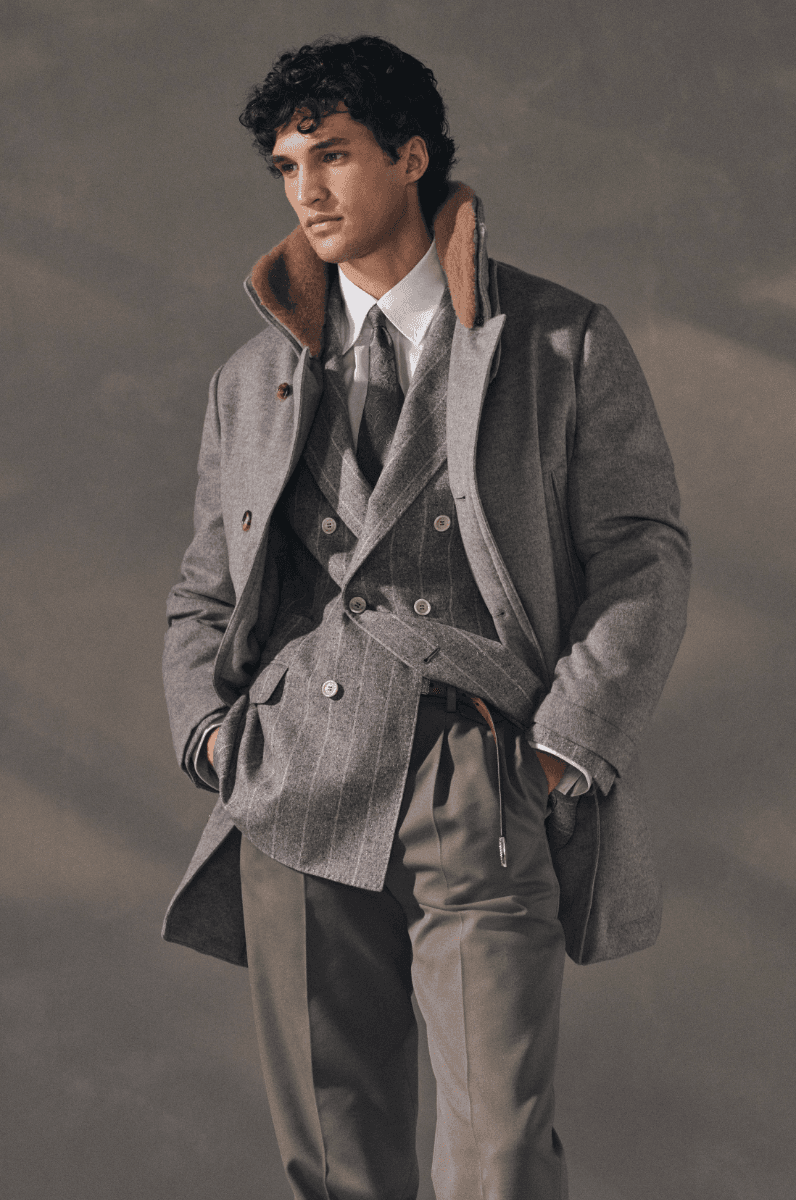
The tweed jacket and country shoulder. The genteel sport coat or blazer — typically in Harris Tweed, Donegal tweed, or estate tweed — diverges from both Savile Row formality and Neapolitan softness to occupy a specifically country-coded position. The shoulder is natural to lightly padded (3–5mm wadding), following the body's shoulder slope without extension or exaggeration, producing a line that accommodates layering (a thick lambswool sweater beneath the jacket is standard in cold weather) without the armored geometry of structured English tailoring. The chest is typically half-canvassed or unstructured — Harris Tweed's own weight and body (370–500 g/m²) provides sufficient shape retention without requiring the internal architecture that lighter suiting fabrics demand. The jacket length covers the seat entirely when standing, a conservative proportion that reads as traditional and is longer than contemporary fashion-forward blazer cuts by 3–5 cm. The tweed jacket's silhouette communicates function-readiness — it appears capable of accommodating a day of outdoor activity (walking, shooting, gardening, horse management) without restricting movement, even when the wearer's actual activity is attending a village fete or sitting in a country-house drawing room. This functional suggestion is central to the aesthetic: the garments imply a physical relationship to land and outdoor pursuit that authenticates the wearer's class position, regardless of whether that relationship is active.
The Barbour silhouette and weatherproof volume. The Barbour waxed-cotton jacket — particularly the Beaufort (designed 1983 for shooting, with a large rear game pocket and moleskin-lined hand-warmer pockets), the Bedale (a shorter, riding-oriented cut), and the Border (a longer, general-purpose country jacket) — produces a distinctive silhouette that is boxier and more volumetric than most fashion outerwear. The jackets are cut with generous ease through the chest and body to accommodate layering (tweed jacket over sweater over shirt is the standard cold-weather stack beneath a Barbour), with raglan or set-in sleeves positioned for arm movement rather than fitted contour. The corduroy collar — a Barbour signature detail in 8-wale cotton corduroy, typically in a contrasting color (sage green jacket with brown collar, navy jacket with brown or green collar) — provides friction resistance against the neck and jaw and constitutes the jacket's most immediately recognizable detail. The overall silhouette is deliberately unflattering by fashion standards — it adds visual bulk, obscures the waist, and creates a rectangular upper-body profile — but within the genteel system this silhouette communicates authenticity: the wearer prioritizes function (weather protection, freedom of movement, layering capacity) over form, and this priority is itself a class signal, because only someone secure in their social position can afford to dress without concern for visual appeal.
Trouser proportion and leg covering. Genteel trousers favor a straight or gently tapered leg in conservative proportions: not wide enough to read as fashion-forward, not narrow enough to read as body-conscious. Corduroy (typically 8-wale or 11-wale, in autumnal tones — rust, olive, mustard, chocolate) is the signature genteel trouser fabric, its vertical rib texture providing visual warmth and tactile interest that complements tweed's horizontal surface complexity. Cavalry twill (a steep-angled twill weave in wool or wool-cotton blend, producing a double-line diagonal rib) provides a dressier alternative for semi-formal country occasions. Moleskin (a heavy, napped cotton with a soft, suede-like surface) offers warmth and durability for practical country wear. The trouser rise sits at or near the natural waist — considerably higher than contemporary casual convention — producing a clean line that accommodates shirt-tucking without gap or slide. For women, tweed skirts (A-line, knee-length to mid-calf, often in matching or coordinating tweed to the jacket) and wool-flannel trousers provide the primary lower-body options, with hemlines and proportions calibrated for practicality and modesty rather than for trend compliance.
Equestrian-derived silhouettes. Jodhpurs (fitted riding trousers that widen slightly below the knee and taper to a close fit at the ankle, originally designed by Sir Pratap Singh of Jodhpur for polo, adopted into British riding dress in the late nineteenth century), breeches (close-fitting from waist to just below the knee, worn with long riding boots), and the hacking jacket (a single-breasted, fitted country jacket with a single rear vent and slanted pockets, cut with a curved front hem that accommodates the saddle) constitute a parallel silhouette system within genteel dress that is more body-conscious than the standard country wardrobe but whose tightness is legitimized by equestrian function. The tall riding boot (in black or brown leather, rising to just below the knee, with a shaped leg and low heel) produces a distinctive lower-leg silhouette — elongated, smooth, upright — that carries equestrian associations even when worn in non-riding contexts. This equestrian silhouette's influence extends into broader genteel dress through jodhpur-style trousers, riding-boot-inspired knee-high boots, and the general principle that a fitted lower body is acceptable when it can be attributed to sporting function rather than to aesthetic display.
Knitwear and the layered middle. The genteel silhouette relies heavily on knitwear as the mediating layer between shirt and jacket — lambswool or Shetland wool V-neck pullovers, cashmere crew-necks, cable-knit Aran sweaters, and Fair Isle patterned vests provide thermal regulation and textural complexity within the layered stack. The V-neck pullover over a collared shirt and beneath a tweed jacket constitutes the genteel system's most characteristic three-layer silhouette, with the V-neck's opening framing the tie or open collar while the pullover's body provides a smooth, color-blocked intermediate layer between shirt and jacket textures. Cricket sweaters (cable-knit V-necks with contrasting-color trim at the neck and hem, traditionally in cream with navy or maroon stripes) and Guernsey sweaters (tightly knitted worsted-wool pullovers originally made for Channel Islands fishermen, with distinctive underarm gussets and split hems) constitute specialty knitwear items whose sporting and maritime associations enrich the genteel wardrobe's activity-reference system.
Materials
Material selection is genteel dress's primary authenticity discriminator and the domain where the aesthetic's heritage-legibility logic is most empirically verifiable. The category's credibility depends on specific British and British-adjacent textiles whose production methods, certification systems, and aging behaviors produce results that mass-market and synthetic substitutes approximate visually but fail to replicate materially.
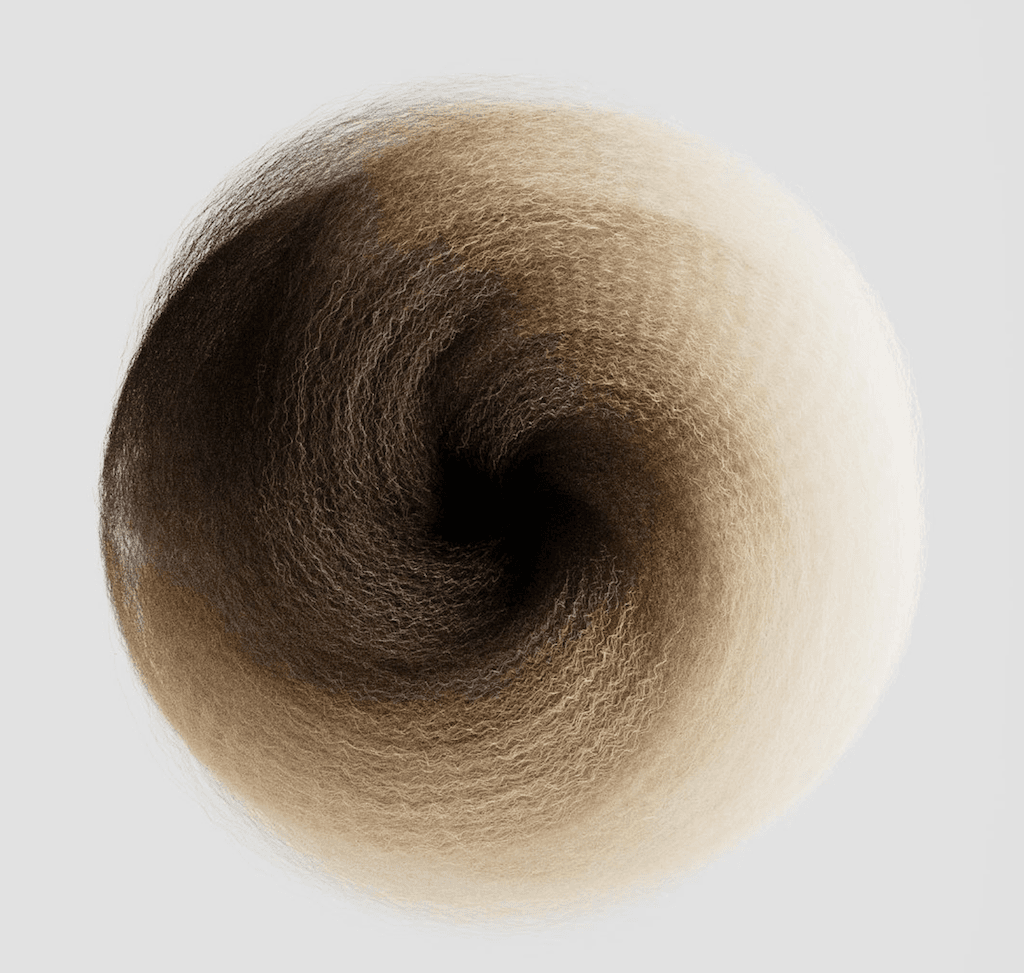
Harris Tweed: production, certification, and fiber science. Harris Tweed's protected status is unique in global textile production. The Harris Tweed Act 1993 defines Harris Tweed as cloth that has been "handwoven by the islanders at their homes in the Outer Hebrides, finished in the Outer Hebrides, and made from pure virgin wool dyed and spun in the Outer Hebrides." The Harris Tweed Authority (HTA) enforces this definition through the Orb trademark, which is stamped on every three yards (2.74 meters) of approved cloth. The production process involves: sourcing Scottish Cheviot and Blackface wool (28–33 micron fiber diameter, coarser than Merino but structurally superior for tweed production due to longer staple length and greater resilience); stock-dyeing the raw wool in multiple colors before blending (this pre-dye blending, rather than yarn-dyeing or piece-dyeing, produces the complex tonal depth — heather, peat, moss, stone — that distinguishes Harris Tweed from simpler plaid or check patterns); carding and spinning the blended fibers into yarn at the mills in Stornoway and Shawbost on the Isle of Lewis; and handweaving the yarn into cloth on Hattersley domestic looms in weavers' homes across Lewis, Harris, Uist, and Barra. The handweaving produces a fabric with characteristic slight irregularity — variations in tension, beat density, and selvedge width that are the signatures of human production and that distinguish Harris Tweed from mill-woven tweeds produced on power looms. The cloth is then finished (washed, dried, and pressed) at the Stornoway mills. Standard Harris Tweed weights range from 370 g/m² (lightweight, suitable for blazers and skirts) to 500 g/m² (heavyweight, suitable for overcoats and outerwear), with most jacket-weight cloth at 400–450 g/m². The fabric's thermal performance derives from the wool fiber's natural crimp, which traps air between fibers to create insulative dead-air space; its water resistance derives from the lanolin (wool grease) retained in the fiber and from the tight plain-weave or twill-weave construction that sheds light rain through capillary deflection before saturation occurs. Harris Tweed's primary failure modes are moth damage (keratin-protein wool is the webbing clothes moth's preferred food source, requiring cedar, lavender, or pheromone-trap protection during storage), localized wear at elbows and cuffs (the coarser fiber eventually thins under friction, traditionally addressed by leather elbow patches that have themselves become a genteel style marker), and color fading from prolonged UV exposure (stock-dyed colors are more lightfast than piece-dyed, but gradual fading is inevitable over decades of country wear).
Barbour waxed cotton: construction and reproofing science. Barbour's waxed-cotton construction begins with a base cloth of Egyptian cotton woven in a dense 60-thread-per-inch plain weave at approximately 6 oz/yd² (200 g/m²). This base cloth is then impregnated with Barbour's proprietary wax dressing — a blend of refined paraffin wax, oils, and other conditioning agents (the exact formulation is commercially confidential) — which fills the spaces between cotton fibers to create a water-resistant barrier. The waxed finish produces a distinctive matte surface with a slight tackiness that decreases as the wax cures (typically 2–4 weeks after application), producing the characteristic dry, slightly stiff hand feel of a properly dressed Barbour jacket. Water resistance degrades over time as wax is displaced by folding, abrasion, and environmental exposure — typically requiring reproofing every 12–18 months under regular use. Barbour's Thornproof Dressing (available as a tin of wax for home application or as a factory reproofing service at the South Shields workshop) is the standard maintenance product: application involves cleaning the jacket, heating the wax tin in warm water, and spreading the wax evenly across the entire surface of the jacket with a cloth or sponge, paying particular attention to seams, folds, and high-wear areas (elbows, shoulders, cuffs), then allowing the wax to penetrate and cure. The reproofing process is itself a genteel maintenance ritual — a tactile, hands-on engagement with the garment's material substrate that reinforces the aesthetic's emphasis on garment stewardship. Barbour jackets that have never been reproofed develop a characteristic dry, cracked appearance at fold points and lose water resistance, signaling either neglect or recent acquisition; jackets that have been reproofed too frequently develop a dark, heavy, over-waxy surface that can transfer wax to furniture and other garments. The optimal Barbour patina — a rich, even surface with moderate crease-line lightening and no dry cracking — is a maintenance achievement that communicates material literacy within the genteel community. Barbour's alternative finishes — the Sylkoil (a lighter wax finish with less tackiness), the wax-cotton Beaufort, and the newer waterproof-breathable options — extend the range but the original waxed cotton remains the authenticity benchmark.
Liberty Tana Lawn: printing and finishing. Liberty's Tana Lawn cotton takes its name from Lake Tana in Ethiopia (now the source region is diversified), where the original long-staple cotton was sourced. The finishing process that distinguishes Tana Lawn from ordinary cotton lawn involves calendaring — passing the woven cotton between heated steel rollers under high pressure, which compresses and smooths the surface fibers to produce a soft, silky hand feel that approaches silk's smoothness while retaining cotton's breathability, washability, and durability. The resulting fabric weighs 80–100 g/m² and drapes with a fluidity unusual for cotton at this weight, making it suitable for blouses, dresses, and lightweight shirts that require movement and body-following behavior. Liberty's print archive — exceeding 50,000 designs accumulated since the 1880s, many by identifiable designers including William Morris (whose Arts and Crafts botanical patterns remain among Liberty's most recognizable) — provides the surface-pattern system that is the fabric's most visible aesthetic contribution. The prints are screen-printed (formerly block-printed) in up to 24 colors per design, with registration precision that ensures pattern continuity across seams. Within the genteel system, Liberty prints function as pattern-literacy markers: recognizing specific prints by name (Betsy, Capel, Wiltshire, Thorpe, Mitsi, Pepper) and associating them with their design periods signals participation in the aesthetic's knowledge community. Tana Lawn's failure modes are primarily mechanical: the light weight makes it vulnerable to catching on rough surfaces (tweed jackets, hedge thorns, jewelry) that can pull threads or create micro-tears, and repeated laundering progressively reduces the calendared finish's smoothness, returning the fabric toward ordinary cotton lawn's texture over many wash cycles.
Cashmere knitwear: fiber grading and construction. The genteel cashmere economy operates through a quality hierarchy that separates genuine luxury-grade fiber from the mass-market cashmere that has flooded the market since Chinese and Mongolian production expanded in the 1990s. Premium cashmere fiber measures 14.5–15.5 microns in diameter with a minimum staple length of 34mm; mass-market cashmere may use fibers up to 19 microns (where it overlaps with fine Merino wool) at shorter staple lengths, producing a garment that is visibly similar but tangibly harsher, less warm, and more prone to pilling. Ply construction — the number of individual yarns twisted together to form the knitting yarn — determines weight, durability, and thermal performance: 2-ply cashmere produces a lightweight sweater suitable for layering (180–220 g per garment); 4-ply produces the standard-weight cardigan or crew-neck (280–350 g) that is the genteel knitwear staple; 6-ply and heavier constructions are reserved for cold-weather or outerwear applications. Scottish cashmere production (Johnstons of Elgin, Pringle of Scotland, Barrie, Hawick Cashmere, Peter Scott) historically processed Mongolian raw fiber through Scottish milling — washing, de-hairing, carding, spinning, knitting, and finishing in the Scottish Borders — but cost pressures have driven significant production to China and Southeast Asia, making "Scottish cashmere" increasingly a branding claim rather than a manufacturing reality. Genteel cashmere's primary failure mode is pilling — the formation of small fiber balls on the surface through abrasion, particularly under the arms, at the elbows, and along the sides where a bag strap contacts the body. Premium long-staple cashmere pills less aggressively and stabilizes more quickly than short-staple alternatives, but all cashmere requires pill management (a cashmere comb or fabric shaver used gently to remove pills without pulling the underlying knit structure) as part of the maintenance protocol that the aesthetic demands.
Silk scarves: twill weave and finishing. The silk scarf — quintessentially the Hermès carré but also produced by British houses (Aspinal of London, Burberry, Drake's) and available in the genteel wardrobe at various price tiers — is constructed from silk twill (a 2/2 twill weave in cultivated mulberry silk, typically 25–28 momme weight), whose diagonal rib structure provides both drape flexibility and surface durability superior to plain-weave silk. The carré's hand-rolled hem (rolled by artisans who fold the edge twice and secure it with invisible stitches, producing a soft, rounded edge rather than the flat, machine-stitched hem of industrial scarves) is the construction detail that most immediately signals quality: hand-rolled hems produce a slightly irregular edge with visible but subtle stitch marks, while machine-rolled hems produce uniform, flat edges. The silk scarf's functional versatility within the genteel wardrobe — worn at the throat, over the head (as rain protection for a styled coiffure), as a bag accessory, or folded in a blazer breast pocket — makes it the aesthetic's highest-utility accessory, performing simultaneous roles as adornment, protection, and heritage-brand signal.
Pearls as material system. The pearl strand — single or double, in graduated or uniform diameter — is genteel dress's most gender-coded accessory and its most explicit luxury-material marker. Cultured pearls (nucleated with a bead or tissue irritant implanted in a living mollusk, then grown for 18 months to 3+ years to develop nacre coating) dominate the genteel market, with quality graded by nacre thickness (minimum 0.4mm per side for Akoya pearls to be considered jewelry-grade; premium Akoya nacre exceeds 0.8mm, producing deeper luster and greater durability), surface quality (fewer blemishes = higher grade), luster (the intensity and sharpness of light reflection from the nacre surface, graded from excellent to poor), shape (round being the most valued in classical genteel contexts), and size (typically 6–8mm for Akoya pearls in a single strand, with South Sea pearls at 9–16mm for statement pieces). Japanese Akoya pearls (Mikimoto's founding innovation, developed by Kokichi Mikimoto from the 1890s, achieving commercial viability by the 1920s) remain the benchmark for the classic white-to-cream pearl strand, though Chinese freshwater cultured pearls have dramatically expanded market availability at lower price points. The pearl strand's genteel significance is temporal: it is traditionally given at coming-of-age or milestone occasions (eighteenth birthday, twenty-first birthday, wedding), functioning as a transitional object that marks the wearer's entry into adult genteel presentation. Properly maintained pearls (stored separately from other jewelry to prevent scratching, wiped with a soft cloth after wearing to remove perspiration and skin oils that degrade nacre, restrung every 2–3 years to prevent thread degradation and bead loss) can last multiple generations, making the inherited pearl strand a particularly potent genteel inheritance marker.
Lambswool, Shetland, and utilitarian wools. Below cashmere in the genteel fiber hierarchy, lambswool (the first shearing of a young sheep, typically 24–28 microns, softer than subsequent shearings due to the fiber's tapered, uncut tip) and Shetland wool (from the Shetland breed's naturally fine, soft fleece, 23–28 microns, with a characteristic halo of loose fibers that gives Shetland knitwear its distinctive slightly fuzzy texture) provide the everyday knitwear substrate that is more durable and less maintenance-intensive than cashmere while maintaining the natural-fiber authenticity the aesthetic demands. Fair Isle knitting — a stranded colorwork technique originating in Fair Isle, Shetland, using two or more colors per row to create geometric patterns (OXO motifs, peerie patterns, star formations) in characteristic palette combinations (moorland greens, heather purples, peat browns, rust reds) — provides the most visually distinctive knitwear pattern within the genteel system, functioning as both craft-heritage marker and seasonal-color system. The Aran sweater (cable-knit in unbleached cream wool, originating from the Aran Islands off Ireland's west coast, with cable, diamond, honeycomb, and moss stitch patterns that legend associates with fishing families but that more rigorous scholarship traces to early twentieth-century cottage-industry development) provides heavyweight cold-weather knitwear whose texture and bulk complement rather than compete with tweed's surface complexity.
Color Palette
The genteel palette operates on a principle of environmental mimesis: colors are drawn from the British landscape — moorland, hedgerow, stone, sky, earth, bark, moss — producing a chromatic range that appears to have emerged from the countryside rather than from a designer's selection, and whose muted complexity resists the simplification of trend-cycle color forecasting.
The foundational palette comprises: hunter green (the Barbour-associated shade, darker and cooler than forest green), moss green (softer, warmer, olive-toned), heather (a complex purple-grey-brown achieved in Harris Tweed through stock-dyeing multiple fiber colors), navy (the town-and-country neutral, darker and more formal than country greens and browns), cream and ecru (the natural-fiber base tones, associated with Aran knitwear and undyed cotton), camel and biscuit (the tan range, associated with corduroy and cavalry twill), rust and bracken (warm autumnal tones, prominent in corduroy and Fair Isle knitting), burgundy and claret (the deepest warm tone in the palette, used sparingly in silk ties, knitwear accents, and tartan details), and stone grey (the color of English limestone and dry-stone walling, used in flannel trousers and wool skirts). Pure black is largely absent from the country-genteel palette — it reads as urban, formal, or subcultural rather than rural and traditional — with charcoal and near-black navy serving where dark tones are needed.
Pattern is integral to the genteel color system and functions as a heritage-literacy test: tartan (specific patterns associated with clans, regiments, and estates, with the ability to identify and correctly wear one's "own" tartan constituting a high-level genteel competency), district checks (patterns associated with specific geographic regions — the Glenurquhart check, the Shepherd's check, the Gunclub check, the Tattersall check), houndstooth (a broken check in two-tone wool, scaled from small dogtooth to large houndstooth), windowpane (an open grid pattern in contrasting colors, more town than country), and paisley (the teardrop-motif pattern originating from the Scottish town of Paisley's shawl-weaving industry, used in silk ties, pocket squares, and lining fabrics) constitute the pattern vocabulary through which genteel dress achieves visual complexity within its restrained chromatic range. The ability to combine patterns — tartan scarf with check jacket, stripe shirt with houndstooth sport coat — without clash or excess is itself a styling competency that demonstrates pattern-literacy within the evaluative community.
Details
Details in genteel dress function as institutional-belonging signals whose deployment communicates the wearer's depth of participation in the aesthetic's evaluative system — not through ostentation but through the precision with which conventionally "invisible" details are correctly managed.
Buttons and closures. Horn buttons (cut from water-buffalo horn, characteristically brown with black veining, each button slightly unique in pattern) and corozo-nut buttons (carved from the tagua nut, a dense ivory-colored palm seed, used as an animal-product-free alternative to bone or horn) are the button materials that signal quality within genteel dress, replacing the plastic buttons of mass-market production. Leather-covered buttons appear on Barbour jackets and equestrian-derived garments. Metal buttons — specifically the blazer button in gilt or antiqued brass, often bearing a crest, anchor, crown, or regimental device — constitute the most explicitly institutional detail in the genteel wardrobe, with the ability to identify the specific device and its association (regimental blazer buttons, school buttons, club buttons, family-crest buttons) functioning as a high-level legibility marker. Genteel closures favor toggles (on duffle coats, the most recognizable being Gloverall's authentic buffalo-horn toggle and hemp-rope loop closure system), buckles (on shoes, belts, and equestrian-derived garments), and covered snaps (on Barbour jackets, where the external appearance of the brass press-stud is partially concealed by a corduroy or fabric storm flap).
Collar and neckline management. The genteel collar is structured and maintained: a stiffened spread or point collar on a cotton shirt, the collar points held in place by collar stays (metal or rigid plastic stiffeners inserted into fabric channels on the collar underside) and the collar band sitting firmly against the neck without gapping or folding. The stock tie (a folded and pinned neckcloth used in formal hunting and dressage) and the cravat (a softer, more decorative alternative used in Ascot dress and formal country occasions) provide neckline treatments specific to genteel contexts. The simple silk tie in regimental, club, or ancient-madder pattern constitutes the standard town-genteel neckline, with the four-in-hand knot slightly preferred over the half-Windsor and the full Windsor considered regionally and generationally variable. The open collar — one button undone beneath a V-neck sweater or cashmere scarf — provides the informal country-genteel neckline whose casualness is calibrated to suggest ease rather than carelessness.
Footwear finishing and maintenance. The polish state of leather footwear is among the genteel system's most evaluated details — and the detail most susceptible to failure. Country brogues (full-brogue or half-brogue Derbies in brown or tan leather, with perforated wingtip patterns that historically allowed drainage when walking through wet terrain), Chelsea boots (elastic-sided ankle boots in black or brown leather, originating from J. Sparkes-Hall's 1851 patent and popularized by the Chelsea Set in the 1960s), and tall riding boots each require specific maintenance: cleaning with saddle soap or leather cleanser to remove dirt and salt, conditioning with leather cream to maintain suppleness, polishing with pigmented wax polish (Kiwi, Saphir, or Cherry Blossom) to restore color and add protective surface coating, and buffing with a horsehair brush and soft cotton cloth to develop shine. This maintenance cycle — performed ideally after every wearing, practically every 3–5 wearings — produces the rich, deep patina that distinguishes well-maintained leather from neglected or new-purchase footwear and constitutes one of the genteel system's most visible maintenance-competency signals. Wellington boots (Hunter's Original Tall, Le Chameau's Chasseur, Aigle's Parcours) provide the country-specific wet-weather footwear that, like the Barbour jacket, signals rural activity through functional design rather than aesthetic intention.
Elbow patches and visible repair. The leather elbow patch — originally a functional reinforcement applied to tweed jackets whose elbows had worn thin through desk-friction or shooting-posture abrasion — has become a genteel style marker whose presence on new jackets is an aesthetic quotation of the repair it was designed to address. Suede patches (in a complementary brown or tan) are the standard material; leather patches appear on more robust country jackets. The broader principle of visible, skilled repair (a professionally darned hole in a lambswool sweater, a neatly re-edged cuff on a tweed jacket, a properly heeled pair of brogues) is valued within the genteel system as evidence that the garment has been worth maintaining over time — a material proof of investment-dressing logic that new purchases cannot provide.
Accessories
Accessories in the genteel system extend the same heritage-legibility logic as primary garments, functioning as a coordinated set of institutional-belonging markers and practical country-life implements.
The silk scarf and its deployment. The silk twill scarf (90cm Hermès carré, Liberty silk square, or long silk scarf in paisley, equestrian, or botanical print) is deployed in several genteel configurations: folded into a triangle and tied loosely at the throat over a coat collar (the "Sloane Ranger" knot), wrapped loosely under a blazer collar, or folded and placed in a blazer breast pocket. The scarf print functions as a brand-literacy test: Hermès prints are identifiable by their characteristic border-frame composition, intense color saturation, and equestrian or natural-history subject matter; Liberty prints are identifiable by their scale, botanical specificity, and archival depth. The cashmere scarf (lightweight woven cashmere in solid color or subtle check, typically from Johnstons of Elgin, Begg & Co., or a Scottish Borders mill) provides cold-weather neck and chest insulation while maintaining the fiber-quality standard.
Headwear. The headband (velvet-covered, typically in black, navy, or jewel tones) is the most coded genteel hair accessory, carrying strong Sloane Ranger associations that have persisted from the 1980s into the present. The flat cap (in tweed, corduroy, or wool) is the standard country headwear for men, with regional and class variations in shape and fabric encoding geographic and social information. The rain hat (waxed-cotton bucket hat from Barbour, or the "sou'wester" style in heavy rain) provides functional weather protection. The riding hat (velvet-covered safety helmet, meeting current BS/EN certification standards) constitutes the equestrian community's required headwear, with the velvet covering aestheticizing a safety device into a dress-code-compliant accessory.
Bags and carriage. The structured leather handbag (in brown or tan leather, from heritage English leather houses — Mulberry, Aspinal of London, Tusting — or from French houses with genteel adjacency — Hermès, Longchamp) is the standard genteel bag, with quality evaluated through leather grain (full-grain vegetable-tanned > corrected-grain chrome-tanned), hardware (solid brass > plated zinc), stitching (hand-stitched > machine-stitched), and edge finishing (hand-painted > folded > raw). The canvas and leather tote (Barbour's waxed-cotton totes, Le Chameau's country bags, Land Rover-branded accessories) provides the country-casual alternative. The wicker basket — carried at farmers' markets, church fetes, and picnics — provides the most explicitly pastoral bag option.
Watches and jewelry beyond pearls. The genteel watch is mechanical (hand-wound or automatic), in a conservative case size (34–40mm) with a leather strap, from a brand whose heritage and restraint match the aesthetic's values — Cartier (the Tank, the Santos), Jaeger-LeCoultre (the Reverso, originally designed for polo players to flip the face inward, protecting the crystal during play), or traditional English/Swiss houses (Garrard, Asprey, Longines). Brooches (in gold, silver, or enamel, often depicting hunting, equestrian, or natural-history subjects — foxes, horses, birds, flowers), signet rings (engraved with family crests or initials, worn on the little finger), and simple gold or silver earrings (small hoops or studs) constitute the acceptable jewelry range, with the guiding principle being permanence over fashion — each piece should appear to have been worn daily for years rather than selected for the occasion.
Body Logic
Genteel dress constructs the body as a surface of institutional composure: managed, maintained, and proportionally correct rather than displayed, enhanced, or deliberately transgressed. The body is neither concealed (as in modest-dress systems) nor maximally revealed (as in body-conscious fashion) but composed — presented through garments that fit well enough to demonstrate care but loosely enough to suggest that the wearer's primary concern is activity, comfort, and social legibility rather than aesthetic exhibition.
Gender coding in genteel dress is historically binary and remains comparatively conservative. The male genteel body is managed through proportion, condition, and restraint — correct trouser break, polished shoes, well-maintained knitwear, groomed hair that appears managed but not styled. The female genteel body adds a narrow range of decorative elements (pearls, silk scarves, Liberty-print blouses) but within the same compositional framework of restraint, proportion, and condition-maintenance. Sexual display is modulated through the equestrian-derived exception: riding-related silhouettes permit a closer fit that would be unacceptable in standard genteel dress, because the fit is attributed to sporting function rather than to display intention. This functional alibi — tightness is acceptable when it serves a purpose beyond aesthetics — is central to how genteel dress manages the tension between its propriety conventions and the physical realities of active country life.
The maintenance labor that genteel dress demands is itself a class-and-competence signal. The genteel body is a maintained body: hair that is styled but not visibly product-heavy (a simple blow-dry, a low ponytail, a velvet-headbanded swept-back style), skin that appears healthy through skincare rather than cosmetic coverage (moisturizer, sunscreen, minimal or no visible makeup base, perhaps a tinted lip), hands that are groomed but unadorned (filed nails, clear polish or none, no elaborate nail art). This maintenance economy — the time, products, and professional services required to produce the appearance of minimal intervention — mirrors the garment-maintenance economy that sustains the wardrobe, and both operate through the same paradox of concealed labor that Bourdieu identified as the mechanism of embodied cultural capital: the most "natural" appearance requires the most sustained, skilled, and resource-intensive production.
The genteel body's age valuation parallels Parisian chic's in favoring maturity over youth — the fully articulated genteel wardrobe presumes a body with sufficient self-knowledge, financial resources, and accumulated garments (including inherited pieces) to dress without experimentation. The "county" woman in her fifties or sixties, wearing a well-maintained tweed jacket over a cashmere sweater and corduroy trousers, with a Barbour in the car boot and a decade-old pair of polished brogues, represents the aesthetic's ideal body more accurately than any twenty-something in new-purchase genteel signifiers, because the older body carries the temporal evidence — the patina of garments, the ease of habitual wearing, the confidence of established style — that the aesthetic values above all visual markers.
Garment Logic
Genteel garment logic begins with durability engineering: garments are selected for multi-year to multi-decade service lives, evaluated by how their materials and construction withstand the specific stresses of country and institutional life (weather exposure, physical activity, frequent wearing, long storage between seasonal rotations), and maintained through specific care protocols whose mastery is itself a participation criterion within the aesthetic's evaluative community.
Tweed jacket maintenance and longevity. Harris Tweed jackets, properly maintained, deliver service lives of 20–40+ years — among the longest of any garment type outside military surplus. The maintenance protocol includes: brushing with a natural-bristle clothes brush after each wearing to remove surface dust, burrs, and loose fibers; spot-cleaning with a damp cloth and mild soap for localized stains; steam pressing (never direct-iron contact, which crushes the tweed's surface texture and produces shine) over a pressing cloth to restore shape after extended wear; and seasonal storage in a breathable garment bag (never sealed plastic, which traps moisture and encourages mold) with cedar blocks or lavender sachets for moth deterrence. Dry cleaning should be minimized — the perchloroethylene solvent strips natural lanolin from the wool fibers, accelerating dryness and color fading — and reserved for annual or biannual deep cleaning rather than routine maintenance. Elbow patches should be applied by a professional tailor at the first sign of fabric thinning, as the underlying fibers, once worn through, cannot be invisibly repaired. Sleeve-lining replacement (relining the jacket's sleeves when the existing lining has worn through at the cuff or armhole) extends the jacket's life by another decade. These maintenance investments are economically rational — a Harris Tweed jacket at 400–800 GBP with 30 years of service achieves a cost-per-year of 13–27 GBP — but they require access to skilled tailoring and garment-care services that presume geographic proximity to competent providers and willingness to invest time in garment stewardship.
Barbour reproofing and seasonal management. The Barbour jacket's functional performance and aesthetic character depend on regular reproofing (every 12–18 months under regular country use, annually for daily wear). The home-reproofing protocol involves: removing all contents and hanging the jacket; wiping down with cold water and a sponge to remove surface dirt; drying the jacket completely at room temperature (never with direct heat, which can melt the wax and distort the cotton base); warming the tin of Barbour Thornproof Dressing in a bowl of hot water; applying the warm wax evenly across the entire surface with a lint-free cloth, working in small sections and paying special attention to seams, folds, and high-wear areas; and allowing the jacket to cure for 24–48 hours in a warm, dry space before wearing. For those unwilling or unable to perform home reproofing, Barbour's factory repair service (based in South Shields, Tyne and Wear) offers professional reproofing, repair, and re-lining — a manufacturer-backed garment-stewardship program that extends jacket life to 20+ years and represents the genteel system's most explicit institutional maintenance infrastructure. Seasonal storage requires hanging (never folding, which creates permanent crease lines in the waxed surface) in a cool, ventilated space away from heat sources (which soften and displace wax) and away from other garments (wax can transfer to adjacent fabrics through contact).
Cashmere aftercare and pilling management. Cashmere's 14.5–16.5 micron fiber diameter produces exceptional softness but also vulnerability to abrasion damage, moth predation, and stretching that requires specific aftercare protocols. Washing should be by hand in cool water (below 30C) with a pH-neutral cashmere detergent (The Laundress Wool & Cashmere Shampoo, Soak, or equivalent) — never in a washing machine, where agitation causes felting (permanent fiber entanglement that shrinks and stiffens the fabric). After washing, the garment should be pressed between towels to remove excess water (never wrung or twisted, which distorts the knit structure), then laid flat on a towel to dry (never hung, which causes wet cashmere to stretch under its own weight). Pilling management requires a cashmere comb (a fine-toothed comb drawn gently across the fabric surface to remove pills without pulling the underlying yarn) applied every 3–5 wearings during the garment's first season; pilling intensity decreases substantially after 15–20 wearings as shorter surface fibers are removed and the surviving longer fibers produce a smoother, denser surface. Storage requires folding (hanging stretches knitwear) in a cedar-lined drawer or with cedar blocks and lavender sachets for moth deterrence, with each garment wrapped in acid-free tissue paper to prevent color transfer between stored items. The entire aftercare protocol — washing by hand, flat-drying for 24+ hours, regular pill combing, seasonal storage with moth prevention — represents a maintenance investment of 30–60 minutes per garment per wash cycle, which, at 4–6 washes per season, totals 2–6 hours of annual maintenance per cashmere garment. This time investment is the material basis of cashmere's class signaling: the wearer who maintains cashmere correctly is demonstrating not just purchasing power but the domestic infrastructure (space for flat drying, storage for cedar, time for hand-washing) and material knowledge (water temperature, detergent chemistry, drying method) that constitute genteel competency.
Failure modes across the genteel wardrobe. The characteristic failure modes of genteel garments are specific to their natural-fiber and heritage-construction foundations. Moth damage (keratin-protein fibers — wool, cashmere, silk — consumed by Tineola bisselliella larvae) is the most catastrophic failure, producing irreversible holes in stored garments; prevention requires a multi-layered strategy of cleanliness (moths are attracted to body oils, food residue, and perspiration on unwashed garments), cedar or lavender deterrence, pheromone-trap monitoring, and sealed storage for seasonal garments. Wax-transfer staining (from an improperly cured or over-waxed Barbour jacket transferring paraffin to car seats, restaurant furniture, or other garments) is a common practical failure that damages both the wearer's possessions and social environment. Leather drying and cracking (in riding boots, brogues, and Chelsea boots) results from inadequate conditioning — the loss of natural oils through wear and weather exposure that, if not replenished with leather cream or conditioner, causes the collagen fibers to stiffen and eventually crack at flex points, producing irreversible structural damage. Pearl nacre degradation (from contact with perfume, hairspray, perspiration acids, or cosmetic chemicals that dissolve the calcium-carbonate nacre surface) reduces luster and can produce visible surface pitting; the traditional rule "last on, first off" — pearls should be the last accessory applied after all cosmetics and the first removed before cleaning — addresses this failure mode through wearing-sequence discipline.
Motifs / Themes
Dominant themes include heritage as authority, countryside as moral landscape, restraint as social competence, maintenance as participation, and institutional continuity as aesthetic value. The genteel wardrobe presents the wearer as someone whose relationship to clothing is resolved not through personal creativity or trend awareness but through inherited convention, material knowledge, and the discipline of sustained garment stewardship.
The country-house as organizing metaphor. Genteel dress is organized around the country house — the estate, the manor, the rectory — as both physical setting and moral imaginary. The wardrobe's activity references (riding, shooting, fishing, walking, gardening) are country-house activities; its textile palette (tweed, waxed cotton, corduroy, Fair Isle) is a country-house palette; its seasonal rhythm (tweeds and Barbours from September to April, lighter linens and cottons from May to August) tracks the country-house calendar. The country house itself has been largely dismantled as a functioning social institution — postwar taxation, death duties, and social change converted most country houses from private residences to National Trust properties, hotels, wedding venues, and heritage attractions — but the wardrobe it generated persists, carrying the values (stability, continuity, stewardship, land-connected identity) that the house once materially embodied into contemporary dress practice.
The "patina of use" as temporal marker. Genteel dress uniquely values garment aging — the crease-line lightening of a Barbour, the leather elbow patches on a tweed jacket, the softened hand of a decade-old cashmere sweater, the thinning selvedge of a well-worn Liberty blouse. This valuation of wear is not merely practical ("I wear my clothes until they're done") but semiotic: garment aging provides temporal evidence that authenticates the wearer's long-term participation in the aesthetic and, by extension, the long-term social belonging that the aesthetic encodes. A new Barbour jacket and a fifteen-year-old Barbour jacket are materially identical products of the same factory; socially, within the genteel evaluative community, they are categorically different objects — the new jacket is a purchase, while the old jacket is a biography.
Cultural Touchstones
The Royal Family and aristocratic exemplars. The British Royal Family functions as the genteel aesthetic's most visible institutional endorsement. Queen Elizabeth II's Balmoral wardrobe — Barbour jacket, tartan skirt, headscarf, wellies, surrounded by corgis — provided decades of photographic documentation of the genteel country style at its most authentic institutional expression. The Prince (now King) Charles's Highgrove wardrobe — double-breasted suits in town, patched tweed jackets and well-worn Anderson & Sheppard sport coats in the country, a famously repaired and reworn collection that embodies the "buy once, maintain forever" ethos — established the male genteel ideal of quality-through-longevity. Princess Diana's pre-marriage "Shy Di" wardrobe (the pie-crust blouse, the pearl strand, the flat shoes, the demure skirts) represented the Sloane Ranger aesthetic at peak global visibility, reaching audiences who would never encounter the county social circuits that produced the style.
Publishing and sociological codification. Ann Barr and Peter York, The Official Sloane Ranger Handbook (1982), crystallized the genteel urban uniform into a legible, nameable, analyzable social category — simultaneously documenting and creating self-consciousness about a dress code that had previously operated through implicit transmission. Lisa Birnbach's The Official Preppy Handbook (1980) performed the analogous function for American genteel dress, and the comparison between the two books illuminates the category's transatlantic variation: American preppy is brighter (Nantucket reds, madras plaid, pastel polo shirts), more explicitly collegiate, and more brand-identified (Brooks Brothers, L.L. Bean, Lacoste); British genteel is more muted, more rurally oriented, and more focused on textile provenance than brand label. Evelyn Waugh's Brideshead Revisited (1945) and its 1981 television adaptation provided the most enduring literary-visual depiction of the English country-house world that produced genteel dress, its images of Oxford and stately homes in summer light establishing a nostalgic referent that heritage-brand marketing continues to invoke.
Television and cinema. Downton Abbey (2010–2015) provided the twenty-first century's most commercially consequential depiction of the country-house aesthetic, driving measurable increases in heritage-brand sales and heritage-tourism visits — though the show's Edwardian-to-interwar setting depicted the aesthetic at a historical extreme of elaboration that contemporary genteel dress does not require. The Crown (2016–2023) documented the Royal Family's wardrobe evolution across decades, providing detailed visual reference for Balmoral-and-Sandringham-style country dress. All Creatures Great and Small (1978–1990 original, 2020–present remake) depicted Yorkshire-country-vet dress with an authenticity of tweeds, knitwear, and wellies that resonated with the aesthetic's rural constituency. Ralph Lauren's decades-long cinematic branding — from The Great Gatsby (1974 and 2013 costumes) through the Rugby and Purple Label campaigns to the Thoroughbred and polo imagery — constituted the most sustained commercial construction of Anglophile genteel aesthetics for an American and global audience, translating British country-house codes into purchasable luxury-lifestyle packages.
See Also
- Quiet luxury / stealth wealth: Shares restraint-as-status logic but aims for seamless invisibility where genteel permits visible heritage markers
- Sartorial: Shares natural-fiber and construction-quality values but operates at higher structural formality and foregrounds visible construction mastery
- Preppy / Ivy League: American counterpart encoding campus-and-club belonging where genteel encodes county-and-country belonging
- Parisian chic: Shares cultivated-ease logic but is metropolitan, feminine-centered, and French-institutional where genteel is rural, gender-binary, and British-institutional
- Cottagecore: Shares pastoral visual vocabulary but lacks the institutional transmission, maintenance discipline, and class-encoding infrastructure that structures genteel dress
- Old money aesthetic: Digital-content-era reformulation of genteel principles, often visually accurate but materially and institutionally attenuated
- Country / equestrian style: The functional-dress substrate from which genteel dress derives its silhouettes, materials, and institutional references
- Workwear: Contrasting construction philosophy (labor-durability vs. social-legibility) with shared values of natural fiber, functional origin, and maintenance investment
Brands and Designers
Heritage British Outerwear and Country Dress:
- Barbour (1894, South Shields): waxed-cotton jackets (Beaufort, Bedale, Border), the defining genteel outerwear brand, royal warrants, factory reproofing service
- Burberry (1856, Basingstoke; now London): gabardine trench coat, heritage check, Thomas Burberry monogram — the genteel brand most aggressively repositioned as global luxury
- Mackintosh (1824, Glasgow): rubberized-cotton raincoats, the eponymous garment type, bonded-seam waterproofing technology
- Cordings (1839, Piccadilly): country-clothing specialist, tattersall shirts, moleskin trousers, the "original" English country outfitter
- Purdey (1814, London): bespoke shotguns and country clothing — at the apex of the shooting-dress hierarchy
Harris Tweed and Heritage Textiles:
- Harris Tweed Hebrides (Shawbost mill, Isle of Lewis): the largest Harris Tweed producer, weaving and finishing under HTA Orb certification
- Carloway Mill (Isle of Lewis): independent Harris Tweed finishing, boutique production
- Johnstons of Elgin (1797, Moray, Scotland): cashmere and fine-wool milling, from raw fiber to finished garment, the Scottish cashmere benchmark
- Pringle of Scotland (1815, Hawick): knitwear heritage, cashmere and lambswool, the argyle pattern and twinset associations
- Liberty of London (1875, Great Marlborough Street): Tana Lawn cotton, the print archive, department-store-as-cultural-institution
Equestrian and Country Footwear:
- Hunter (1856, Edinburgh; now manufacturing in various locations): Wellington boots, the Original Tall as the quintessential country-welly
- Le Chameau (1927, Pont-d'Ouilly, France): handmade rubber boots, the Chasseur as the premium country-welly alternative to Hunter
- Dubarry of Ireland (1937, Ballinasloe): leather country boots, the Galway as the hybrid boot for country-house weekends
- Church's (1873, Northampton): Goodyear-welted English shoes, the Burwood brogue, the Shannon Derby — the genteel shoe benchmark
- Tricker's (1829, Northampton): country brogues, the Bourton and Stow as definitive English country shoes
- Loake (1880, Kettering): accessible English Goodyear-welted shoes, the 1880 Premium line as value benchmark
Knitwear and Accessories:
- John Smedley (1784, Lea Bridge, Derbyshire): fine-gauge Merino and Sea Island cotton knitwear, the oldest manufacturing factory in the world
- Hawick Cashmere / Barrie (Scottish Borders): luxury cashmere production, supplying Chanel and independent brands
- Begg & Co. (1866, Ayr, Scotland): cashmere and lambswool scarves, lightweight woven cashmere
- N. Peal (1936, London): cashmere retail specialist, the James Bond association (Daniel Craig's N. Peal sweaters in Spectre and No Time to Die)
- Anderson & Sheppard (Haberdashery) (Clifford Street, London): knitwear, accessories, and casual garments from the Savile Row tailoring house
Country and Lifestyle Retailers:
- Country Attire (online): multi-brand country-clothing retailer, the digital entry point for genteel wardrobe building
- Farlows (1840, Pall Mall, London): fishing-tackle and country-clothing specialist, the genteel equivalent of a fly-fishing pilgrimage site
- William Evans (1883, London): gunmakers and country-clothing suppliers
- Holland & Holland (1835, London): bespoke shotguns and luxury country clothing at the apex of the shooting-and-country hierarchy
Bridge / Accessible Genteel:
- Joules (1989, Market Harborough): accessible British country-lifestyle clothing, floral prints and colored wellies, the mass-market genteel gateway
- Boden (1991, London): catalog-and-online British wardrobe, Liberty-print collaborations, the middle-class genteel staple
- Jack Wills (2003, Salcombe): "Fabulously British" university-heritage branding, the student-genteel entry point
- Crew Clothing (1993, Salcombe): rugby shirts, striped knits, and chinos positioned as "classic British" casual
- Toast (1997, Wales): natural-fiber, earth-toned, craft-influenced clothing that occupies the genteel-to-artisan border
Citations
[1] Barr, Ann, and Peter York. The Official Sloane Ranger Handbook: The First Guide to What Really Matters in Life. Ebury Press, 1982. [2] Birnbach, Lisa, ed. The Official Preppy Handbook. Workman Publishing, 1980. [3] Bourdieu, Pierre. Distinction: A Social Critique of the Judgement of Taste. Translated by Richard Nice, Harvard University Press, 1984. [Originally published 1979; foundational analysis of class and taste.] [4] Breward, Christopher. The Suit: Form, Function and Style. Reaktion Books, 2016. [5] Breward, Christopher. Fashion. Oxford University Press, 2003. [6] Chenoune, Farid. A History of Men's Fashion. Translated by Deke Dusinberre, Flammarion, 1993. [7] Crane, Diana. Fashion and Its Social Agendas: Class, Gender, and Identity in Clothing. University of Chicago Press, 2000. [8] Entwistle, Joanne. The Fashioned Body: Fashion, Dress and Social Theory. 2nd ed., Polity, 2015. [9] Hayashida, Teruyoshi, et al. Take Ivy. PowerHouse Books, 2010 [1965]. [10] Hebdige, Dick. Subculture: The Meaning of Style. Routledge, 1979. [11] Hollander, Anne. Seeing Through Clothes. University of California Press, 1993. [12] Hollander, Anne. Sex and Suits: The Evolution of Modern Dress. Kodansha International, 1994. [13] Hunter, Janet. The Harris Tweed Story. Acair, 2011. [14] Kadolph, Sara J., and Sara B. Marcketti. Textiles. 12th ed., Pearson, 2016. [15] Kawamura, Yuniya. Fashion-ology: An Introduction to Fashion Studies. 2nd ed., Bloomsbury Academic, 2018. [16] Lipovetsky, Gilles. The Empire of Fashion: Dressing Modern Democracy. Princeton University Press, 1994. [17] Lurie, Alison. The Language of Clothes. Vintage, 1992. [18] Marx, W. David. Ametora: How Japan Saved American Style. Basic Books, 2015. [Ivy-to-heritage pipeline and the Japanese adoption of American-British dress.] [19] McKenzie, Janet. "Harris Tweed: From Land to Street." Textile: The Journal of Cloth and Culture, vol. 8, no. 3, 2010, pp. 326–343. [20] Musgrave, Eric. Sharp Suits: A Celebration of Men's Tailoring. Pavilion, 2009. [21] Roetzel, Bernhard. Gentleman: A Timeless Guide to Fashion. Konemann, 1999. [22] Simmel, Georg. "Fashion" (1904). In Simmel on Culture: Selected Writings, edited by David Frisby and Mike Featherstone, SAGE, 1997. [23] Tortora, Phyllis G., and Sara B. Marcketti. Survey of Historic Costume. 6th ed., Fairchild Books, 2015. [24] Veblen, Thorstein. The Theory of the Leisure Class. Macmillan, 1899. [Conspicuous leisure and the signaling mechanisms of landed-class dress.] [25] Waugh, Evelyn. Brideshead Revisited. Chapman & Hall, 1945. [The definitive literary depiction of the English country-house world and its dress codes.] [26] Wilson, Elizabeth. Adorned in Dreams: Fashion and Modernity. Revised ed., Rutgers University Press, 2003. [27] Hatch, Kathryn L. Textile Science. West Publishing, 1993. [28] Barthes, Roland. The Fashion System. Translated by Matthew Ward and Richard Howard, University of California Press, 1983. [29] Harris Tweed Authority. "The Act and the Orb." https://www.harristweed.org/ [30] Barbour. "Heritage." https://www.barbour.com/heritage [31] Johnstons of Elgin. "Our Story." https://www.johnstonsofelgin.com/our-story/ [32] Liberty London. "Heritage." https://www.libertylondon.com/uk/heritage/ [33] Mikimoto. "History." https://www.mikimoto.com/history [34] Santayana, George. "The Genteel Tradition in American Philosophy." 1911. In Winds of Doctrine, Scribner's, 1913. [35] Foulkes, Nicholas. The Trench Book. Assouline, 2007. [36] Crompton, Simon. "Guide to Tweeds." Permanent Style, 2019. https://www.permanentstyle.com/