Lekondo's
Ontology of Fashion Aesthetics

36 aesthetics

Clothing is expression without explanation. It influences how you’re seen and how you see yourself. Patterns of taste, mood, discipline, excess, and restraint repeat across time and culture. This is our guide to making that language visible.

Back to Ontology
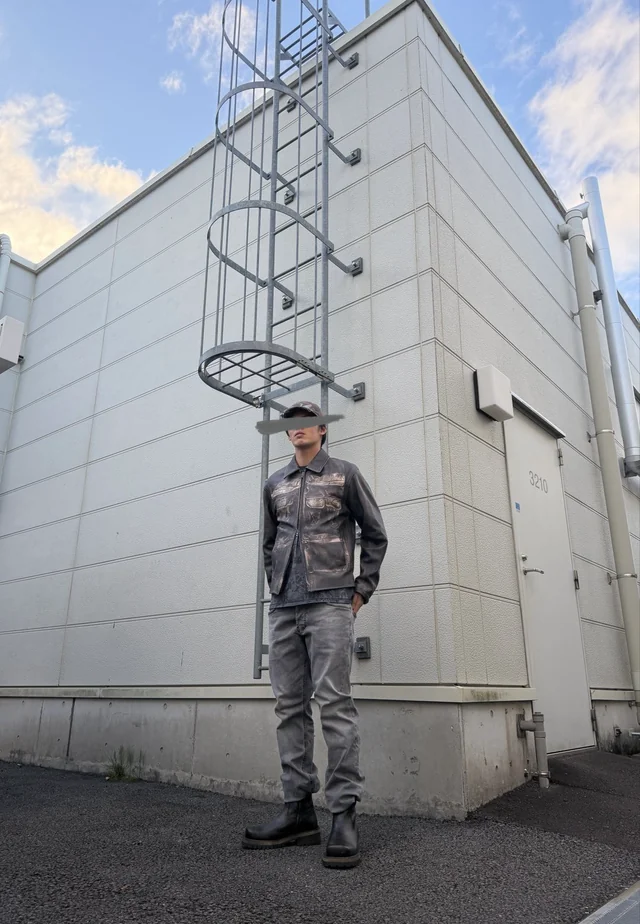
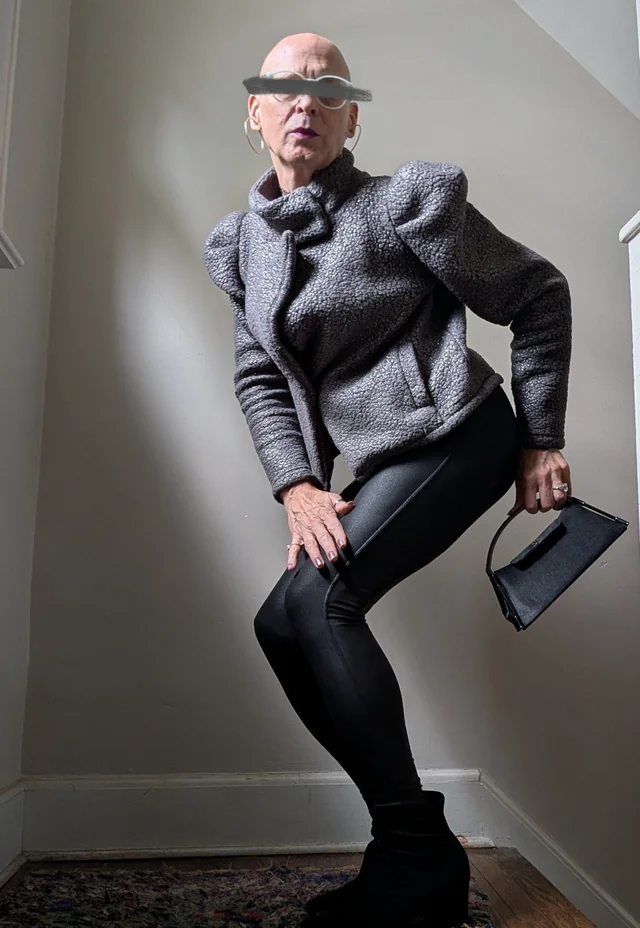
Brutalism 1
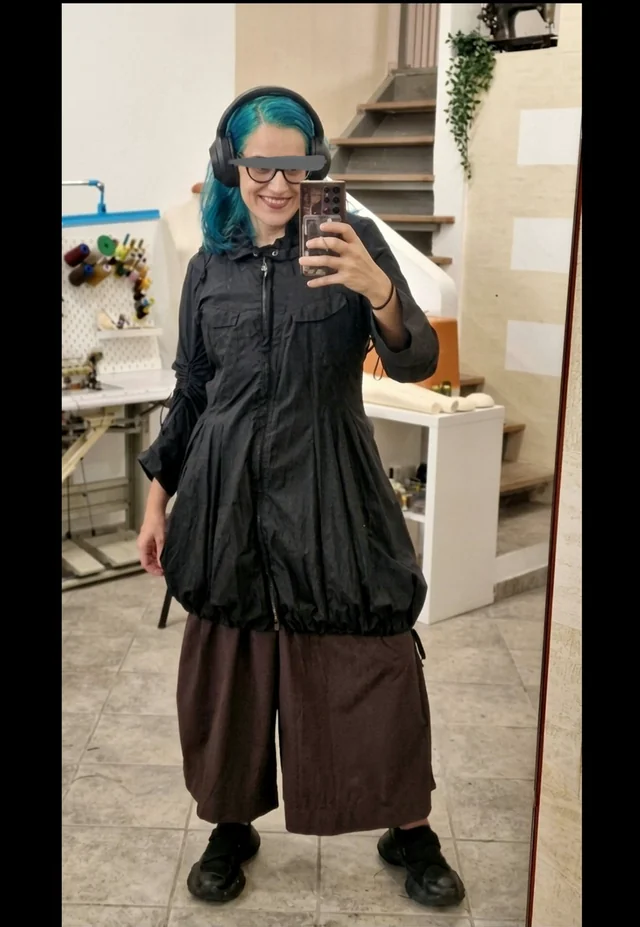
Brutalism 2
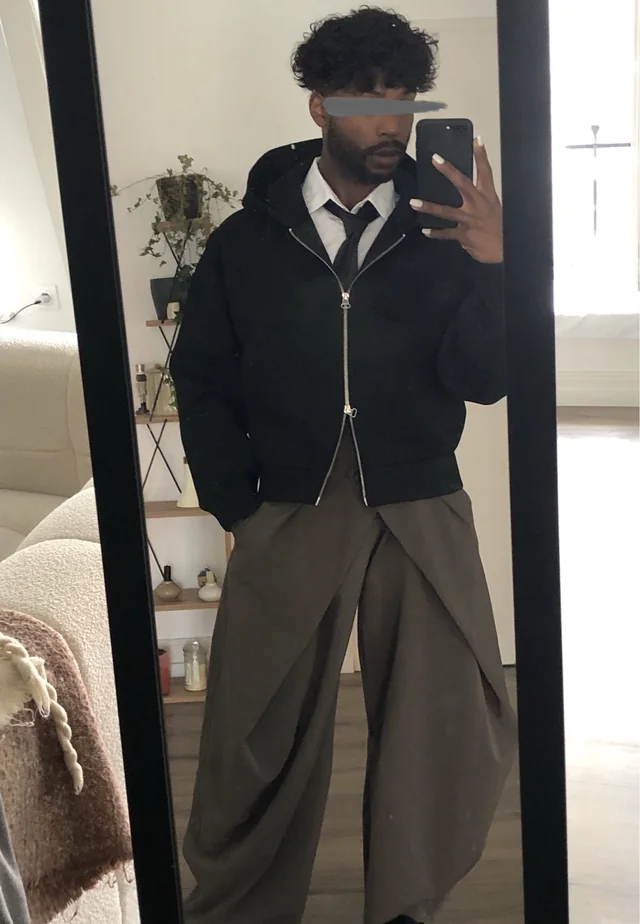
Brutalism 3

Brutalism

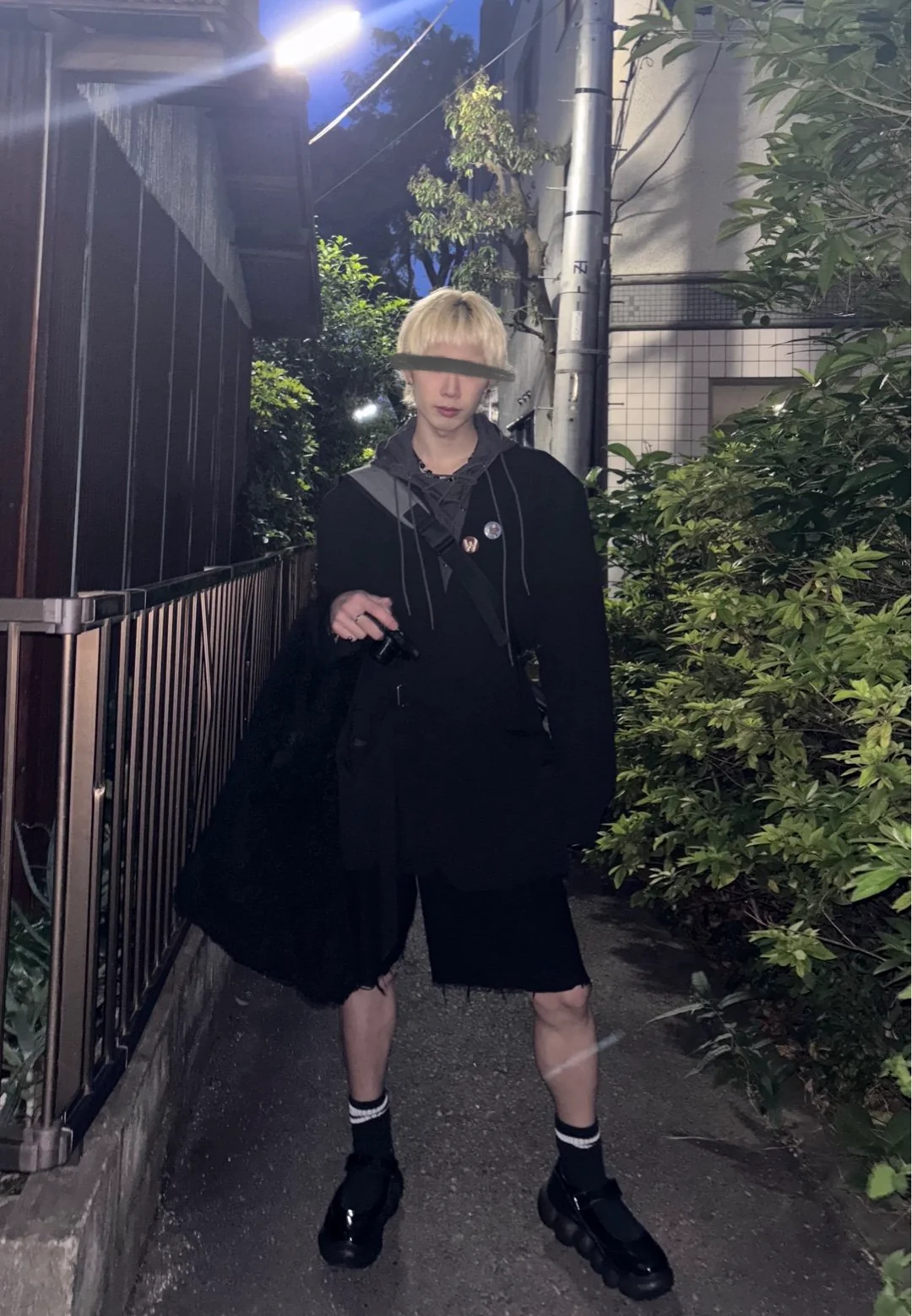
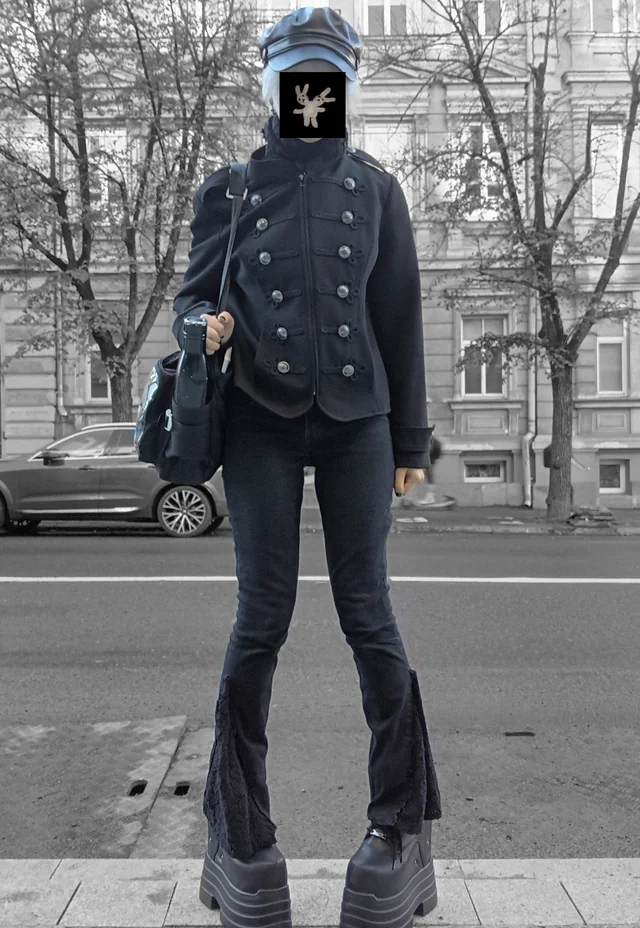
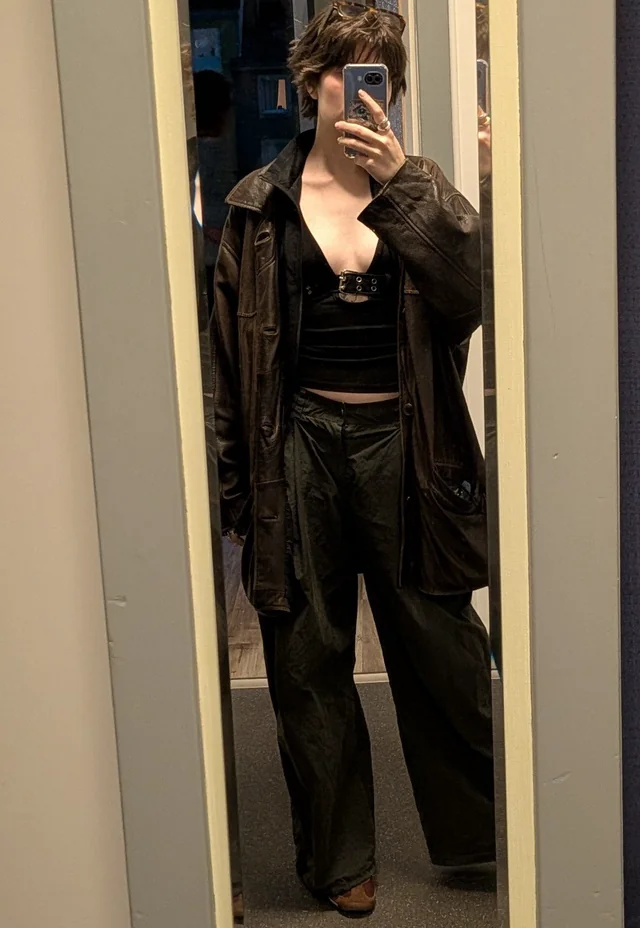
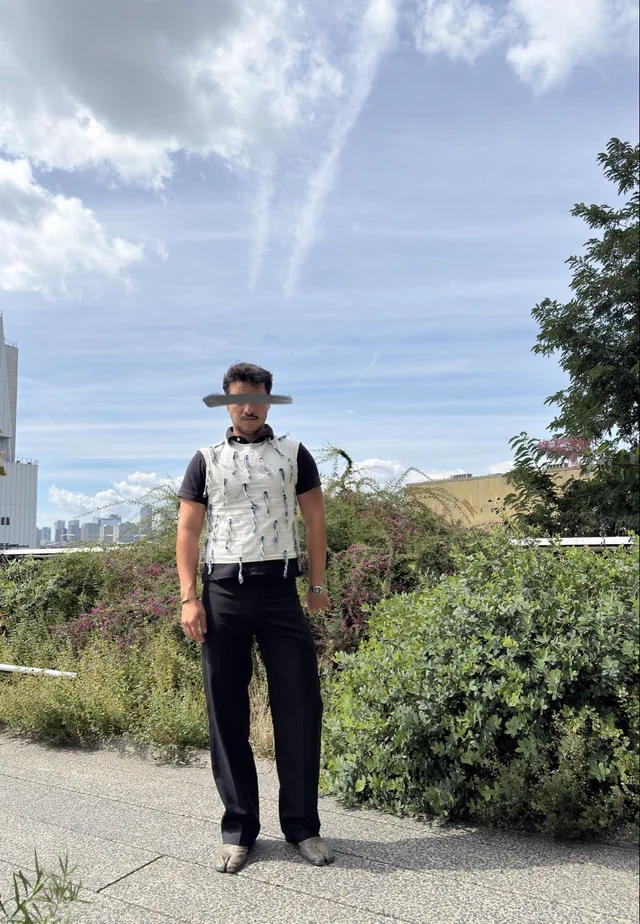
Summary. Brutalist fashion is a dress regime in which the structural principles of Brutalist architecture — truth to materials, exposed construction, monolithic form, and the refusal of applied ornament — are translated into garment systems that prioritize rigid sculptural volume, visible making processes, and material weight over drape, finish, or body-conforming silhouette. The aesthetic operates as a construction-forward discipline: garments are engineered to hold architectural form through internal structure (canvas interlining, horsehair chest pieces, buckram interfacing, bonded substrates) and heavyweight textiles (wool felt at 10–20 oz/yd², cotton duck at 10–18 oz, bonded neoprene at 2–5 mm, rigid denim at 14+ oz) rather than through pattern-cutting ease or fabric fluidity. Where conventional fashion conceals process and reveals body, Brutalist fashion exposes process and conceals body — raw edges, visible seam allowances, unfinished hems, and reversed construction details function as the sartorial equivalent of Le Corbusier's béton brut: the honest surface of the material itself, unmediated by decorative overlay.

In Material Terms

Brutalist fashion's coherence depends on textiles that resist drape and maintain rigid geometric form under gravity and body movement. This requirement eliminates most knits, lightweight wovens, and bias-cut fabrics from the category's functional vocabulary. The operative textiles are those whose fiber composition, weave density, and weight per unit area produce sufficient stiffness to hold shape independently of the body beneath them: fulled wool felt (fiber entanglement creates a non-woven sheet with no grain, drape, or stretch), heavyweight cotton canvas (tight plain weave at high thread count produces a board-like hand), bonded neoprene (closed-cell foam laminated between jersey faces creates a self-supporting panel), and stiff selvedge denim (ring-spun cotton in tight 3×1 twill at 14–21 oz produces a fabric that must be broken in through wear rather than conforming to the body on first wearing). These materials share a critical property: they impose form on the body rather than receiving form from it. When Brutalist garments are constructed from lighter-weight or drapier substitutes — a common failure in commercial dilutions of the aesthetic — the architectural logic collapses, and the garment reads as oversized rather than monolithic.

At Category Level

Brutalist fashion occupies a specific position within the broader field of architecturally inflected dress. It is distinguished from deconstructivism (which disassembles garment conventions to reveal their arbitrary construction, as in Margiela's reversed and unfinished pieces) by its emphasis on monolithic solidity rather than fragmentation; from minimalism (which pursues reduction and refinement of surface) by its embrace of material weight and visible construction marks; and from industrial or workwear aesthetics (which derive from functional labor garments) by its explicit architectural referent and its rejection of utility as justifying logic. Brutalist fashion does not claim to be useful. It claims to be structurally honest. This distinction is critical: where workwear's exposed rivets serve load-bearing functions, Brutalist fashion's exposed seam allowances serve epistemological ones — they declare the garment's construction history as its primary communicative content.

Methodologically

This entry analyzes Brutalist fashion through three intersecting frames: material science (what textiles do under the demands of rigid-form garment engineering), construction technology (how patternmaking, interlining, and assembly techniques produce architectural volume), and cultural semiotics (how exposed-construction aesthetics acquire meaning through circulation across architecture, fashion, and critical discourse). The emphasis throughout is on the causal relationship between material properties and aesthetic outcomes — the ways in which fiber behavior, weave structure, and finishing processes determine what forms are achievable and what failure modes constrain the aesthetic's longevity.

Word (Etymology)

From French béton brut ("raw concrete"), the term used by Le Corbusier to describe the unfinished board-marked concrete surfaces of his Unité d'Habitation (Marseille, 1952). British architectural critics Alison and Peter Smithson adopted and anglicized the term as "New Brutalism" in the 1950s, shifting its register from a material description (raw concrete) to an ethical position (honesty of construction, refusal of applied finish, legibility of structural logic). The architectural historian Reyner Banham codified the movement in The New Brutalism: Ethic or Aesthetic? (1966), framing the central tension that fashion Brutalism inherits: whether exposed construction constitutes a moral stance (truth-telling) or merely an aesthetic preference (roughness as style). In fashion discourse, "Brutalist" began circulating as a critical descriptor in the 1990s, applied retrospectively to Rei Kawakubo's and Yohji Yamamoto's early Paris collections and prospectively to Rick Owens's monolithic constructions. The term retains its architectural etymology as a constant reminder that the aesthetic's legitimacy depends on structural logic, not surface appearance — "brutal" refers not to aggression but to rawness, to the unmediated presence of the material and its making.

Subculture

Brutalist fashion's subcultural base is a network of avant-garde fashion practitioners, architecture-literate consumers, and critical-theory-informed dressers whose shared evaluative framework privileges construction knowledge over trend awareness. Unlike street-style subcultures organized around brand affiliation or music-scene membership, Brutalist fashion's community is organized around an expertise economy centered on material and structural literacy: the ability to distinguish between a garment whose raw edges result from deliberate construction decisions (stabilized by stay-stitching, positioned to exploit the textile's non-fraying properties) and one whose raw edges result from cost-cutting (unstabilized, likely to deteriorate). This distinction — invisible to casual observers — functions as the primary gatekeeping mechanism within the subculture.

Institutional anchors include specialized retail environments (Dover Street Market, whose concrete-and-scaffold interiors architecturally mirror the aesthetic they sell; standalone Comme des Garçons boutiques designed by Rei Kawakubo and Takao Kawasaki; Rick Owens's Paris flagship on Place du Palais Royal), academic fashion programs that emphasize conceptual design (Central Saint Martins, Royal Academy of Fine Arts Antwerp, Bunka Fashion College), and publication platforms that treat fashion as a design discipline rather than a lifestyle commodity (System magazine, Vestoj, The Gentlewoman's design-criticism sections, 032c's architecture-fashion intersection). Online communities on platforms such as Reddit's r/avantgardefashion and Stylezeitgeist Forum sustain technical discourse on construction methods, fabric sourcing, and designer intent that would be illegible within mainstream fashion conversation.

Sociologically, the Brutalist fashion field is stratified by proximity to production knowledge. At the top, designers and pattern-cutters who engineer architectural garments command authority through demonstrated construction mastery. Mid-tier participants — stylists, critics, dedicated collectors — mediate between production and consumption, translating construction logic into critical narrative. Entry-level participants navigate the aesthetic through silhouette recognition and brand identification, often without access to the material-science substrate that generates the forms they admire. Mobility between tiers is possible through self-education (pattern-cutting courses, textile-science study, archival garment analysis), but the hierarchy shapes how authenticity claims are adjudicated: wearing Comme des Garçons without understanding Kawakubo's pattern-cutting innovations is tolerated but does not confer subcultural authority.

History

The material and intellectual prehistory of Brutalist fashion begins in postwar architectural discourse and arrives at garment construction through a series of cross-disciplinary translations, each of which preserved some principles while transforming others.

Architectural foundation (1950s–1970s). Le Corbusier's Unité d'Habitation (Marseille, 1947–1952) established béton brut as both material practice and ethical position: the building's concrete surfaces retained the imprint of their timber formwork, refusing the plastered or rendered finishes that conventional construction used to conceal structural material. Alison and Peter Smithson's Hunstanton School (1949–1954) extended this principle to steel and brick, leaving services and structure exposed where typical buildings would conceal them behind finished surfaces. The Barbican Estate (London, Chamberlin, Powell and Bon, 1965–1976) and Habitat 67 (Montreal, Moshe Safdie, 1967) demonstrated that Brutalist principles could scale to residential and urban infrastructure, producing environments of monumental geometric weight. These buildings established the formal vocabulary that fashion would later translate: monolithic volume, exposed material, geometric angularity, the refusal of decorative mediation between structure and surface.

Japanese avant-garde translation (1970s–1980s). The decisive translation from architecture to fashion occurred in Japanese design culture, where postwar architectural discourse (Kenzo Tange's Brutalist civic buildings, the Metabolist movement's structural ambitions) and textile-arts traditions (wabi-sabi aesthetics of imperfection, boro patching as visible repair) converged in fashion education. Rei Kawakubo, trained in fine art at Keio University rather than in fashion school, founded Comme des Garçons in 1969 and developed a construction philosophy that treated garments as architectural objects: volumes engineered through padding, interlining, and unconventional pattern-cutting rather than through body-following drape. Her Spring/Summer 1981 Paris debut — presented entirely in black and featuring distressed knits, asymmetric hems, raw edges, and deliberate holes — was received by Western press as an attack on fashion's decorative conventions. Women's Wear Daily described it as "Hiroshima chic," a widely criticized formulation that nonetheless registered the genuine rupture: Kawakubo's garments refused every established protocol of Western feminine dress (fitted waist, smooth surface, finished edge, polished color) in favor of construction-forward austerity. Yohji Yamamoto's simultaneous Paris debut reinforced the intervention: oversized black garments in heavyweight wools and cottons that wrapped and draped around the body in volumes derived from Japanese clothing construction (hakama proportions, kimono layering logic) rather than Western tailoring.

Belgian deconstruction and exposed process (1980s–1990s). The "Antwerp Six" graduates (1980–1981, Royal Academy of Fine Arts) — Ann Demeulemeester, Dries Van Noten, Walter Van Beirendonck, Dirk Van Saene, Dirk Bikkembergs, and Marina Yee — extended the Japanese precedent into a European context. Martin Margiela, who graduated from the same institution in 1980 and worked for Jean Paul Gaultier before launching his eponymous label in 1988, made exposed construction his signature methodology: reversed seams showing their allowances, garments made from reclaimed vintage pieces with visible joining, linings worn as exteriors, exposed shoulder pads, visible basting stitches left in as finished details, and the white cotton label attached with four visible pick-stitches that deliberately pulled and distorted the garment surface. Margiela's 1997 "Stockman" collection, which featured garments built around the tailor's dress form as an exterior structure, made the construction armature itself into the visible garment — the most literal translation of Brutalism's "truth to structure" principle into fashion.

Owens, monolithic volume, and the 2000s codification. Rick Owens (first collection 1994, Paris relocation 2003) synthesized the Japanese volumetric tradition and Belgian exposed-construction ethos into a coherent system of monolithic garment architecture: heavyweight jersey, leather, and waxed cotton cut into elongated, angular silhouettes with dropped crotches, extended shoulders, and asymmetric hems. His DRKSHDW diffusion line (launched 2005) made raw-edged heavyweight cotton, exposed serging, and unfinished seams commercially accessible at a lower price point. Owens's furniture design (concrete, marble, antler, bronze) and his Concordia studio — housed in a former Parisian substation — explicitly linked his fashion practice to Brutalist architectural environments. The label's runway presentations (models walking on monumental concrete or plywood stage architectures) reinforced the cross-disciplinary claim.

Contemporary practitioners (2010s–present). Craig Green (Central Saint Martins MA, 2012) introduced padded-panel constructions and worker-uniform geometries that operate as wearable architectural modules. His signature lacing systems — panels connected by visible cord rather than conventional seaming — literalize Brutalism's exposure of joining methods. Issey Miyake's Pleats Please and 132 5. lines, while rooted in a different Japanese design philosophy, share the Brutalist commitment to garments as autonomous geometric forms that exist independently of the body. Demna Gvasalia's early Vetements (2014–2017) deployed extreme oversizing, raw hems, and industrial material references (DHL courier shirts, construction-site visibility vests) as a form of construction-as-commentary, though this work has been more commonly assigned to the "post-ironic" or "anti-fashion" category than to Brutalism proper. Simone Rocha, Juun.J, Boris Bidjan Saberi, and A-COLD-WALL* (Samuel Ross, an architecture student before entering fashion) sustain various strands of the aesthetic.

Analytically, Brutalist fashion's history is a sequence of translations across disciplinary boundaries — architecture to textile, Japanese to Western, runway to commercial — in which the core principles (truth to materials, exposed construction, monolithic volume) are preserved while their institutional contexts, audiences, and value logics are repeatedly renegotiated.

Silhouette

Brutalist silhouette is governed by architectural volume rather than anatomical proportion. The characteristic forms — rectangular torso blocks, cylindrical sleeve tubes, trapezoidal coat profiles, wide-leg trousers that fall as columns rather than draping around the leg — are engineering consequences of the aesthetic's material commitments: heavyweight, low-drape textiles held in shape by internal structure produce geometric volumes that relate to the body as a building relates to its site (occupying and defining space around it) rather than as a conventional garment relates to the body (following and revealing its contours).

The critical technical distinction is between volume achieved through ease (adding fabric width and relying on drape to distribute excess material softly around the body, as in oversized casual clothing) and volume achieved through structure (using interlining, canvas, and rigid textiles to hold geometric form irrespective of the body's shape beneath). Brutalist fashion operates in the second mode. A Comme des Garçons coat from the "Body Meets Dress, Dress Meets Body" collection (Spring/Summer 1997) does not drape loosely around the body; it imposes a padded, asymmetric geometry that the body must inhabit. A Rick Owens DRKSHDW parka in 18 oz waxed cotton does not flow with movement; it maintains its trapezoidal profile because the textile's stiffness resists the body's kinetic forces.

Pattern construction enables this silhouette through several specific techniques. Oversized block patterns with minimal darts and reduced waist shaping produce the rectangular torso geometry: by refusing to take in fabric at the waist or shape it around the bust, the pattern creates a straight-sided volume that reads as a slab rather than a fitted shell. Dropped shoulder seams extend the garment's shoulder line beyond the body's natural shoulder point, producing the characteristic broadened, squared shoulder profile — a horizontal emphasis that reinforces the architectural mass of the silhouette. Straight side seams (no waist suppression, no hip flare) create vertical planes that function as the garment equivalent of a building's load-bearing wall. Cocoon constructions — where the garment widens from shoulder to hem and curves inward only at the bottom — produce egg-shaped or barrel-shaped profiles that encase the body in a self-supporting shell.

Asymmetry operates as a specific formal device within the Brutalist silhouette vocabulary: uneven hems, off-center closures, and panels of unequal length create visual disequilibrium that refuses the balanced proportions of classical tailoring. This asymmetry is not decorative but structural — it typically results from construction decisions (a seam placed where engineering requires it rather than where symmetry would dictate) that make the garment's making logic legible in its final form.

Materials

Material selection in Brutalist fashion is the primary determinant of whether a garment achieves architectural form or collapses into merely oversized clothing. The category's credibility depends on textiles whose physical properties — stiffness, weight, surface texture, resistance to drape — enable rigid sculptural volume.

Wool felt and fulled wool (10–20 oz/yd²). Wool felt is produced by subjecting wool fibers to heat, moisture, and mechanical agitation (fulling), which causes the fibers' microscopic scales to interlock irreversibly, creating a dense, non-woven sheet with no warp, weft, or grain direction. This absence of grain is structurally significant: felt has no bias (the 45-degree angle at which woven fabrics stretch and drape), meaning it holds form equally in all directions. Heavy wool felt (16–20 oz/yd²) can be cut and left with raw, unseamed edges that will not fray — a property that makes it the ideal material for Brutalist exposed-edge construction. Its thermal properties (high insulation, moderate breathability, moisture absorption up to 30% of its weight before feeling wet) suit it to cool-climate heavy outerwear. Failure modes: moth larvae (Tineola bisselliella) target wool keratin protein; felted wool is particularly vulnerable because its dense structure traps larvae in a nutrient-rich environment; pilling occurs at abrasion points; and the material's weight creates structural stress at hanging points (shoulder seams, closures), requiring reinforced construction at these junctions.

Heavyweight cotton canvas and duck (10–18 oz/yd²). Canvas (plain weave) and duck (a tighter variant of plain weave using plied yarns) are produced from tightly interlocked cotton yarns at high thread density, creating a stiff, board-like fabric that resists drape. At weights above 12 oz/yd², the fabric holds shape independently and can be cut into flat, panel-like garment sections that maintain their planar geometry when worn. Waxed canvas (treated with paraffin or proprietary blends such as Barbour's Thornproof or Filson's Tin Cloth wax) adds water resistance and a surface patina that develops with wear — a material narrative of aging that aligns with Brutalism's truth-to-materials ethic. Failure modes: cotton canvas is susceptible to mildew in humid storage; wax coatings degrade with washing (waxed canvas should not be machine-washed; rewaxing with Otter Wax or similar bar wax is required annually under regular use); and heavyweight cotton's moisture absorption (cotton absorbs 25–27 times its weight in water) makes it dangerously heavy and slow-drying if saturated.

Bonded neoprene (2–5 mm). Neoprene (polychloroprene foam) laminated between knit jersey faces creates a self-supporting panel material that holds form without any internal structure. The closed-cell foam core provides both rigidity (resistance to drape) and dimensional memory (the material returns to its original form after compression). Scuba-weight neoprene (2–3 mm) is sufficiently rigid for structured garments while remaining light enough for comfortable wear; heavier weights (4–5 mm) are used for extreme sculptural applications. Neoprene's smooth, unbroken surfaces produce the monolithic visual effect that Brutalist fashion seeks, and its edges can be left raw (sealed by heat-cutting rather than hemming) or bonded (glued rather than sewn), both of which expose construction logic. Failure modes: neoprene delamination (the adhesive bond between foam core and jersey face separating, typically beginning at cut edges and stress points) is the primary catastrophic failure, often triggered by heat exposure, UV degradation, or machine washing. The material is non-breathable, producing significant perspiration buildup during wear — a comfort limitation that genuine Brutalist design acknowledges as a material consequence rather than disguising through ventilation inserts.

Stiff denim (14–21 oz). Heavyweight selvedge denim, produced on narrow shuttle looms using ring-spun cotton yarn in a 3×1 or 2×1 right-hand twill weave, shares the Brutalist principle of a material that imposes form on the body rather than conforming to it. Raw (unwashed, unsanforized) denim at 16+ oz is virtually rigid on first wearing, requiring months of use to break in — a process that records the wearer's body geometry and movement patterns as permanent crease lines (known as "whiskers" at the hip and "honeycombs" behind the knee). This material autobiography aligns with Brutalism's truth-to-materials ethic: the fabric's surface becomes a document of lived use. Japanese selvedge mills (Kuroki, Collect, Kaihara, Nihon Menpu) produce the heavyweight denims most relevant to the aesthetic, often using vintage shuttle looms (Toyoda GL-series) that produce a characteristically irregular "slubby" texture. Failure modes: crotch blowout (friction-driven failure at the inseam-crotch junction, typically after 12–18 months of daily wear in weights above 16 oz); indigo crocking (dye transfer to adjacent surfaces, a persistent handling issue with raw denim); and shrinkage in unsanforized fabrics (up to 10% in length after first soak).

Internal structure materials. Brutalist garments achieve architectural volume through interlining systems borrowed from traditional tailoring but deployed at extreme scales. Woven horsehair canvas (a blend of cotton, rayon, and actual horsehair from mane or tail) provides the shaped chest piece in structured jackets and coats, holding the lapel roll and chest form without adhesive (the hair fibers' natural resilience provides spring and shape recovery). Hymo (a lighter horsehair canvas) is used in softer constructions. Cotton domette (a flannel-like interlining) adds body without stiffness. Buckram (a heavily sized cotton or linen fabric, nearly board-stiff) provides extreme structure for collars, hat brims, and sculptural projections that must hold geometric form against gravity. Fusible interfacing (adhesive-backed non-woven or woven interlining applied by heat press) provides a faster alternative to traditional canvas construction but introduces the failure mode of adhesive delamination — bubbling or separation of the interfacing from the face fabric, typically visible as a puckered or rippled surface that emerges after repeated dry-cleaning or prolonged humidity exposure.

The critical material hierarchy is clear: Brutalist fashion's structural integrity depends on heavyweight, stiff, shape-holding textiles supported by internal construction. When either element is compromised — lightweight fabric substituted for cost, or fusible interfacing replacing canvas for speed — the architectural form degrades, and the aesthetic's central claim (truth to materials and structure) becomes a performative contradiction.

Color Palette

Brutalist fashion's chromatic logic is architecturally derived: the palette references the material surfaces of Brutalist buildings — poured concrete, raw steel, oxidized zinc, weathered timber formwork, exposed aggregate — and uses achromatic or near-achromatic tones to redirect visual attention from color to texture, weight, and surface structure.

Concrete grays. The dominant chromatic register. Warm concrete gray (containing yellow-brown undertones from sand aggregate and timber-formwork staining) is the most architecturally specific hue, distinguishable from the cooler, bluer grays of corporate minimalism. Mid-tone grays reference freshly poured concrete; darker grays reference weathered or rain-stained surfaces. The full gray range — from near-white raw plaster through mid-tone concrete to near-black charcoal — can sustain an entire wardrobe palette when differentiated by material texture: a matte wool felt gray reads differently from a sheen-surfaced neoprene gray, which reads differently from a warp-face cotton canvas gray, even when the chromatic values are identical.

Black. Dominant in the Japanese and Belgian contributions to the aesthetic (Kawakubo, Yamamoto, Owens, Demeulemeester). Black in Brutalist fashion functions differently from black in minimal or gothic dress: it is valued not for its elegance or its subcultural associations but for its capacity to eliminate color as a variable, forcing the viewer to evaluate form, proportion, texture, and construction as the garment's primary visual content. Matte black (absorbing light, suppressing surface detail) is preferred over glossy or saturated black (which introduces shine as a decorative element).

Raw and undyed tones. Ecru, raw canvas, unbleached muslin, natural linen — the colors of construction materials before dyeing. These tones literalize Brutalism's "truth to materials" principle: the garment appears in the color its fibers naturally produce, without chemical intervention. Comme des Garçons's use of calico and muslin (traditionally the fabrics of toiles — test garments — rather than finished pieces) in runway presentations made the pre-production color into a statement about process visibility.

Oxidized metal tones. Rust (iron oxide), verdigris (copper patina), tarnished brass — colors that reference the chemical aging of architectural metals. These tones are used sparingly as accents within predominantly achromatic palettes, introducing a narrative of time and material transformation without abandoning the palette's overall austerity.

Industrial accents. Safety orange, hazard yellow, or fluorescent marking — borrowed from construction-site signaling — appear in some iterations (notably A-COLD-WALL*'s architectural-worksite references). These function as chromatic disruptions that acknowledge Brutalist architecture's relationship to construction labor and industrial environments.

The palette's austerity is not reductive but disciplinary: by constraining color, Brutalist fashion demands that garments communicate through the variables that conventional fashion's chromatic richness often renders secondary — weave structure, fiber surface, material weight, construction technique, and the garment's geometric form in space.

Details

Details in Brutalist fashion are best understood as truth-to-construction devices — elements that make the garment's making process visible as its primary aesthetic content. Each detail performs a double function: it serves (or visibly served) a construction purpose, and it communicates that construction purpose to the viewer as a form of structural honesty.

Raw edges. The most immediately recognizable Brutalist detail. Raw (unfinished, unhemmed) edges expose the fabric's cross-section — its warp and weft structure, its fiber composition, its cut line — rather than folding it under and concealing it with a hem. Functional raw edges require deliberate engineering: fabrics must be selected for their resistance to fraying (felt, neoprene, tightly woven canvas, laser-cut synthetics) or stabilized through techniques that prevent uncontrolled unraveling (stay-stitching a single line of lockstitch 3–5 mm from the cut edge; pink-cutting with pinking shears to interrupt the weft's tendency to pull free; fusing a narrow strip of lightweight interfacing along the cut edge). The distinction between engineered raw edges and simply unfinished edges is the quality marker that separates sophisticated Brutalist construction from its superficial imitations: Kawakubo's raw edges hold their integrity across years of wear because they are constructed in non-fraying or stabilized textiles; fast-fashion "raw edge" details in loosely woven poly-cotton begin deteriorating within weeks.

Visible seam allowances. Seams constructed with their allowances pressed open and left exposed on the garment's exterior (rather than enclosed inside the garment) display the construction's joining logic. This can be achieved through reversed construction (assembling the garment inside-out and then wearing it with the seam-allowance side as the exterior, as in Margiela's reversed garments), through external seaming (stitching panels together with allowances deliberately positioned outward), or through flat-felled seams left partially open (one fold of the felled seam is omitted, exposing the raw allowance edge). Each method produces a different visual signature: reversed construction exposes the serged or overlocked edge in its functional, industrial character; external seaming displays the pressed-open allowance as a raised ridge; and partially felled seams show the intermediate state between finished and unfinished.

Exposed stitching. Contrast-thread topstitching, visible basting stitches left as permanent details, and deliberately oversized stitch lengths that read as constructional rather than decorative. Margiela's white basting stitches (traditionally temporary markers removed before a garment's completion) became a signature by arresting the construction process at a pre-finished stage and presenting that stage as the final product. Industrial stitching — heavy-gauge thread in chain stitch or multi-needle coverstitch, typically concealed on garment interiors — is brought to the surface as a declaration of manufacturing method.

Structural hardware. Metal grommets, rivets, D-rings, and heavy-gauge snaps used as functional fastening and reinforcement rather than as decorative trim. The distinction from military or workwear hardware is contextual: in Brutalist fashion, hardware is chosen for its visual weight and constructional honesty (it visibly performs a structural function — holding layers together, reinforcing stress points, providing attachment) rather than for its nostalgic or utilitarian associations. Exposed zippers — particularly heavy-gauge metal zippers from manufacturers like RiRi, Raccagni, or Excella by YKK — are used as visible closure systems that refuse concealment behind plackets or fly guards. The zipper's teeth, slider, and tape become part of the garment's surface composition rather than a hidden mechanism.

Unfinished and intermediate-state details. Linings omitted to reveal the garment's interior construction (seam allowances, interlining, facing edges); garments presented with pattern markings (tailor's chalk, notch cuts, drill holes) still visible; selvage edges used as finished edges (the woven edge of the fabric serving as the garment's hem or side seam, exposing the weave's self-finished structure). These details claim the garment's pre-production and mid-production states as aesthetically valid — a principle directly analogous to Brutalist architecture's refusal to plaster over structural concrete.

Accessories

Accessories in Brutalist fashion extend the constructional logic of garments into objects, maintaining the principles of heavy materiality, exposed construction, and geometric form.

Footwear is typically heavy, thick-soled, and architecturally blocked. Rick Owens's Geobasket sneakers (exaggerated sole, oversized tongue, asymmetric lacing) and Ramones (extended high-top, thick rubber platform) treat the shoe as a sculptural base that anchors the garment silhouette to the ground. Chunky-soled leather boots with visible Goodyear welt stitching (the lockstitch that joins upper to sole, traditionally concealed by the welt's positioning, here left visible as a constructional detail) extend the truth-to-construction principle to footwear. Margiela's Tabi boot (the split-toe silhouette derived from Japanese tabi socks) introduces anatomical disruption as a Brutalist device: the foot's form is made structurally legible rather than concealed within conventional shoe geometry.

Bags and carry objects favor rigid construction over soft drape: structured leather boxes, rigid neoprene pouches, canvas totes with board-stiff bases. Hardware (buckles, clasps, D-ring attachments) is oversized and visible. Straps are wide and load-bearing rather than decorative.

Jewelry, when present, tends toward the sculptural and industrial: large-scale rings, cuffs, and pendants in oxidized metals (blackened silver, raw brass, patinated bronze) that read as architectural miniatures rather than ornamental accessories. Avant-garde jewelers working within the Brutalist register (Jill Platner's cable-and-wire constructions, Werkstatt:München's oxidized silver chains) produce pieces whose making process — forging marks, visible solder joints, tool-marked surfaces — remains legible in the finished object.

Eyewear favors thick acetate or metal frames with geometric profiles: rectangular, hexagonal, or shield-form lenses that frame the face as an architectural opening. Mykita and Kuboraum produce frames whose exposed hinge mechanisms and raw surface finishes align with Brutalist construction exposure.

Body Logic

Brutalist fashion treats the body as an armature — a structural support around which garments construct autonomous geometric volumes — rather than as a form to be revealed, flattered, or sexualized. The body provides the vertical axis and the locomotive force, but the garment's visible form owes more to its own material stiffness and internal construction than to the contours of the body beneath it. This produces a distinctive relationship between garment and wearer: the body inhabits the garment rather than the garment adhering to the body. The experience is enclosing, architectural, and often deliberately heavy — the wearer feels the garment's weight and structure as a persistent material presence rather than as a transparent second skin.

Gender coding is significantly attenuated by this body logic. When garments do not follow the body's contours, they do not encode the gendered body-mapping (waist suppression as feminine, shoulder broadening as masculine) that conventional tailoring relies on to produce legible gender presentation. Kawakubo's and Yamamoto's early collections were described as "anti-fashion" in part because they refused the waist-bust-hip proportional system that Western women's fashion used as its fundamental organizing principle. This refusal was not an absence of design but a positive construction of alternative body-garment relationships: the body as ground for sculptural projection, as support structure for architectural form, as occupant of a wearable space rather than object of display.

However, Brutalist fashion's body logic is not without its own limitations. The heavy materials and structured volumes impose significant physical demands: garments weighing 2–4 kg (a heavy wool felt coat, a structured canvas jacket with horsehair interlining) create load on the shoulders, restrict range of motion, and generate substantial thermal load. These demands privilege bodies with the physical capacity to carry weight and tolerate heat. The aesthetic's monumental proportions — oversized shoulders, extended hems, wide sleeves — also require a relationship with physical space (room to move, absence of crowding) that is itself a consideration of spatial access. In embodied terms, wearing Brutalist fashion successfully requires not just the garments but the conditions — cool climate, unhurried movement, adequate space — that allow their material properties to function as intended.

Garment Logic

Brutalist garment construction operates as an engineering system in which material selection, interlining architecture, patternmaking method, and assembly technique are interdependent. Isolating any single element — adopting raw edges without selecting non-fraying fabrics, or using heavyweight materials without reinforcing construction at stress points — produces garments that fail both functionally and aesthetically.

Pattern construction. Brutalist patternmaking favors flat, geometric blocks over contoured shaping. Darts are minimized or eliminated; ease is distributed evenly rather than concentrated at bust or waist; seam lines follow geometric logic (vertical, horizontal, or angular divisions) rather than anatomical logic (princess seams, curved side panels). This approach produces the characteristic flat-plane surfaces and angular intersections that give Brutalist garments their architectural quality. When sculptural volume is required (as in Kawakubo's "lumps and bumps" constructions), it is achieved through padding, interlining, or secondary structures attached to the garment's interior rather than through fabric manipulation (gathering, draping, ruching), which would contradict the aesthetic's commitment to material flatness and structural legibility.

Assembly and seaming. Construction methods are selected for structural integrity under the stresses created by heavy materials. Flat-felled seams (two interlocking folds that enclose raw edges and distribute stress across a wide seam path) provide maximum strength for heavyweight cotton and denim. Lapped seams (one panel overlapping another, joined with single or double rows of topstitching) produce the exposed seam allowance that functions as a Brutalist detail while providing adequate strength for medium-weight fabrics. French seams (the seam enclosed within itself) are generally avoided because they conceal construction — antithetical to the aesthetic — and because their multiple fabric layers create excessive bulk in heavy textiles.

Aftercare protocols. The heavy, structured materials of Brutalist garments demand specific maintenance regimes. Wool felt should be spot-cleaned with cold water and mild soap; machine washing or immersion will cause irreversible felting shrinkage and loss of dimensional stability. Moth prevention (cedar blocks, lavender sachets, sealed storage with moth-repellent strips during off-season) is essential; felted wool's dense structure makes moth damage difficult to detect until advanced. Waxed canvas requires periodic rewaxing (application of bar wax or liquid dressing, buffed with a heat gun or hairdryer to melt wax into the weave) to maintain water resistance; frequency depends on exposure but typically falls between once and three times per season. Neoprene should be washed by hand in cold water and air-dried flat; heat exposure (tumble drying, direct sunlight storage, heated pressing) accelerates foam degradation and delamination. Heavyweight denim, particularly raw selvedge, should be washed infrequently (every 30–50 wears is standard practice among aficionados) to preserve fade patterns and minimize indigo loss; when washed, cold water and minimal agitation prevent excessive crocking and shrinkage. Structured jackets with horsehair canvas should be dry-cleaned infrequently (once or twice per year) and stored on wide wooden hangers that distribute shoulder-point stress; wire hangers concentrate stress on a narrow contact area, producing permanent shoulder distortion in heavy garments.

Failure modes and longevity. Brutalist garments fail in characteristic ways determined by their material systems. Canvas and horsehair interlining failure manifests as loss of shape — the garment's structured form gradually softens and collapses as the interlining fibers break down under repeated stress and cleaning. Fusible interfacing failure produces visible bubbling or delamination, where the adhesive separating from the face fabric creates a puckered surface that is irreparable without complete deconstruction. Neoprene delamination — the jersey face fabric separating from the foam core — typically begins at cut edges and stress points (armholes, shoulder seams, hem edges) and progresses inward; once initiated, the process is irreversible and accelerates with continued wear. Bonded-fabric adhesive failure follows a similar pattern in any garment using adhesive-bonded textile composites: the polyurethane adhesive hydrolyzes (degrades through moisture exposure), losing elasticity and releasing its bond. This failure mode can manifest even in unworn garments stored in humid conditions, making bonded-fabric Brutalist pieces inherently less durable than those constructed from single-layer textiles. Heavyweight wool's primary failure mode is moth damage: Tineola bisselliella larvae digest keratin protein, producing irregular holes that begin at points of soil or perspiration concentration and spread outward. Structural failure in heavyweight garments also occurs at hanging points: shoulder seams and closure attachments bear the garment's full weight during storage, and insufficient reinforcement (too-narrow seam allowances, inadequate bartacking, absence of interior shoulder stays) leads to progressive seam distortion and eventual failure.

The longevity hierarchy is clear: garments constructed from single-layer heavy textiles (wool felt, waxed canvas, rigid denim) with traditional interlining systems (horsehair canvas, domette padding) and properly maintained against their specific threats (moths, mildew, mechanical stress) can last decades. Garments relying on adhesive-bonded composites (bonded neoprene, fusible interfacing, laminated fabrics) have inherent lifespan limitations imposed by adhesive hydrolysis, typically becoming structurally unreliable within 5–15 years depending on storage conditions and use intensity.

Motifs / Themes

Brutalist fashion's thematic content is architectural and epistemological rather than decorative or narrative.

Truth to materials. The central ethical position, translated directly from Brutalist architecture: materials should appear as what they are, without cosmetic treatments that disguise their fundamental properties. Concrete should look like concrete; wool should look like wool; seams should look like seams. In fashion application, this principle mandates that surface treatments (dyeing, finishing, pressing) be minimal, that the fabric's woven or felted structure remain visible rather than being smoothed into an undifferentiated surface, and that the garment's construction be legible from its exterior rather than concealed behind linings and facings.

Exposed structure. The principle that a building's (or garment's) structural system — the elements that hold it together and give it form — should be visible as part of its finished surface rather than hidden behind decorative cladding. In fashion, this produces the exposed seams, visible interlining, and reversed-construction details that constitute Brutalism's signature vocabulary.

Monolithic form. The preference for single, unified volumes over articulated or segmented forms. Brutalist buildings read as massive, continuous masses rather than assemblages of distinct elements; Brutalist garments analogously read as singular geometric volumes rather than combinations of distinct panels. This is achieved through construction that minimizes visible seaming (large pattern pieces, minimal piecing) and through materials whose stiffness integrates separate panels into a continuous surface.

Refusal of decoration. The principled elimination of applied ornament — embroidery, print, appliqué, decorative trim — in favor of construction as the garment's aesthetic content. This refusal is not merely reductive (removing decoration) but substitutive (replacing decoration with construction detail as the locus of visual interest).

Cultural Touchstones

Rei Kawakubo's Spring/Summer 1981 Paris collection for Comme des Garçons remains the foundational cultural event: the moment when exposed-construction, anti-finish, monochromatic garment design entered Western fashion discourse as a coherent position. The collection's reception — equal parts horror and fascination from the Parisian fashion establishment — established the interpretive framework through which all subsequent Brutalist fashion would be evaluated: as an intervention against dominant fashion values rather than as a style within them.

Rick Owens's Paris presentations, particularly those staged on monumental concrete or plywood structures (Spring/Summer 2014 with step-dancers performing on a raw concrete platform; Fall/Winter 2017–2018 with models carrying each other across a bare stage), positioned fashion presentation itself within Brutalist architectural space, collapsing the boundary between the garment and its environment.

Martin Margiela's "Stockman" collection (Spring/Summer 1997), in which dress forms were worn as exterior garments and construction tools (pins, pattern markings, muslin) were presented as finished details, remains the most literal translation of "truth to construction" into a fashion statement. The Palais de Tokyo (Paris, Lacaton and Vassal's 2002 renovation, which left the building's concrete shell unfinished as a deliberate architectural choice) became a cultural venue whose raw interior space mirrored and validated the exposed-construction aesthetic of the fashion shown within it.

Craig Green's Spring/Summer 2015 collection, with its sculptural padded panels connected by visible cord lacing, introduced a new formal vocabulary for wearable architectural construction that has been widely referenced. Issey Miyake's "132 5." collection (2010–present), in which garments fold from flat geometric patterns into three-dimensional forms, translated mathematical origami principles into a Brutalist logic of garment-as-geometric-structure.

In architecture, the Barbican Centre (London), the National Theatre (Denys Lasdun, 1976), Tadao Ando's Church of the Light (1989), and Peter Zumthor's Therme Vals (1996) provide the visual reference library from which fashion Brutalism draws its formal vocabulary. The Instagram account @brutgroup (curating Brutalist architecture and design) functions as a contemporary image-archive that connects architectural and fashion audiences.

See Also

  • Deconstructivism: Shares exposed-construction methodology but prioritizes fragmentation and disassembly over monolithic volume
  • Minimalism: Adjacent austerity but pursues surface refinement rather than material rawness
  • Workwear: Overlapping material palette (canvas, denim, hardware) but derived from labor utility rather than architectural principle
  • Wabi-sabi: Japanese aesthetic of imperfection and material aging; parallel truth-to-materials ethic through a different cultural-philosophical frame
  • Anti-fashion: Broader category encompassing any rejection of fashion's dominant values; Brutalism is one specific formal strategy within it
  • Industrial: Overlapping visual vocabulary (hardware, heavyweight materials, utilitarian forms) but without Brutalism's explicit architectural referent
  • Monastic: Shared austerity and volumetric silhouette but motivated by ascetic spiritual discipline rather than structural honesty

Brands and Designers

Foundational Designers:

  • Comme des Garçons / Rei Kawakubo (founded 1969, Tokyo/Paris): the originating force; "Body Meets Dress, Dress Meets Body" (SS 1997), "Lumps and Bumps," and continuous deconstruction of garment conventions
  • Yohji Yamamoto (founded 1972, Tokyo/Paris): heavyweight black wools and cottons, oversized volumes, architectural wrapping
  • Maison Margiela / Martin Margiela (founded 1988, Paris): reversed construction, exposed process, Stockman collection, white-stitch signature
  • Rick Owens (founded 1994, Los Angeles/Paris): monolithic volumes, DRKSHDW raw-edge constructions, concrete-and-fashion lifestyle integration

Contemporary Practitioners:

  • Craig Green (founded 2012, London): padded-panel systems, visible cord-lacing construction, worker-uniform geometries
  • A-COLD-WALL* / Samuel Ross (founded 2015, London): architecture-school background, construction-site material references, concrete-pigment dyeing
  • Boris Bidjan Saberi (founded 2007, Barcelona): extreme material treatments (hand-dyed, resin-coated), heavyweight constructions, raw-edge finishing
  • Julius / Tatsuro Horikawa (founded 2001, Tokyo): post-apocalyptic structural volumes, heavy jersey and leather constructions
  • Juun.J (founded 1999, Seoul): oversized architectural proportions, graphic geometry, heavyweight cotton constructions

Architecturally Adjacent:

  • Issey Miyake (founded 1970, Tokyo): Pleats Please (1993–present) and 132 5. as garment-as-geometry systems; A-POC as construction-process exhibition
  • Simone Rocha (founded 2010, London): structured tulle and neoprene volumes, though with a decorative dimension that complicates strict Brutalist classification
  • Hed Mayner (founded 2015, Tel Aviv/Paris): extreme volumetric tailoring, oversized geometric coats, heavyweight wool and cotton
  • Lemaire (revived 2014, Paris): quiet volumetric construction in heavyweight natural fibers, architectural drape discipline
  • Studio Nicholson (founded 2010, London): structured minimalism in heavy cotton, wool, and linen, geometric pattern-cutting

Material and Production Specialists:

  • Hosoo (Kyoto, est. 1688): traditional Nishijin weaving techniques producing heavyweight architectural textiles for fashion collaborations
  • Loro Piana (cashmere and fine wool supply): Storm System treatments providing heavyweight luxury wool with Brutalist-compatible stiffness
  • Cone Denim / White Oak Plant (closed 2017): American-made selvedge denim; its closure concentrated heavyweight selvedge production in Japanese mills
  • Nihon Menpu, Kuroki, Kaihara, Collect (Japanese denim mills): heavyweight selvedge production on vintage shuttle looms

Citations

[1] Banham, Reyner. The New Brutalism: Ethic or Aesthetic? Architectural Press, 1966. [2] Smithson, Alison, and Peter Smithson. "The New Brutalism." Architectural Design, vol. 25, January 1955, pp. 1–2. [3] Le Corbusier. Towards a New Architecture. Translated by Frederick Etchells, Dover Publications, 1986. Originally published 1923. [4] Koolhaas, Rem, and Hans Ulrich Obrist. Project Japan: Metabolism Talks. Taschen, 2011. [5] Kawakubo, Rei. Interview by Susannah Frankel. The Independent, October 2, 2005. [6] Sudjic, Deyan. Rei Kawakubo and Comme des Garçons. Rizzoli, 1990. [7] English, Bonnie. Japanese Fashion Designers: The Work and Influence of Issey Miyake, Yohji Yamamoto and Rei Kawakubo. Berg, 2011. [8] Koda, Harold, and Andrew Bolton. Rei Kawakubo / Comme des Garçons: Art of the In-Between. Metropolitan Museum of Art, 2017. [9] Grand, France. "Comme des Garçons et les Japonais." Le Monde, October 18, 1981. [10] Evans, Caroline. Fashion at the Edge: Spectacle, Modernity, and Deathliness. Yale University Press, 2003. [11] Gill, Alison. "Deconstruction Fashion: The Making of Unfinished, Decomposing, and Re-assembled Clothes." Fashion Theory, vol. 2, no. 1, 1998, pp. 25–49. [12] Martin, Richard, and Harold Koda. Infra-Apparel. Metropolitan Museum of Art, 1993. [13] Vinken, Barbara. Fashion Zeitgeist: Trends and Cycles in the Fashion System. Translated by Mark Hewson, Berg, 2005. [14] Quinn, Bradley. The Fashion of Architecture. Berg, 2003. [15] Hodge, Brooke, Patricia Mears, and Susan Sidlauskas. Skin + Bones: Parallel Practices in Fashion and Architecture. Thames and Hudson, 2006. [16] Loschek, Ingrid. When Clothes Become Fashion: Design and Innovation Systems. Berg, 2009. [17] Owens, Rick. Interview by Tim Blanks. "Rick Owens on His Approach to Fashion." The Business of Fashion, March 12, 2014. [18] Fury, Alexander. "Rick Owens: The Lord of Darkness." The Independent, March 6, 2014. [19] Blanks, Tim. "Craig Green." Vogue Runway, Spring/Summer 2015 review. [20] Bolton, Andrew. Manus x Machina: Fashion in an Age of Technology. Metropolitan Museum of Art, 2016. [21] Miyake, Issey, and Dai Fujiwara. A-POC Making: Issey Miyake and Dai Fujiwara. Vitra Design Museum, 2001. [22] Wilcox, Claire. The Golden Age of Couture: Paris and London 1947–1957. V&A Publishing, 2007. [23] Cabrera, Roberto, and Patricia Flaherty Meyers. Classic Tailoring Techniques: A Construction Guide for Men's Wear. Fairchild Books, 2015. [24] Shaeffer, Claire B. Couture Sewing Techniques. Revised ed., Taunton Press, 2011. [25] Gale, Colin, and Jasbir Kaur. The Textile Book. Berg, 2002. [26] Kadolph, Sara J. Textiles. 12th ed., Pearson, 2016. [27] Tortora, Phyllis G., and Ingrid Johnson. Fairchild's Dictionary of Textiles. 8th ed., Fairchild Books, 2013. [28] Hearle, John W.S., et al. Structural Mechanics of Fibers, Yarns, and Fabrics. Wiley-Interscience, 1969. [29] Entwistle, Joanne. The Fashioned Body: Fashion, Dress and Social Theory. 2nd ed., Polity, 2015. [30] Hollander, Anne. Seeing Through Clothes. University of California Press, 1993. [31] Barthes, Roland. The Fashion System. Translated by Matthew Ward and Richard Howard, University of California Press, 1983. [32] Veblen, Thorstein. The Theory of the Leisure Class. Macmillan, 1899. [33] Bourdieu, Pierre. Distinction: A Social Critique of the Judgement of Taste. Translated by Richard Nice, Harvard University Press, 1984. [34] Simmel, Georg. "Fashion" (1904). In Simmel on Culture: Selected Writings, edited by David Frisby and Mike Featherstone, SAGE, 1997. [35] Hebdige, Dick. Subculture: The Meaning of Style. Routledge, 1979.