Androgyny
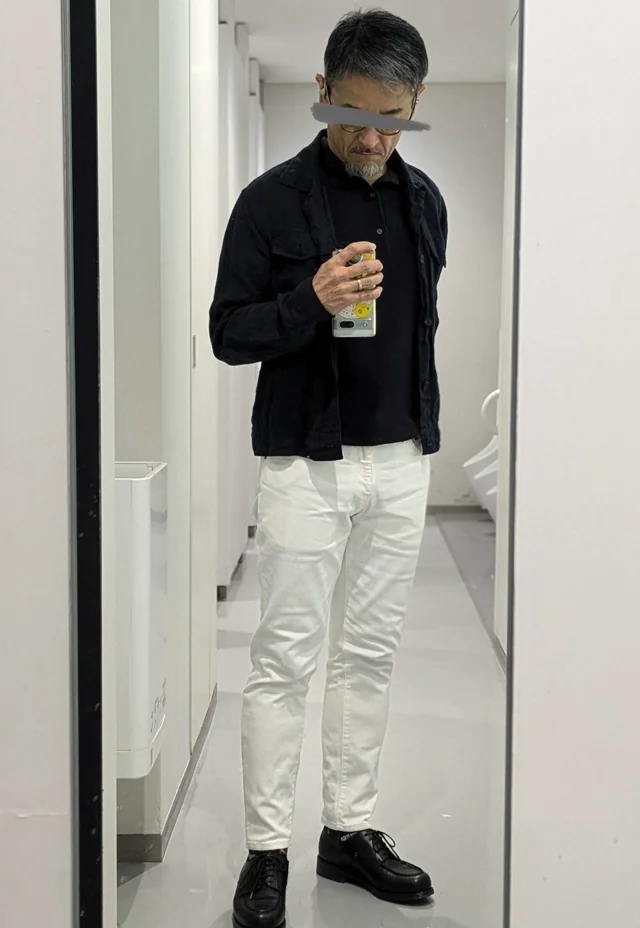
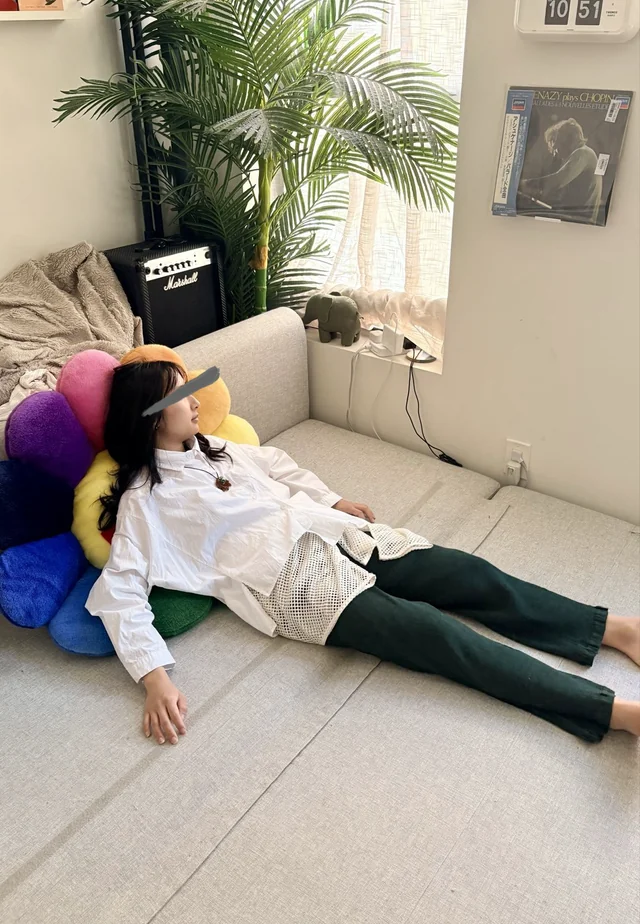
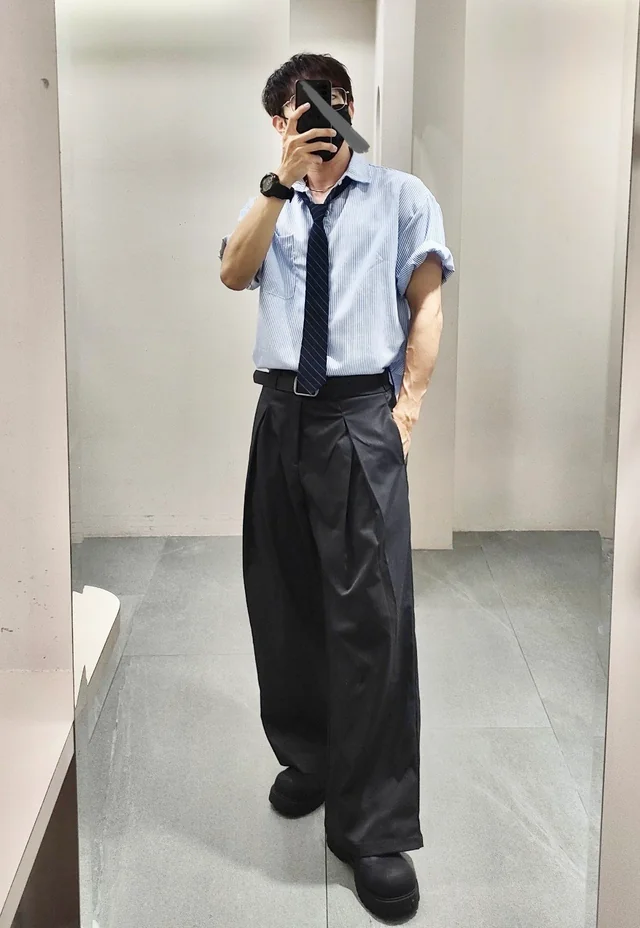
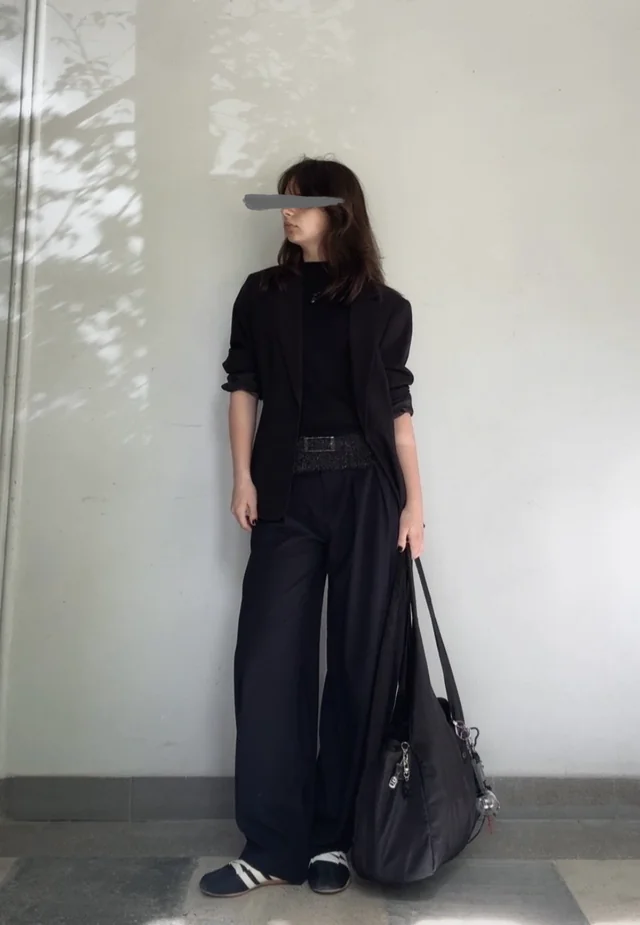
Summary. Androgyny is a dress system in which garments are engineered to redistribute, suppress, or refuse the gender-coded construction conventions — darting, waist suppression, shoulder padding, hip shaping, bust accommodation — that Western fashion has historically used to differentiate "menswear" from "womenswear," producing silhouettes whose gender legibility is deliberately ambiguous, contested, or illegible. The aesthetic is governed by a gender-refusal logic: garments are evaluated by how successfully their pattern-cutting, proportional engineering, and material selection challenge the viewer's ability to assign the wearer to a binary gender category, and by whether this ambiguity is achieved through genuine construction innovation (neutral darting, extended size-range grading, body-agnostic drape) or through superficial restyling (menswear silhouettes in smaller sizes marketed as "unisex," womenswear with suppressed decoration sold as "gender-neutral"). Unlike cross-dressing, which stages the legibility of the "wrong" gender, androgyny stages the illegibility of gender itself — the garment becomes a surface that refuses to answer the question the viewer's gaze is trained to ask.
In Material Terms
Androgyny's coherence depends on textiles whose drape, weight, and hand behave neutrally across body geometries without requiring gender-specific construction intervention. Medium-weight cotton jerseys (180–240 g/m), fluid viscose and Tencel twills (160–220 g/m), wool crepes (240–300 g/m), and ponte knits with moderate recovery (280–350 g/m) form the core fabric library because their inherent drape accommodates chest variance, hip variance, and shoulder-width variance without the stiffness that exposes fit mismatch or the excessive fluidity that reveals body contour. When these textiles are correctly matched to neutral pattern geometry — suppressed waist shaping, dropped or natural armhole, moderate shoulder width, extended body length — the system produces garments that fit across a range of bodies without requiring the gender-specific grading (bust-point migration, hip-curve grading, shoulder-slope differentiation) that conventional menswear and womenswear patterns demand. When the system is reduced to visual quotation — a "unisex" label applied to men's-graded garments in standard sizing, or an oversized women's silhouette called "gender-neutral" — the category collapses into marketing language that reproduces the binary it claims to dissolve.
At Category Level
Androgyny occupies a contested boundary between genuine construction innovation and commercial category expansion. High-specification implementations engineer garments from first principles: body-agnostic pattern blocks drafted from combined-gender anthropometric data, modular closure systems that accommodate chest binding or breast tissue without separate men's and women's patterns, extended size grading that maps a continuous measurement spectrum rather than two parallel sizing systems. Lower-tier implementations reproduce the visual grammar — boxy silhouettes, neutral palettes, minimalist detailing — while retaining conventional gendered construction underneath, relying on oversizing to mask fit problems rather than engineering neutral fit. This stratification is not merely commercial but political: it separates participants who understand androgyny as a construction-engineering challenge requiring new pattern-cutting approaches from those who understand it as a styling trend achievable through existing garment infrastructure, and this separation structures the entire discourse around gender-neutral fashion from Judith Butler's performativity theory to fast-fashion "genderless" capsule collections.
Methodologically
This entry treats androgyny as a gender-refusal construction system embedded in specific material, subcultural, and political-economic contexts: garments are analyzed by how their pattern engineering, textile selection, and size-range architecture produce or fail to produce genuine gender illegibility, by how subcultural and institutional histories have shaped which forms of gender ambiguity receive aesthetic credit and which receive social sanction, and by how the political economy of "genderless" fashion navigates the tension between market expansion and genuine liberation from binary dress codes.
Word (Etymology)
From Greek andr- (ἀνδρ-, from anēr, "man") + gynē (γυνή, "woman"), combined through the Latin androgynus and the later English "androgynous" (attested from the early seventeenth century). The etymological structure itself encodes a binary — man-plus-woman — that the contemporary aesthetic seeks to exceed: androgyny names not a third gender but a refusal of the two-term system from which its own linguistic components derive. This paradox — a word built from binary elements used to name binary dissolution — is productive rather than contradictory, because it preserves the trace of the system it disrupts, acknowledging that gender ambiguity in dress is always legible against the normative conventions it refuses.
In fashion discourse, "androgynous" circulates alongside competing terms — "unisex," "gender-neutral," "gender-fluid," "non-binary," "genderless" — each carrying distinct connotations. "Unisex" (coined in the 1960s, from Latin uni- + sexus) foregrounds commercial universality and was historically applied to mass-market garments (jeans, t-shirts) that elided gender difference through simplification. "Gender-neutral" emphasizes the absence of gender coding and is the preferred term in contemporary retail and institutional contexts. "Gender-fluid" foregrounds movement between presentations rather than the absence of gendered signaling. "Androgynous," by contrast, retains a specifically aesthetic charge: it names not the neutral absence of gender but the active production of ambiguity — the visible tension between masculine and feminine codes held in suspension within a single garment or outfit. In Japanese fashion discourse, the concept circulates as andorojinī (アンドロジニー) alongside jendāresu (ジェンダーレス, "genderless"), with the latter term dominating street-fashion media (particularly jendāresu danshi, genderless boys) and the former reserved for more theoretically inflected design discourse. This terminological landscape indexes the aesthetic's fundamental instability: what it names shifts depending on who deploys the term and in which institutional context.
Subculture
Androgyny does not belong to a single subculture but operates across overlapping publics — queer and trans communities, performance and club scenes, avant-garde fashion systems, and mainstream retail — whose stakes in gender-ambiguous dress are structurally different and whose interactions produce the aesthetic's internal tensions.
Queer and trans communities. For trans, nonbinary, and gender-nonconforming individuals, androgynous dress is not a style choice but a survival practice and a technology of self-determination. Binding (compressing chest tissue to flatten the chest profile), tucking (concealing genital contour through garment engineering and body technique), padding (augmenting hip or bust silhouette), and proportion manipulation (shoulder enhancement, waist suppression or expansion) are construction and body-engineering practices developed within trans and gender-diverse communities out of material necessity — the need to produce a legible gender presentation in a social environment that can make illegibility socially and professionally challenging. These practices constitute the oldest and most technically sophisticated body of knowledge about gender-ambiguous garment construction, and their transmission through community networks (online forums, mutual-aid groups, DIY tutorials, queer clothing swaps) represents an expertise economy organized around bodily safety rather than aesthetic aspiration. The stakes are not equivalent to fashion experimentation: for a nonbinary person navigating employment, healthcare, or public space, the garment's capacity to manage gender legibility is a material condition of social participation.
Glam rock, New Romantic, and performance scenes (1970s–1980s). David Bowie's Ziggy Stardust persona (1972–1973), designed in collaboration with Kansai Yamamoto and Freddie Burretti, staged androgyny as theatrical spectacle — jumpsuits, platform boots, face paint, and body-revealing silhouettes that collapsed rock-star masculinity into something unclassifiable. Marc Bolan, Jobriath, the New York Dolls, and later Boy George, Annie Lennox, and the New Romantic club scene (Blitz Kids, Leigh Bowery's Taboo) developed androgynous performance dress as a subcultural currency: the capacity to produce gender confusion was a form of social capital within these scenes, evaluated through creativity, commitment, and the ability to sustain ambiguity across contexts (not just onstage but in the street, the club, the interview). Grace Jones — whose flat-top, sharp-shouldered, hypergeometric presentation refused categorization along gender or racial lines — operated at the intersection of music, fashion, and art, demonstrating that androgyny's most potent forms resist not only gender binaries but the broader classificatory apparatus.
Japanese avant-garde and deconstructionist fashion (1980s–present). Rei Kawakubo's Comme des Garcons and Yohji Yamamoto's eponymous label debuted in Paris in 1981 with collections that scandalized Western critics by dressing bodies (primarily women's) in shapeless black volumes that refused every convention of feminine silhouette — no waist, no bust emphasis, no color, no decoration. This was not "women dressed as men" but bodies dressed as architecture, as absence, as negation of the gendered gaze itself. The Japanese avant-garde introduced a construction logic that remains central to androgynous design: the garment as autonomous volume rather than body-mapping surface, cut to drape from the shoulders or hang from the torso without reference to the gendered landmarks (bust point, waist, hip) that Western pattern-cutting takes as foundational. Issey Miyake's A-POC (A Piece of Cloth, 1997) and Pleats Please further developed this logic by engineering garments from flat geometric pieces that accommodate any body without darting or gender-specific shaping.
Digital-era and Gen Z communities (2010s–present). Social-media platforms (Instagram, TikTok, Tumblr) created new publics for gender-ambiguous self-presentation, enabling individuals to circulate androgynous looks outside the institutional gatekeeping of fashion media. The "genderless" movement in Japanese street fashion, K-pop's visually fluid masculinity (G-Dragon, Taemin, RM), and the broader normalization of gender-nonconforming presentation through celebrity figures (Harry Styles, Janelle Monae, Hunter Schafer, Emma D'Arcy, Timothee Chalamet, Lil Nas X) expanded the aesthetic's audience while compressing its subcultural specificity. This expansion raises persistent questions about who receives aesthetic credit for gender play (celebrities photographed in Gucci gowns) versus who bears social risk for the same visual strategies (trans individuals navigating public space).
Sociologically, androgyny is shaped by varying social contexts: the same garment or silhouette that functions as avant-garde fashion statement on one body may be received differently on another, depending on the wearer's perceived background, body type, and institutional context. This variability — rather than any single subcultural lineage — is what gives the aesthetic its cultural complexity.
History
The material history of androgynous dress begins not in fashion studios but in the specific social, technological, and political conditions that periodically disrupted gender-coded garment conventions, creating openings for ambiguous construction that were subsequently absorbed, commercialized, or sanctioned depending on who wore them and in which institutional context.
Classical and pre-modern precedents. Gender-ambiguous garment forms have existed across cultures and periods — the chiton and himation of classical Greece draped identically on male and female bodies, Chinese hanfu and Japanese kimono are constructed from rectangular cloth panels that accommodate bodies without gender-specific shaping, and numerous non-Western garment traditions (West African agbada, South Asian dhoti and sari) are engineered as body-wrapping systems rather than body-mapping patterns. These are not "androgynous" in the modern Western sense — they operate within their own gender-coding systems — but they demonstrate that the tight mapping of garment construction to binary gender is a specifically Western industrial convention, not a universal structural necessity. The Western tailoring system's commitment to gendered fit (bust darts for women, flat fronts for men, divergent waist-hip ratios in pattern grading) is a relatively recent historical development, consolidating through the eighteenth and nineteenth centuries as industrial garment production required standardized sizing that encoded binary gender into its measurement infrastructure.
The garçonne and interwar disruption (1920s–1940s). World War I's mass mobilization of women into factory and agricultural labor normalized "masculine" garment forms — trousers, overalls, heavy boots — for female bodies, establishing a practical precedent for cross-gender garment use that fashion subsequently stylized. The postwar garçonne movement (from the French "boy-girl," catalyzed by Victor Margueritte's 1922 novel La Garçonne) translated this practical disruption into aesthetic program: cropped hair, flattened chests (achieved through bandeau binding), dropped-waist dresses that suppressed waist-hip differentiation, and borrowed elements of masculine tailoring. Marlene Dietrich's publicity photographs in menswear (1930s, directed by Josef von Sternberg in Morocco and photographed by Eugene Robert Richee) produced some of the most enduring images of androgynous self-presentation, demonstrating that a woman in a tailored suit and top hat could produce gender confusion potent enough to provoke moral panic, police intervention (Dietrich was reportedly warned by Paris police for wearing trousers in public), and intense erotic fascination. Katharine Hepburn's persistent trouser-wearing challenged Hollywood's costume conventions and connected androgynous dress to intellectual independence and feminist refusal. During World War II, practical necessity again normalized cross-gender garment use, establishing a recurring historical pattern: war disrupts dress codes, peace partially restores them, but each cycle leaves a residue of expanded possibility.
Le Smoking and the masculine-authority transfer (1960s–1970s). Yves Saint Laurent's Le Smoking tuxedo for women (1966) was not merely a styling provocation but a construction argument: it demonstrated that the suit's authority-projecting architecture — structured shoulder, suppressed waist, clean trouser line — could be engineered for a female body without becoming costume or parody. The garment transferred masculine institutional authority to the female wearer through construction fidelity rather than visual approximation, and this transfer was legible precisely because Saint Laurent's tailoring was technically precise — the jacket fit, the proportions were correct, the engineering was real. The Le Smoking's cultural impact was immediate and sustained: Helmut Newton's 1975 photograph of a woman in Le Smoking standing in a Parisian street, casting a shadow that could belong to either gender, became one of fashion photography's most reproduced images. Simultaneously, 1970s counterculture produced gender-ambiguous dress through different mechanisms: David Bowie's costuming (Kansai Yamamoto's bodysuits, Freddie Burretti's ice-blue Oxford bags suit), Patti Smith's white-shirt-and-black-blazer uniform (photographed by Robert Mapplethorpe for the Horses album cover, 1975), and the broader glam-rock scene's makeup, platform boots, and satin that coded as neither masculine nor feminine but as something third.
Japanese deconstruction and the body-as-volume (1980s–1990s). The 1981 Paris debuts of Comme des Garcons and Yohji Yamamoto constituted a tectonic disruption in how gender related to garment construction. Western fashion critics, trained to evaluate clothes through gendered-body legibility (Does the garment flatter the bust? Define the waist? Elongate the leg?), confronted garments that answered none of these questions because they were not asking them. Kawakubo's asymmetric, hole-punctured sweaters and voluminous black dresses, and Yamamoto's draped coats and oversized jackets, treated the body as an armature for textile sculpture rather than as a gendered form to be revealed or refined. The construction innovation was genuine: these garments used flat-pattern cutting, asymmetric draping, and deliberate oversizing to create volumes that accommodated any body geometry without gender-specific engineering. Martin Margiela (Maison Martin Margiela, founded 1988) extended this logic into deconstruction — exposed seams, oversized proportions achieved by scaling up vintage garments, garments constructed from found materials — producing androgyny through systematic refusal of finished-garment conventions rather than through gender-mixing.
Celebrity normalization and commercial capture (2000s–2020s). The 2000s and 2010s saw androgynous dress move from subcultural resistance toward mainstream visibility through celebrity adoption and luxury-brand positioning. Tilda Swinton's persistent refusal of gendered red-carpet convention (wearing Haider Ackermann, Chanel, and custom suiting with neither "masculine" nor "feminine" presentation) made androgyny visible within high-culture media. Rad Hourani's unisex couture (the first unisex collection accepted to the Chambre Syndicale de la Haute Couture calendar, 2013) demonstrated that gender-neutral construction could meet couture's technical standards. Harry Styles wearing a Gucci dress on the Vogue cover (December 2020), Janelle Monae's tuxedo era (2010s), Billy Porter's velvet tuxedo gown at the 2019 Oscars, and Timothee Chalamet's red-carpet fluidity all moved androgynous presentation into mass-media circulation. Simultaneously, fast-fashion and mid-market brands launched "genderless" lines (Zara Ungendered, 2016; H&M's gender-neutral collections; COS and Arket positioning) that were frequently criticized for being conventional menswear in extended sizing rather than genuinely re-engineered construction.
The historical arc reveals a recurring cycle: androgynous construction is developed under conditions of necessity or subcultural experimentation (wartime labor, queer survival, avant-garde design), enters mainstream visibility through celebrity and luxury-brand mediation, is commercialized through retail category expansion that often strips away the construction innovation, and provokes backlash that reasserts binary norms — until the next disruption. Each cycle leaves a residual expansion of what is legible as "normal" dress, but each also demonstrates the limits of aesthetic normalization without structural change in sizing systems, retail infrastructure, and social conditions.
Silhouette
Androgynous silhouette is governed by proportion-neutralization engineering rather than by gendered body-mapping or trend-cycle proportion shifts. The characteristic forms — suppressed waist, moderate shoulder, straight or A-line body, dropped or natural armhole, extended length — are engineering consequences of how pattern cutting must be restructured when gender-specific fit landmarks (bust point, waist-hip differential, shoulder-slope angle) are deliberately removed from the design brief.
Shoulder and upper body. The androgynous shoulder avoids both the extended, padded authority of menswear tailoring and the narrowed, sloped accommodation of womenswear fitting. The target is a natural shoulder — set at or near the anatomical acromion point without padding, roping, or extension — that reads as proportionally neutral regardless of the wearer's shoulder-width-to-hip ratio. The dropped armhole (armhole seam set 3–8 cm below the anatomical armpit) is the aesthetic's signature construction solution: it creates a relaxed upper-body volume that accommodates both narrow and broad shoulders without pulling, gapping, or straining, while simultaneously de-emphasizing the shoulder-to-chest transition that gendered fit uses to create differentiated silhouettes. The trade-off is reduced arm mobility compared to a fitted armhole — the dropped armhole shifts the pivot point of arm movement, which is why it works for urban wear but fails for physical labor or sport — and a visual widening of the torso that must be managed through body length and hem proportion to avoid reading as simply "too big."
Torso and waist. Waist suppression is the binary dress system's most powerful gender marker: womenswear uses darts, princess seams, and side-seam shaping to create waist definition that emphasizes the waist-hip differential, while menswear uses minimal or absent waist shaping to project a straight torso line. Androgynous construction navigates between these by using moderate ease (1.5–3 cm beyond body measurement at the waist) without darting, allowing the garment to skim the waist without defining it. A-line and cocoon silhouettes — wider at the hem than the shoulder, or widest at the mid-body — bypass the waist question entirely by creating continuous volumes that do not reference the waist as a fit landmark. Oversizing achieves a similar effect but through excess rather than engineering: a garment four sizes too large will suppress waist legibility on any body, but it will also suppress all other fit information, producing shapelessness rather than the controlled ambiguity that defines successful androgynous silhouette.
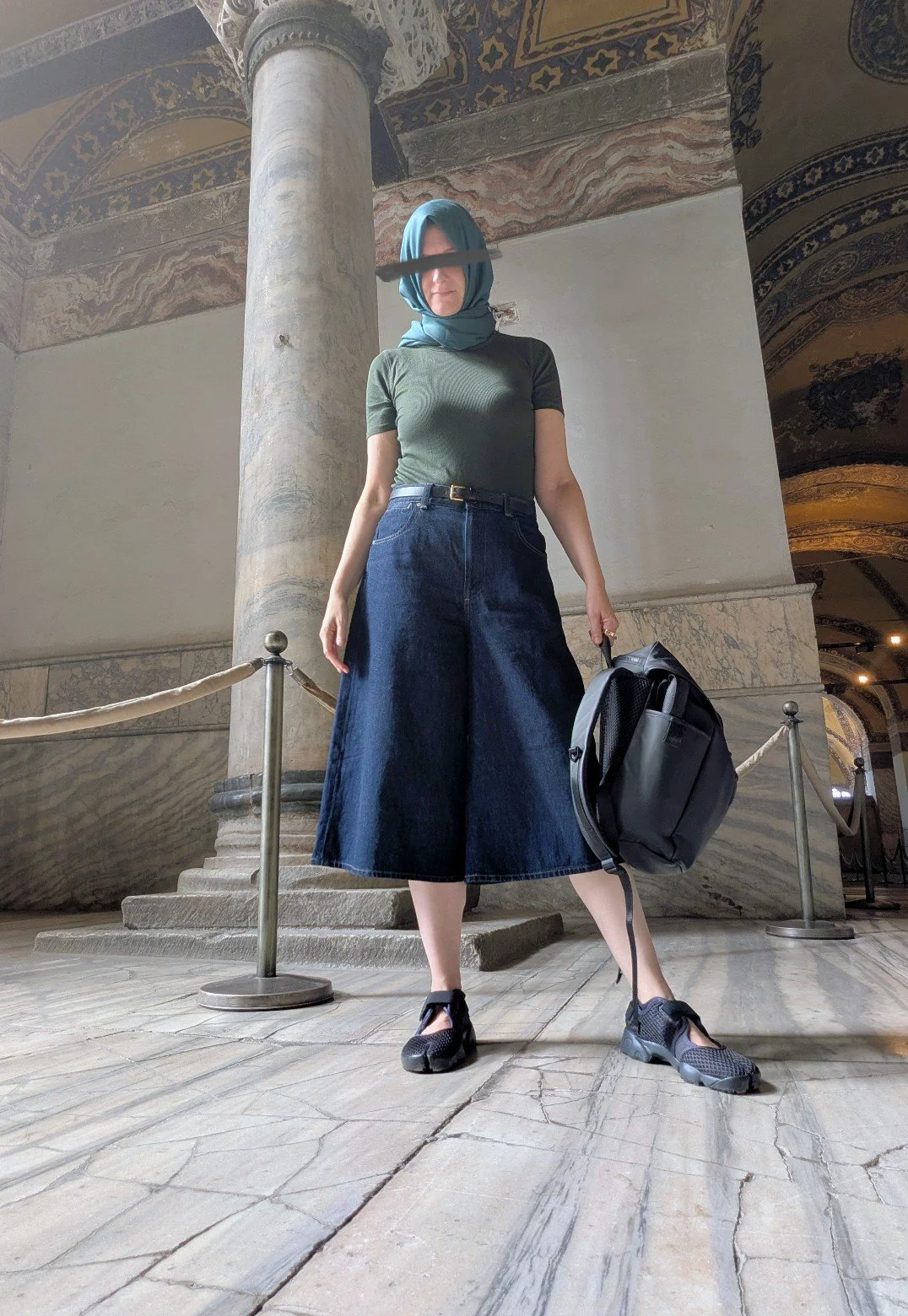
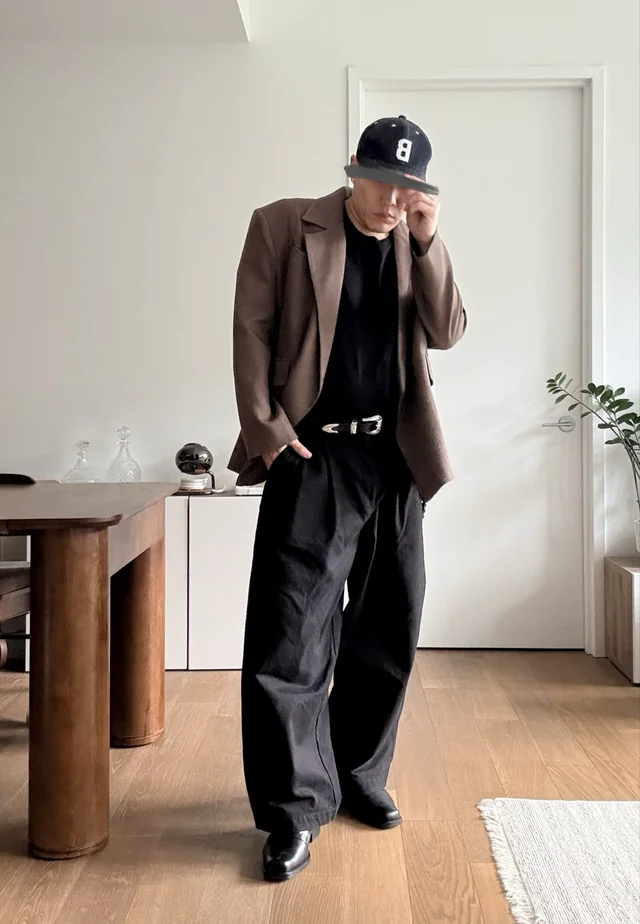
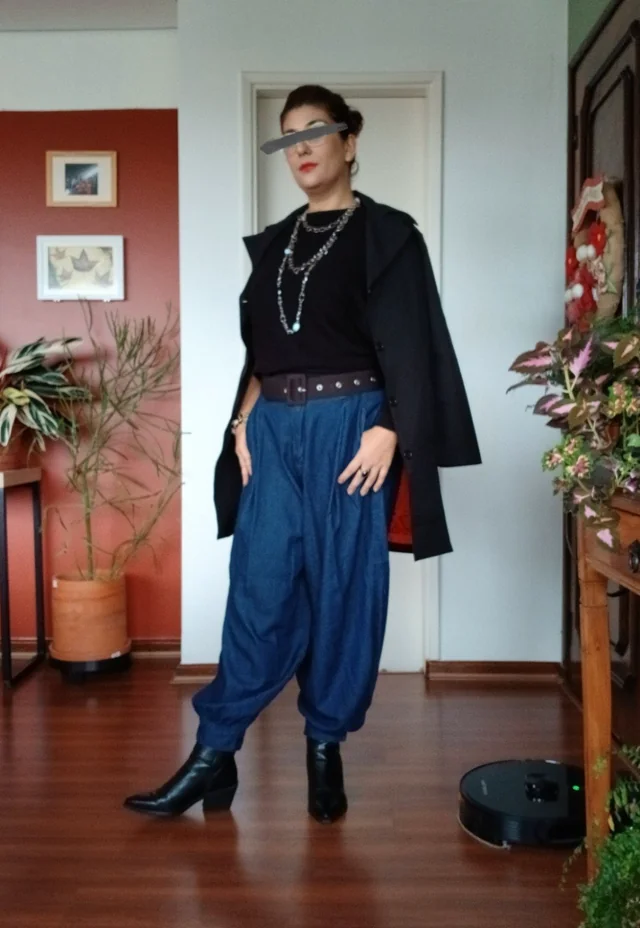
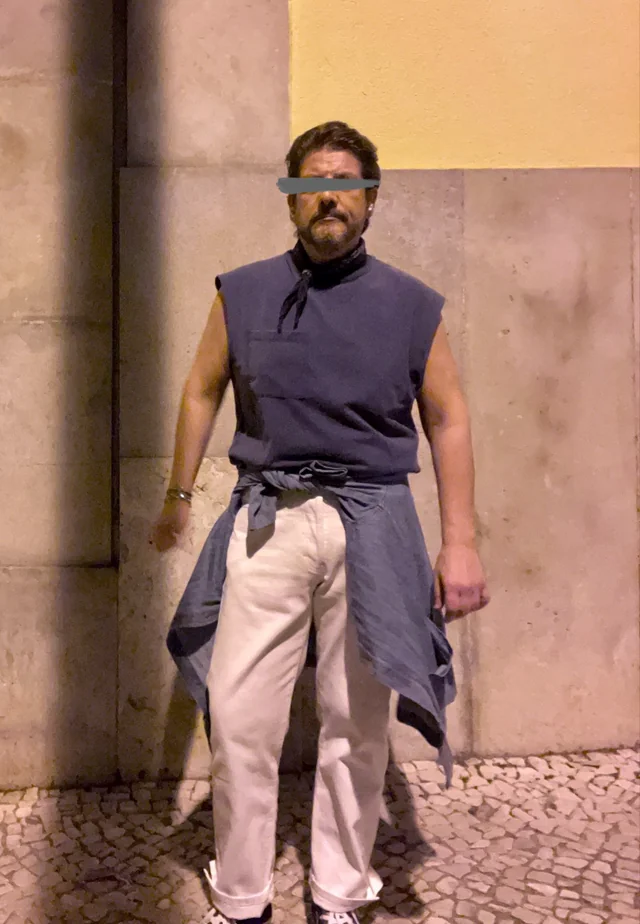
Lower body and proportion. Androgynous trouser construction uses a moderate rise (sitting between the low-hip menswear standard and the natural-waist womenswear option), straight or slightly tapered leg, and sufficient thigh ease to accommodate hip-width variance without requiring the divergent hip-curve grading that separates men's and women's trouser patterns. The absence of front darts and the use of a flat or single-pleat front minimize gendered visual coding. Skirts, when deployed in androgynous contexts, use A-line or straight construction at knee-length or below, avoiding the body-contouring of pencil skirts or the feminized volume of gathered and pleated styles. The overall proportion — where the waistline falls, how long the top is relative to the bottom, how wide the trouser is relative to the shoe — is calibrated to avoid the gendered proportion conventions (cropped top with high-waist bottom reading as feminine; long shirt with low-rise bottom reading as masculine in streetwear contexts) that viewers use as unconscious classification cues.
Materials
Material selection in androgyny is not merely aesthetic but structurally determinative: the wrong textile can gender a garment regardless of its pattern-cutting, because drape behavior, opacity, surface texture, and weight all carry gender associations embedded through decades of conventional deployment.
Neutral-drape cottons and cotton blends. Medium-weight cotton jersey (180–240 g/m in single or interlock knit) is the foundational androgynous textile because its moderate recovery and controlled drape accommodate chest and hip variance without clinging (which reveals gendered contour) or standing away from the body (which creates volume readable as oversized menswear). Organic cotton jersey in this weight range provides a matte surface that resists the sheen associated with performance synthetics or the crispness associated with formal shirting, occupying a texture middle ground that codes as neutral. Cotton poplin (110–150 g/m) serves for shirting but requires careful pattern-cutting to avoid the fitted-shirt conventions (bust darts, waist shaping) that gender the fabric's deployment. Heavier cotton canvas (200–350 g/m) provides workwear-derived structure for jackets and outerwear, its stiffness suppressing body contour in a way that serves androgynous silhouette.
Viscose, Tencel, and regenerated cellulose. Viscose (rayon) and Tencel (lyocell) in twill or plain weave (160–220 g/m) provide fluid drape with moderate body — sufficient to fall away from the torso without clinging to gendered contour points, but insufficient to stand independently as volume. These fibers' capacity to be finished at varying weights and weave densities makes them versatile across androgynous garment types: lightweight for shirts and loose trousers, medium-weight for draped jackets and dresses. Their environmental profile is mixed — Tencel (Lenzing's branded lyocell) uses closed-loop solvent recovery in production, while conventional viscose manufacturing generates significant chemical waste — creating a sustainability variable that aligns with the aesthetic's political commitments when production is specified.
Wool crepes and jersey. Wool crepe (240–300 g/m, high-twist yarn producing a matte, slightly textured surface with natural stretch and drape) is the androgynous textile par excellence for structured garments: it drapes cleanly without revealing contour, holds shape through cutting rather than interfacing, and ages gracefully through wear. Its matte surface resists the luster that codes as either masculine (worsted suit shine) or feminine (silk sheen), and its natural stretch accommodates movement without the body-mapping tightness of lycra blends. Wool jersey provides similar properties in knit form, suitable for unstructured tops, dresses, and layering pieces. Both textiles require dry-clean or careful hand-wash maintenance, which positions them in the mid-to-high price tier and limits their accessibility in mass-market androgynous fashion.
Ponte, scuba, and bonded knits. Ponte di Roma (a double-knit with moderate stretch and substantial body, typically 280–350 g/m in polyester-viscose-elastane blends) provides the structure that androgynous tailored garments require — maintaining a clean line through the shoulder and torso — while accommodating body-geometry variance through inherent stretch rather than gendered darting. The trade-off is breathability: ponte's synthetic composition traps heat and moisture more aggressively than natural fibers, producing comfort limitations in warm environments. Bonded and neoprene-adjacent knits (used by brands like Rad Hourani and early COS collections) extend this logic to create garments with architectural volume that holds shape independently of the body, treating the garment as a self-supporting shell rather than a body-mapping surface.
Denim as gender-neutral substrate. Denim's existing cultural position as the paradigmatic "unisex" fabric makes it a recurring androgynous material, but its deployment is complicated by the fact that men's and women's denim are typically cut on entirely different pattern blocks with different rise, hip curve, and thigh taper. Genuinely androgynous denim requires a unified pattern block with moderate rise, straight or relaxed leg, and sufficient hip ease to accommodate body-variance — a construction approach pioneered by brands like 69 (the brand), Eckhaus Latta, and Telfar, and that Japanese straight-cut denim (OrSlow, Resolute) achieves through silhouette simplicity rather than explicit gender-neutral engineering.
Fabric failure modes in androgynous construction. Fabrics that are too light (under 150 g/m in woven form) cling to the body under static electricity or moisture, revealing gendered contour and defeating the silhouette's ambiguity. Fabrics that are too stiff (heavy canvas, structured suiting above 350 g/m) create volumes that reference menswear construction too strongly, coding the garment as "borrowed from men" rather than gender-neutral. Fabrics with high sheen (satin, charmeuse, polished silk) carry strong feminine coding in Western fashion convention; those with aggressive matte texture (raw selvedge denim, heavy wool flannel) carry masculine coding. The androgynous fabric library therefore occupies a narrow band of weight, drape, and surface finish — the material equivalent of the silhouette's navigated middle ground between gendered extremes.
Color Palette
The palette operates on a principle of coded restraint that parallels the silhouette's gender-refusal logic. Black dominates as the default androgynous color because it suppresses the color-coding that Western fashion uses as a gender signal — pink, pastels, and jewel tones carry feminine associations; bold primaries, earth tones, and indigo carry masculine associations in conventional retail taxonomy. Black functions as a chromatic refusal equivalent to the silhouette's proportional refusal: it removes one more classification variable from the viewer's assessment. White, grey (in the full spectrum from pale silver to charcoal), and navy constitute the secondary palette, each operating below the threshold of gendered color coding.
Beyond achromatic restraint, androgynous color deploys desaturated, ambiguous tones — dusty mauve, sage, stone, slate blue, muted terracotta — that occupy the chromatic border zone between "masculine" and "feminine" color conventions. These colors are not neutral in the way that black is neutral (through absence); they are neutral through deliberate liminality, sitting on the boundary where a color could tip toward masculine or feminine coding but does not commit to either.
The Japanese avant-garde's influence on androgynous color is foundational: Comme des Garcons' and Yohji Yamamoto's deployment of black as a complete vocabulary — matte black, washed black, charcoal-tinged black, blue-black, brown-black — demonstrated that a single nominal color could sustain an entire design language when explored through texture, weight, and finish variation. This approach effectively separated color from gender and connected it instead to material and surface, a reorientation that remains central to androgynous palette logic.
Details
Details in androgynous dress are best understood as gender-marker suppression systems — engineering choices that eliminate or neutralize the specific construction details that conventional fashion uses to signal gender.
Closure systems. Button plackets are gendered by convention: men's shirts button right-over-left, women's shirts button left-over-right (a convention variously attributed to sword-drawing handedness, maid-dressing convenience, or arbitrary historical standardization). Androgynous garments navigate this through several strategies: concealed (fly-front) plackets that hide button direction; center-front zipper closures that carry no gender signal; pullover and overhead constructions that eliminate the placket entirely; or the explicit choice of one convention used across all sizes, standardizing rather than hiding the detail. Similarly, trouser fly direction, waistband closure type (button-fly versus zip-fly, hook-and-bar versus clasp), and jacket-lapel button stance all carry subtle gender coding that androgynous construction must address through standardization or concealment.
Pocket placement and construction. Womenswear's persistent pocket deficit — smaller pockets, fewer pockets, or no functional pockets at all — constitutes one of the most tangible gender-construction differences in mainstream fashion. Androgynous garments typically adopt menswear-standard pocket sizing and placement (functional front pockets at minimum 15 cm depth, back pockets, chest pockets on outerwear) because the construction problem is asymmetric: menswear pockets are functional and need only to be retained, while womenswear pockets must be added or enlarged. This seemingly minor detail has outsized symbolic significance because it makes palpable the degree to which conventional womenswear prioritizes silhouette over utility.
Seam construction and fit markers. Princess seams (curved vertical seams running from shoulder or armhole through bust point to hem, used in womenswear to create three-dimensional bust accommodation without horizontal darts) are the strongest structural gender marker in garment construction. Their presence immediately codes a garment as designed for a body with breast tissue; their absence codes as menswear or androgynous. Androgynous construction replaces princess seams with flat side seams, panel seams that do not reference the bust point, or gathered/pleated front panels that create volume without gender-specific shaping. Dart suppression (redistributing dart take-up into ease, gathers, or seam fullness) is the core technical operation of androgynous pattern-cutting.
Surface and finish. Minimal hardware (concealed or matte-finish buttons, invisible zippers, no decorative clasps or embellishment), absence of gendered textile manipulation (no lace, no floral embroidery, but equally no aggressive military-derived hardware), clean topstitching in tonal thread, and raw or minimally finished edges (associated with avant-garde and Japanese deconstructionist traditions) constitute the androgynous detail language. The goal is detail suppression to the point where the garment's construction reads as deliberate but uncodable — present enough to communicate design intention, absent enough to resist gendered classification.
Garment Logic
Androgynous construction begins with the fundamental challenge that Western pattern-cutting is built on gendered body blocks — the basic pattern templates from which all garments are derived — and that producing genuinely gender-neutral garments requires either engineering new body blocks or deploying existing ones in ways that neutralize their gendered assumptions.
Body-block engineering. Conventional pattern-cutting uses separate men's and women's body blocks that differ in shoulder slope (men's blocks use a steeper shoulder-point-to-neck angle), bust accommodation (women's blocks include a bust dart or equivalent ease), waist suppression (women's blocks include waist shaping of 5–10 cm beyond men's), hip grading (women's blocks add 5–8 cm at the hip relative to men's at equivalent waist measurement), and armhole shape (women's blocks use a shallower armhole that accommodates arm movement past breast tissue). A genuinely androgynous body block must either average these differences — creating a pattern that fits neither conventional body perfectly but accommodates both acceptably — or modularize them, building adjustment points (removable darts, expansion pleats, adjustable closures) that allow a single pattern to adapt to different body geometries without requiring separate men's and women's versions. Brands that have invested in this engineering (Telfar, Rad Hourani, 69, Official Rebrand, Older Brother) produce garments with measurably different fit behavior than brands that simply relabel existing menswear patterns as "unisex."
Size-range engineering. Binary sizing systems (S-M-L-XL in menswear or 2-4-6-8 in womenswear) encode gender into their measurement progression: men's sizes progress primarily on chest and waist circumference with minimal hip-curve change; women's sizes progress on bust, waist, and hip circumference with bust-point-to-waist ratio maintained at each grade. A genuinely androgynous sizing system must either adopt a continuous-spectrum approach (individual measurements rather than category sizes, as in made-to-measure), use extended alpha sizing with fit notes indicating body-measurement ranges, or develop hybrid grading that maps a single size progression across the combined distribution of men's and women's body measurements. This is an unsolved engineering problem at scale: no mass-market brand has achieved a single sizing system that fits both broad-shouldered, flat-chested bodies and narrow-shouldered, full-chested bodies with equal precision, which is why oversizing remains the dominant androgynous strategy — it avoids the fit problem rather than solving it.
Binding, padding, and proportion manipulation. Trans and gender-nonconforming communities have developed sophisticated construction and body-engineering techniques for manipulating gender legibility: chest binding (using compression garments — commercial binders from gc2b, Spectrum Outfitters, FLAVNT; or improvised wrapping with elastic bandages, which carries documented health risks including rib bruising, respiratory restriction, and skin breakdown) to flatten the chest profile; hip and bust padding (silicone prosthetics, foam inserts, layered textile padding) to augment body contour; shoulder enhancement (structured jacket shoulders, layered tops) to broaden the upper body; and garment-layering strategies that build visual proportion independent of body shape. These techniques represent genuinely innovative construction knowledge — they are, in engineering terms, wearable body-modification systems — but they are rarely credited in mainstream androgynous fashion discourse, which tends to center designer-led innovation while treating community-developed practices as folk technique rather than as the sophisticated construction system they represent.
Aftercare and maintenance. Androgynous garments using natural-fiber and blended textiles require the same care as their conventional counterparts: wool crepes need dry cleaning or gentle hand-wash; cotton jerseys tolerate machine washing but degrade in shape through tumble-drying; viscose and Tencel wrinkle when wet and require hang-drying to maintain drape integrity. Garments engineered for body-agnostic fit — particularly those using ponte, jersey, and knit structures — are susceptible to stretch-out at stress points (neckline, hem, cuffs) over extended wear, gradually losing the controlled volume that creates androgynous silhouette. This stretch-out is the primary failure mode of knit-based androgynous garments: a ponte jacket that holds clean, neutral lines when new may develop stretched, drooping proportions that compromise its silhouette within a season of regular wear, depending on fabric quality and care.
Failure modes in androgynous construction. The most common failure is reversion to gendered legibility: a garment designed for gender ambiguity that, on an actual body, reads unmistakably as either menswear-on-a-female-body or womenswear-on-a-male-body because the pattern-cutting did not account for the specific body-geometry interactions that produce gendered visual signals (bust outline visible through fabric, shoulder-to-hip ratio exaggerated by garment proportions, trouser rise creating gendered crotch-line behavior). This failure exposes the fundamental difficulty of androgynous construction: the human body is not gender-neutral, and dressing it in gender-neutral garments requires active engineering rather than passive omission. Simply removing darts does not produce androgyny; it produces ill-fitting menswear.
Accessories
Accessory systems in androgynous dress extend the same gender-marker suppression logic as garments, forming a presentation layer that manages legibility at the margins — face, extremities, personal objects — where gendered coding is often most visible.
Footwear. Gender-coded footwear conventions (heels and pointed toes as feminine, flat and rounded soles as masculine) are navigated through a narrow corridor of forms that resist classification: Chelsea boots (historically menswear, adopted broadly across genders), chunky-soled Derby shoes (Dr. Martens 1461, Clarks Wallabee), minimal sneakers (Common Projects Achilles, Veja Esplar), and Birkenstock sandals (whose utilitarian form resists gender coding through deliberate anti-fashion). Sole height and shape provide the strongest footwear gender signal; androgynous footwear typically uses a flat or moderate-height sole without the extreme elevation (stiletto) or aggressive flatness (athletic trainer) that code toward specific genders.
Bags and carry. Crossbody bags, tote bags, and backpacks with minimal hardware and clean construction serve as androgynous carry because they avoid the gendered conventions of structured handbags (feminine coding) and briefcases (masculine coding). Telfar's Shopping Bag, explicitly positioned as "the Bushwick Birkin," achieved cultural significance in part because its simple construction and universal sizing (small, medium, large) operated outside gendered-bag conventions.
Jewelry and personal items. Minimal jewelry in non-precious metals (silver, stainless steel, titanium), small-gauge earrings, and simple chain necklaces occupy the androgynous accessory space. The absence of jewelry communicates as much as its presence: bare hands, unadorned ears, and empty wrists resist both the feminine expectation of decorative jewelry and the masculine expectation of watch-as-status-marker, producing a neutral surface that extends the garment system's refusal logic to the body's extremities.
Body Logic
Androgynous dress conceptualizes the body not as a surface to be revealed or refined according to gendered conventions but as a contested site whose legibility is to be actively managed — made ambiguous, illegible, or multiple depending on the wearer's intention and the social context's tolerance. The garment system operates as an illegibility interface: it intervenes between the body's physical form and the viewer's classificatory gaze, disrupting the automatic gender-assignment process that Western dress conventions have trained viewers to perform within milliseconds of visual contact.
This body logic is fundamentally relational. The same androgynous garment — a boxy blazer, a draped trouser, an oversized shirt — produces different gender readings on different bodies because the viewer's classification draws not only on the garment but on the body's visible sex characteristics (chest profile, hip-shoulder ratio, facial features, voice, movement patterns), the wearer's grooming (hair length and style, facial hair, cosmetic use), and the social context (fashion event versus workplace, urban versus rural, queer-normative versus heteronormative space). Androgynous construction can intervene on the first variable (garment fit and silhouette) but cannot fully control the others, which is why androgyny's body logic must be understood as a negotiation rather than an achievement — it manages legibility probabilistically rather than deterministically.
Judith Butler's theory of gender performativity (Gender Trouble, 1990) provides the standard theoretical framework: gender is not an essential attribute of the body but a performance constituted through repeated acts, including the act of dressing. Androgynous dress does not reveal a "true" non-gendered body beneath the costume of gender; it performs gender refusal as its own constitutive act, producing androgyny as an effect of garment-body-context interaction rather than as an expression of inner identity. This theoretical framing is useful but also contested: trans and nonbinary critics argue that performativity theory, when applied carelessly, can trivialize the material reality of gender embodiment by reducing it to theatrical metaphor — for someone whose body produces gender dysphoria, androgynous dress is not a performance choice but a material intervention in a condition of embodied distress.
The maintenance labor of androgynous presentation — binding, padding, garment selection calibrated to body-specific legibility, constant awareness of how one's gender is being read — constitutes an invisible labor economy whose demands are greatest for those whose bodies deviate most from cisgender norms. This labor is not analogous to "getting dressed well" in a gendered fashion system; it is closer to the labor of code-switching across cultural contexts, where the stakes of misreading include social friction and navigating institutional expectations.
Motifs / Themes
The refusal of binary. Androgynous dress organizes itself around a sustained negation — not masculine, not feminine, not a midpoint between the two but an exit from the axis that defines them. This refusal manifests in specific garment choices (no darts, no gender-coded color, no gendered closures) and in broader stylistic dispositions (restraint, minimalism, architectural volume), but its ultimate referent is conceptual rather than material: the motif is the possibility that dress can operate outside the classification system that has governed Western fashion for two centuries.
The suit as site of gender negotiation. From Dietrich's menswear to Saint Laurent's Le Smoking to Janelle Monae's tuxedo era to Billy Porter's gown-over-tuxedo assemblages, the tailored suit has served as androgyny's most charged garment because its gender coding (masculine authority, institutional power) is simultaneously the strongest and the most transferable. When a non-male body wears a well-constructed suit, the gender transfer is legible and powerful precisely because the suit's masculine associations are so deeply embedded; when a male body wears suit-adjacent garments with skirt or dress elements, the disruption is equally potent. The suit thus functions as androgyny's primary test case: if gender norms can be challenged here, at the most coded site in Western dress, they can be challenged anywhere.
Controlled ambiguity as aesthetic achievement. Unlike maximalist fashion, which accumulates visual information, or minimalist fashion, which reduces it, androgynous fashion calibrates information to a precise threshold of illegibility — enough construction to communicate intentionality, not enough to communicate gender. This calibration is the aesthetic's distinctive skill: it requires the designer to understand exactly which construction details trigger gender classification and to suppress, neutralize, or counterbalance them without producing the impression of mere absence.
Cultural Touchstones
Marlene Dietrich in Morocco (1930) — top hat, white tie, tuxedo jacket — remains the inaugural androgynous-fashion image in Western cinema, establishing the template of cross-gender authority transfer that subsequent figures would elaborate. David Bowie as Ziggy Stardust (1972–1973) exploded androgyny into mass-media spectacle, demonstrating that gender illegibility could function as charismatic rather than threatening. Patti Smith's Horses album cover (1975, photographed by Robert Mapplethorpe) — white shirt, black jacket, tie slung over shoulder, backlit to eliminate color and flatten gender cues — distilled androgynous presentation to its graphic minimum. Grace Jones's Island Life album cover (1985, photographed by Jean-Paul Goude) performed androgyny through hypergeometric body presentation that refused racial and gender classification simultaneously.
Tilda Swinton — in Orlando (1992, playing Virginia Woolf's gender-shifting protagonist), at red carpets (consistently wearing Haider Ackermann, Chanel menswear, and custom pieces that resist classification), and in conversation (refusing to identify her dress as either menswear or womenswear) — has functioned as the aesthetic's most sustained contemporary representative. Janelle Monae's tuxedo era (2010s) and subsequent style evolution connected androgynous presentation to Black excellence and Afrofuturism. Hunter Schafer, Emma D'Arcy, and Timothee Chalamet represent Gen Z androgyny's visibility within mainstream entertainment. In K-pop, G-Dragon's and Taemin's styling introduced androgynous visual vocabulary to East Asian pop culture at mass scale.
Gender Trouble (Judith Butler, 1990) is the category's foundational theoretical text. Orlando (Virginia Woolf, 1928; Sally Potter film adaptation, 1992) provides its literary-cinematic touchstone. Comme des Garcons' 1981 Paris collection remains its construction reference point. Calvin Klein's CK One fragrance campaign (1993, photographed by Steven Meisel) commercialized androgyny for a mass audience. RuPaul's Drag Race (2009–present) complicated the aesthetic by demonstrating that gender amplification (drag's hyperfeminine or hypermasculine performance) can expand gender expression as effectively as gender suppression — excess and refusal converge at the point where both make the constructedness of gender visible.
See Also
- Minimalism: Shared restraint, reduction, and structural clarity; overlapping palette and detail logic
- Sartorial / tailoring: The suit as androgyny's primary negotiation site; construction-engineering overlap
- Goth: Shared deployment of black, shared gender-disruption history through 1980s subculture
- Bauhaus / functionalism: Shared commitment to form-follows-function logic applied to the body
- Harajuku / Japanese street fashion: Overlapping jendāresu (genderless) movement, shared subcultural context
- Queer fashion history: The originating community and expertise economy for androgynous body-engineering
- Glam rock: Theatrical androgyny as spectacle; shared historical lineage through Bowie, Bolan, New York Dolls
- Deconstructionism: Shared construction logic through Kawakubo, Yamamoto, Margiela; garment-as-negation
Brands and Designers
Avant-Garde / Deconstructionist:
- Comme des Garcons (Rei Kawakubo, 1969, Tokyo/Paris): foundational androgynous-construction logic, body-as-volume pattern-cutting, 1981 Paris debut as tectonic disruption of gendered fashion
- Yohji Yamamoto (1972, Tokyo/Paris): draped volumes, black-as-vocabulary, oversized proportions that refuse gendered body-mapping
- Maison Margiela (Martin Margiela, 1988, Paris): deconstructed garments, exposed seams, scale manipulation, gender refusal through construction negation
- Rick Owens (1994, Los Angeles/Paris): gendered-silhouette disruption through asymmetry, draping, and extreme proportion, consistently casting gender-diverse models
- Ann Demeulemeester (1985, Antwerp): romantic androgyny, poet-shirt and draped-jacket vocabulary, soft construction on non-gendered body block
Gender-Neutral / Unisex Engineering:
- Telfar (Telfar Clemens, 2005, New York): unisex construction across all garment categories, Shopping Bag as genderless-accessory icon, pricing accessibility as political position
- Rad Hourani (2007, Montreal/Paris): first unisex haute-couture collection (2013), architectonic construction, gender-agnostic body blocks
- 69 (2012, Los Angeles): unisex denim and jersey, body-agnostic fit through pattern engineering, inclusive size range
- Official Rebrand (2018, Los Angeles): genderless everyday garments, neutral palette, extended sizing
- Older Brother (Los Angeles): natural-dyed, hand-finished genderless garments, small-batch production
- One DNA (New York): modular unisex construction, interchangeable garment components
Contemporary Designer / Gender-Fluid:
- JW Anderson (2008, London): gender-disrupting runway presentations, menswear-womenswear crossover as design methodology
- Ludovic de Saint Sernin (2017, Paris): gender-fluid construction with body-revealing confidence, sensual androgyny
- Harris Reed (2020, London): romantic, maximal gender-fluid tailoring, historical-costume reference through gender-disrupting lens
- Eckhaus Latta (2011, New York): gender-inclusive casting and construction, experimental textiles, body-positive androgyny
- Palomo Spain (Alejandro Gomez Palomo, 2015): romantic menswear that refuses masculine constraint, historical-dress reference
- Grace Wales Bonner (2014, London): diasporic menswear and tailoring through Afro-Atlantic cultural lens, androgyny as cultural practice
Accessible / Mass-Market:
- COS (2007, London/H&M Group): minimalist, moderately androgynous silhouettes, wool-blend and ponte construction at accessible pricing
- Arket (2017, Stockholm/H&M Group): gender-neutral basics, neutral palette, sustainable-material positioning
- Big Bud Press (Los Angeles): unisex jumpsuits and basics in organic cotton, inclusive sizing, candy-palette variation within androgynous construction
- Wildfang (2013, Portland): "tomboy" and gender-neutral suiting and casualwear, community-engagement model
- Entireworld (2018, New York): unisex basics in cotton and recycled fibers, simple construction across gender
Luxury / Fashion-House Gender Expansion:
- Gucci (Alessandro Michele era, 2015–2022): gender-fluid runway casting and design, Harry Styles collaboration, romantic maximalism that disrupted luxury's gender binary
- Haider Ackermann (1994, Antwerp/Paris): fluid tailoring and draping that resists gendered classification, Tilda Swinton as primary muse
- Lemaire (Christophe Lemaire and Sarah-Linh Tran, 2014, Paris): quietly androgynous construction, shared-wardrobe philosophy, soft tailoring across gender
- The Row (Mary-Kate and Ashley Olsen, 2006, New York): construction-quality androgyny in women's-positioned luxury, neutral silhouettes that function across gender presentations
Citations
[1] Butler, Judith. Gender Trouble: Feminism and the Subversion of Identity. Routledge, 1990. [2] Butler, Judith. Bodies That Matter: On the Discursive Limits of "Sex." Routledge, 1993. [3] Garber, Marjorie. Vested Interests: Cross-Dressing and Cultural Anxiety. Routledge, 1992. [4] Halberstam, Jack. Female Masculinity. Duke University Press, 1998. [5] Hollander, Anne. Sex and Suits: The Evolution of Modern Dress. Kodansha International, 1994. [6] Hollander, Anne. Seeing Through Clothes. University of California Press, 1993. [7] Steele, Valerie. Fashion and Eroticism: Ideals of Feminine Beauty from the Victorian Era to the Jazz Age. Oxford University Press, 1985. [8] Wilson, Elizabeth. Adorned in Dreams: Fashion and Modernity. Revised ed., Rutgers University Press, 2003. [9] Entwistle, Joanne. The Fashioned Body: Fashion, Dress and Modern Social Theory. 2nd ed., Polity, 2015. [10] Crane, Diana. Fashion and Its Social Agendas: Class, Gender, and Identity in Clothing. University of Chicago Press, 2000. [11] Kawamura, Yuniya. Fashion-ology: An Introduction to Fashion Studies. 2nd ed., Bloomsbury Academic, 2018. [12] Breward, Christopher. Fashion. Oxford University Press, 2003. [13] Lipovetsky, Gilles. The Empire of Fashion: Dressing Modern Democracy. Princeton University Press, 1994. [14] Barthes, Roland. The Fashion System. Translated by Matthew Ward and Richard Howard, University of California Press, 1983. [15] Simmel, Georg. "Fashion" (1904). In Simmel on Culture: Selected Writings, edited by David Frisby and Mike Featherstone, SAGE, 1997. [16] Bourdieu, Pierre. Distinction: A Social Critique of the Judgement of Taste. Translated by Richard Nice, Harvard University Press, 1984. [17] Hebdige, Dick. Subculture: The Meaning of Style. Routledge, 1979. [18] Cole, Shaun. "Don We Now Our Gay Apparel": Gay Men's Dress in the Twentieth Century. Berg, 2000. [19] Reilly, Andrew, and Ben Barry, editors. Crossing Gender Boundaries: Fashion to Create, Disrupt, and Transcend. Intellect, 2020. [20] Geczy, Adam, and Vicki Karaminas. Queer Style. Bloomsbury Academic, 2013. [21] Arnold, Rebecca. Fashion, Desire and Anxiety: Image and Morality in the 20th Century. Rutgers University Press, 2001. [22] Evans, Caroline. Fashion at the Edge: Spectacle, Modernity and Deathliness. Yale University Press, 2003. [23] English, Bonnie. Japanese Fashion Designers: The Work and Influence of Issey Miyake, Yohji Yamamoto and Rei Kawakubo. Berg, 2011. [24] Suoh, Tamami, editor. Fashion: The Collection of the Kyoto Costume Institute. Taschen, 2002. [25] Woolf, Virginia. Orlando: A Biography. Hogarth Press, 1928. [26] Castiglione, Baldassare. The Book of the Courtier (1528). Translated by George Bull, Penguin, 1967. [On sprezzatura and performed identity.] [27] Margueritte, Victor. La Garçonne. Flammarion, 1922. [The novel that catalyzed interwar androgynous fashion.] [28] Hatch, Kathryn L. Textile Science. West Publishing, 1993. [29] Kadolph, Sara J., and Sara B. Marcketti. Textiles. 12th ed., Pearson, 2016. [30] Tortora, Phyllis G., and Sara B. Marcketti. Survey of Historic Costume. 6th ed., Fairchild Books, 2015. [31] Veblen, Thorstein. The Theory of the Leisure Class. Macmillan, 1899. [32] Marx, W. David. Ametora: How Japan Saved American Style. Basic Books, 2015. [33] Telfar. "About." https://tfrclmns.com/ [34] Rad Hourani. "Unisex Haute Couture." https://radhourani.com/ [35] Spectrum Outfitters. "Chest Binders." https://spectrumoutfitters.co.uk/